
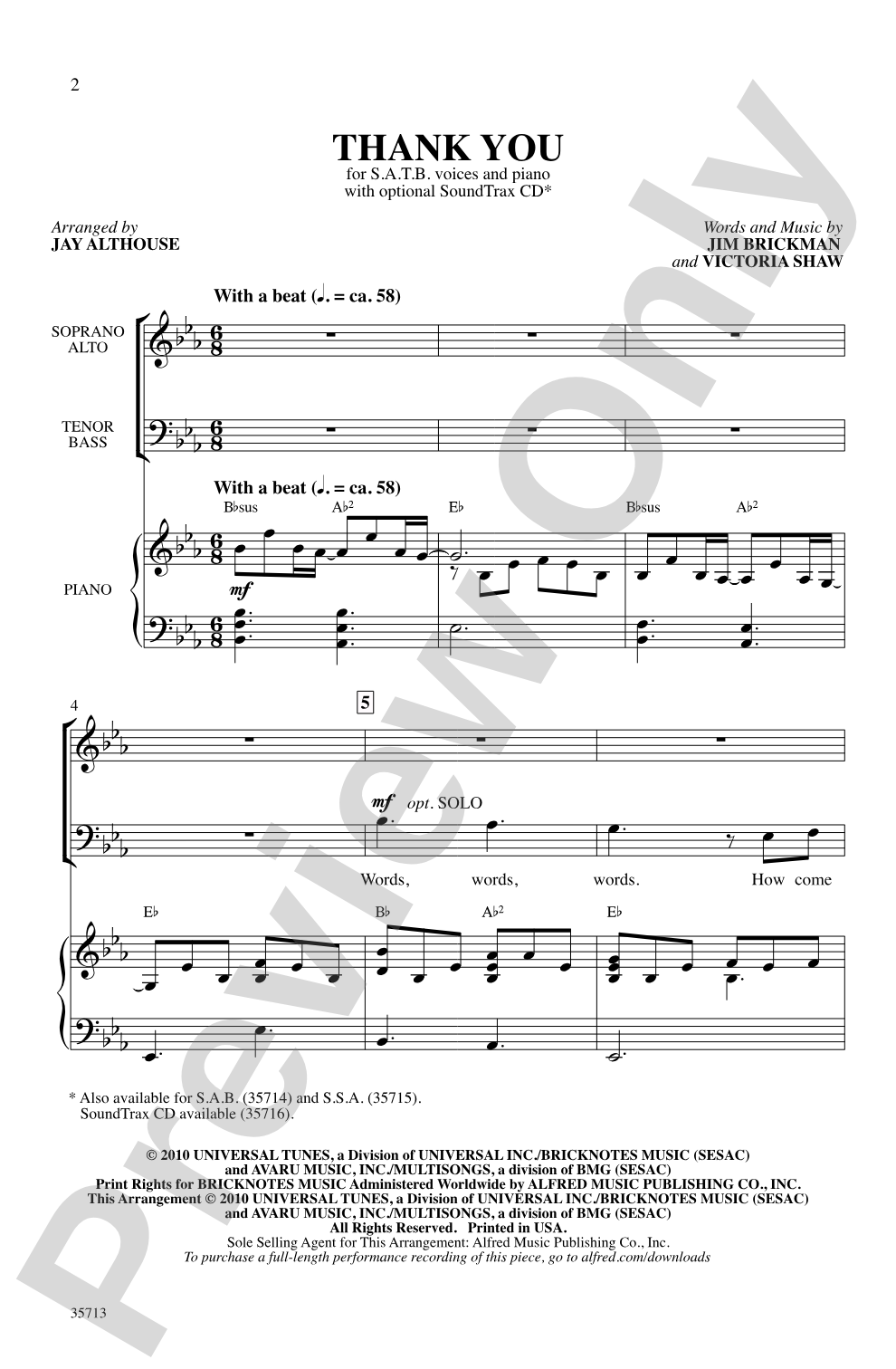
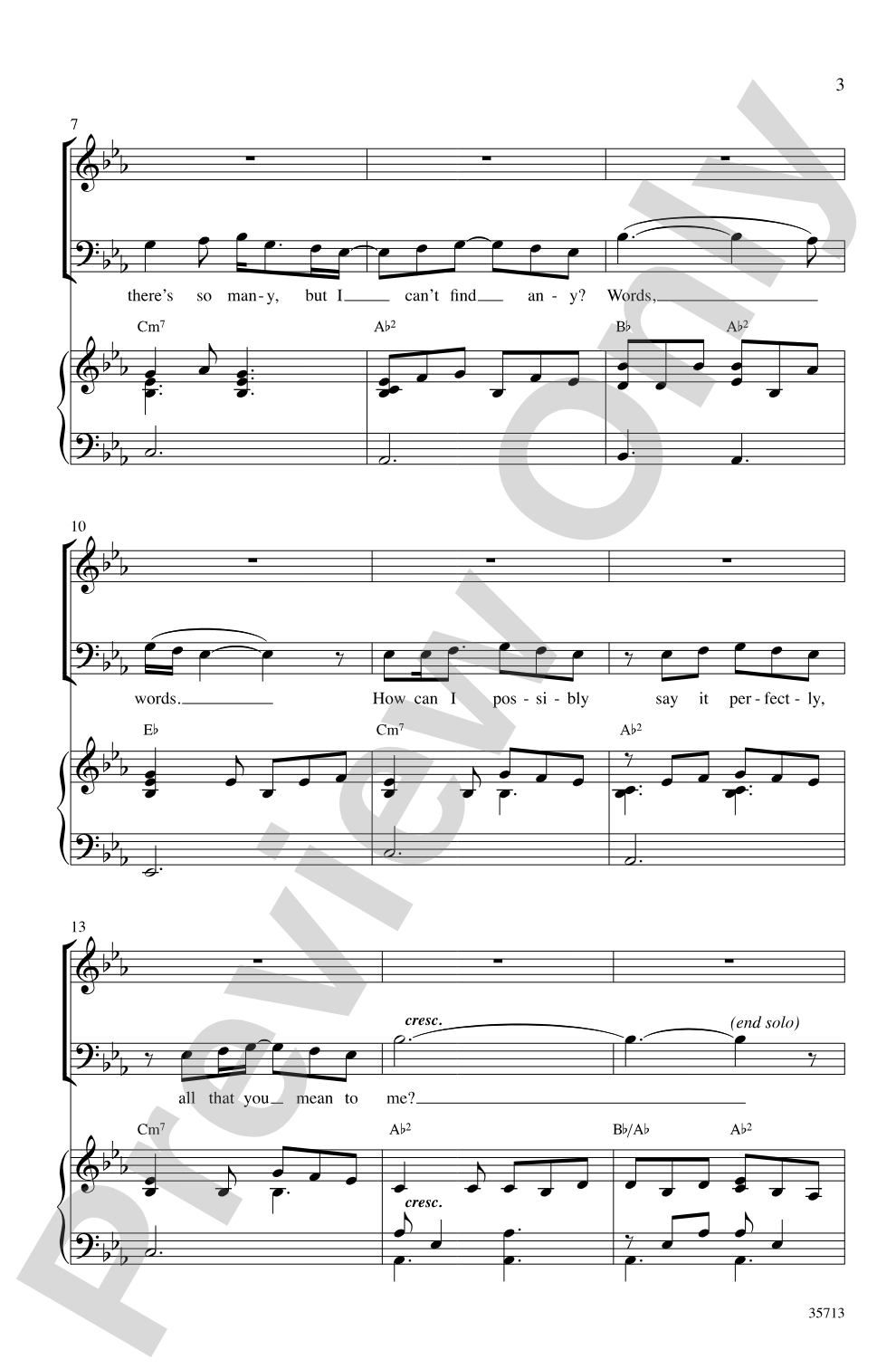

Thank You: SATB Choral Octavo
As Recorded by Jim Brickman
Words and music by Jim Brickman and Victoria Shaw / arr. Jay Althouse
Item: 00-PO-0001050
$1.90
Minimum order quantity: 20 copies
Pickup currently not available
Related Items
Thank You: SoundTrax Digital Audio Download |
$27.99
|
View | |
Thank You: SAB Choral Octavo |
$2.25
|
View | |
Thank You: SSA Choral Octavo |
$1.90
|
View | |
Thank You: SATB Choral Octavo |
$1.90
|
View | |
Thank You: SAB Choral Octavo |
$2.25
|
View | |
Thank You: SSA Choral Octavo |
$1.90
|
View | |
Thank You: Choral Octavo SoundTrax CD |
$27.99
|
View |
Description
Revolutionary pianist and composer Jim Brickman and American Idol contestant Matt Giraud have combined their considerable talents to bring us the ultimate appreciation choral for spring and end-of-the-year concerts. "I don't want to let another day pass us by without a chance to say thank you." The perfect way to acknowledge parents, teachers, and friends.


Thank You: SATB Choral Octavo isn't in MakeMusic Cloud just yet...but it could be. Let us know you'd like to see it, and you'll help shape what comes next. In the meantime, start a free trial and dive into thousands of interactive titles your students can play along with today.
Request This Title
Tell us you want it.
Start Your Free Trial
Explore everything that's ready to play right now.
Sample Audio
1
Audio File
--:--
0:00
0:00
Sample Video
No sample videos found.
Additional Details
Series:
Alfred Pop Choral Series
Publisher:
Alfred Music
Page Count:
12
SKU:
00-PO-0001050
More about this title
About the Composer: Jim Brickman
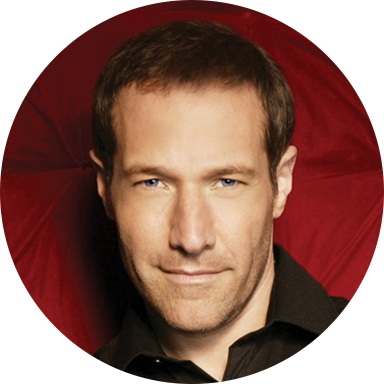
Jim Brickman has built a career on creating music that connects directly to life's pivotal moments. His gift for melodic storytelling and his skill at the piano have made him one of the best-selling solo pianists in modern music, demonstrating that instrumental music can reach audiences as powerfully as any vocal performance.
Brickman writes with intention: each piece serves a purpose, whether to comfort, elevate, or mark an occasion. His philosophy centers on music as a shared experience—a soundtrack for the events and people that matter most. That sensibility carries through into his collaborative work with lyricist Victoria Shaw on pieces like this one, where the music and text together create something specifically designed for meaningful moments.
Why we love this
Jay Althouse's arrangement captures the warmth and sincerity of Brickman's melodic gift while giving an SATB choir genuine musical substance to work with. The piece hits the emotional mark without requiring virtuosity or complexity, making it genuinely singable while still sounding polished enough for a meaningful concert moment. Directors consistently choose this because it lands exactly where spring and year-end concerts need to be: heartfelt, accessible, and genuinely moving.
What to expect
Warm and direct, with a conversational tone that makes the gratitude feel personal rather than ceremonial. The melodic line has a gentle buoyancy that suggests sincerity without sentimentality, and the harmonic language stays accessible while maintaining emotional depth throughout.
Who it's for
This piece speaks to choirs at the middle school through adult level who need a genuine expression of gratitude that doesn't feel saccharine or overwrought. It works for any director seeking a secular choral that acknowledges parents, educators, and community members with actual musical integrity, not just sentiment.
How to get the most out of it
- Balance the melodic line across all four parts so the text remains clear and the expression doesn't rely solely on sopranos. Check that tenors and altos carry their weight in phrases where they support the main idea.
- Let the phrasing breathe with the text's natural speech rhythm. Resist the urge to mechanically subdivide every bar; instead, shape around the phrases 'I don't want to let another day pass us by' and 'a chance to say thank you.'
- Invest the quiet moments with intention. Moments of harmonic simplicity or reduced texture are where vulnerability lives; these spaces need as much attention as fuller sonorities.
- Consider the recorded accompaniment as a conversational partner, not a strict guide. Your tempo and phrasing may need slight flexibility to feel authentic in the moment rather than locked to a click.
How to use it
Program this as the emotional anchor of a spring or year-end concert, particularly when you want to honor the people who support your program. It pairs well on a concert that mixes lighter pop and secular repertoire, serving as the moment where the mood shifts toward genuine reflection. Many directors place it near the program's close, where its message of appreciation can resonate as the final thought.
Skills your students will build
- Singing pop-influenced harmony while maintaining pure, blended tone
- Shaping phrased lines with conversational expression rather than rhythmic precision alone
- Balancing secondary melodic lines so ensemble clarity doesn't collapse into unison
- Interpreting contemporary text with emotional authenticity in a concert setting