
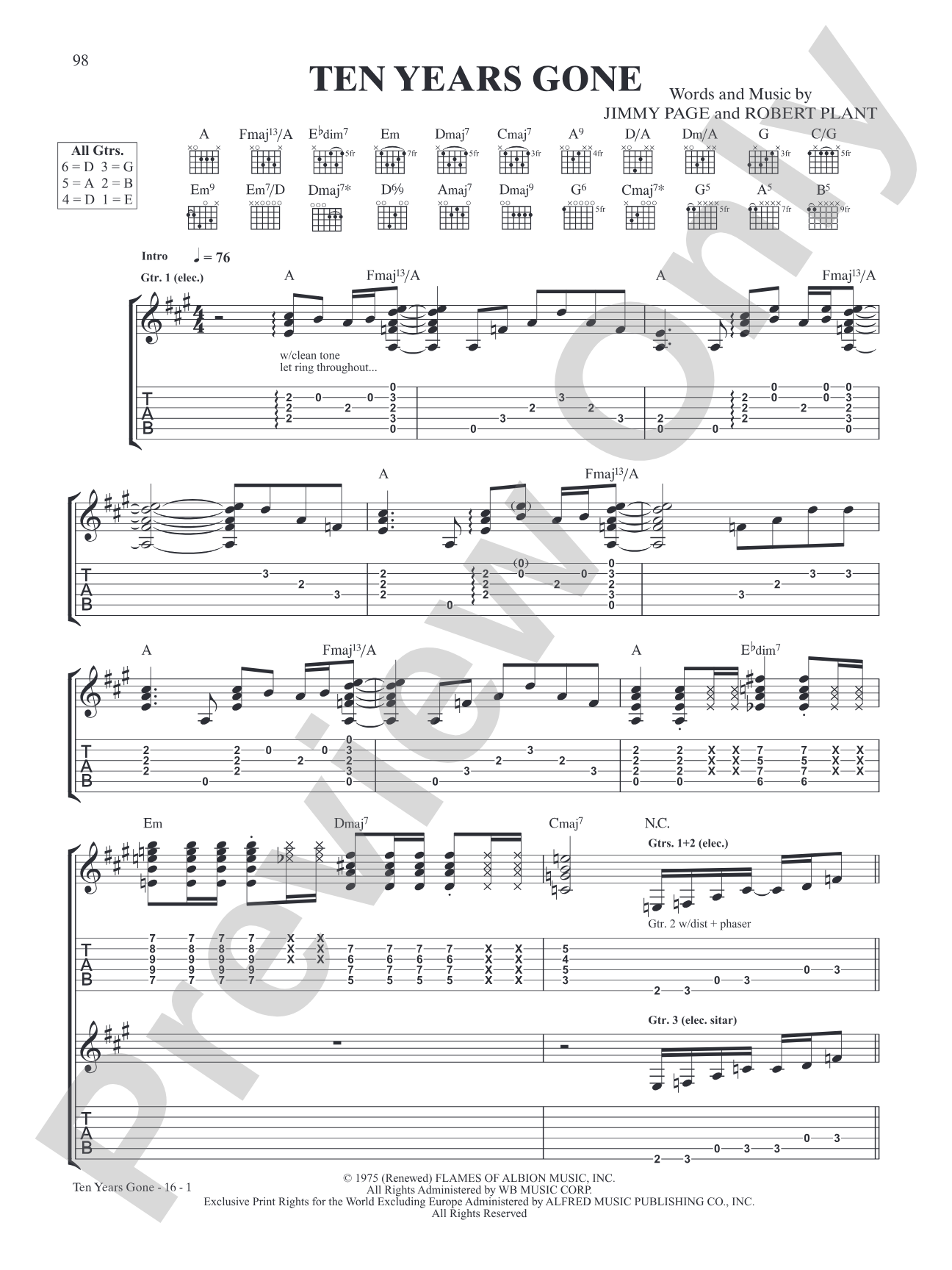
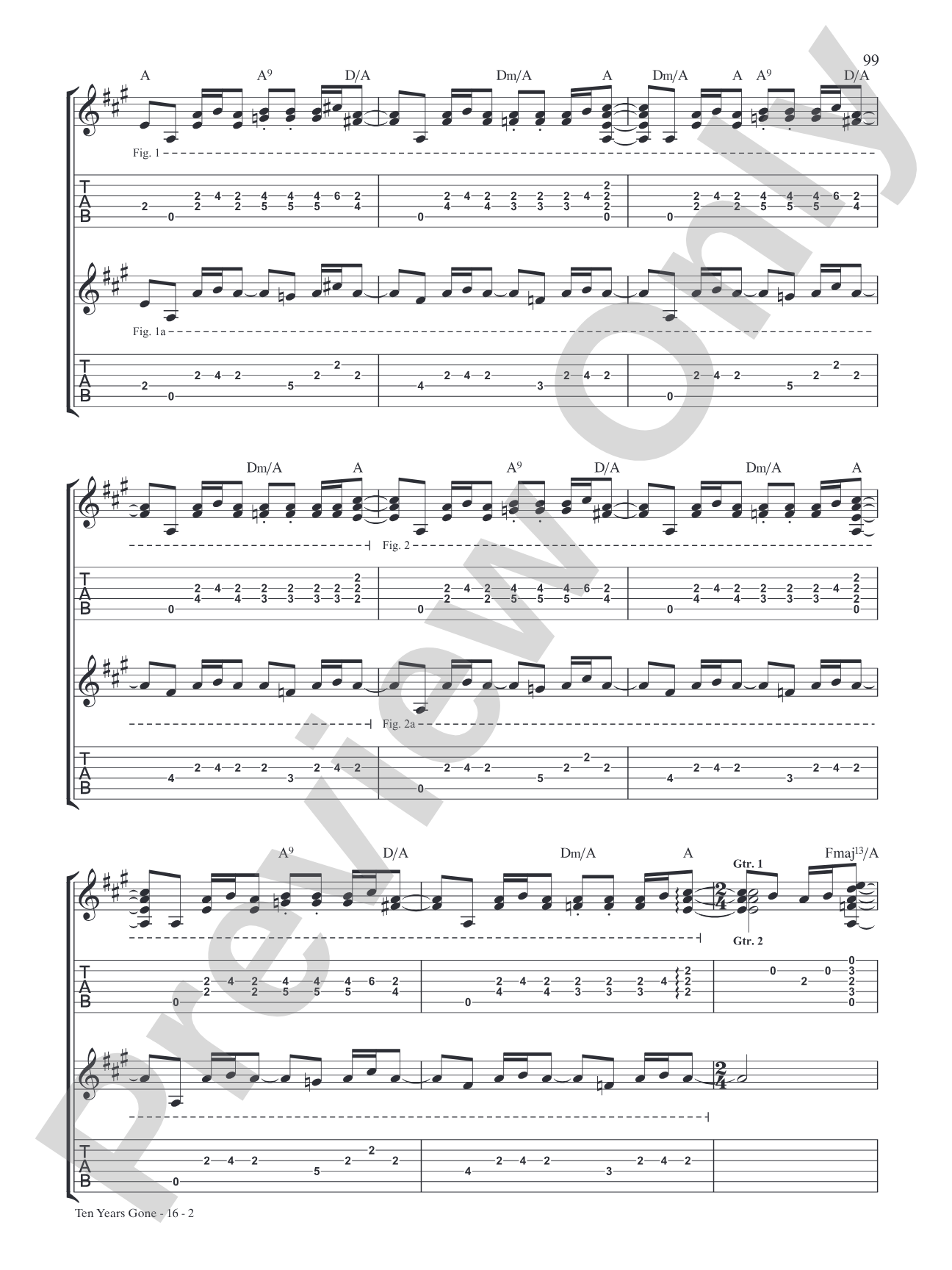
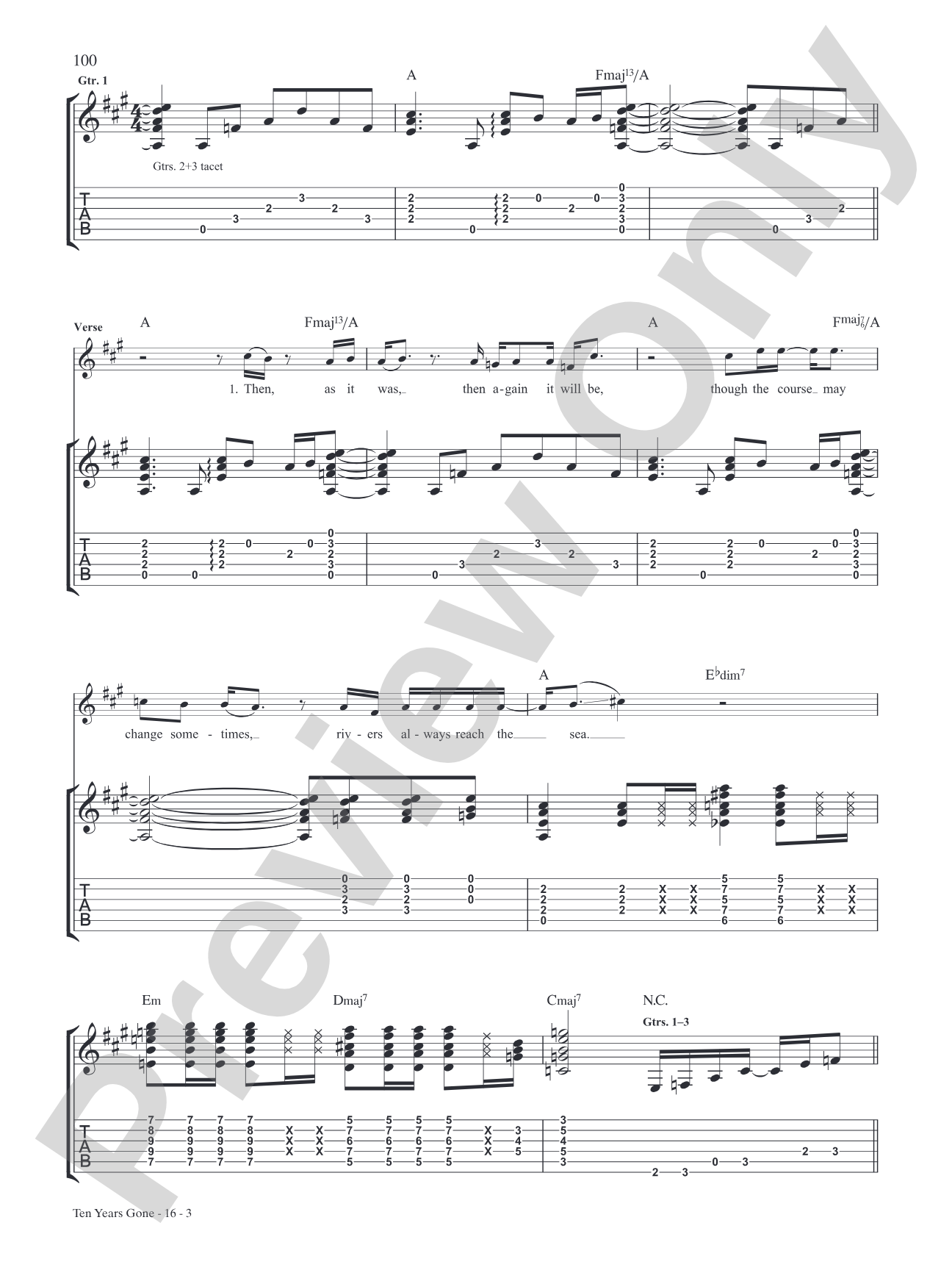
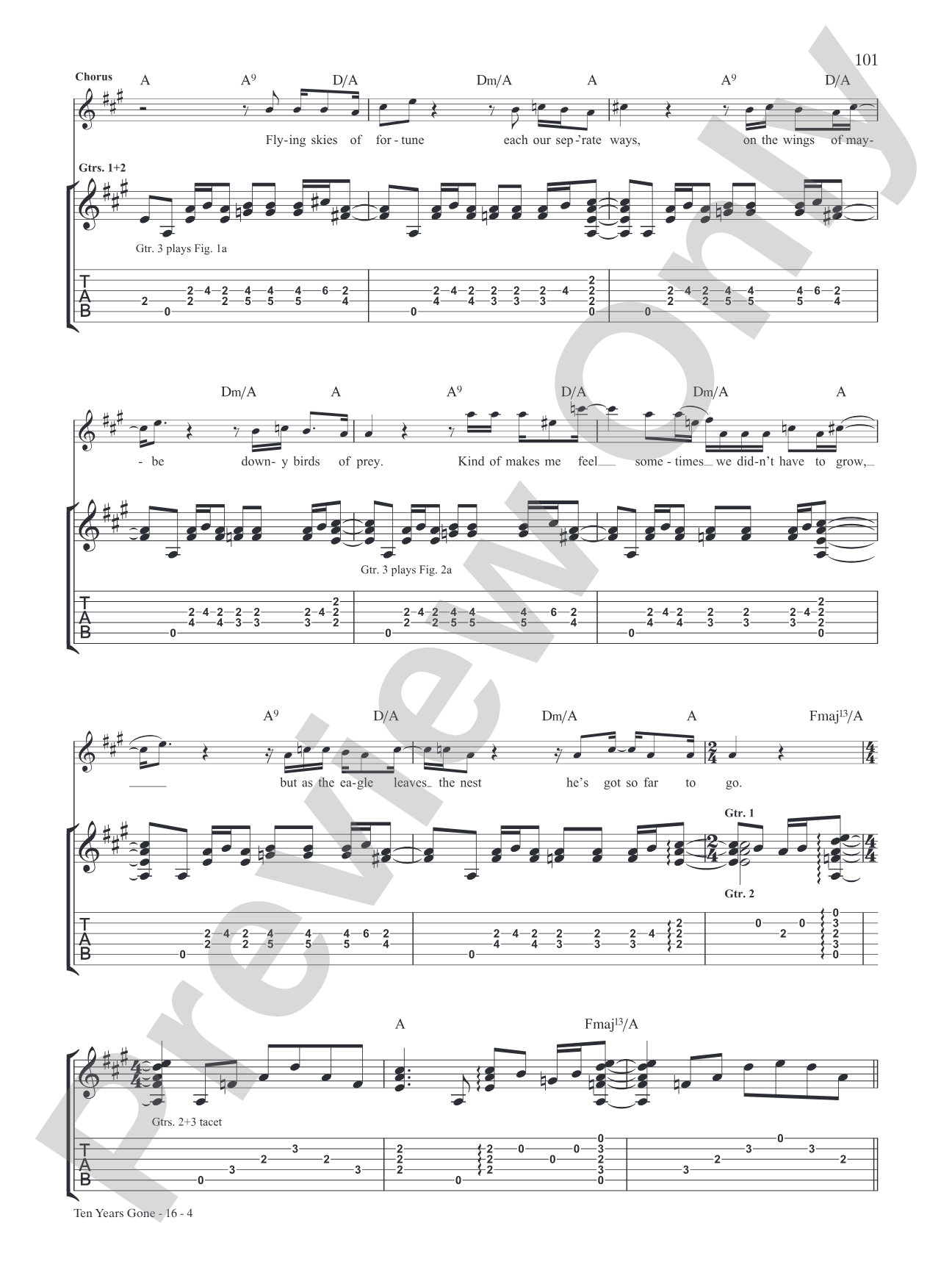

Ten Years Gone: Authentic Guitar TAB
Led Zeppelin
Item: 00-PS-0013729
$9.99
Pickup currently not available
Related Items
Custard Pie: Authentic Guitar TAB |
$4.99
|
View | |
The Rover: Authentic Guitar TAB |
$9.99
|
View | |
In My Time of Dying: Authentic Guitar TAB |
$9.99
|
View | |
Houses of the Holy: Authentic Guitar TAB |
$5.99
|
View | |
Kashmir: Authentic Guitar TAB |
$9.99
|
View | |
Trampled Under Foot: Authentic Guitar TAB |
$9.99
|
View | |
In the Light: Authentic Guitar TAB |
$9.99
|
View | |
Night Flight: Authentic Guitar TAB |
$5.99
|
View | |
Bron-Yr-Aur: Authentic Guitar TAB |
$4.99
|
View | |
Down by the Seaside: Authentic Guitar TAB |
$9.99
|
View | |
The Wanton Song: Authentic Guitar TAB |
$5.99
|
View | |
Black Country Woman: Authentic Guitar TAB |
$5.99
|
View | |
Sick Again: Authentic Guitar TAB |
$9.99
|
View | |
Boogie with Stu: Authentic Guitar TAB |
$5.99
|
View | |
Led Zeppelin: Physical Graffiti Platinum Album Edition: Drum Transcriptions Book |
$19.99
|
View | |
Led Zeppelin: Physical Graffiti Platinum Album Edition: Authentic Guitar TAB Book |
$24.99
|
View | |
Led Zeppelin: Physical Graffiti Platinum Album Edition: Authentic Bass TAB Book |
$19.99
|
View |
Description
Alfred Music, in association with Led Zeppelin, is proud to present this new Platinum Album Edition book. Drawn from more than 30 years of documentation, interviews, and recorded footage, these all-new transcriptions feature unprecedented accuracy and insight into the guitar style of Jimmy Page. With vintage Zeppelin photographs and a historical foreword by Guitar World magazine's editor-in-chief, Brad Tolinski, this book is a true collectible every fan must own. Titles: Custard Pie * The Rover * In My Time of Dying * Houses of the Holy * Trampled Under Foot * Kashmir * In the Light * Bron-Yr-Aur * Down by the Seaside * Ten Years Gone * Night Flight * The Wanton Song * Boogie with Stu * Black Country Woman * Sick Again.


Ten Years Gone: Authentic Guitar TAB isn't in MakeMusic Cloud just yet...but it could be. Let us know you'd like to see it, and you'll help shape what comes next. In the meantime, start a free trial and dive into thousands of interactive titles your students can play along with today.
Request This Title
Tell us you want it.
Start Your Free Trial
Explore everything that's ready to play right now.
Sample Audio
No sample audio found.
Sample Video
No sample videos found.
Additional Details
Series:
Alfred's Platinum Album Editions
Publisher:
Alfred Music
Page Count:
160
SKU:
00-PS-0013729
More about this title
About the Composer: Jimmy Page
Jimmy Page stands as one of rock's most influential and innovative guitarists. His work with Led Zeppelin across the 1970s fundamentally shaped hard rock, blues-rock, and heavy metal through his mastery of dynamics, studio production, and compositional vision. Page's ability to layer acoustic and electric textures, draw from folk and world music traditions, and craft arrangements that served the song rather than the ego set a standard that continues to influence guitarists across genres.
Why we love this
These transcriptions capture Page's playing with exceptional detail because they're drawn from decades of documentation and recorded material rather than ear alone. Serious guitar students finally have a reliable resource to study how one of rock's greatest voices actually constructed his parts, from the fingerstyle precision in acoustic passages to the layered overdubs and studio choices that defined Zeppelin's sound. The historical context and photographs make this as much a learning document as a playable collection.
What to expect
Opening this book, you encounter the swagger and mystery of 1970s rock at its peak. The arrangements shift between delicate fingerstyle passages, searing blues-rock riffs, and complex layered production, each one revealing Page's gift for balancing raw power with emotional restraint. These aren't transcriptions of simple songs; they're windows into a master craftsperson's process.
Who it's for
This is for guitarists with intermediate to advanced reading and playing skills who want to understand how Led Zeppelin's iconic songs were actually constructed. Whether you're a student of rock history, a player preparing covers, or someone working to deepen your technical and stylistic knowledge, these transcriptions offer insight into one of rock's most consequential voices.
How to get the most out of it
- Study the original recordings alongside the tab to understand Page's use of open tunings and alternate tunings; many of these songs employ non-standard setups that shape the character of each piece.
- Pay attention to dynamics and space rather than speed. Page's style emphasizes restrained playing and strategic silence as much as technical virtuosity; rushing through passages defeats the point.
- Recognize that some pieces layer multiple guitar parts; decide whether you're learning the main riff, a harmony line, or attempting a fuller arrangement, and adjust your approach accordingly.
- Work with headphones and slow down the tempo on the original recordings to hear the nuances in tone, bending, and rhythm that tab alone cannot convey.
How to use it
Private guitar instructors can use individual transcriptions to explore specific technical or stylistic concepts with advanced students; assigning "Kashmir" to study modal harmony and atmosphere or "Ten Years Gone" to work on fingerstyle control and arrangement thinking offers real musical payoff. Ensemble programs might draw on simpler pieces for group performance, while solo performers have fifteen substantial arrangements to choose from based on their current abilities and interests.
Skills your students will build
- Reading and interpreting guitar tab with accuracy
- Understanding alternate and open tunings
- Fingerstyle technique and coordination between bass notes and melody
- Dynamics and tone control across electric and acoustic styles
- Recognizing and executing layered guitar arrangements
- Blues and rock rhythmic phrasing and timing