Technic Today, Part 2 Cover Image

Technic Today, Part 2: Auxiliary Percussion (Tambourine, Wood Block, Triangle, Claves, Maracas, Suspended Cymbal & Sleigh Bells) Book

$6.99 USD
Sale price  $6.99 USD Regular price 
Skip to product information
Technic Today, Part 2 Cover Image

Technic Today, Part 2: Auxiliary Percussion (Tambourine, Wood Block, Triangle, Claves, Maracas, Suspended Cymbal & Sleigh Bells) Book

A Supplementary Technic Book

By James D. Ployhar

Item: 00-CBC00188

$6.99
Shipped

One moment…

Description
Technic Today, Part Two is a companion book designed to reinforce the technical aspect of the basic method Band Today, Part Two, of the Contemporary Band Course. The natural progression of the materials makes Technic Today an ideal supplement to any intermediate band method.

Technic Today, Part 2: Auxiliary Percussion (Tambourine, Wood Block, Triangle, Claves, Maracas, Suspended Cymbal & Sleigh Bells) Book isn't in MakeMusic Cloud just yet...but it could be. Let us know you'd like to see it, and you'll help shape what comes next. In the meantime, start a free trial and dive into thousands of interactive titles your students can play along with today.

Sample Pages

No sample pages found.

Sample Audio
No sample audio found.
Sample Video
Additional Details
Series: Contemporary Band Course
Publisher: Alfred Music
Page Count: 24
ISBN10: 0-7579-2558-8
ISBN13: 978-0-7579-2558-0
UPC: 029156631234
SKU: 00-CBC00188
Instrumentation: Auxiliary Percussion (Tambourine, Wood Block, Triangle, Claves, Maracas, Suspended Cymbal & Sleigh Bells)

More about this title

About the Author: James D. Ployhar
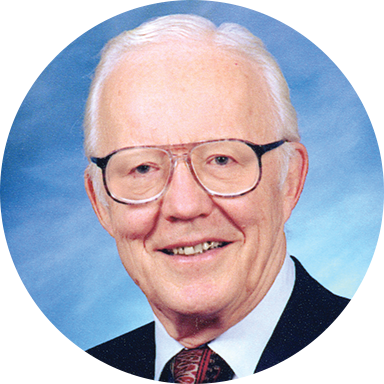
James D. Ployhar

James D. Ployhar has established himself as a prolific voice in music education, with more than 800 published works to his name. His authorship of the Contemporary Band Course, now published by Alfred Music, has shaped instrumental pedagogy across multiple continents; the series has been translated into French and Norwegian and remains in active use throughout Norwegian schools. Beyond composition, Ployhar brings deep training in orchestration developed through study with Knud Havalde of the Danish Royal Philharmonic Orchestra, informing his ability to write idiomatically for young ensembles.

Plyohar's thirty-year career spans both public school teaching and higher education, with extensive clinic and conducting appearances across the United States, Canada, and Europe. His academic preparation includes a BS from Valley City State University, an MA from Northern Colorado University, and graduate composition study at California State University-Long Beach. He is a recipient of the National Band Association Citation of Excellence and the Distinguished Alumnus Award from his undergraduate institution, and serves as a member of the American Bandmasters Association.

Why we love this

Ployhar wrote this book with full understanding of how young percussionists actually develop facility on auxiliary instruments, layering technique within contexts that sound musical from day one. The exercises progress logically without the disconnected feel of pure technical drills, making it genuinely useful as a reinforcement tool alongside Band Today rather than something students resent practicing.

What to expect

These exercises feel purposeful rather than mechanical. Ployhar structures each piece so students engage musically while refining stroke clarity, tone production, and rhythmic precision on tambourine, wood block, triangle, claves, maracas, suspended cymbal, and sleigh bells.

Who it's for

Intermediate band programs using Band Today, Part Two or any curriculum at the same level who need focused technical work on non-pitched percussion. This book serves percussionists in grades 5-8 who have mastered basic mallet control and are ready to develop independence and accuracy across a wider palette of instruments.

How to get the most out of it

  • Establish consistent grip and posture for each instrument before running through a full page; students often rush into exercises with sloppy technique that then becomes habit.
  • Isolate any rhythm patterns that appear across multiple instruments first, then layer in the specific stroke technique for that percussion voice.
  • Assign one student per part and rotate through the ensemble so every percussionist encounters all six instruments; this prevents specialization too early and builds versatility.
  • Use a practice metronome at tempos slightly slower than marked to lock articulation and tone quality before pushing for speed.

How to use it

Use this book as a parallel track to your main method text, assigning one or two pages weekly during sectional rehearsal. The 24-page length makes it ideal for a full semester of supplementary work without overwhelming students, and it pairs naturally with any concert repertoire requiring auxiliary percussion.

Skills your students will build

  • Proper grip and stroke technique for each individual percussion instrument
  • Reading rhythmic notation specific to non-pitched percussion voices
  • Controlling dynamics and tone quality across different mallets and beaters
  • Executing rhythmic patterns with consistent articulation and precision
  • Building independence on auxiliary parts while listening to harmonic context

You May Also Like