
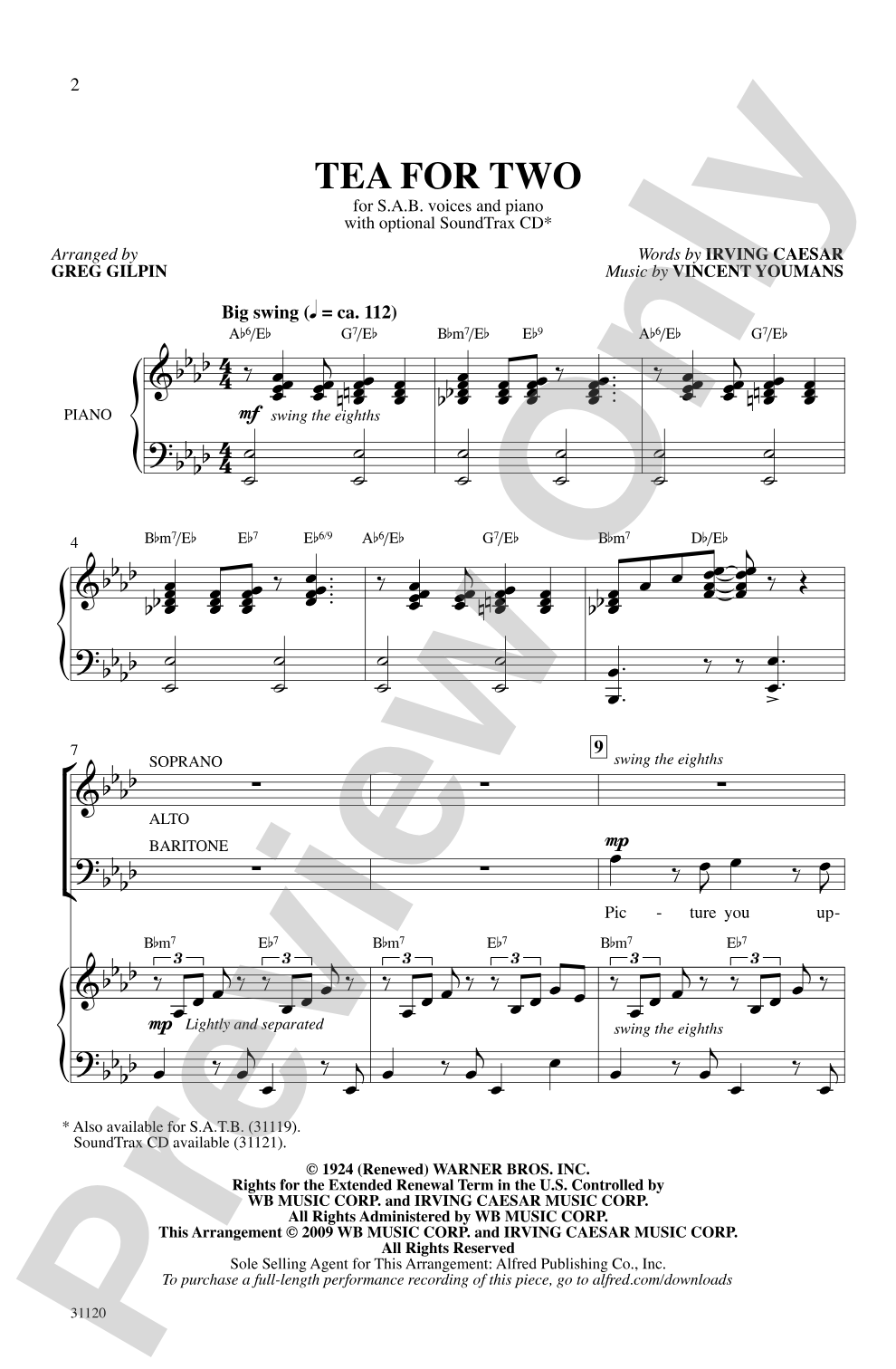
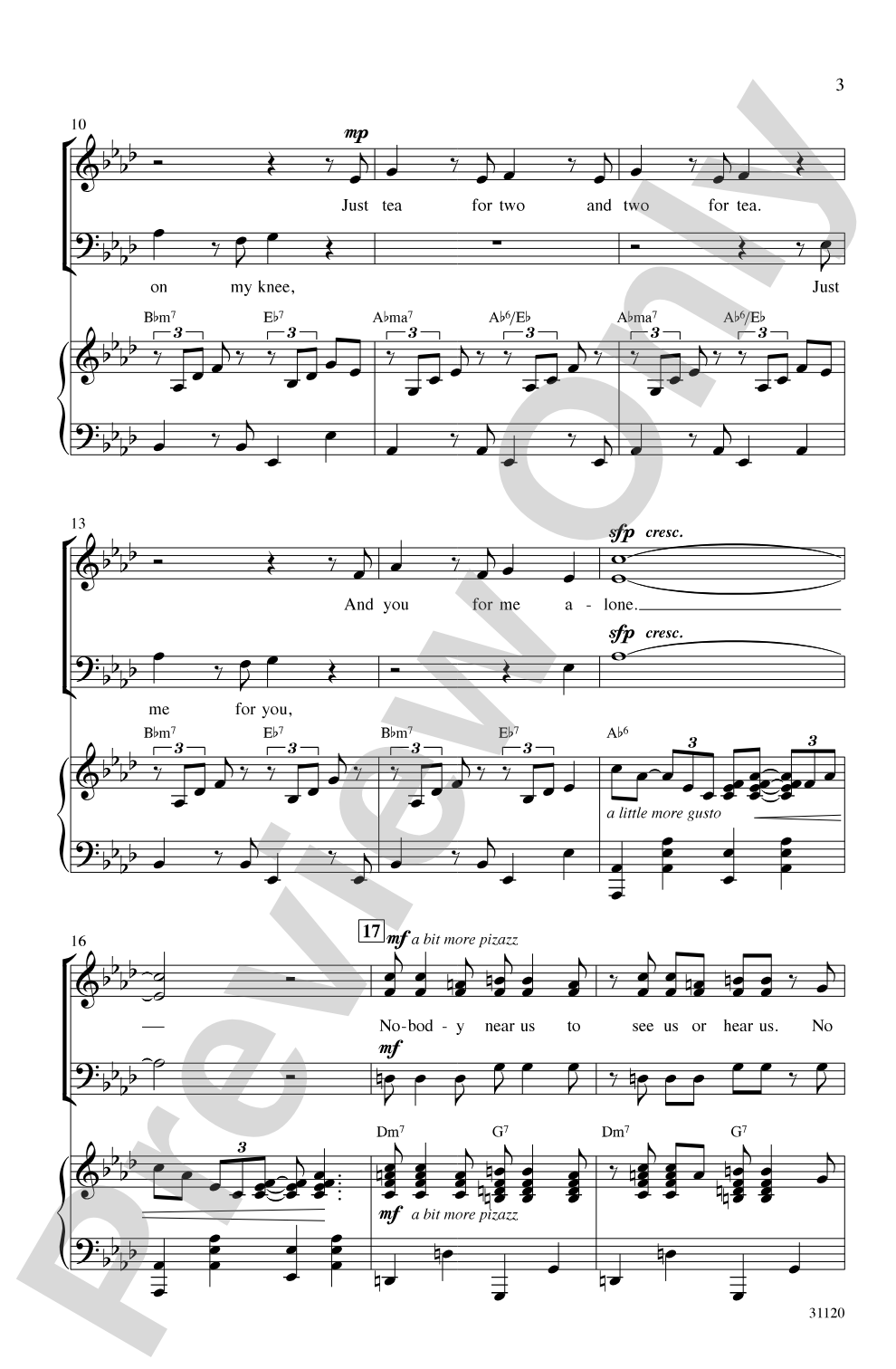

Tea for Two: SAB Choral Octavo
From the Musical No, No, Nannette
Words by Irving Caesar, music by Vincent Youmans / arr. Greg Gilpin
Item: 00-PO-0008004
$1.85
Minimum order quantity: 20 copies
Pickup currently not available
Description
The ultimate soft shoe song has been given novel twists and turns galore! This theme-and-variations arrangement includes the traditional soft shoe, a waltz, a jazz waltz, and a soap opera theme treatment! Perfect for your "novelty" slot in the concert.


Tea for Two: SAB Choral Octavo isn't in MakeMusic Cloud just yet...but it could be. Let us know you'd like to see it, and you'll help shape what comes next. In the meantime, start a free trial and dive into thousands of interactive titles your students can play along with today.
Request This Title
Tell us you want it.
Start Your Free Trial
Explore everything that's ready to play right now.
Sample Audio
1
Audio File
--:--
0:00
0:00
Sample Video
No sample videos found.
Additional Details
Series:
Alfred Pop Choral Series
Publisher:
Alfred Music
Page Count:
12
SKU:
00-PO-0008004
More about this title
About the Composer: Vincent Youmans
Vincent Youmans (1898-1946) was a Broadway composer who brought melodic sophistication and harmonic innovation to American musical theater during the 1920s. His gift for crafting instantly memorable songs that could also sustain elaborate arrangements made him a favorite among music directors for decades after his death, and "Tea for Two" remains one of his most frequently performed and reimagined compositions.
Youmans understood what made a song durable: a strong, singable melody paired with enough harmonic interest to support creative reinterpretation. His work shaped how American popular music could function simultaneously as entertainment and as a vehicle for musical growth.
Why we love this
Greg Gilpin's treatment transforms a single standard into four distinct musical experiences without losing what makes the original beloved. The progression from soft shoe simplicity through waltz, jazz waltz, and soap opera parody gives your singers variety while keeping technical demands reasonable, and the novelty aspect practically programs itself as a concert highlight that audiences anticipate.
What to expect
You move through a musical storybook in under five minutes. The opening invites you into familiar, comfortable territory before spinning off into waltzing sophistication, then swinging jazz energy, then pure comedic melodrama. Each section feels like its own small world while the melody keeps them all connected.
Who it's for
Choral directors looking to program something entertaining that doesn't require a large ensemble and works as a tonal palate cleanser in concerts. Intermediate to advanced singers who can handle stylistic shifts and appreciate musical humor will find this rewarding.
How to get the most out of it
- Establish the soft shoe groove early by having the rhythm section lock in the laid-back feel before full ensemble entrance; this style sets the tone for everything that follows.
- Shape the transition into the waltz with a clear ritardando so the meter shift lands decisively rather than feeling abrupt.
- Bring out the jazz waltz's swing character through rhythmic articulation and lighter vowels; let the rhythm section drive the pocket here.
- Make the soap opera treatment intentionally theatrical; this section rewards over-the-top expression and should feel like a wink to the audience.
How to use it
This belongs in that critical moment after a set of serious repertoire when you need to reset the room's energy and give your singers a chance to show personality. It pairs well on programs that mix classical work with contemporary or pops selections, and it's substantial enough to command respect despite its novelty angle.
Skills your students will build
- Executing stylistic shifts within a single piece (soft shoe, waltz, swing, dramatic)
- Singing jazz articulation and swing rhythms in a waltz context
- Maintaining intonation across harmonic density changes
- Communicating character and mood through vocal tone and phrasing adjustments
- Collaborating with recorded accompaniment in multiple tempos and feels