
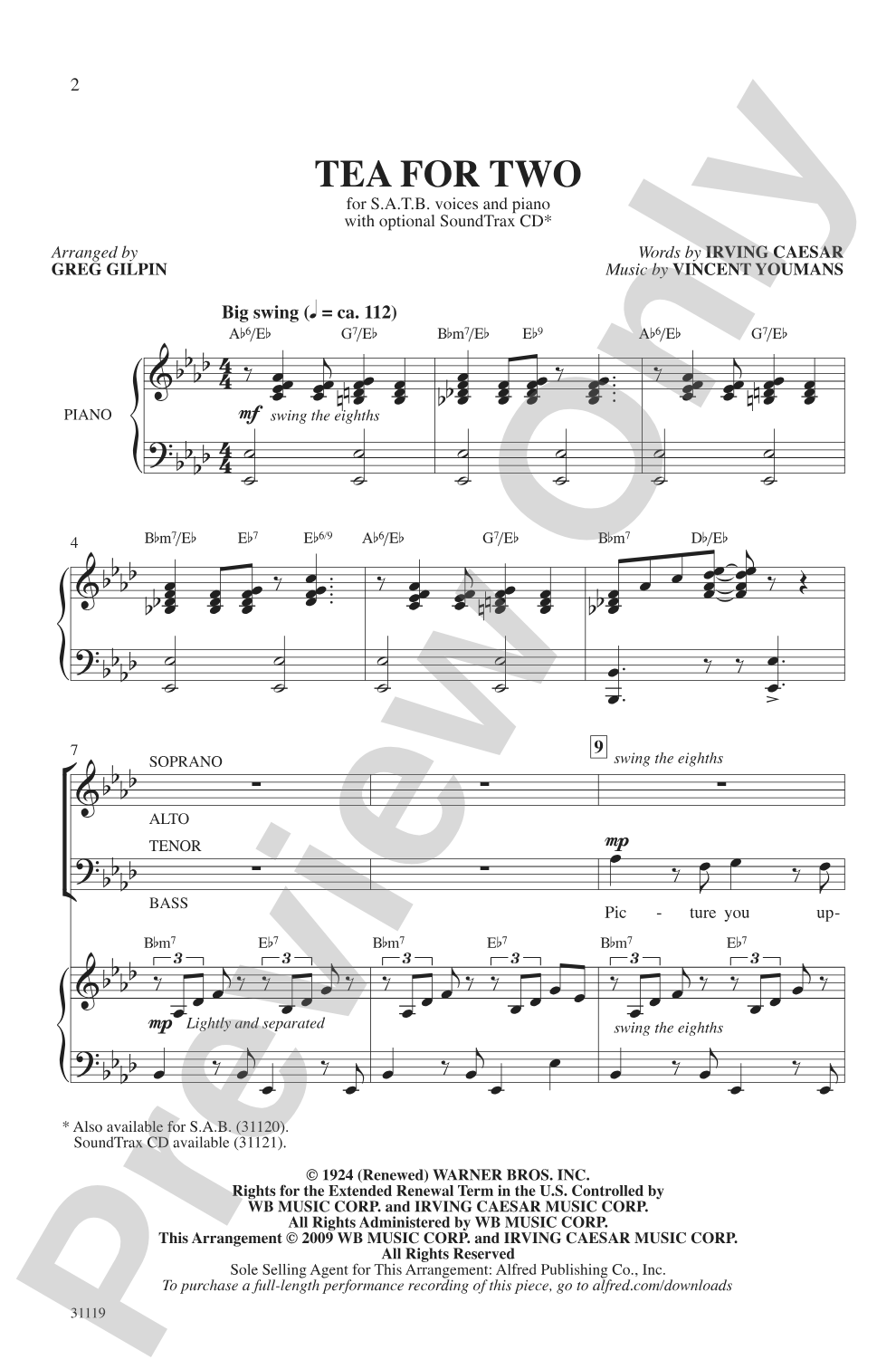

Tea for Two: SATB Choral Octavo
From the Musical No, No, Nannette
Words by Irving Caesar, music by Vincent Youmans / arr. Greg Gilpin
Item: 00-PO-0007711
$2.10
Minimum order quantity: 20 copies
Pickup currently not available
Description
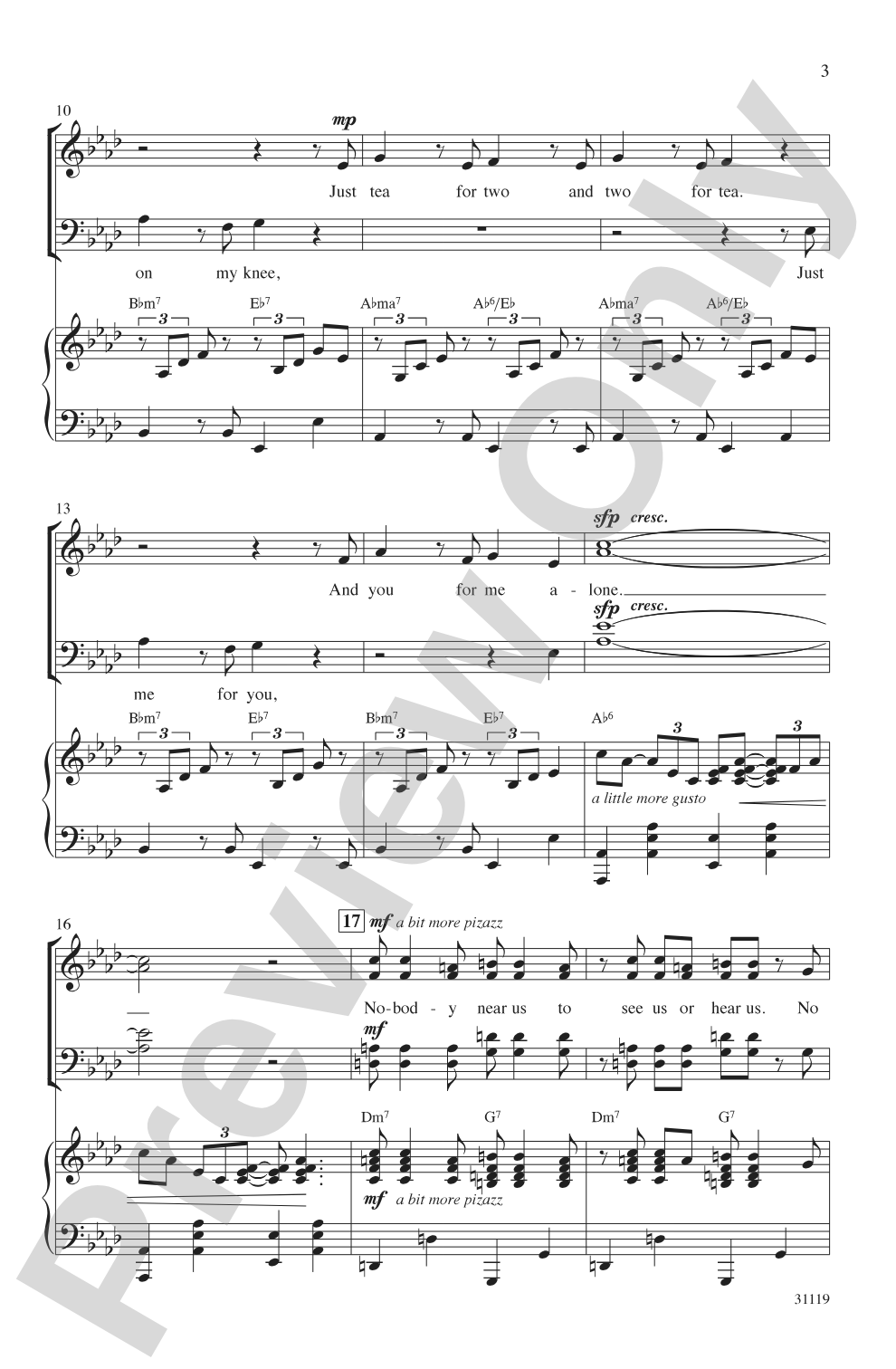
The ultimate soft shoe song has been given novel twists and turns galore! This theme-and-variations arrangement includes the traditional soft shoe, a waltz, a jazz waltz, and a soap opera theme treatment! Perfect for your "novelty" slot in the concert.


Tea for Two: SATB Choral Octavo isn't in MakeMusic Cloud just yet...but it could be. Let us know you'd like to see it, and you'll help shape what comes next. In the meantime, start a free trial and dive into thousands of interactive titles your students can play along with today.
Request This Title
Tell us you want it.
Start Your Free Trial
Explore everything that's ready to play right now.
Sample Audio
1
Audio File
--:--
0:00
0:00
Sample Video
No sample videos found.
Additional Details
Series:
Alfred Pop Choral Series
Publisher:
Alfred Music
Page Count:
12
SKU:
00-PO-0007711
More about this title
About the Composer: Vincent Youmans
Vincent Youmans (1898, 1946) was one of Broadway's most prolific composers during the 1920s and 1930s, creating scores that balanced sophisticated harmony with infectious melodies. He had a gift for writing songs that became standards, including "Tea for Two" from the 1924 musical "No, No, Nanette," which remains one of the most recorded compositions in American music.
Youmans' work shaped how America heard jazz and popular music during the interwar years. His compositions are prized by choral arrangers for their flexibility; they sit naturally in voices and respond well to creative reinterpretation, making them ideal for educational settings where singers develop both technique and musical personality.
Why we love this
Greg Gilpin's treatment here respects the melody's timeless appeal while giving your choir genuine entertainment value on stage. The theme-and-variations structure lets singers inhabit different musical worlds (soft shoe, waltz, jazz waltz, soap opera parody) without losing the core tune, and each variation plays to what choirs do well: blend, precision, and style.
What to expect
Nostalgic and playful in equal measure. The familiar "Tea for Two" melody grounds every variation, so listeners recognize and enjoy the familiar even as Gilpin transforms it. You get the warmth of a classic Broadway tune refracted through modern choral writing that feels fresh and clever.
Who it's for
Choirs seeking a crowd-pleasing novelty piece that showcases musicianship and humor in equal measure. This works for show choirs, community choirs, and concert choirs wanting to program something contemporary and surprising without stepping away from a beloved standard.
How to get the most out of it
- Balance the melody clearly across sections so the variations read as intentional shifts in character rather than chaos; think of each treatment as a distinct snapshot, not a blur.
- Use the recorded accompaniment to lock the rhythmic feel, especially in the jazz waltz section where swing and waltz rhythms demand precision.
- Shape each variation's dynamic arc independently. The soap opera theme thrives on exaggerated expression; the traditional soft shoe rewards restraint and elegance.
- Pay attention to articulation changes between sections. Crisp consonants in the up-tempo passages; sustained legato in the waltz.
How to use it
This earns its place as the novelty number on a mixed concert, breaking up a program of serious work with genuine wit. Pair it with other American classics or use it to transition between a formal first half and a lighter second half. At 12 pages, it's substantial enough to showcase your ensemble's range without monopolizing rehearsal time.
Skills your students will build
- Shifting between contrasting meters and rhythmic feels (waltz, swing, standard 4/4)
- Maintaining a consistent melody while adapting tone and articulation to suit different styles
- Ensemble blend and balance across multiple textural variations
- Rhythmic precision in jazz waltz and swing-influenced passages
- Expressive interpretation and character work in parody/novelty contexts