Take the "A" Train Cover Image

Take the "A" Train: String Orchestra Conductor Score

$9.00 USD
Sale price  $9.00 USD Regular price 
Skip to product information
Take the "A" Train Cover Image

Take the "A" Train: String Orchestra Conductor Score

As recorded by Glenn Miller

Words and music by Billy Strayhorn / arr. Victor López

Grade: 3

Item: 00-41207S

$9.00
Shipped

One moment…

Description
Enjoy one of the masterpieces of jazz in this dynamic arrangement! This tune provides plenty of opportunity to teach swing eighths in contrast to straight.

Take the "A" Train: String Orchestra Conductor Score isn't in MakeMusic Cloud just yet...but it could be. Let us know you'd like to see it, and you'll help shape what comes next. In the meantime, start a free trial and dive into thousands of interactive titles your students can play along with today.

Sample Pages

Sample Audio
0:00
0:00
Sample Video
Additional Details
Series: Pop Intermediate String Orchestra
Publisher: Alfred Music
Page Count: 8
UPC: 038081471891
SKU: 00-41207S

More about this title

About the Composer: Billy Strayhorn
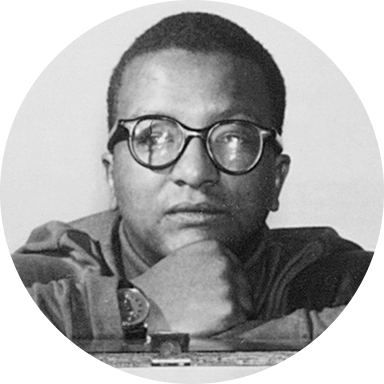
Billy Strayhorn

Billy Strayhorn (1915-1967) emerged as one of the defining voices in jazz composition, though his contributions remained largely uncredited during his lifetime. Born in Dayton, Ohio, Strayhorn began his partnership with Duke Ellington in 1939, a collaboration that would shape the sound of American jazz for decades. His harmonic sophistication and melodic gift produced some of the era's most enduring standards, from "Take the 'A' Train" to "Lush Life," works that continue to challenge and inspire musicians across all genres.

Strayhorn's decision to live openly as a gay Black man during an era of profound social restriction contributed to decades of public obscurity, even as his music became ubiquitous in jazz performance and recording. Yet his influence speaks volumes: countless jazz artists from Ella Fitzgerald to John Coltrane to Sarah Vaughan have recorded his compositions. Historians now recognize Strayhorn as one of America's most significant composers, a figure whose harmonic innovation and emotional depth elevated jazz composition to an art form that demanded serious musical and intellectual engagement.

Why we love this

Victor López's arrangement captures the infectious energy and sophisticated harmonies of this jazz standard while making it genuinely playable for young string players. The score balances authentic swing feel with clear pedagogical value, giving students a chance to experience a real jazz composition rather than a simplified imitation. Programming this puts your ensemble in direct conversation with one of the most important works in American music history.

What to expect

Upbeat and sophisticated, with the casual glamour of 1940s Harlem embedded in every phrase. The tune has an infectious forward motion that makes students want to move and play with energy, yet beneath that drive sits clever harmonic movement that rewards careful listening and musicianship.

Who it's for

String orchestra conductors teaching Grade 3 ensembles ready to tackle authentic jazz repertoire with serious musical intent. This score works well for programs introducing students to swing style and the harmonic vocabulary of jazz standards without requiring them to improvise or perform at an advanced technical level.

How to get the most out of it

  • Establish the swing eighth feel clearly in the first rehearsal by singing or playing the rhythm before attempting it with pitch. Have students listen to the original Duke Ellington recording to internalize the laid-back, behind-the-beat interpretation that defines this tune.
  • Balance the contrast between straight rhythms (where they appear) and swing eighths by rehearsing these sections separately, then combining them. This precision makes the arrangement pedagogically powerful rather than confusing.
  • Shape the phrasing with attention to dynamics marked in the score. The opening statement should feel casual and confident, not metronomic.
  • Lock the rhythm section early and give them confidence. Once the bass and any internal accompaniment voices establish a steady pocket, the melody section will find the swing feel more naturally.

How to use it

Program this as a bridge between classical and contemporary repertoire, especially effective on a concert that explores American music or introduces jazz idioms. The eight-page score makes it manageable for mid-season programming, and its cultural significance and accessibility make it an ideal teaching moment about how serious composers work within popular forms.

Skills your students will build

  • Swing eighth feel and the relationship between straight and swung rhythms
  • Interpretation of jazz articulation and phrasing conventions
  • Listening to and performing from a jazz composition with authentic harmonic language
  • Ensemble cohesion and balance when layering melody with harmonic accompaniment
  • Understanding the cultural and historical context of an American standard

You May Also Like