
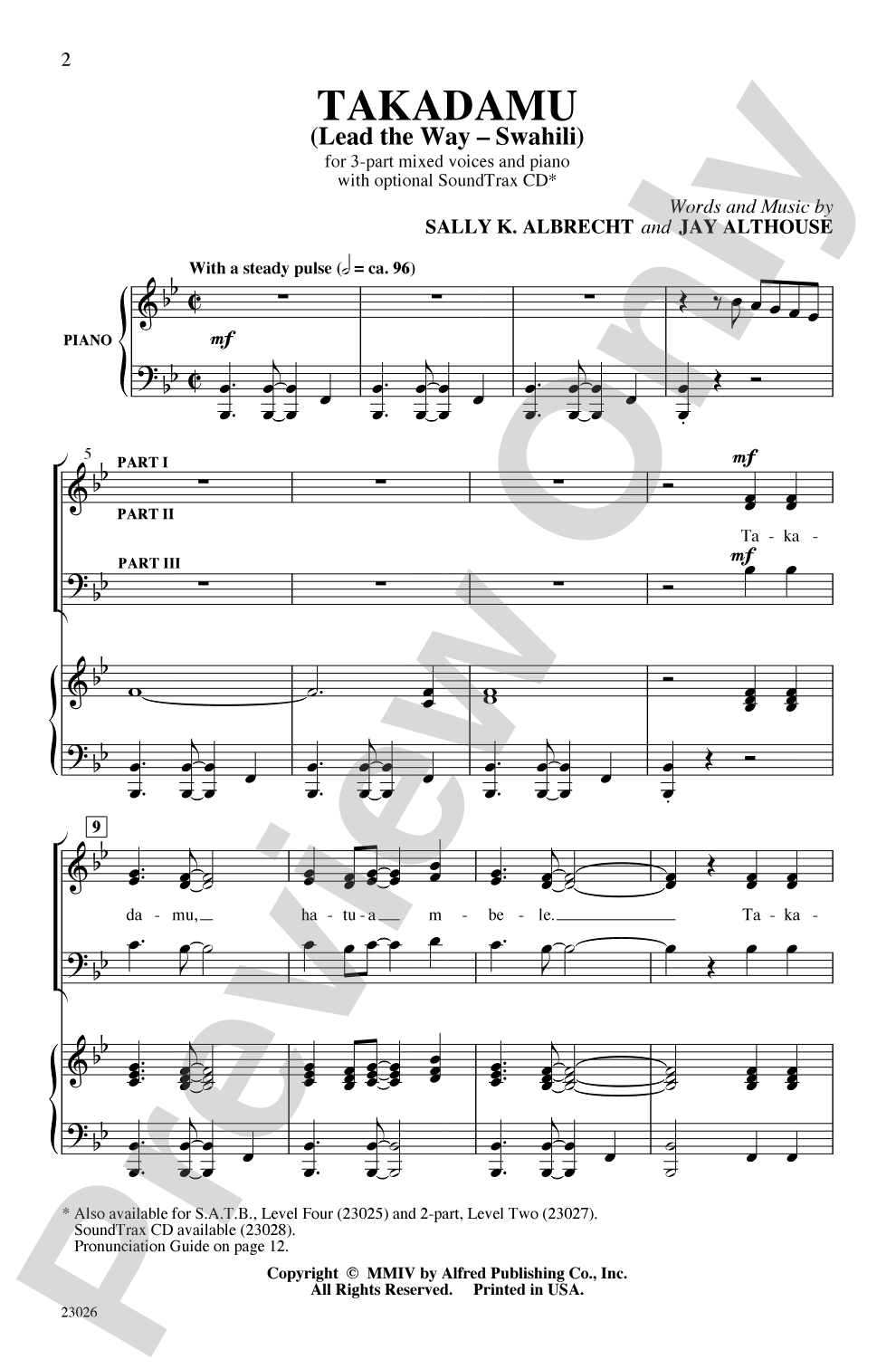

Takadamu: 3-Part Choral Octavo
(Lead the Way -- Swahili)
Music by Sally K. Albrecht and Jay Althouse
Item: 00-PO-0007952
$1.65
Minimum order quantity: 20 copies
Pickup currently not available
Description
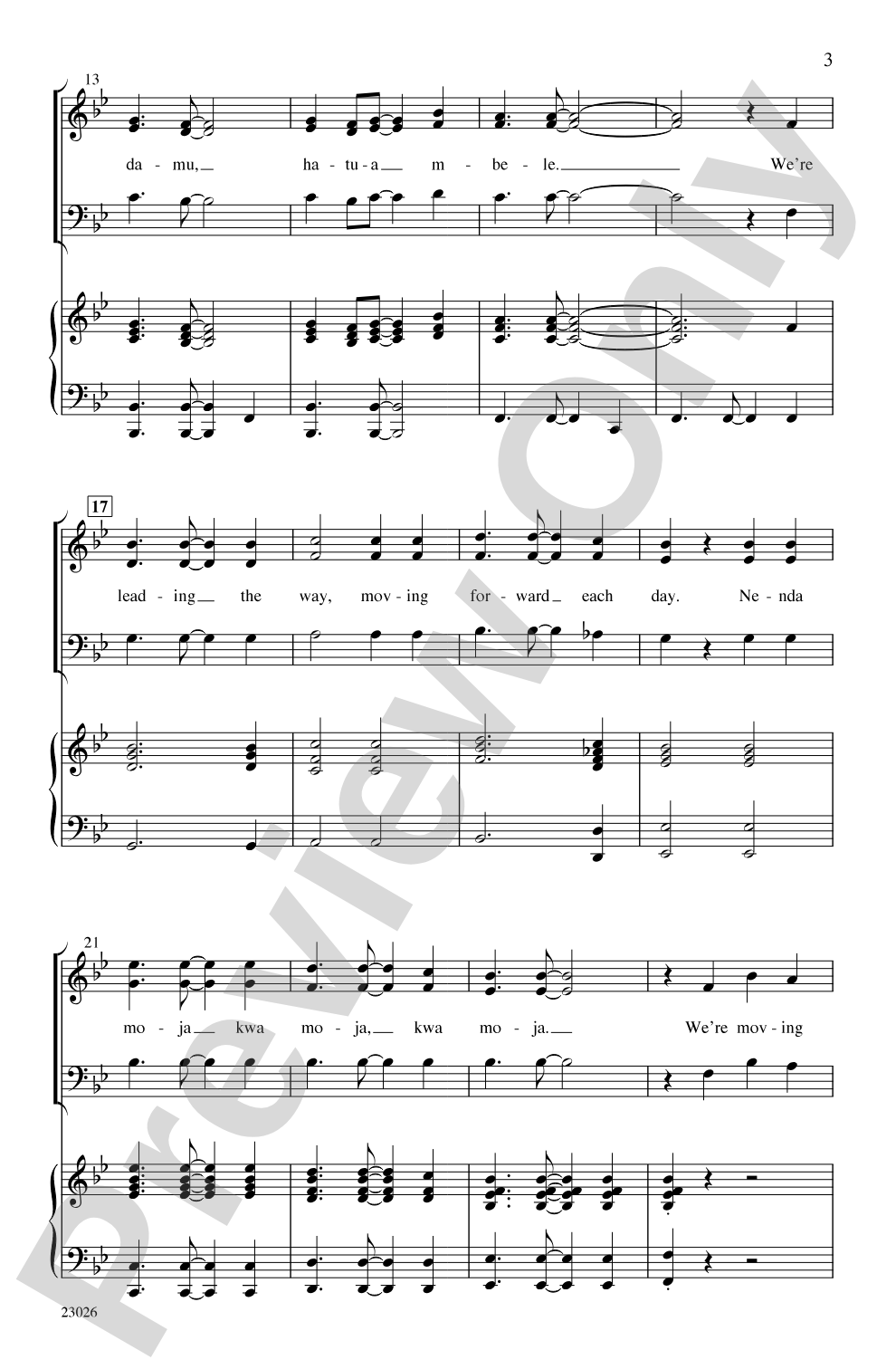
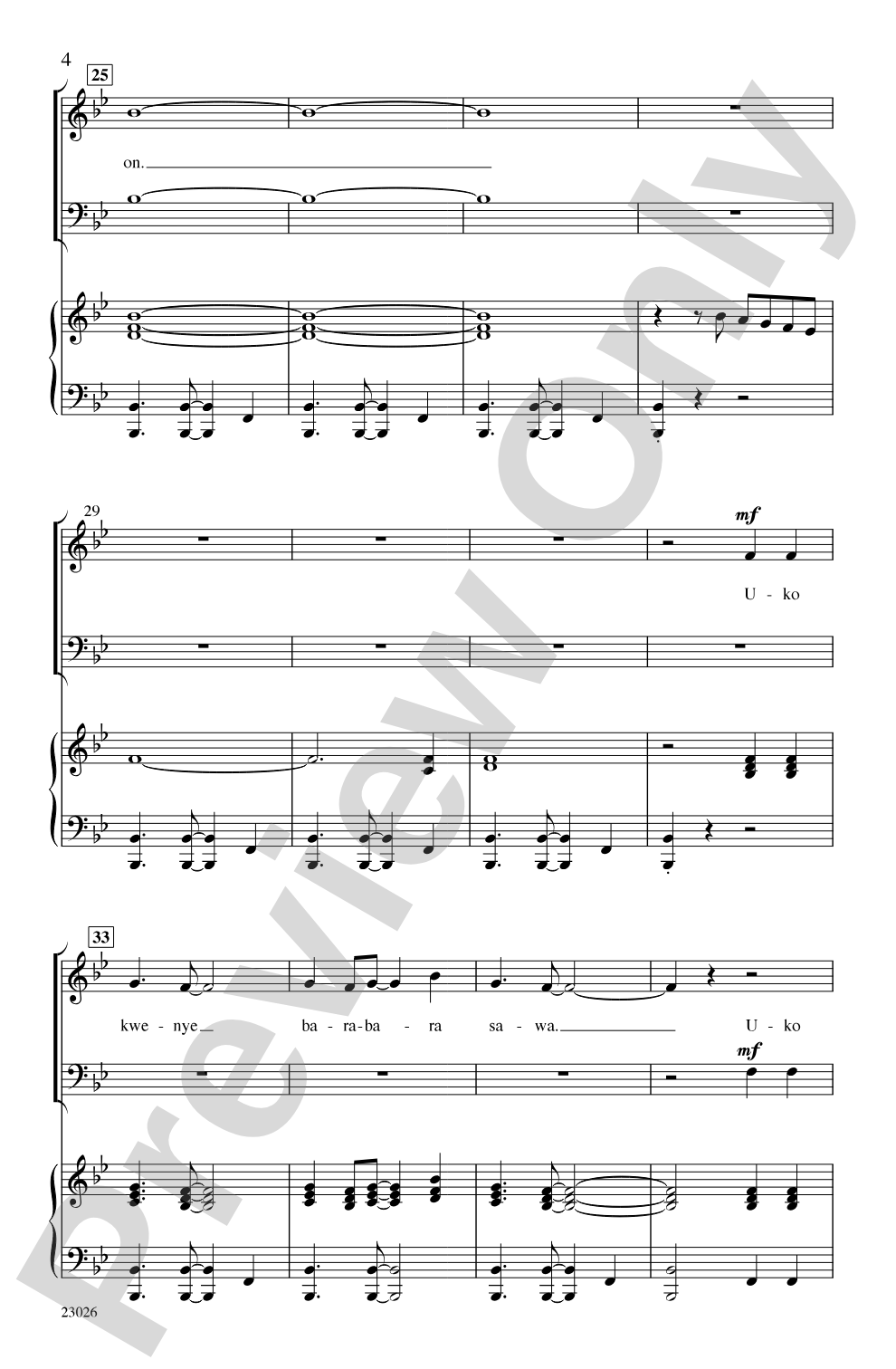
Five easy Swahili phrases are followed by their English equivalents in this pulsating piece which teaches the importance of traveling life's road "step by step." The rhythms are infectious and the harmonies are traditional. A phonetic pronunciation guide and literal translation are included in the publication, and the optional SoundTrax CD sounds authentic, with real African instruments. Featured on the new staging DVD/Video "On the Stage!" (DVD #23037, Video #23129).


Takadamu: 3-Part Choral Octavo isn't in MakeMusic Cloud just yet...but it could be. Let us know you'd like to see it, and you'll help shape what comes next. In the meantime, start a free trial and dive into thousands of interactive titles your students can play along with today.
Request This Title
Tell us you want it.
Start Your Free Trial
Explore everything that's ready to play right now.
Sample Audio
1
Audio File
--:--
0:00
0:00
Sample Video
No sample videos found.
Additional Details
Series:
Alfred Choral Designs
Publisher:
Alfred Music
Page Count:
12
SKU:
00-PO-0007952
More about this title
About the Composer: Sally K. Albrecht
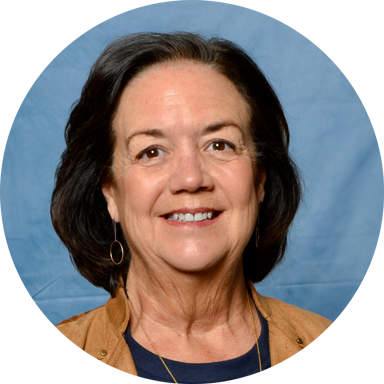
Sally K. Albrecht brings three decades of publishing leadership and choral innovation to her work as composer and clinician. Her catalog exceeds 600 choral publications alongside 75 musicals and songbooks, supported by consistent ASCAP recognition since 1987. She has guest conducted honor choirs at major venues including Lincoln Center, Carnegie Hall, and The Kennedy Center, and previously directed school choral and vocal publications for Alfred Music and another major educational publisher.
Albrecht holds degrees from Rollins College (B.A. in Music and Theater, 1976), the University of Miami (M.A. in Drama, 1977; M.M. in Accompanying, 1979), and has taught in university music departments across Michigan, New Jersey, and North Carolina. She received the Distinguished Alumna Award from both Rollins College and the University of Miami Frost School of Music in 2021, and served as Chair of the Board of Trustees for Omicron Delta Kappa National Leadership Honor Society. She and her collaborator husband, composer Jay Althouse, live in Wake Forest, North Carolina.
Why we love this
Albrecht and Althouse crafted something genuinely useful here: a piece that teaches cultural literacy through melody and rhythm rather than talking at students. The infectious grooves and straightforward three-part voicing mean your singers can focus on getting the Swahili right and moving confidently, rather than wrestling with complex harmony. Programming it alongside holiday concerts or brotherhood-themed services gives weight to the message about journeying step by step.
What to expect
Grounded and celebratory. The piece carries the steady forward motion its text promises, with harmonies that feel warm rather than complex. Real African instruments in the accompaniment create an atmosphere of authenticity and travel, pulling the choir into a different musical landscape.
Who it's for
Young choirs ready to explore music beyond the Western classical tradition. The SAB voicing and approachable harmony work for middle school and early high school singers, while the cultural content makes it equally valuable for music classes and assembly performances.
How to get the most out of it
- Spend rehearsal time with the phonetic guide before expecting clean diction. Swahili pronunciation rewards careful listening and repetition, and students will feel more invested once they own the phrases.
- Let the recorded accompaniment drive your sectional rehearsals. The authentic African instrumentation gives context that a piano can't match, and hearing real percussion patterns helps singers lock into the piece's pulse.
- Pair staging with the music from day one. This piece was designed with movement in mind, and even simple swaying or walking in place transforms how the choir experiences the rhythm and message.
How to use it
Consider this for winter concerts where you want to broaden your program's cultural reach without asking students to perform in unfamiliar registers or demanding arrangements. It also makes a natural fit for graduation or peace-themed services, where the metaphor of walking life's road step by step resonates with audience and singers alike.
Skills your students will build
- Singing in non-English languages with attention to authentic pronunciation
- Interpreting and performing African musical traditions and rhythmic patterns
- Coordinating singing with staged movement and choreography
- Building confidence with percussion-driven accompaniment textures
- Understanding and celebrating cultural diversity through choral repertoire