
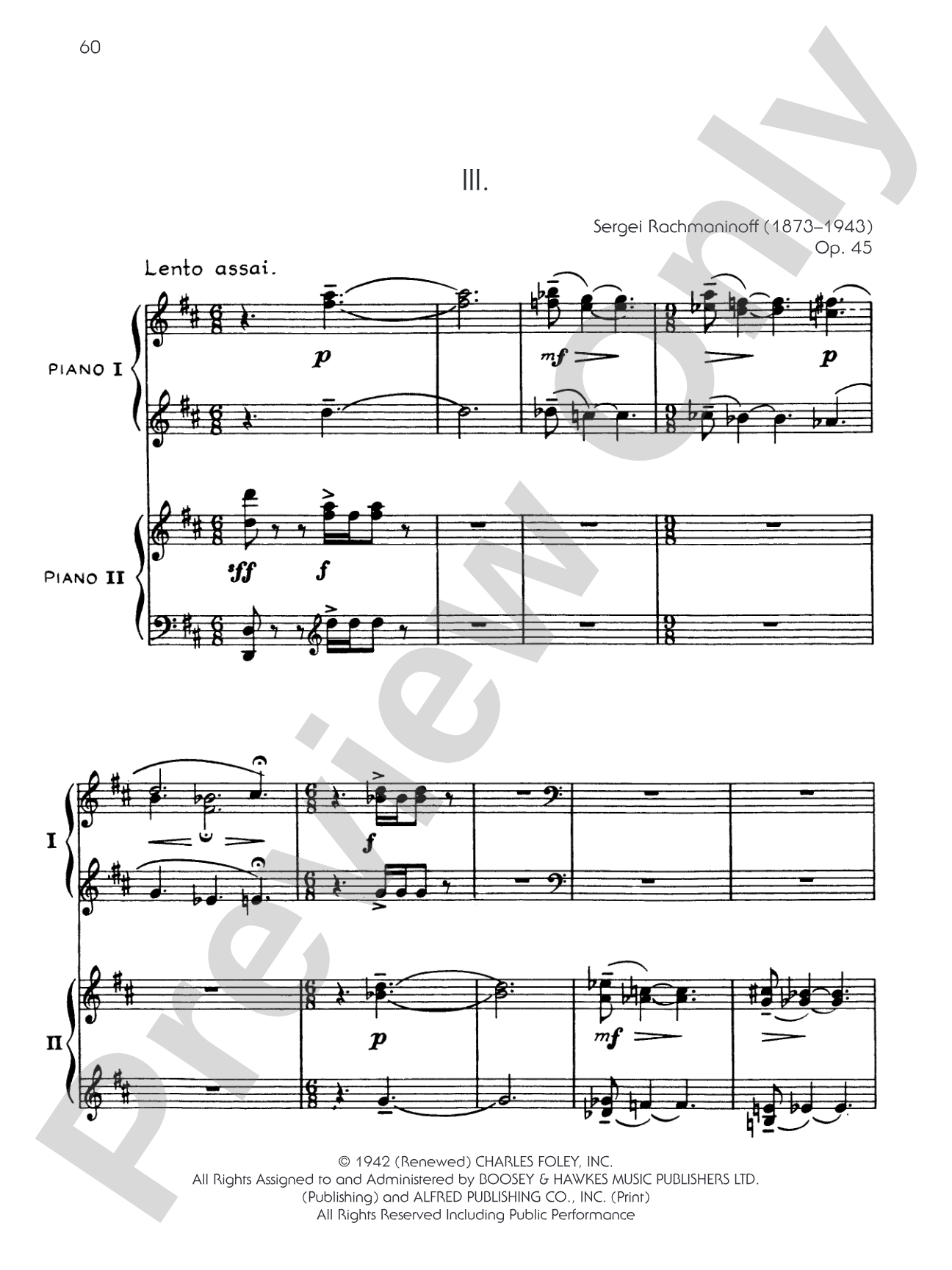
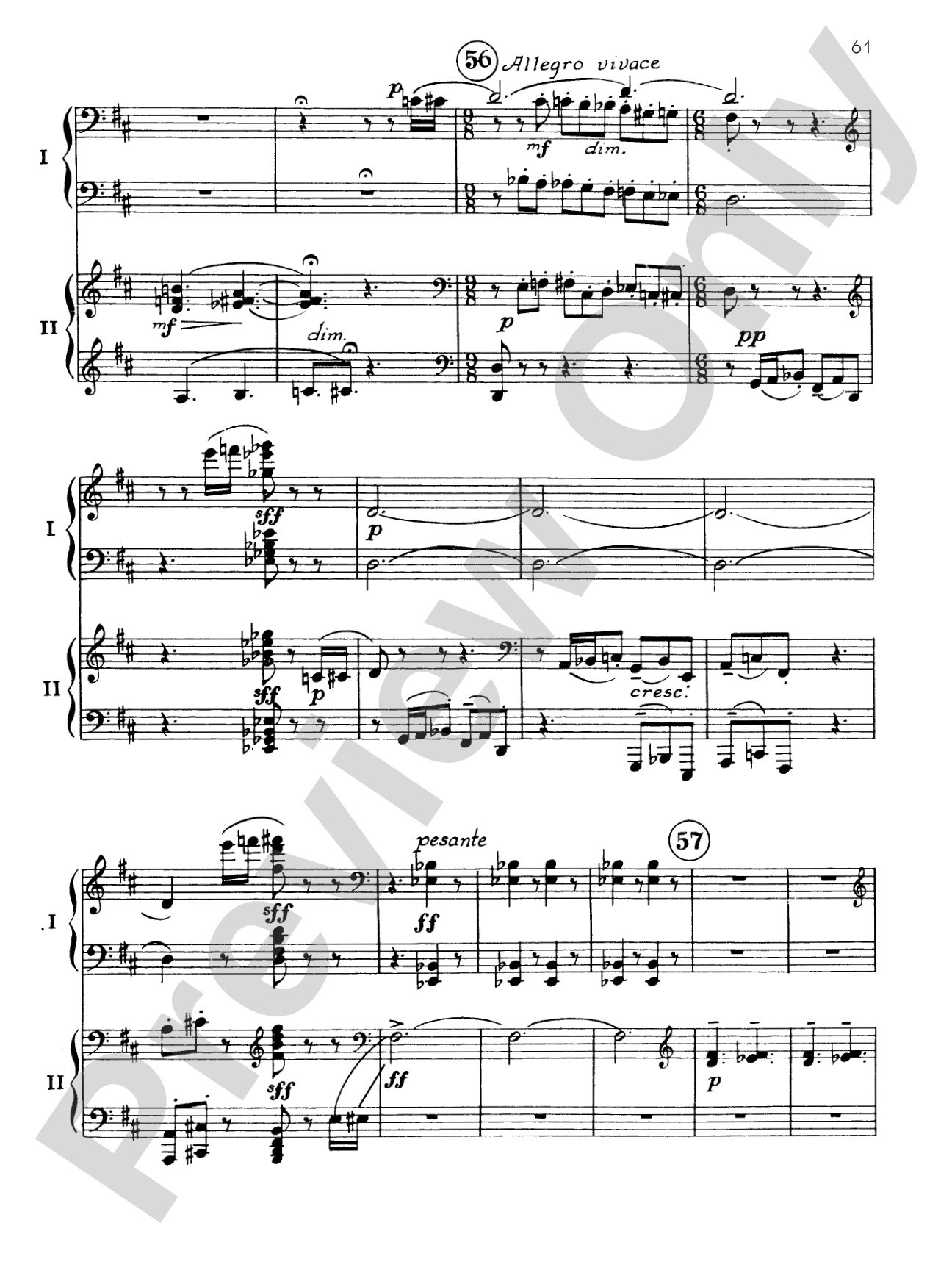
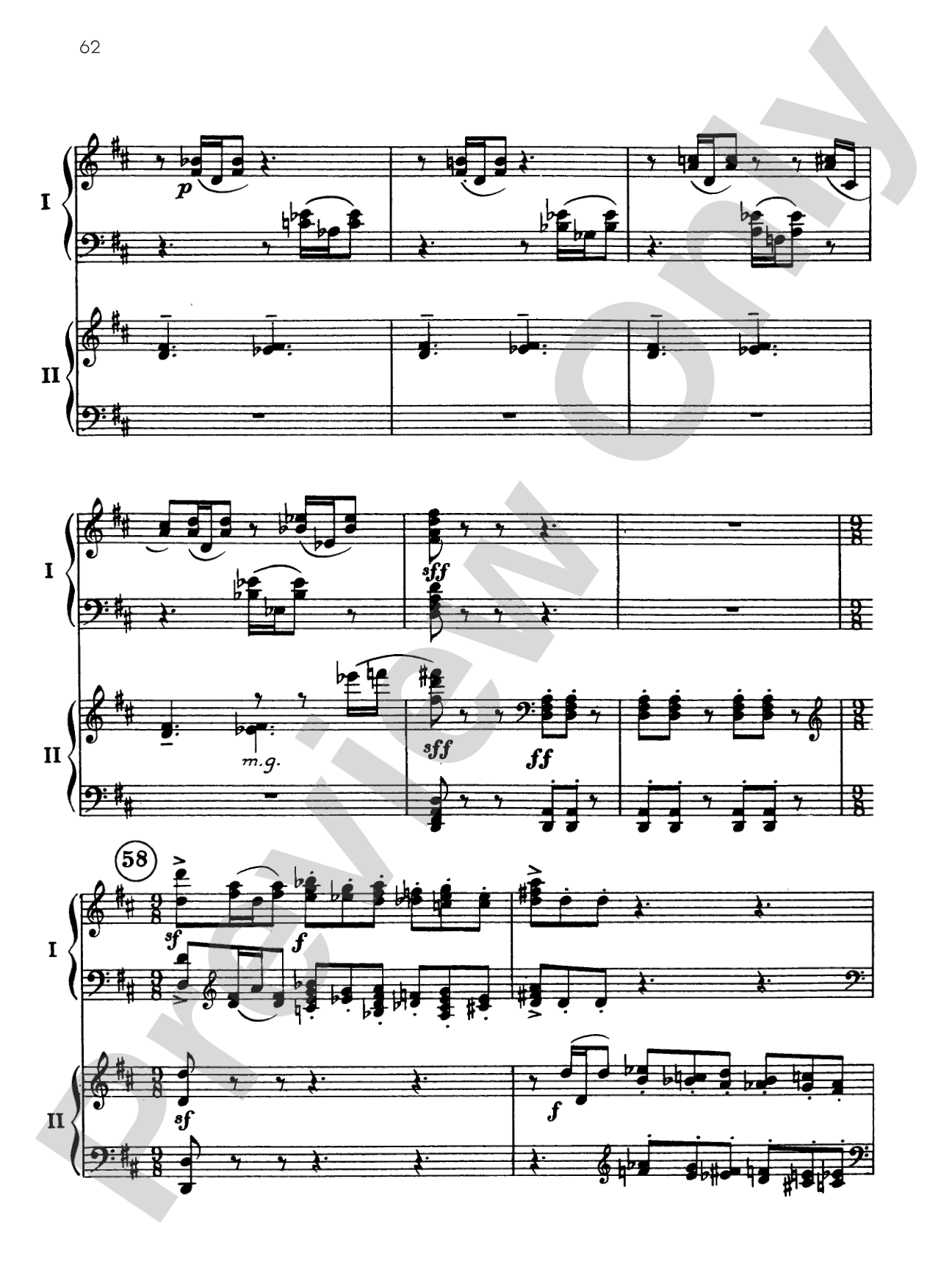
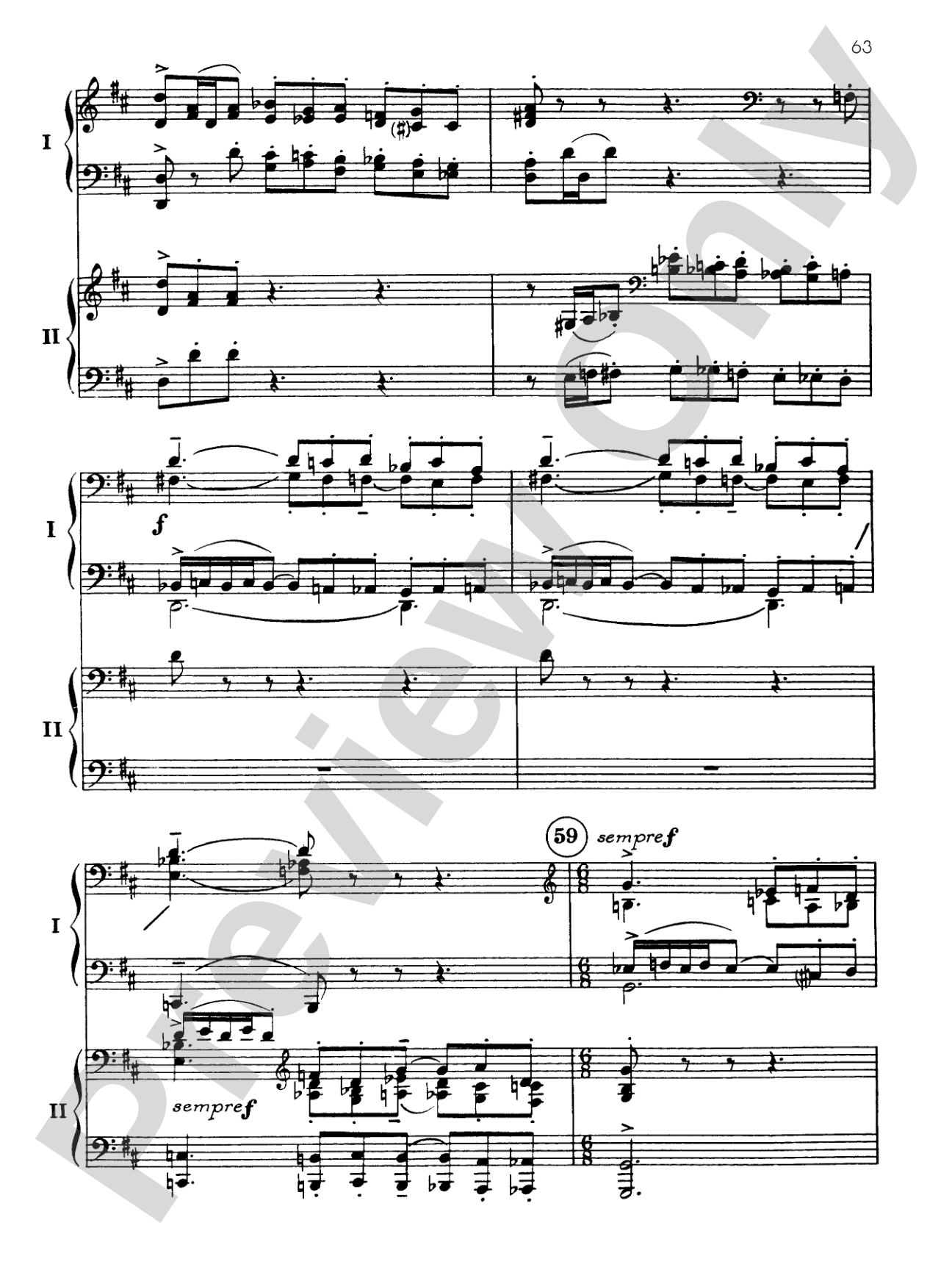
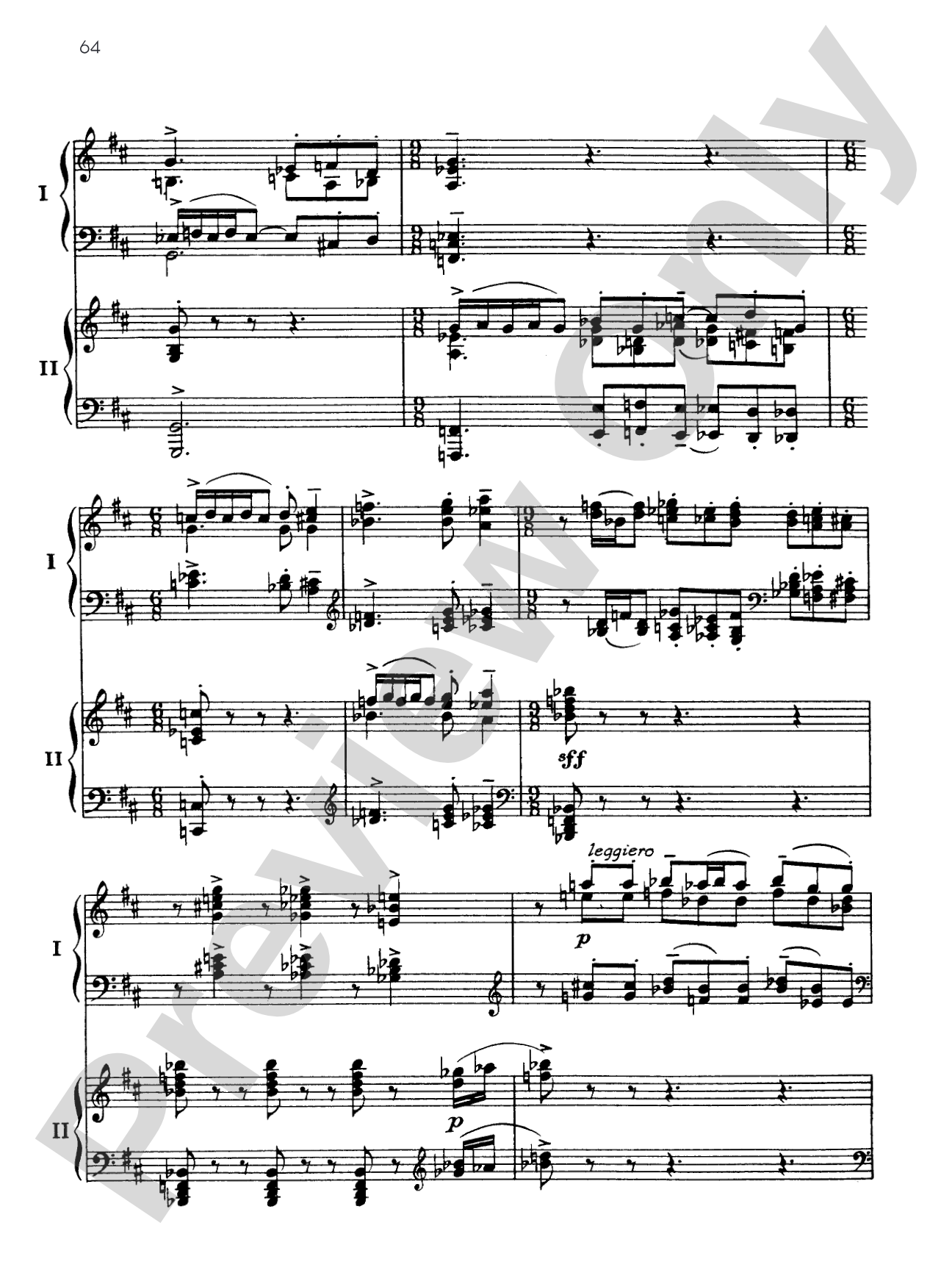
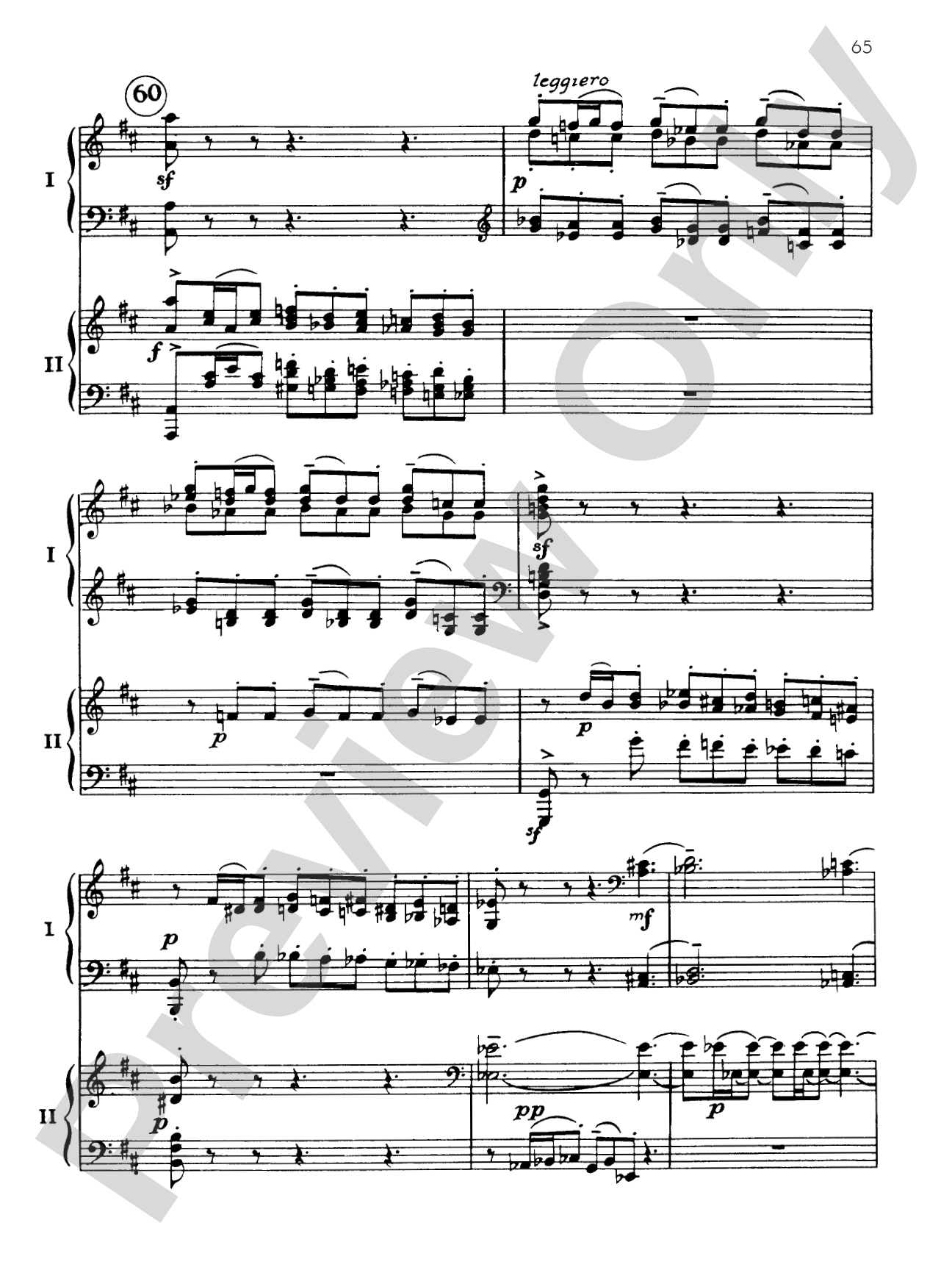
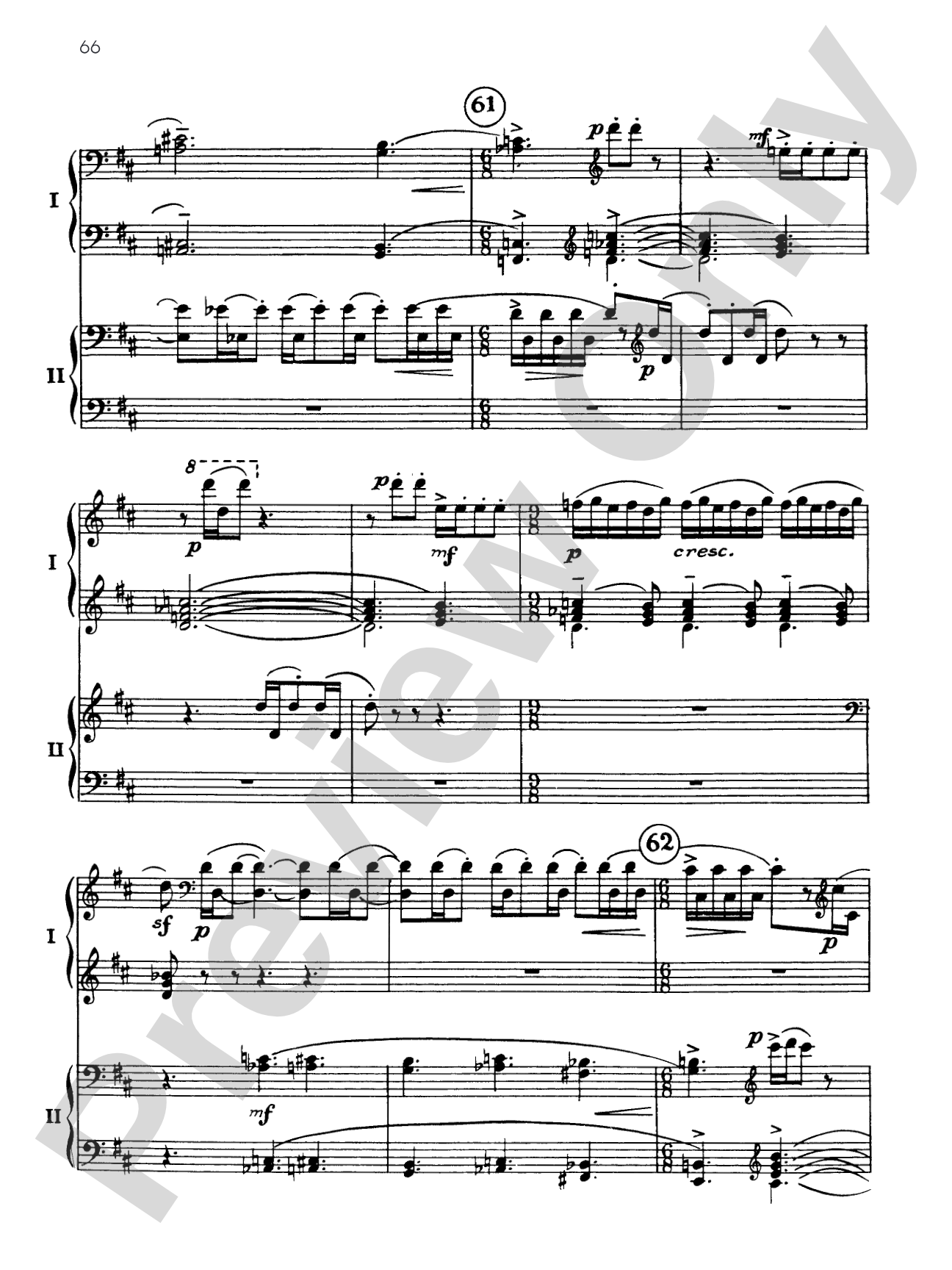
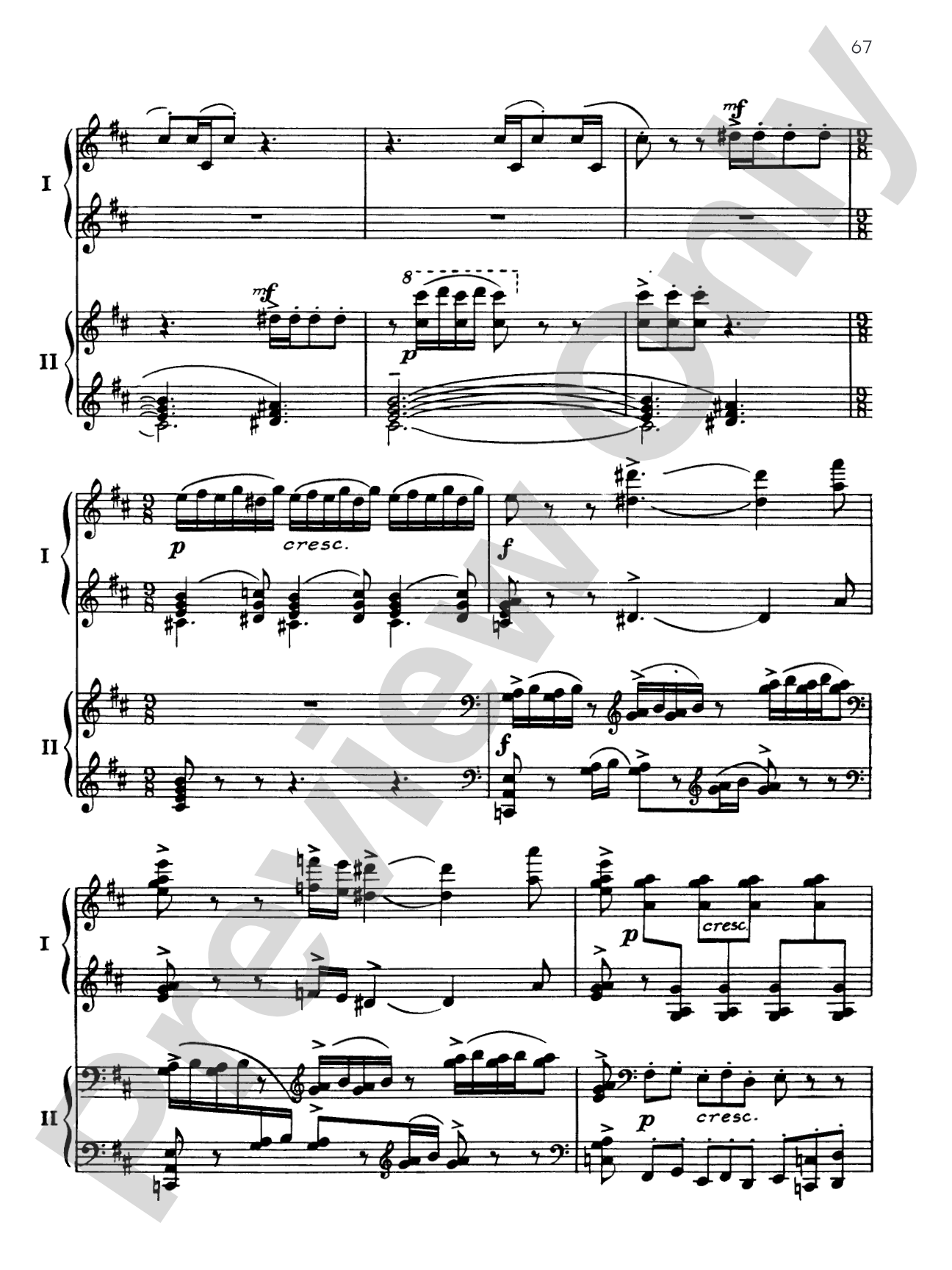
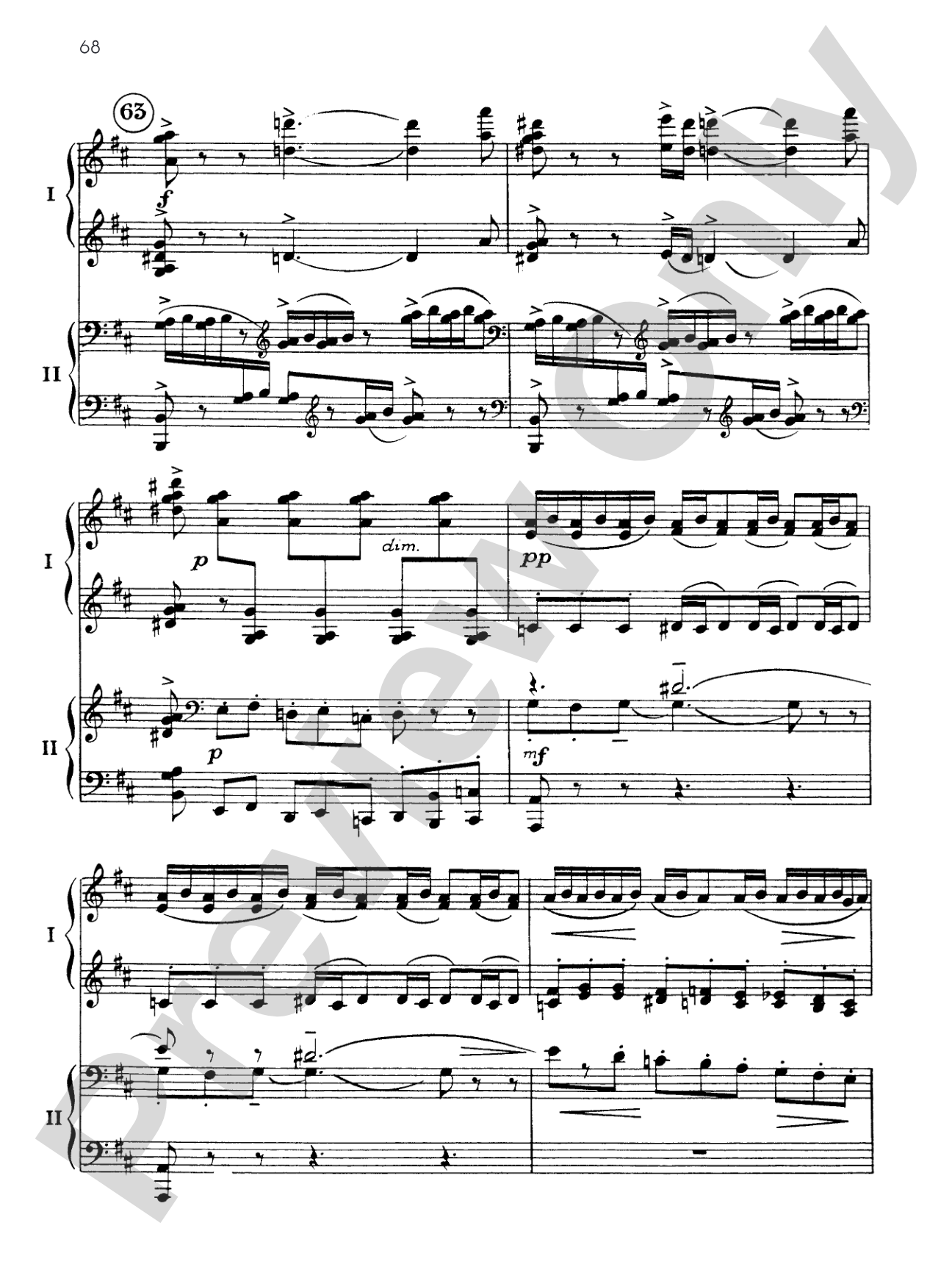

Symphonic Dances, Opus 45 - III. Lento assai / Allegro vivace - Piano Duo (2 Pianos, 4 Hands): Piano Duo (2 Pianos, 4 Hands)
By Sergei Rachmaninoff
Level: Advanced
Item: 00-PS-0017413
$19.95
Pickup currently not available
Related Items
Symphonic Dances, Opus 45 - I. Non Allegro - Piano Duo (2 Pianos, 4 Hands): Piano Duo (2 Pianos, 4 Hands) |
$9.99
|
View | |
Symphonic Dances, Opus 45 - II. Andante con moto - Piano Duo (2 Pianos, 4 Hands): Piano Duo (2 Pianos, 4 Hands) |
$9.99
|
View | |
The Piano Works of Rachmaninoff, [0j*] Volume X: Symphonic Dances, Opus 45 (Two Pianos, Four Hands): Piano Duo (2 Pianos, 4 Hands) Book & CD (2 copies required) |
$19.95
|
View |
Description
The Symphonic Dances, Op. 45, was originally written by Sergei Rachmaninoff as an orchestral work, but was also later arranged for piano duo (Two Pianos, Four Hands) by the composer. This historic reference edition contains the three symphonic dances from Op. 45 plus a CD recording by the famed piano duo Begoña Uriarte and Karl-Hermann Mrongovius. A Federation Festivals 2024-2028 selection.


Symphonic Dances, Opus 45 - III. Lento assai / Allegro vivace - Piano Duo (2 Pianos, 4 Hands): Piano Duo (2 Pianos, 4 Hands) isn't in MakeMusic Cloud just yet...but it could be. Let us know you'd like to see it, and you'll help shape what comes next. In the meantime, start a free trial and dive into thousands of interactive titles your students can play along with today.
Request This Title
Tell us you want it.
Start Your Free Trial
Explore everything that's ready to play right now.
Sample Audio
No sample audio found.
Sample Video
No sample videos found.
Additional Details
Series:
Alfred's Classic Editions
Publisher:
Alfred Music
Page Count:
104
SKU:
00-PS-0017413
More about this title
About the Composer: Sergei Rachmaninoff
Sergei Rachmaninoff (1873, 1943) was a Russian composer and pianist whose gift for melody and harmonic richness defined early twentieth-century concert music. His facility at the keyboard shaped everything he wrote; even his orchestral works sing with the voice of a composer who understood intimacy and virtuosity in equal measure. Rachmaninoff's late works, including the Symphonic Dances, balance structural ambition with emotional directness, qualities that make them essential repertoire for advanced pianists.
The Symphonic Dances represent Rachmaninoff's final orchestral masterpiece, written late in his life and infused with the reflective power of his maturity. His own arrangement for two pianos preserves the orchestral scope while creating new challenges and rewards for the collaborative duo.
Why we love this
Rachmaninoff's own reduction for two pianos transforms an orchestral experience into chamber music without sacrificing grandeur or complexity. The inclusion of a professional recording by Uriarte and Mrongovius gives your students a reference standard from pianists who understand the work's architecture. As a Federation Festivals selection, this carries institutional weight while remaining genuinely rewarding to play.
What to expect
The Lento assai unfolds with Rachmaninoff's characteristic breadth and harmonic richness, creating an almost orchestral wash of sound across two instruments. The Allegro vivace that follows crackles with energy and rhythmic vitality, its writing idiomatic to the piano yet retaining the symphonic sweep of the original orchestration.
Who it's for
Advanced pianists preparing competition or festival repertoire at the duo level will find a substantial work that commands respect and demonstrates genuine musicianship. This score suits students ready to shoulder the responsibility of collaborative performance and capable of managing Rachmaninoff's technical and interpretive demands.
How to get the most out of it
- Balance the textural roles carefully between the two pianos; one often carries thematic material while the other provides harmonic foundation, and switching these roles demands clear communication without rehearsal markings.
- Attend to the transition between Lento assai and Allegro vivace as a single gesture rather than two separate movements; the tempo relationship and thematic connection matter as much as the technical execution.
- Study the recorded performance for interpretive choices about rubato and pedal, especially in the Lento assai section where sustaining harmonies across two instruments requires synchronized listening.
How to use it
Feature this as a centerpiece in a chamber music or collaborative recital that showcases advanced technique and musical maturity. Pairing it with other twentieth-century duo repertoire creates a compelling concert arc, or program it alongside orchestral arrangements to highlight Rachmaninoff's command of texture and scale.
Skills your students will build
- Balancing independent yet interlocking melodic and harmonic voices across two pianos
- Managing extended harmonic progressions and Rachmaninoff's chromatic language
- Executing tempo transitions and maintaining structural coherence across movements
- Coordinating pedal use and sustaining techniques in a two-piano setting
- Interpreting Russian Romantic idiom with attention to rubato and emotional weight