
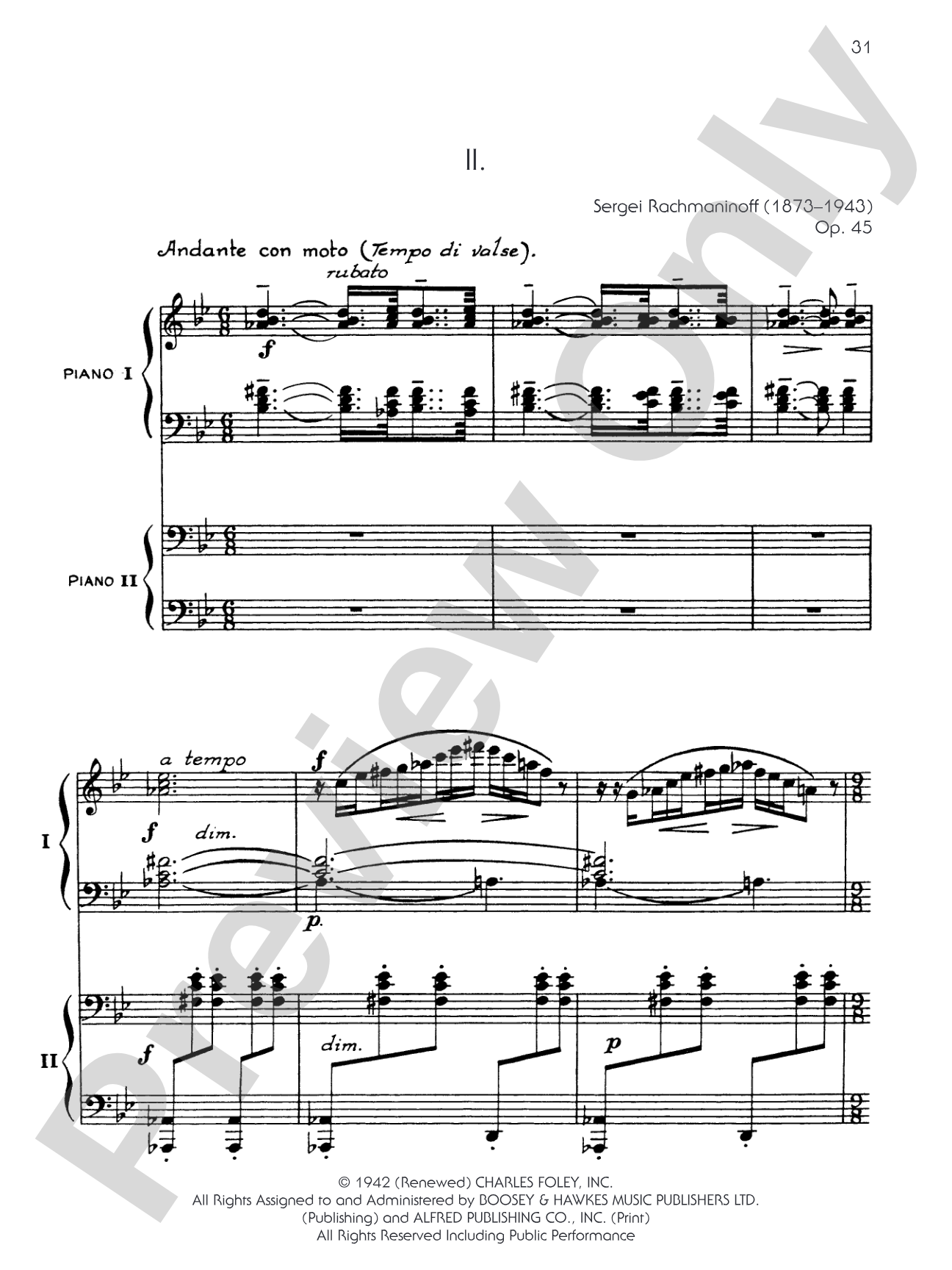
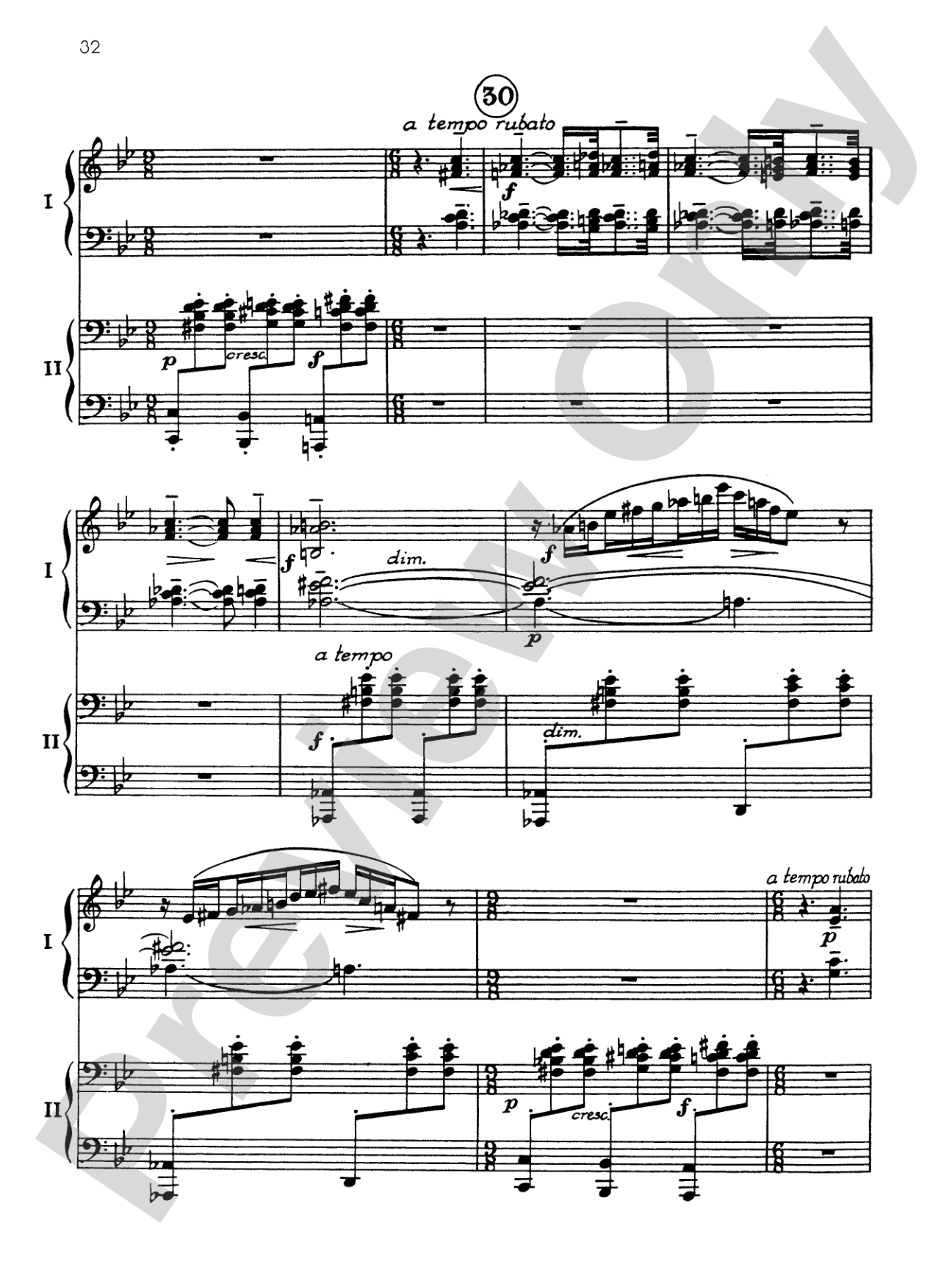
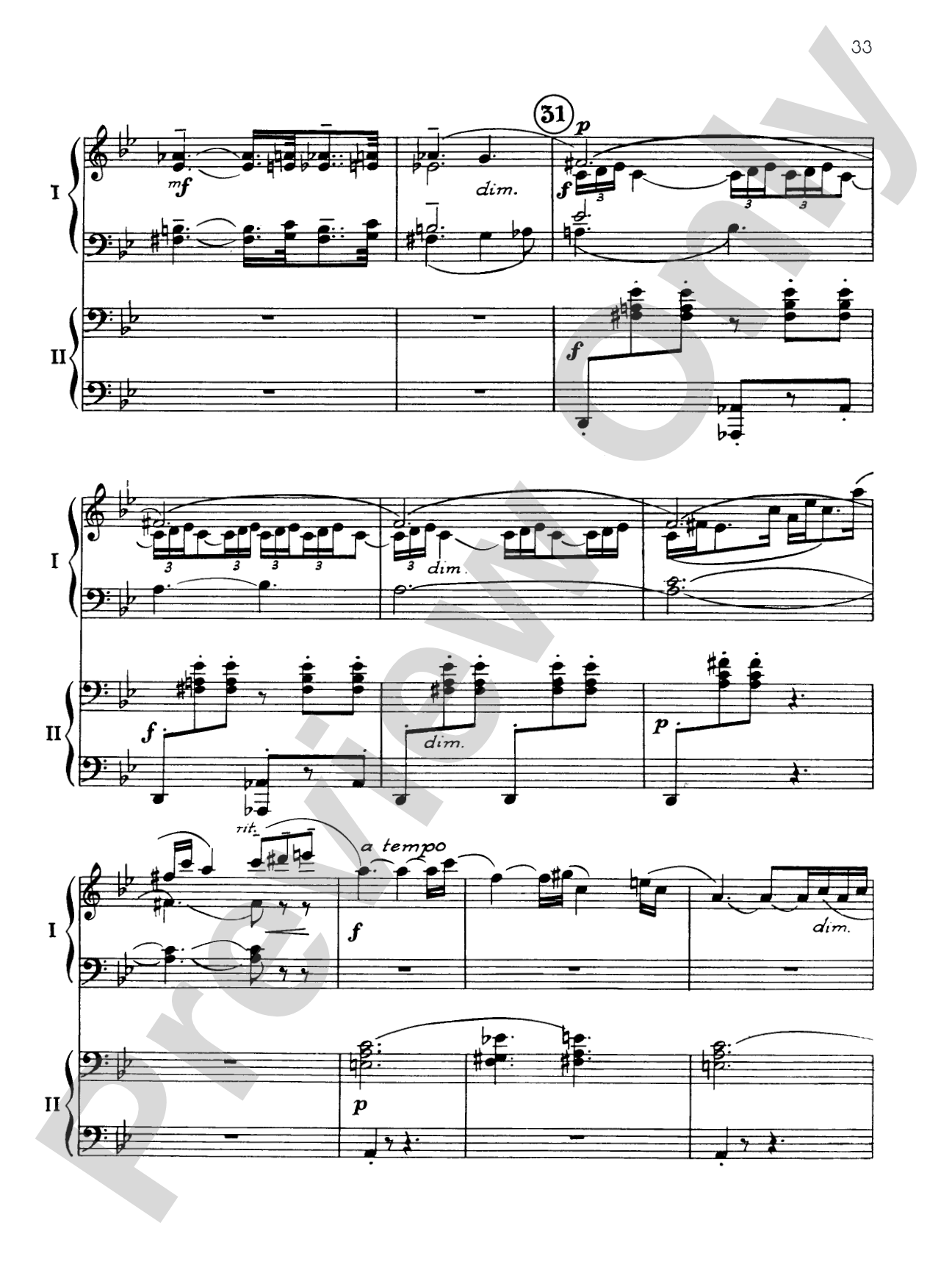
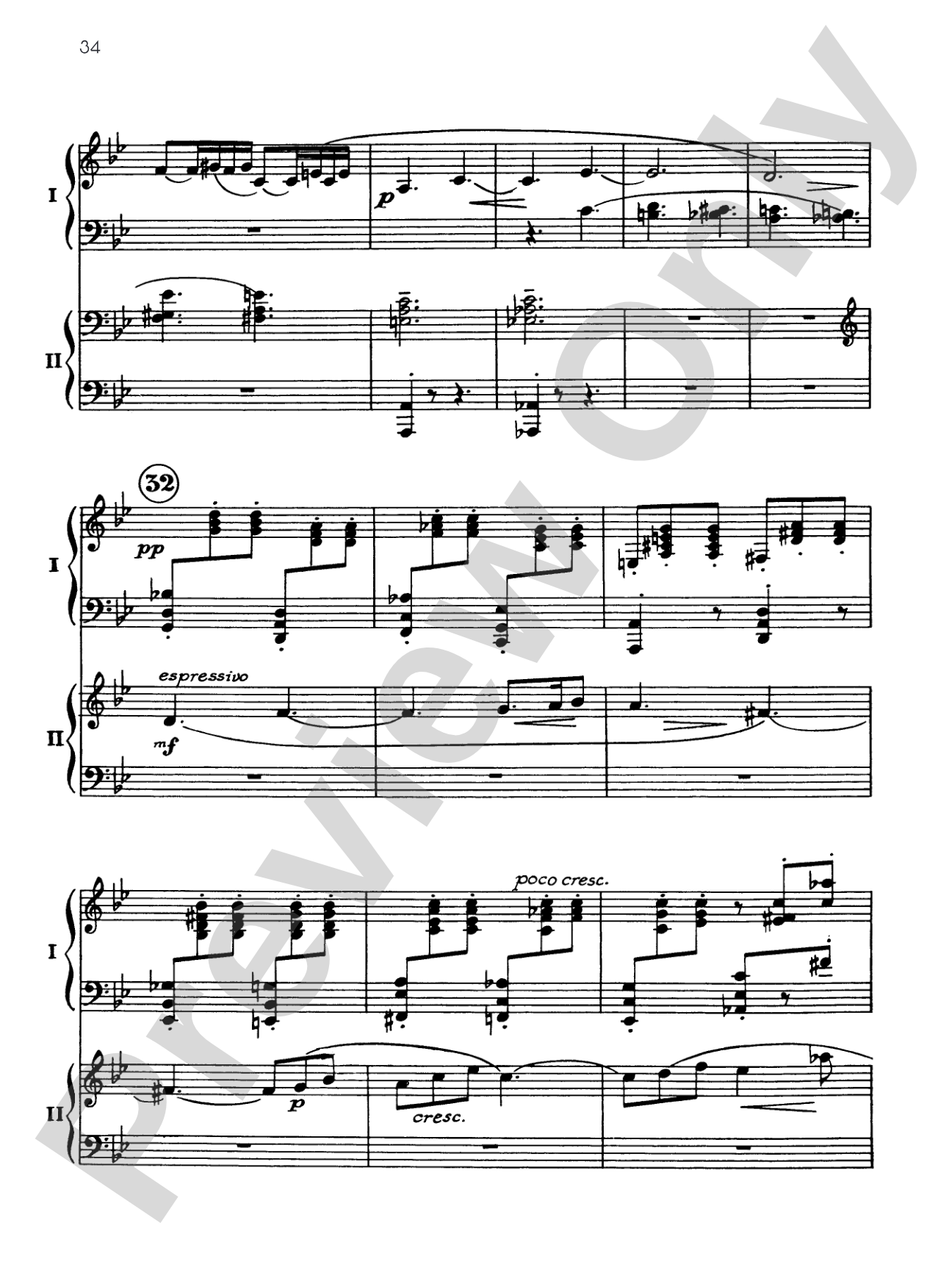
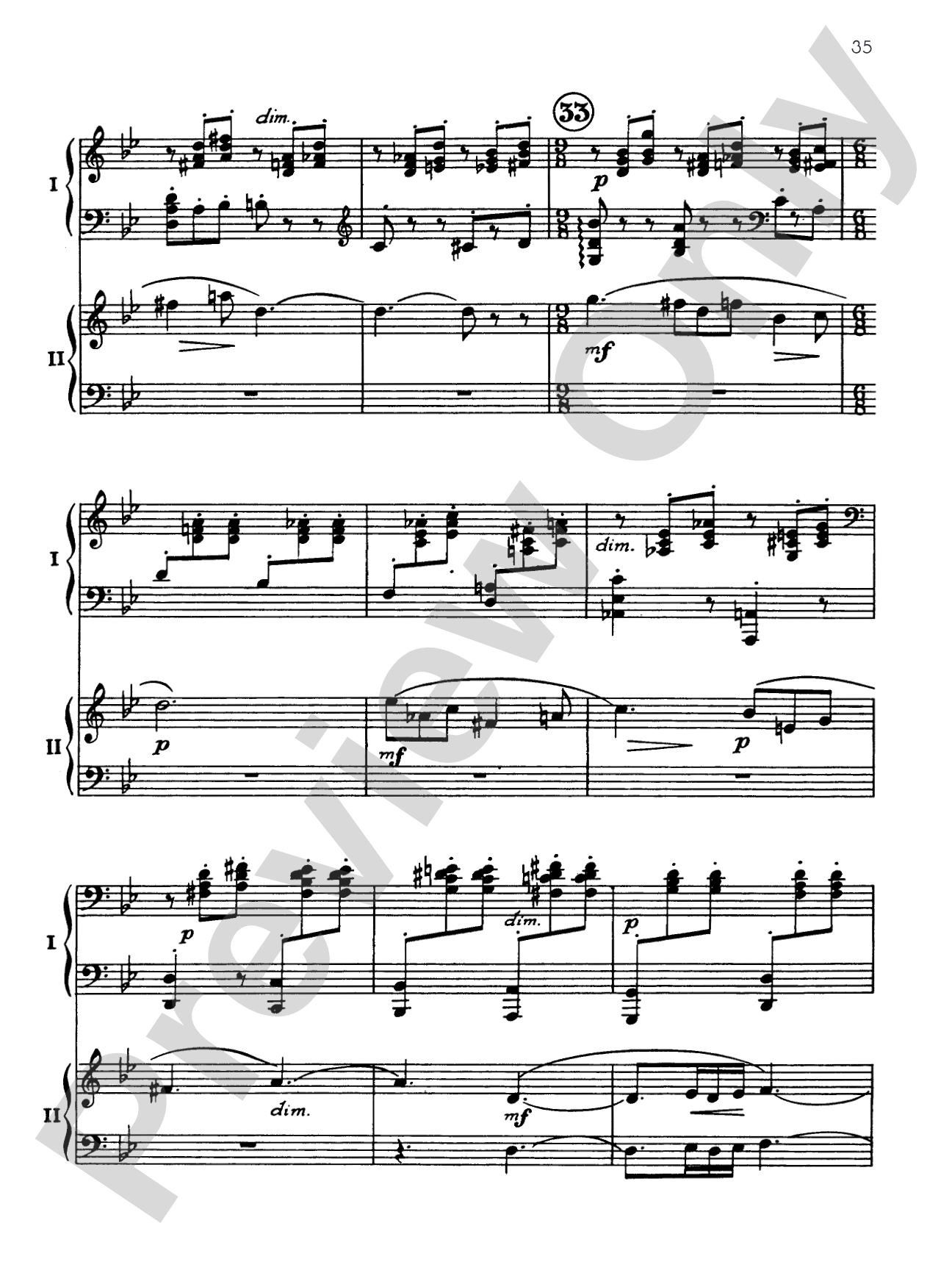
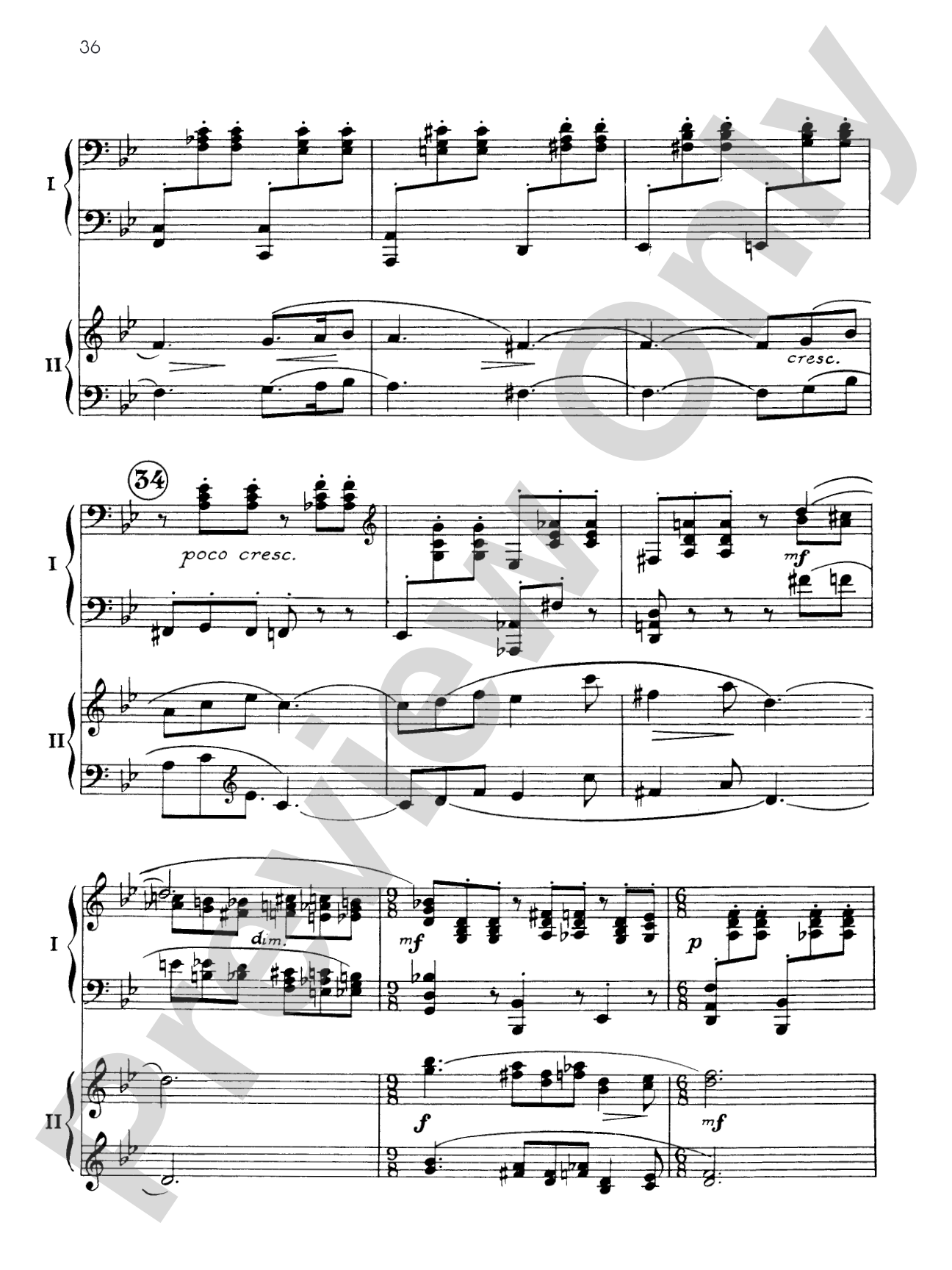

Symphonic Dances, Opus 45 - II. Andante con moto - Piano Duo (2 Pianos, 4 Hands): Piano Duo (2 Pianos, 4 Hands)
By Sergei Rachmaninoff
Level: Advanced
Item: 00-PS-0017412
$9.99
Pickup currently not available
Related Items
Symphonic Dances, Opus 45 - I. Non Allegro - Piano Duo (2 Pianos, 4 Hands): Piano Duo (2 Pianos, 4 Hands) |
$9.99
|
View | |
Symphonic Dances, Opus 45 - III. Lento assai / Allegro vivace - Piano Duo (2 Pianos, 4 Hands): Piano Duo (2 Pianos, 4 Hands) |
$19.95
|
View | |
The Piano Works of Rachmaninoff, [0j*] Volume X: Symphonic Dances, Opus 45 (Two Pianos, Four Hands): Piano Duo (2 Pianos, 4 Hands) Book & CD (2 copies required) |
$19.95
|
View |
Description
The Symphonic Dances, Op. 45, was originally written by Sergei Rachmaninoff as an orchestral work, but was also later arranged for piano duo (Two Pianos, Four Hands) by the composer. This historic reference edition contains the three symphonic dances from Op. 45 plus a CD recording by the famed piano duo Begoña Uriarte and Karl-Hermann Mrongovius. A Federation Festivals 2024-2028 selection.


Symphonic Dances, Opus 45 - II. Andante con moto - Piano Duo (2 Pianos, 4 Hands): Piano Duo (2 Pianos, 4 Hands) isn't in MakeMusic Cloud just yet...but it could be. Let us know you'd like to see it, and you'll help shape what comes next. In the meantime, start a free trial and dive into thousands of interactive titles your students can play along with today.
Request This Title
Tell us you want it.
Start Your Free Trial
Explore everything that's ready to play right now.
Sample Audio
No sample audio found.
Sample Video
No sample videos found.
Additional Details
Series:
Alfred's Classic Editions
Publisher:
Alfred Music
Page Count:
104
SKU:
00-PS-0017412
More about this title
About the Composer: Sergei Rachmaninoff
Sergei Rachmaninoff (1873, 1943) was a Russian composer and pianist whose dramatic, emotionally direct voice defined late Romantic music. His technical mastery as a performer shaped everything he wrote; his piano works demand virtuosity grounded in profound lyricism, and his orchestral scores sing with the richness of the Russian tradition. Rachmaninoff composed the Symphonic Dances late in his life, after emigrating to America, and the work stands as a capstone to his aesthetic: grand in scale, intricate in texture, and uncompromising in its emotional depth.
Why we love this
The Andante con moto movement strikes a rare balance between accessibility and artistic weight. Two pianists can inhabit the sweeping melodic lines and rich harmonic language that define Rachmaninoff's voice without the logistical burden of a full orchestra, and the recorded reference by Uriarte and Mrongovius provides a window into how a world-class ensemble approaches the score. For festivals and recitals, this movement offers serious musicians a chance to explore 20th-century masterwork repertoire at the duo level.
What to expect
This movement unfolds with the unhurried elegance of a prayer. Rachmaninoff spins long melodic strands over rich, rolling harmonies, creating an atmosphere that feels both intimate and grand, tender and searching. The texture invites both pianists to breathe together, creating a unified voice that transcends the mechanical nature of the instrument.
Who it's for
Advanced pianists and piano teachers seeking substantial two-piano repertoire beyond transcriptions and arrangements. Students preparing for college auditions, festival competitions, and chamber recitals will find a work that showcases mature musicality and technical command without requiring orchestral resources.
How to get the most out of it
- Listen closely to the recorded accompaniment multiple times before rehearsing, mapping where the primo and secondo voice lead and follow. This clarifies phrase architecture that can easily dissolve into undifferentiated texture.
- Balance the melody between pianos through dynamic shaping rather than aggressive registration changes. The elegance of this movement depends on both players trusting a shared legato line.
- Coordinate pedal changes with your partner, especially in the slower passages. Rachmaninoff's harmonies blur intentionally, but synchronizing the lift will keep the sound luminous rather than murky.
- Mark breath points and emotional peaks in the score before the first rehearsal. This movement breathes like a vocal line, and agreement on phrasing boundaries prevents the accompanist from rushing through connecting passages.
How to use it
Open a chamber concert or recital with this movement to establish a contemplative mood that prepares the audience for a full evening of art music. It also pairs naturally with other Rachmaninoff piano works or with 20th-century chamber music from composers navigating similar expressive terrain. The inclusion in the Federation Festivals list makes it an excellent preparation tool for competition candidates.
Skills your students will build
- Sustaining long melodic phrases across register changes and hand positions
- Coordinating tempo and touch between two independent pianos in slow music
- Balancing melody and accompaniment when both emerge from complex harmonic textures
- Reading and interpreting Rachmaninoff's nuanced dynamic and pedal markings
- Chamber communication and ensemble listening at an advanced level