
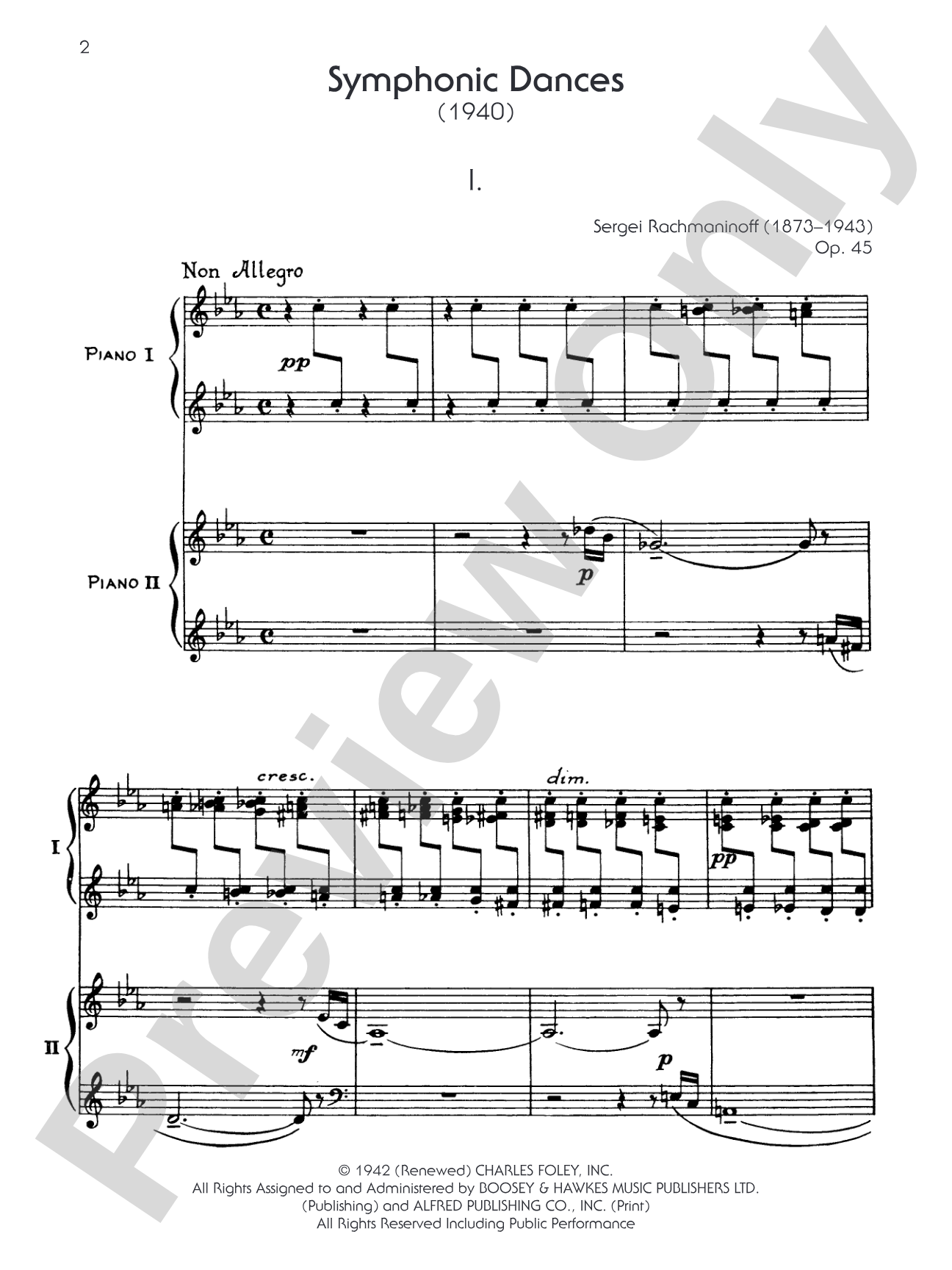
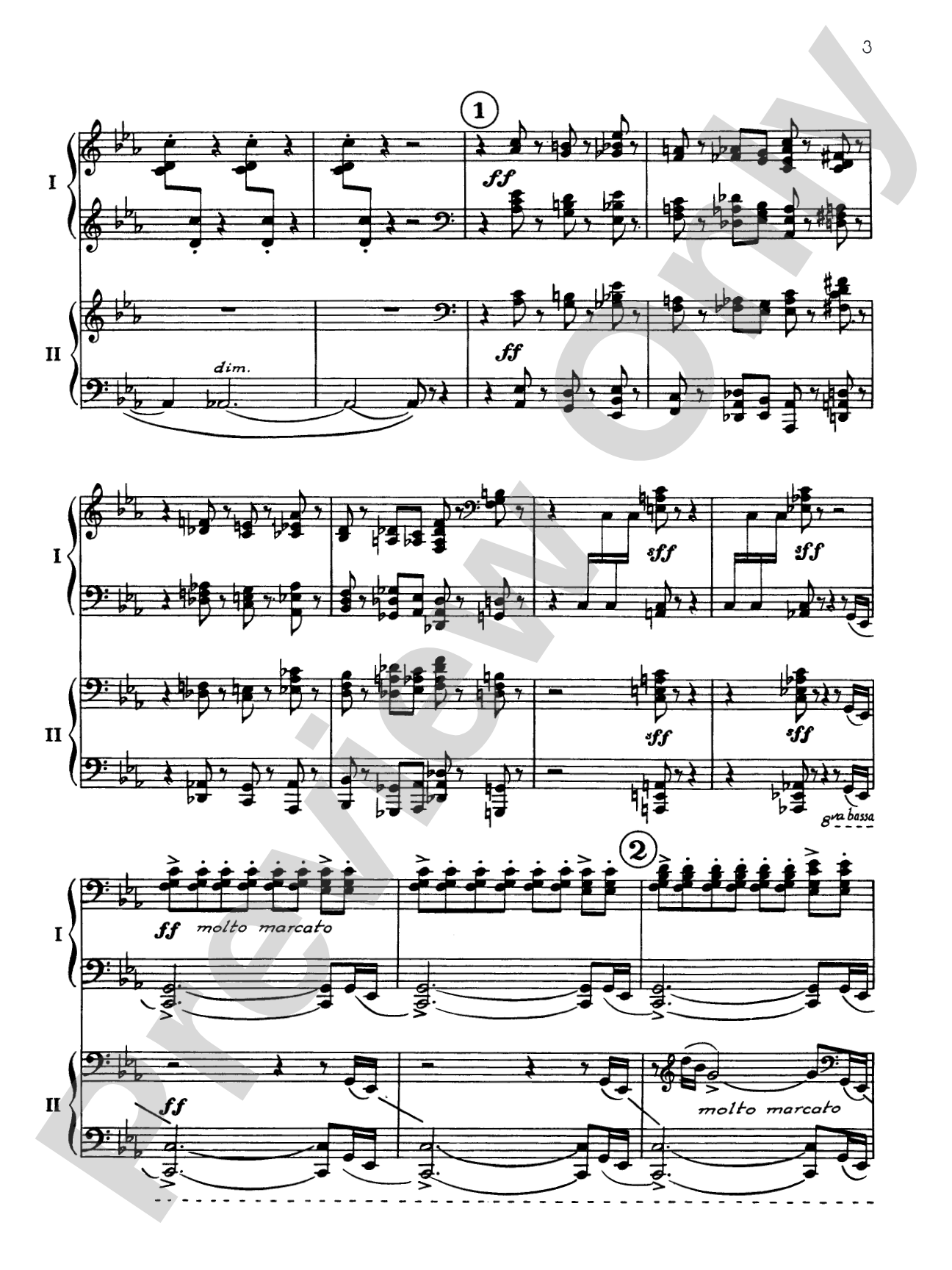
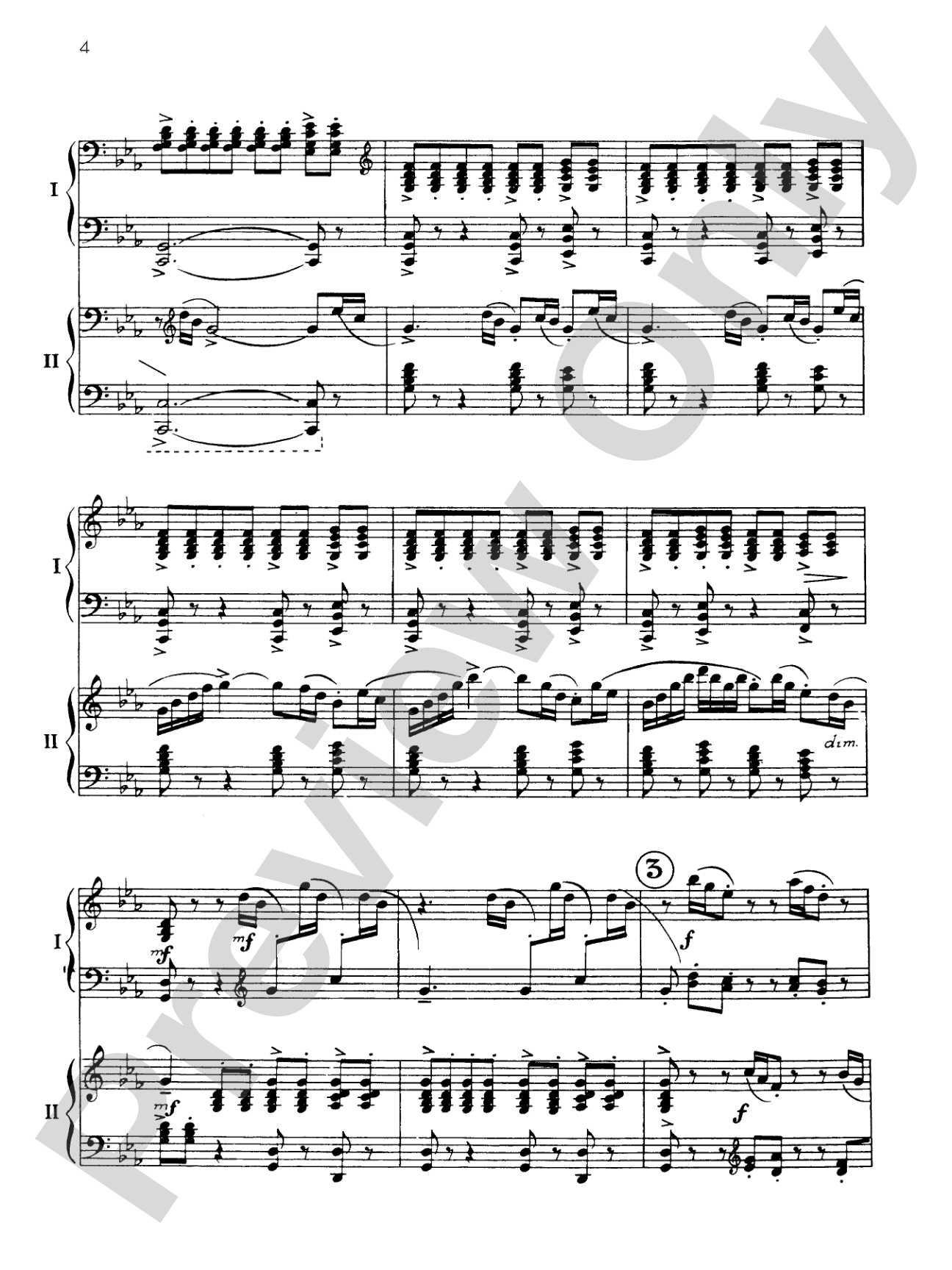
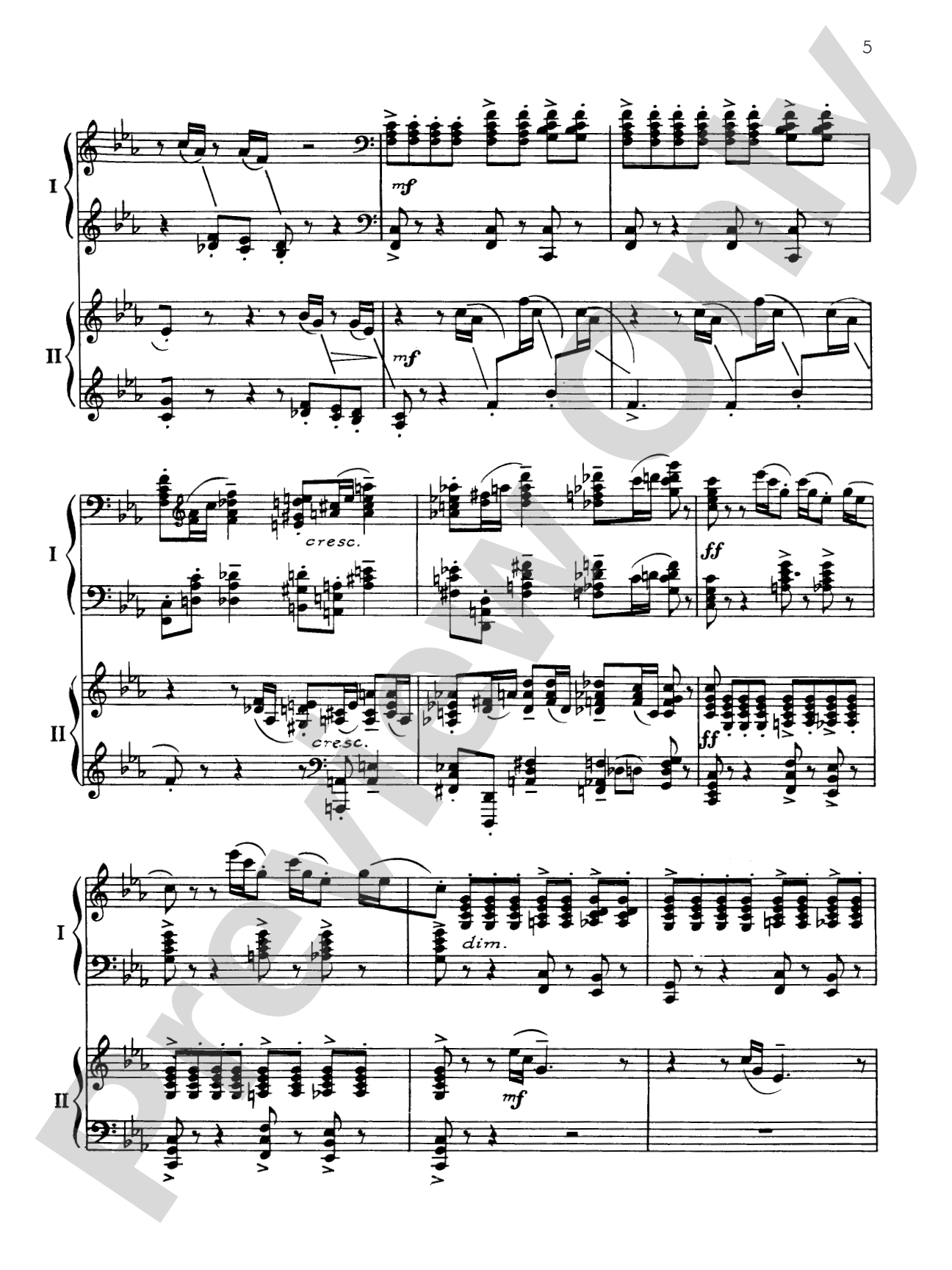
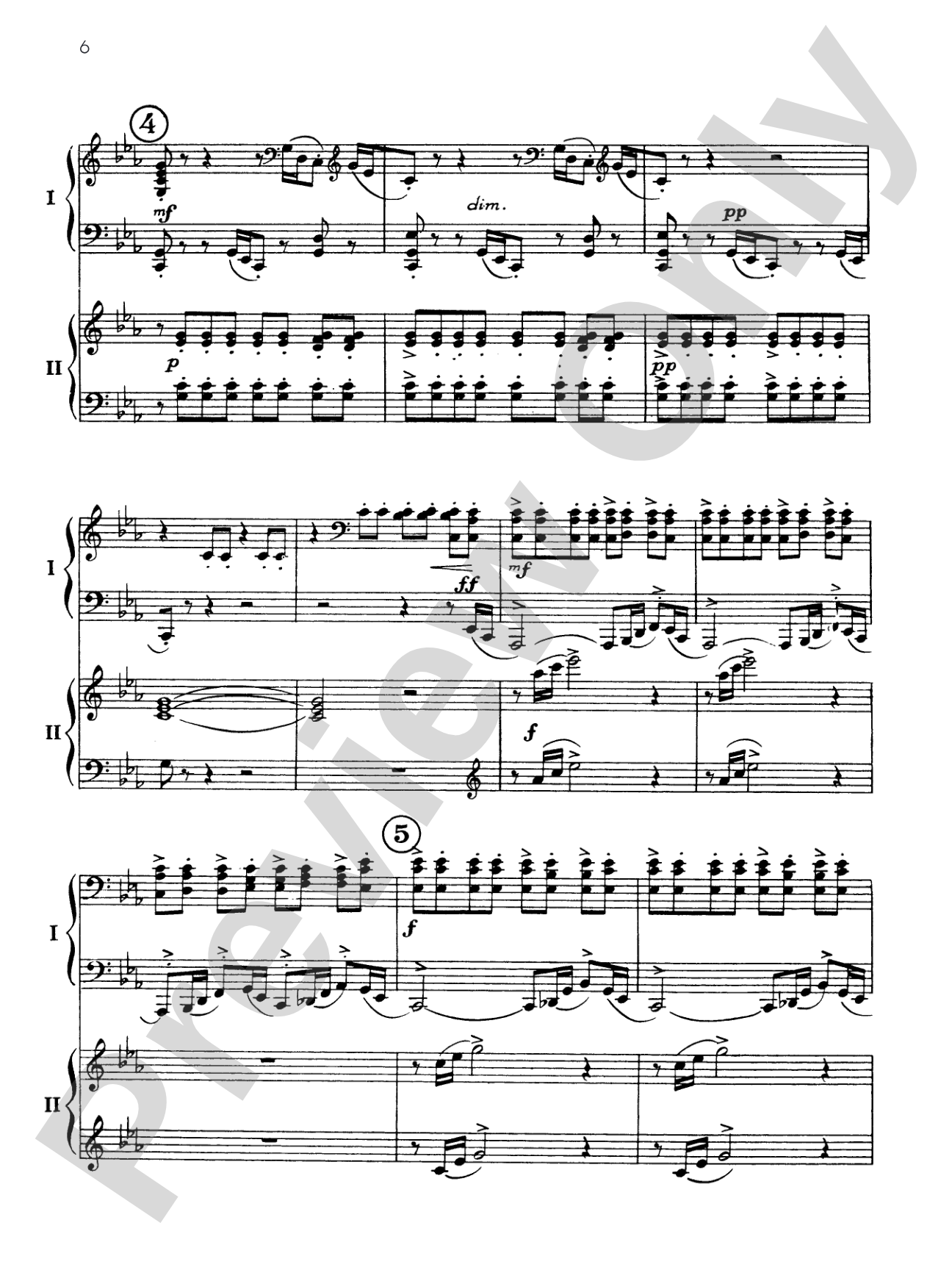
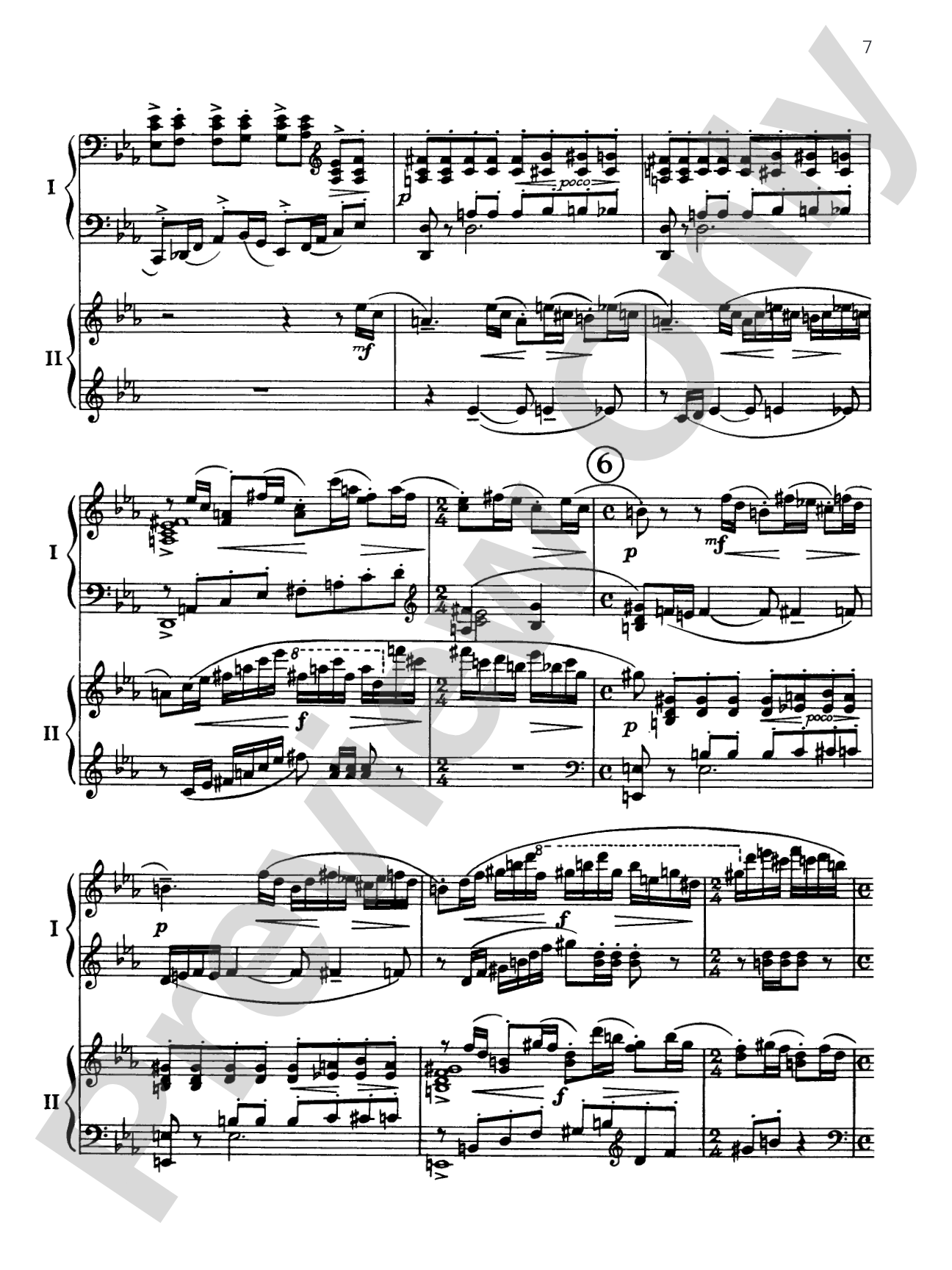

Symphonic Dances, Opus 45 - I. Non Allegro - Piano Duo (2 Pianos, 4 Hands): Piano Duo (2 Pianos, 4 Hands)
By Sergei Rachmaninoff
Level: Advanced
Item: 00-PS-0017411
$9.99
Pickup currently not available
Related Items
Symphonic Dances, Opus 45 - II. Andante con moto - Piano Duo (2 Pianos, 4 Hands): Piano Duo (2 Pianos, 4 Hands) |
$9.99
|
View | |
Symphonic Dances, Opus 45 - III. Lento assai / Allegro vivace - Piano Duo (2 Pianos, 4 Hands): Piano Duo (2 Pianos, 4 Hands) |
$19.95
|
View | |
The Piano Works of Rachmaninoff, [0j*] Volume X: Symphonic Dances, Opus 45 (Two Pianos, Four Hands): Piano Duo (2 Pianos, 4 Hands) Book & CD (2 copies required) |
$19.95
|
View |
Description
The Symphonic Dances, Op. 45, was originally written by Sergei Rachmaninoff as an orchestral work, but was also later arranged for piano duo (Two Pianos, Four Hands) by the composer. This historic reference edition contains the three symphonic dances from Op. 45 plus a CD recording by the famed piano duo Begoña Uriarte and Karl-Hermann Mrongovius. A Federation Festivals 2024-2028 selection.


Symphonic Dances, Opus 45 - I. Non Allegro - Piano Duo (2 Pianos, 4 Hands): Piano Duo (2 Pianos, 4 Hands) isn't in MakeMusic Cloud just yet...but it could be. Let us know you'd like to see it, and you'll help shape what comes next. In the meantime, start a free trial and dive into thousands of interactive titles your students can play along with today.
Request This Title
Tell us you want it.
Start Your Free Trial
Explore everything that's ready to play right now.
Sample Audio
No sample audio found.
Sample Video
No sample videos found.
Additional Details
Series:
Alfred's Classic Editions
Publisher:
Alfred Music
Page Count:
104
SKU:
00-PS-0017411
More about this title
About the Composer: Sergei Rachmaninoff
Sergei Rachmaninoff (1873, 1943) stands among the last great Romantic composers, bridging the 19th-century keyboard tradition with 20th-century modernism. His command of pianistic writing was unmatched; he composed at the instrument and understood its capabilities in ways few others did, producing some of the most virtuosic and emotionally direct music for piano ever written.
Rachmaninoff's later works, including the Symphonic Dances, synthesize his mature style: lush harmonies rooted in Russian Romanticism, architectural strength, and orchestral thinking translated to the keyboard. His willingness to arrange his own orchestral works for piano duo reflects both his respect for the medium and his understanding of how two pianists could realize the grandeur of a full orchestra.
Why we love this
Rachmaninoff's piano duo arrangement preserves the sweeping orchestral scope of the original while creating an entirely different listening experience. The interplay between the two pianos, sometimes competing, sometimes supporting, demands genuine ensemble maturity and offers advanced students a masterclass in chamber balance and dialogue.
What to expect
Symphonic grandeur channeled through two instruments. The First Dance moves with an unhurried, almost ceremonial grace, full of Rachmaninoff's signature lush harmonies and long, singing melodic lines that seem to float across the keyboard. There is introspection here, but also subtle forward momentum.
Who it's for
Advanced pianists preparing for competition or recital programs that demand sophisticated ensemble work. Duets at this level suit pianists with solid technique, musical maturity, and the ability to listen and respond in real time to a partner.
How to get the most out of it
- Shape the opening theme with unhurried, singing tone; resist the urge to rush even as accompanying figures become more active.
- Balance the two pianos as equal voices rather than a soloist-and-accompanist arrangement; the second piano carries thematic material too.
- Allow rubato in the lyrical passages, but keep rhythmic synchronization tight in the denser, busier sections to maintain clarity.
- Study the recording by Uriarte and Mrongovius included with this edition; their approach to phrasing and pedal work will illuminate the score's expressive possibilities.
How to use it
Program this as a recital centerpiece when you want to showcase both technical prowess and musical depth. The three dances together create a satisfying arc across a concert; the First alone makes a compelling opening statement that invites the audience into Rachmaninoff's world.
Skills your students will build
- Ensemble listening and balance between two equal pianistic lines
- Pedal control across a wide dynamic and harmonic range
- Sustained legato technique over extended phrases
- Coordination of independent hand positions and textures between partners
- Interpretation of Romantic-era rubato and expressive marking within a structured harmonic framework