
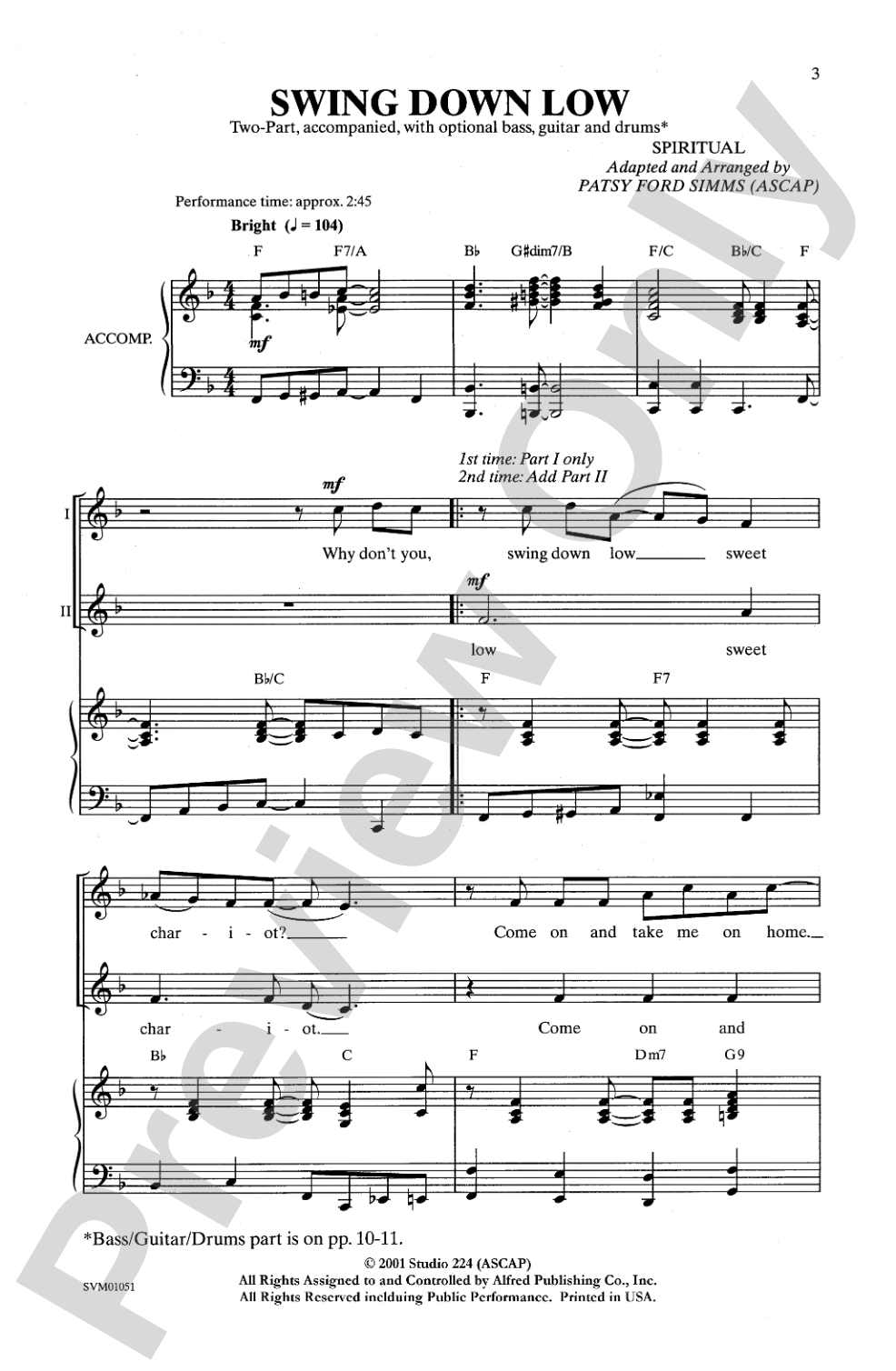
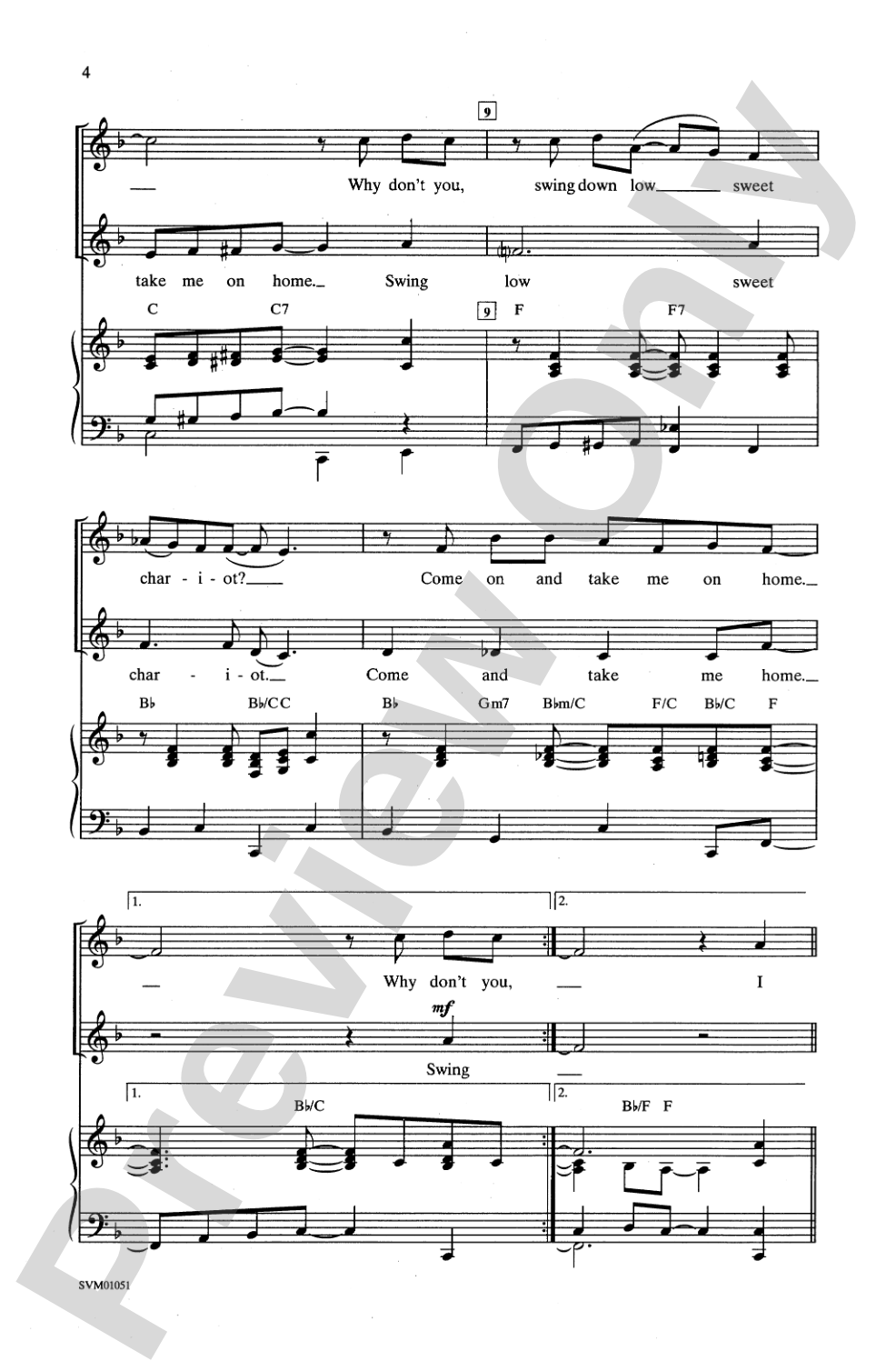

Swing Down Low: 2-Part Choral Octavo
Spiritual / adapted and arr. Patsy Ford Simms
Level: Moderate
Item: 00-PO-0005341
$2.25
Minimum order quantity: 20 copies
Pickup currently not available
Description
This unique spiritual from Patsy Ford Simms is built around Swing Low, Sweet Chariot. It'll be a welcome addition to any concert. You'll have 'em clappin and stompin' their feet!


Swing Down Low: 2-Part Choral Octavo isn't in MakeMusic Cloud just yet...but it could be. Let us know you'd like to see it, and you'll help shape what comes next. In the meantime, start a free trial and dive into thousands of interactive titles your students can play along with today.
Request This Title
Tell us you want it.
Start Your Free Trial
Explore everything that's ready to play right now.
Sample Audio
No sample audio found.
Sample Video
No sample videos found.
Additional Details
Series:
Alfred Archive Edition: Studio PR Catalog
Publisher:
Alfred Music
Page Count:
12
SKU:
00-PO-0005341
More about this title
About the Arranger: Patsy Ford Simms
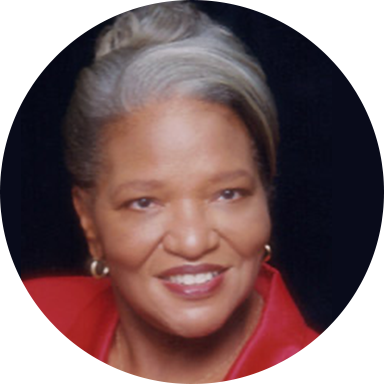
Patsy Ford Simms began her publishing career in 1981 and has since composed and arranged over 300 works for educational and church settings, collaborating with major publishers including Shawnee Press. Her prolific output grew from a practical need she identified during her early teaching years: the shortage of accessible choral octavos written for junior high and middle school voices.
Simms holds a Bachelor of Science in Music Education from Knoxville College, a Master of Education from the University of Louisville, and a doctorate in Music Education from Columbia Pacific University. Over three decades of classroom teaching in grades K-12 and at the Youth Performing Arts School informed her understanding of what young singers need. Her work has earned national recognition through ASCAP Special Music Awards and inclusion in two MENC World's Largest Concerts. She has served as a clinician and presenter internationally, including residencies in Italy and Africa, and has created commissioned works and musical theater pieces exploring African American history.
Why we love this
Simms takes one of the most beloved spirituals and reimagines it with fresh energy while keeping it entirely accessible for developing singers. The arrangement respects the source material while adding rhythmic vitality and participatory elements (clapping, stomping) that transform a concert moment into a shared experience. At grade 3, this sits in that sweet spot where your students can tackle something with real substance without drowning in technical demands.
What to expect
The spiritual's familiar bones shine through with a contemporary rhythmic vitality that invites physical response. Listeners will feel the joy and invitation in the writing, recognizing the beloved melody while experiencing something fresh and alive in its arrangement.
Who it's for
This arrangement works beautifully for middle school and early high school choirs seeking a spiritual with authentic character and built-in energy. Directors with developing ensembles will appreciate a piece that demands musicality and rhythmic control without overwhelming younger singers. It's equally at home in church, school, and community choral settings.
How to get the most out of it
- Establish the rhythmic groove early in rehearsal by having students echo the accompaniment pattern before adding their parts; this locks the ensemble into the style from day one.
- Encourage natural, uninhibited movement during rehearsals so singers feel permission to clap and stomp authentically in performance rather than holding back.
- Balance the two parts by checking that the thinner part carries its melodic weight and isn't getting buried beneath the harmony; Simms likely wrote both lines to be heard.
- If using the recorded accompaniment, rehearse with it frequently enough that students trust it rather than rushing ahead in moments of rhythmic complexity.
How to use it
Use this as an energizing mid-concert pivot to lift the room's energy after a set of more introspective pieces. It works equally well closing a program because audiences leave with that infectious rhythmic momentum and communal spirit. Consider pairing it with other spirituals to build a thematic set, or stand it alone as your accessible crowd-pleaser.
Skills your students will build
- Singing syncopated rhythms in a spiritual style
- Maintaining independent vocal lines in 2-part texture while responding to rhythmic accompaniment
- Connecting physicality (clapping, stomping) to vocal performance
- Interpreting and performing African American sacred music tradition authentically