
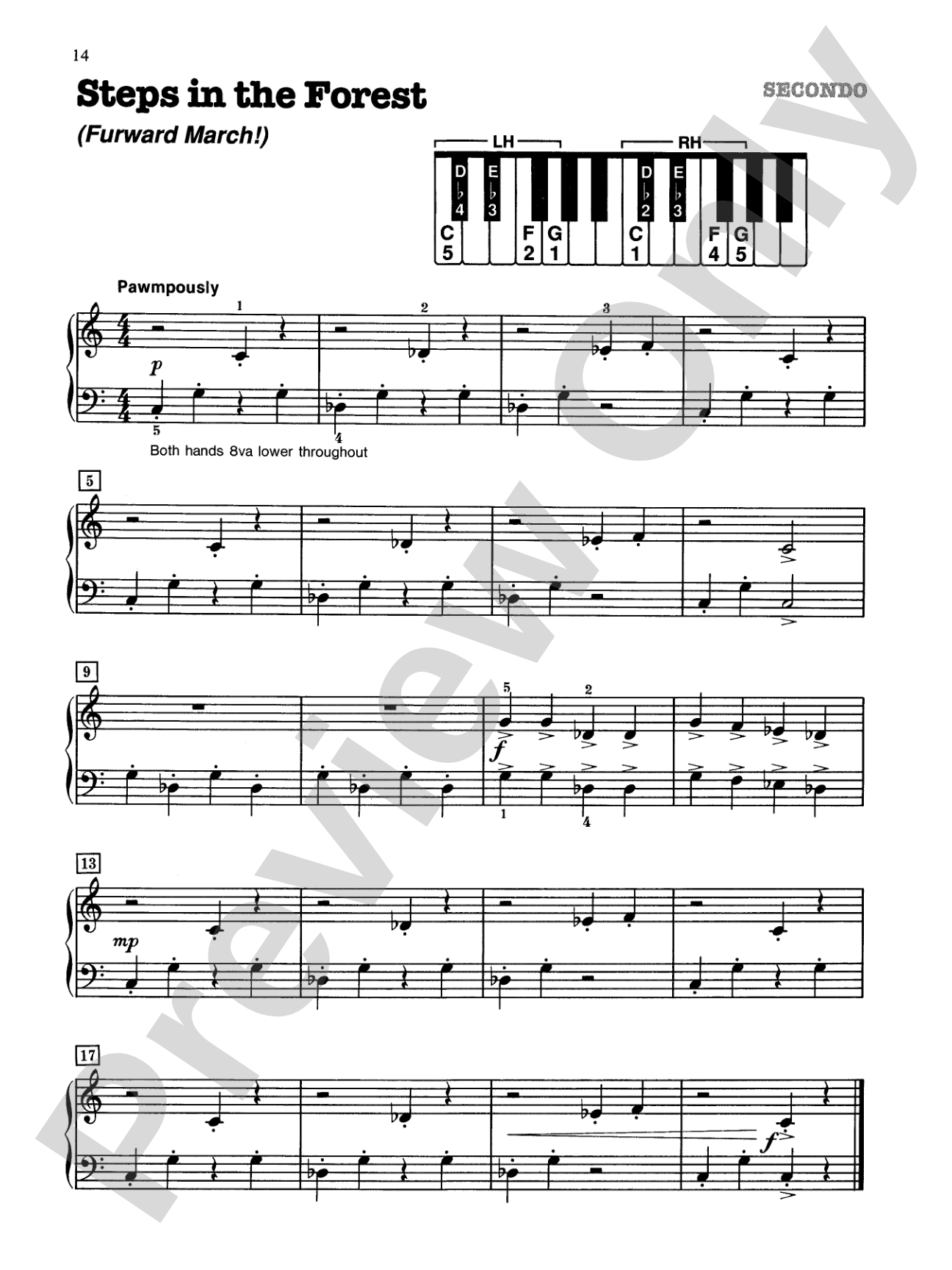

Steps in the Forest (Furward March!) - Piano Duet (1 Piano, 4 Hands): Piano Duet (1 Piano, 4 Hands)
Elementary Duets for 1 Piano, 4 Paws
By Margaret Goldston
Level: Elementary
Item: 00-PS-0017538
$5.99
Pickup currently not available
Related Items
Babbling Bears (Can You Bear It?) - Piano Duet (1 Piano, 4 Hands): Piano Duet (1 Piano, 4 Hands) |
$4.99
|
View | |
Bear Hug (A Lullaby) - Piano Duet (1 Piano, 4 Hands): Piano Duet (1 Piano, 4 Hands) |
$4.99
|
View | |
Bears on Wheels (Performed by the Cub Club) - Piano Duet (1 Piano, 4 Hands): Piano Duet (1 Piano, 4 Hands) |
$4.99
|
View | |
Duets for Bear Lovers: Piano Duet (1 Piano, 4 Hands) Book |
$5.99
|
View |
Description
A collection of elementary duets for one piano and four paws! The primo and secondo parts are equal in difficulty and the hand positions are shown for each piece. Some pieces feature easy position shifts. An indispensable collection to add variety to the lesson plan and help make practicing the piano become less work and more fun! A Federation Festivals 2024-2028 selection.


Discover MakeMusic Cloud: thousands of interactive titles your students can play along with today.
Sample Audio
1
Audio File
--:--
0:00
0:00
Sample Video
No sample videos found.
Additional Details
Publisher:
Alfred Music
Page Count:
16
SKU:
00-PS-0017538
More about this title
About the Composer: Margaret Goldston

Margaret Goldston built her reputation as both a composer and an active educator, running a thriving piano studio in North Carolina where she taught across all age levels. She earned her Bachelor of Music degree in piano performance from Louisiana State University and went on to study composition privately with Pulitzer Prize winner Robert Ward, developing a compositional voice rooted in accessible, engaging writing for students.
Recognized twice as Composer of the Year by the North Carolina Federation of Music Clubs (1983 and 1994), Goldston was commissioned by Clavier Magazine and became a sought-after clinician and workshop leader throughout the United States and Canada. Her legacy includes a catalog of works that remain fixtures on festival and competition lists, and she received the MTNA Foundation Fellow honor posthumously in 2020, underscoring the lasting impact of her pedagogical contributions.
Why we love this
Goldston wrote duets that treat both players as equals, a rarity at the elementary level where secondo parts often feel like accompaniment work. The hand positions marked throughout the book remove guesswork and let students focus on listening, balancing, and responding to their partner rather than hunting for notes. When duet repertoire actually makes practicing feel like a shared experience instead of an assignment, elementary pianists start believing they're real musicians.
What to expect
These pieces evoke a walk through nature with a friend, unfolding through accessible melodies and light textures that elementary pianists can shape expressively without struggle. The forest setting invites young players to paint with sound, creating moments where duet playing feels more like exploration than exercise.
Who it's for
Elementary piano students benefit most from duets that split the workload fairly and build confidence through shared performance. Teachers looking to inject variety into lesson plans and reduce the grind of solo practice will find this collection essential for paired lessons and recitals.
How to get the most out of it
- Start by having students play their parts separately, then listen to each other while reading through without stopping. Accuracy comes second to ensemble awareness at this stage.
- Establish a steady pulse before counting off. Many young duets fall apart because one player rushes; a metronome or foot tap from the teacher can anchor the rhythm.
- Encourage the primo player to occasionally listen to just the secondo line to understand how their melody sits against the accompaniment, then switch roles and repeat.
- Mark hand position changes clearly in pencil during the first rehearsal so neither student wastes mental energy wondering where to go next.
How to use it
Use these duets as opening pieces in a studio recital, pairing students strategically to create momentum and variety early in the program. They also work well as the foundation for a "Duet Day" lesson where students rotate partners and gain experience adapting to different players, or as performance rewards throughout the year when mastered quickly.
Skills your students will build
- Balance and blend between two equally weighted parts
- Reading and maintaining position shifts without losing ensemble cohesion
- Listening to a partner's line while managing their own part independently
- Following a conductor's cues or starting cues when playing alongside another musician
- Pedal control in a duet setting, coordinating with a partner's phrasing