
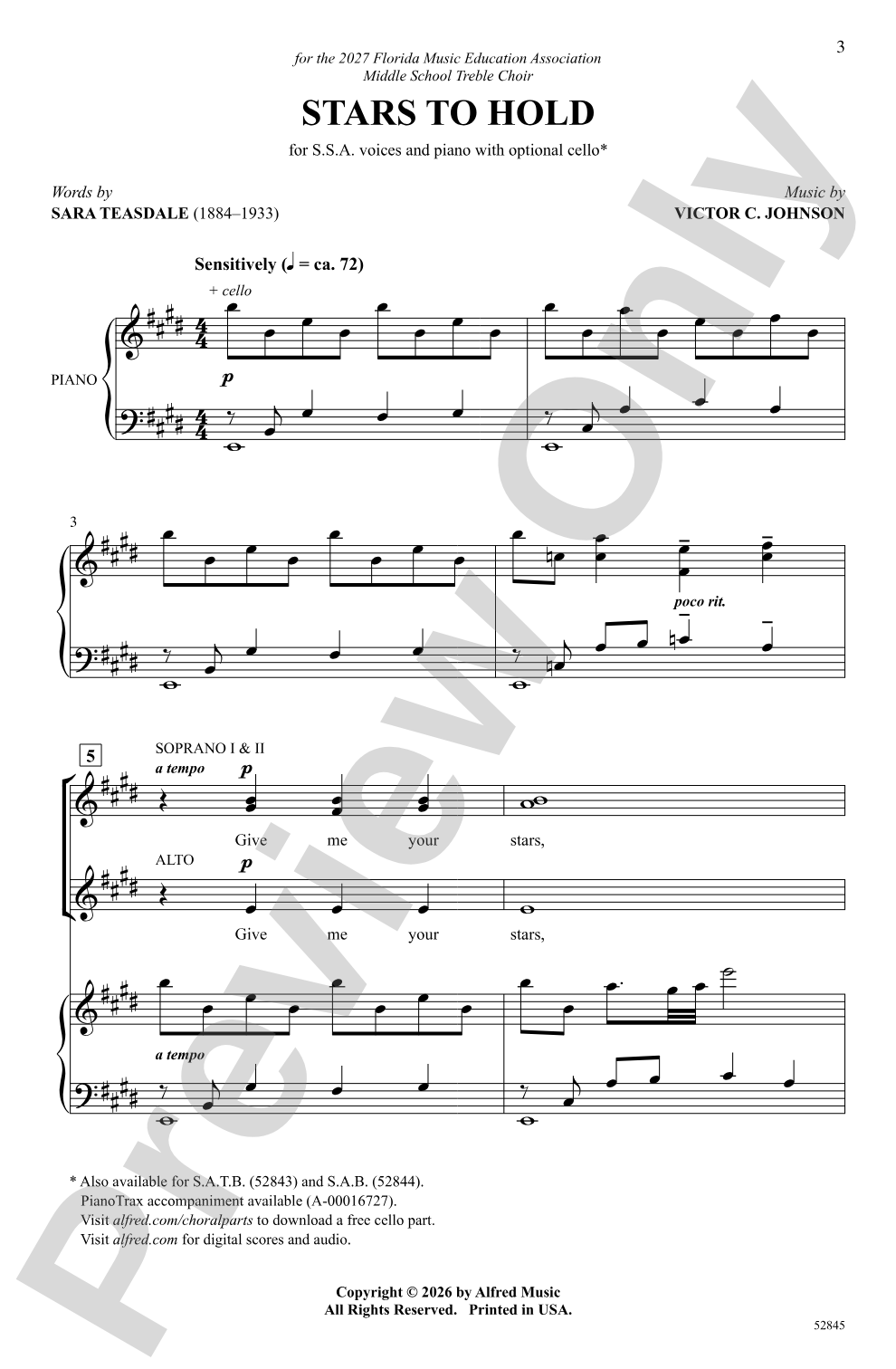

Stars to Hold: SSA Choral Octavo
Words by Sara Teasdale, music by Victor C. Johnson
Item: 00-PO-0008306
$2.50
Minimum order quantity: 10 copies
Please note: Under U.S. copyright law, you must purchase the exact number of copies needed for your ensemble. Printing, duplicating or sharing additional copies is strictly prohibited.
Pickup currently not available
Description
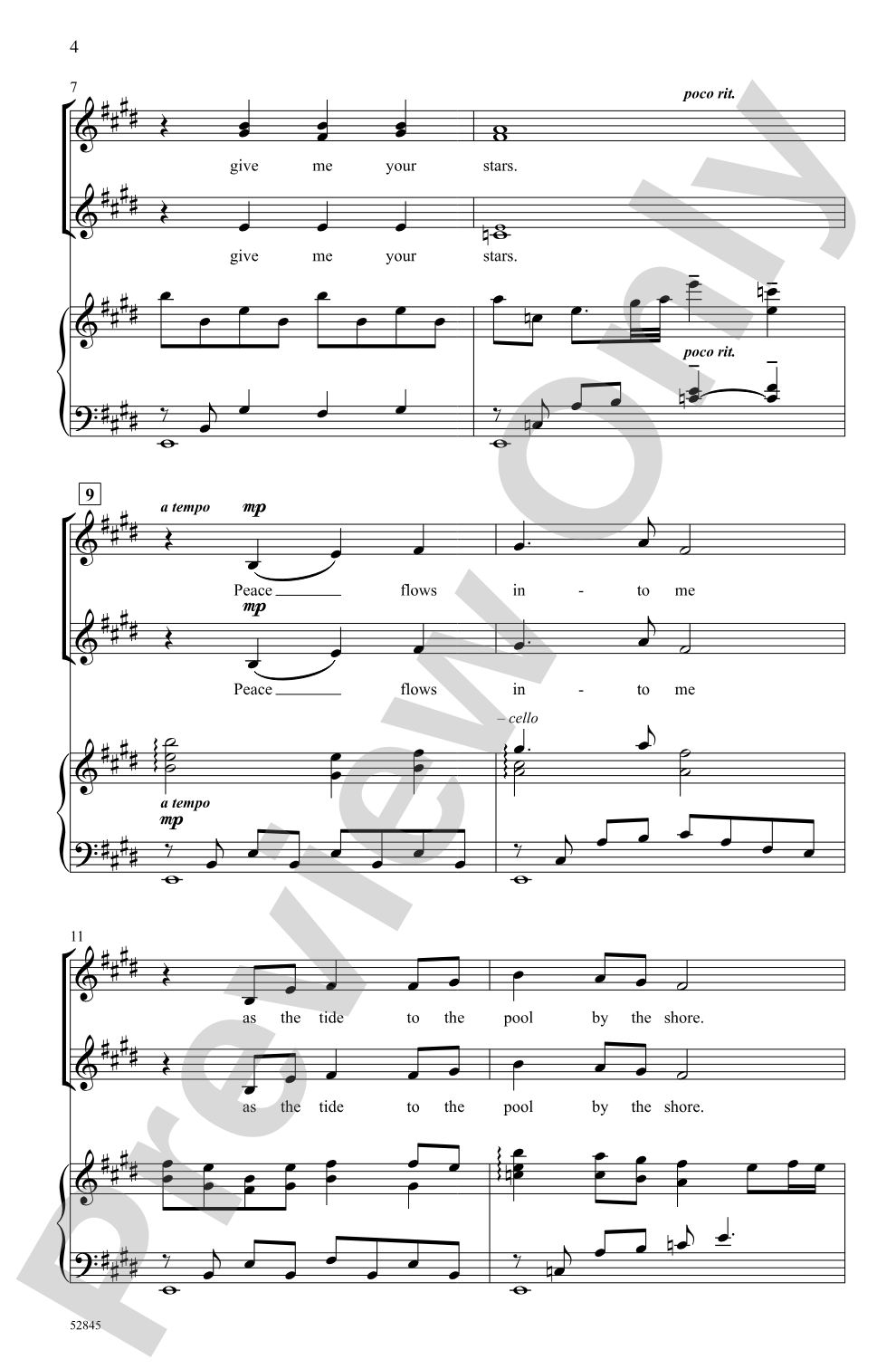
Victor C. Johnson turns Sara Teasdale's sea-and-starlight imagery into a stunning emotional arc with this original concert work. The sensitive setting traces peace flowing in like the tide, grows richer and as the full-voiced choir builds to its artistic high point, then settles back into the quiet plea that opened the piece. A shimmering piano part and an optional cello obbligato add warmth throughout. "Give me your stars to hold."


Discover MakeMusic Cloud: thousands of interactive titles your students can play along with today.
Sample Audio
1
Audio File
--:--
0:00
0:00
Sample Video
Additional Details
Series:
Alfred Choral Designs
Page Count:
12
SKU:
00-PO-0008306
More about this title
About the Composer: Victor C. Johnson

Victor C. Johnson serves as School Choral Editor for Sing!, the educational publishing arm of Choristers Guild, and has become one of today's most prolific voices in choral composition and arrangement. With more than 500 works in print spanning choral pieces, vocal solos, and keyboard collections, his output reflects decades of hands-on experience directing choirs at every level. From 2000 to 2018, he directed multiple ensembles at Ft. Worth Academy of Fine Arts, including the Academy Singers and the Singing Girls of Texas, while simultaneously building a catalog of music that serves school and community choirs nationwide.
As conductor of the Dallas Symphony Children's Chorus Mixed Ensemble since 2022, Johnson continues to shape young singers at the highest level. His deep involvement in professional organizations including the American Choral Directors Association, Texas Music Educators Association, and ASCAP underscores his commitment to the field. His compositions marry accessibility with musical substance, making them invaluable resources for directors seeking repertoire that both challenges and inspires their singers.
Why we love this
Johnson captures something rarely easy to execute in SSA writing: genuine architectural growth that doesn't rely on volume alone to create impact. The emotional trajectory mirrors the text itself, moving from introspection to fullness to resolution, and the optional cello obbligato gives you flexibility depending on your ensemble's resources. Teasdale's starlight imagery becomes something tactile and urgent in this setting, making it a compelling choice when you want to program concert work with real poetic substance.
What to expect
Peaceful and wistful at the start, the piece swells with warmth and collective power before resolving into something both tender and resigned. There is an aching beauty to the imagery, a sense of longing held gently rather than urgently, with the shimmering piano creating pools of light beneath the voices throughout.
Who it's for
SSA choirs with strong upper voices and the musicianship to sustain quiet, introspective passages alongside fuller moments. Works well for concert and festival contexts where literary text and emotional authenticity matter more than technical showmanship.
How to get the most out of it
- Shape the opening phrases with sustained legit singing; resist any impulse to rush the quiet plea that anchors the piece. Let the text do the work before the harmonic richness enters.
- Balance the three voices carefully as the piece builds. The uppermost line can easily eclipse the inner voices, especially in the middle section where those sustained harmonies matter most.
- If using the cello obbligato, schedule separate rehearsal time for that instrumentalist with your pianist. The part needs to breathe alongside the choir rather than sit on top of it.
- The piano part shimmers but requires clarity and precision. Work with your accompanist to ensure that the accompaniment never muddles the harmonic content the choir is carrying.
How to use it
Pair this with other art song settings or contemporary concert pieces when building a program that emphasizes lyrical singing and poetic substance. It works beautifully as a second or third piece in a concert, after something with more textural variety has warmed up the audience and the ensemble alike.
Skills your students will build
- Sustaining soft dynamics without sacrificing tone quality
- Balancing multiple voice parts in rich harmonic contexts
- Responding to poetic text as a structural and emotional guide
- Shaping longer phrases with natural breath and arc
- Tuning major and minor triads in extended vocal ranges