
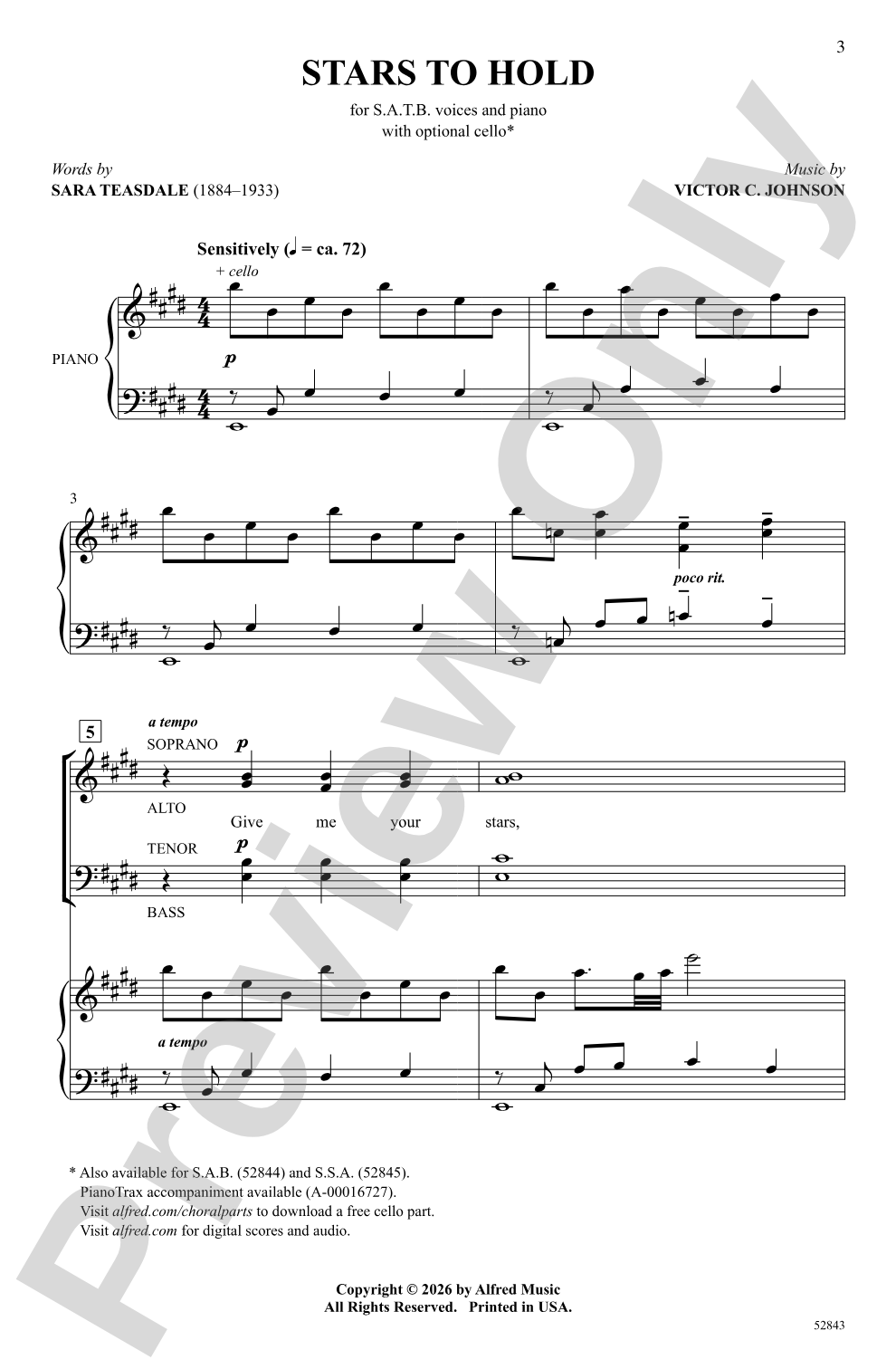

Stars to Hold: SATB Choral Octavo
Words by Sara Teasdale, music by Victor C. Johnson
Item: 00-PO-0008304
$2.50
Minimum order quantity: 10 copies
Please note: Under U.S. copyright law, you must purchase the exact number of copies needed for your ensemble. Printing, duplicating or sharing additional copies is strictly prohibited.
Pickup currently not available
Description
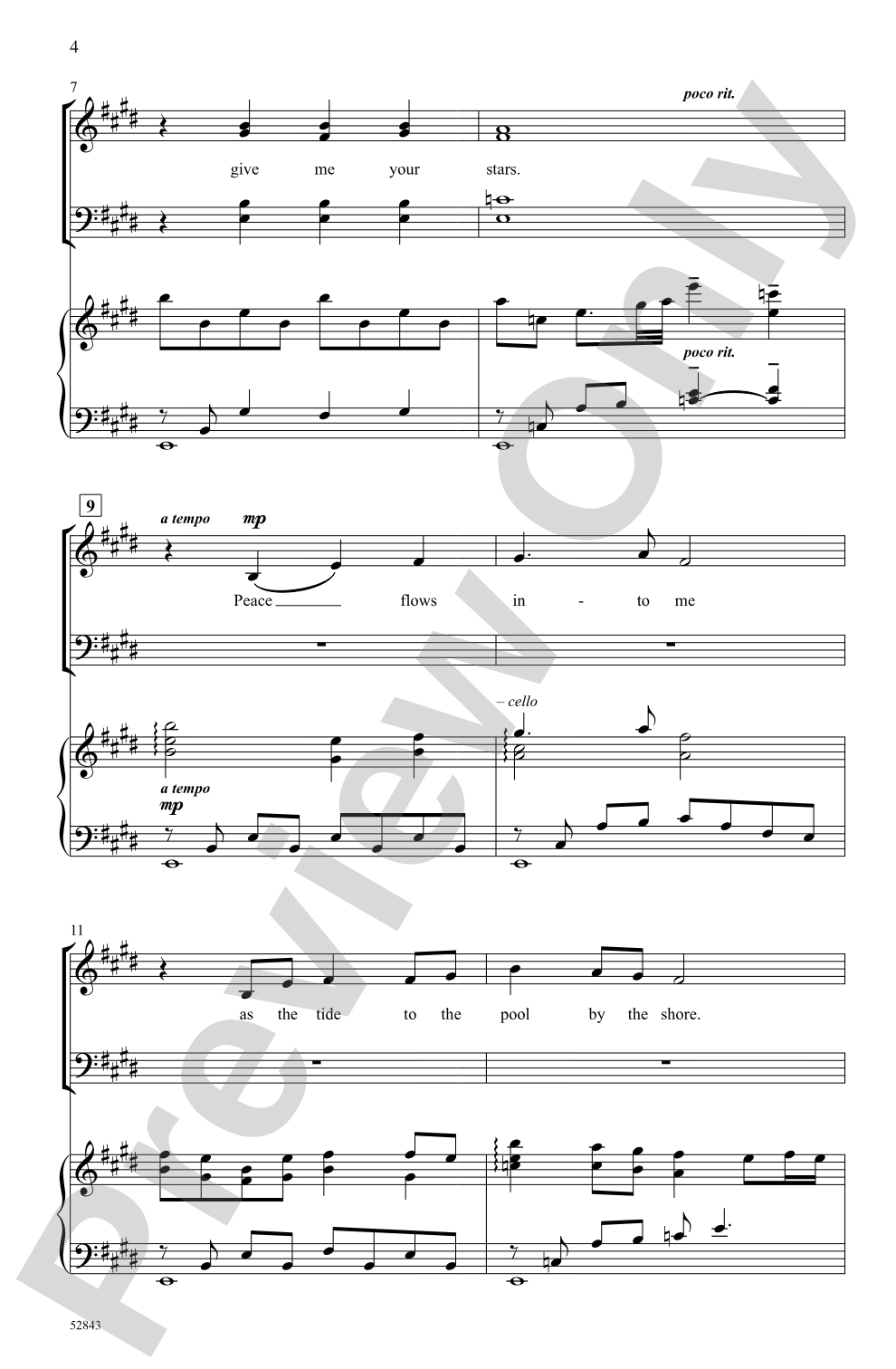
Victor C. Johnson turns Sara Teasdale's sea-and-starlight imagery into a stunning emotional arc with this original concert work. The sensitive setting traces peace flowing in like the tide, grows richer and as the full-voiced choir builds to its artistic high point, then settles back into the quiet plea that opened the piece. A shimmering piano part and an optional cello obbligato add warmth throughout. "Give me your stars to hold."


Discover MakeMusic Cloud: thousands of interactive titles your students can play along with today.
Sample Audio
1
Audio File
--:--
0:00
0:00
Sample Video
Additional Details
Series:
Alfred Choral Designs
Page Count:
12
SKU:
00-PO-0008304
More about this title
About the Composer: Victor C. Johnson

Victor C. Johnson brings decades of choral experience to his prolific output as composer and arranger. Based in Dallas, he has shaped the choral landscape through direct mentorship as a high school director at Ft. Worth Academy of Fine Arts and through his current role as School Choral Editor for Sing!, where he curates educational choral music for young singers. His catalog exceeds 500 works across choral, vocal, and keyboard genres.
Beyond the page, Johnson's leadership extends to the concert stage. He currently conducts the Dallas Symphony Children's Chorus Mixed Ensemble, the resident youth choir of the Dallas Symphony Orchestra. His deep involvement with organizations including the American Choral Directors Association, Texas Choral Directors Association, and ASCAP reflects his commitment to advancing the art form both locally and nationally.
Why we love this
Johnson's command of emotional narrative shines here. The piece moves with genuine architecture: opening quietude gives way to richness and climax before returning home, making it substantial enough for festival consideration yet intimate enough to land in a concert without overwhelming the program. The optional cello obbligato provides flexibility, allowing directors to expand the piece's palette when resources allow or keep it elegant and lean when they don't.
What to expect
Stars to Hold unfolds like a journey across calm water toward starlight, then back again. The writing creates moments of introspection alongside passages of warm, full-voiced lyricism, supported by a piano part that genuinely enhances rather than accompanies. Teasdale's evocative imagery finds a musical vessel that honors her language while allowing singers and audiences to dwell in the piece's emotional truth.
Who it's for
This octavo suits choirs seeking a concert showcase that demonstrates musical maturity and emotional range. It works equally well for advanced high school groups and community or collegiate ensembles looking for accessible but substantive secular repertoire.
How to get the most out of it
- Shape the opening phrasing to emphasize the text's vulnerability. Resist rushing the quiet plea that frames the piece; let the choir understand they are singing a request, not a statement.
- Balance the piano and cello parts so they shimmer rather than dominate. This is collaborative accompaniment, not background filler.
- Build the crescendo toward the climax gradually across multiple measures rather than in sudden waves. Johnson's writing rewards patient dynamic progression.
- If using the recorded accompaniment, rehearse with it early and often. Students anchor to tempos faster than they learn from your conducting alone.
How to use it
Program this work as a concert centerpiece that can anchor a thematic set around nature, contemplation, or romantic poetry. It pairs naturally with other sea imagery or introspective texts, and its moderate length makes it ideal for filling a strategic spot in a longer concert without demanding the full dramatic weight of a closing number.
Skills your students will build
- Shaping long phrases with intentional dynamics and breath
- Interpreting poetic text to inform musical expression
- Balancing independence as an SATB voice while maintaining ensemble cohesion
- Responding to piano accompaniment that moves beyond strict support
- Building and sustaining emotional arc across a complete piece