
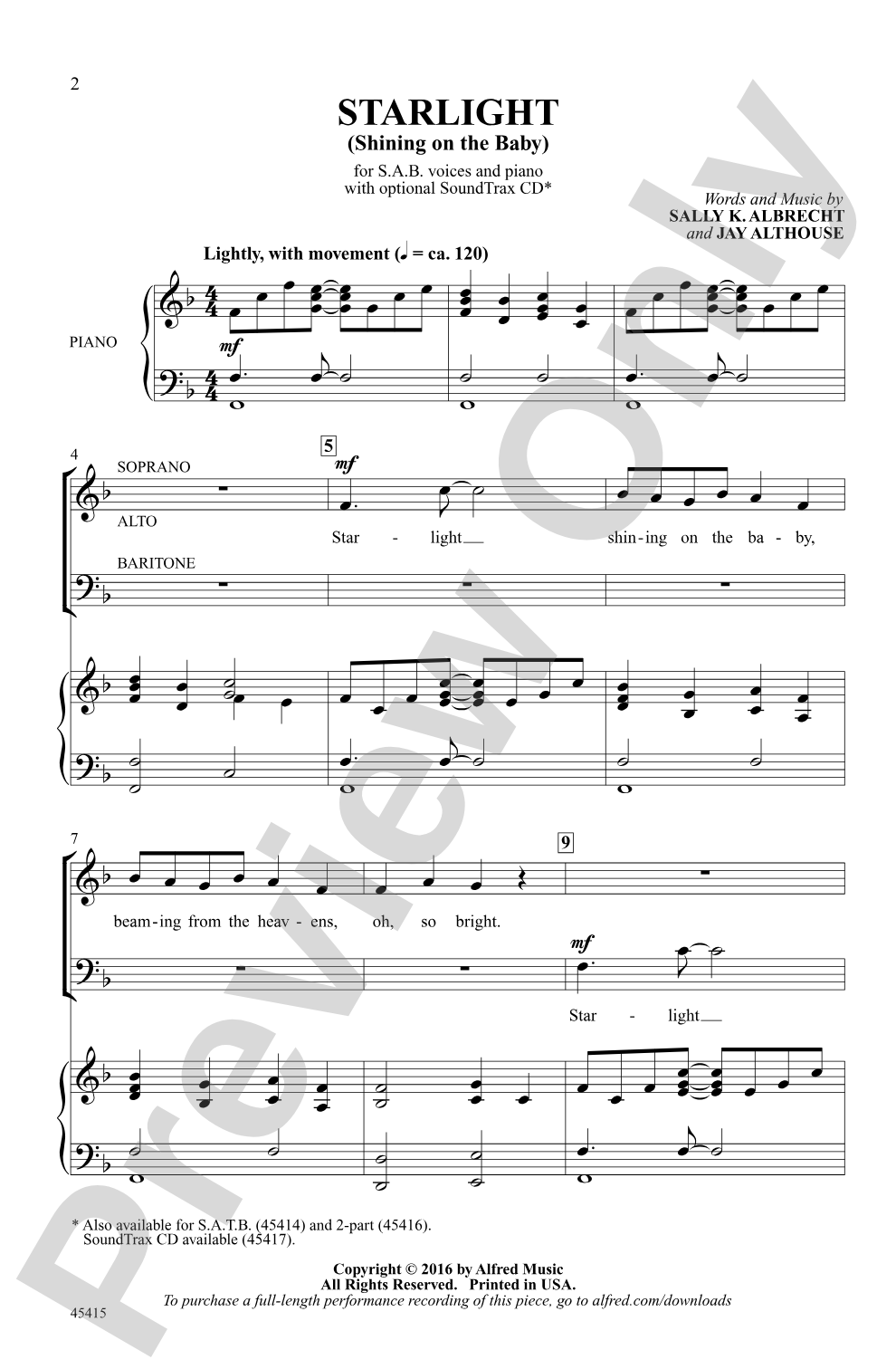
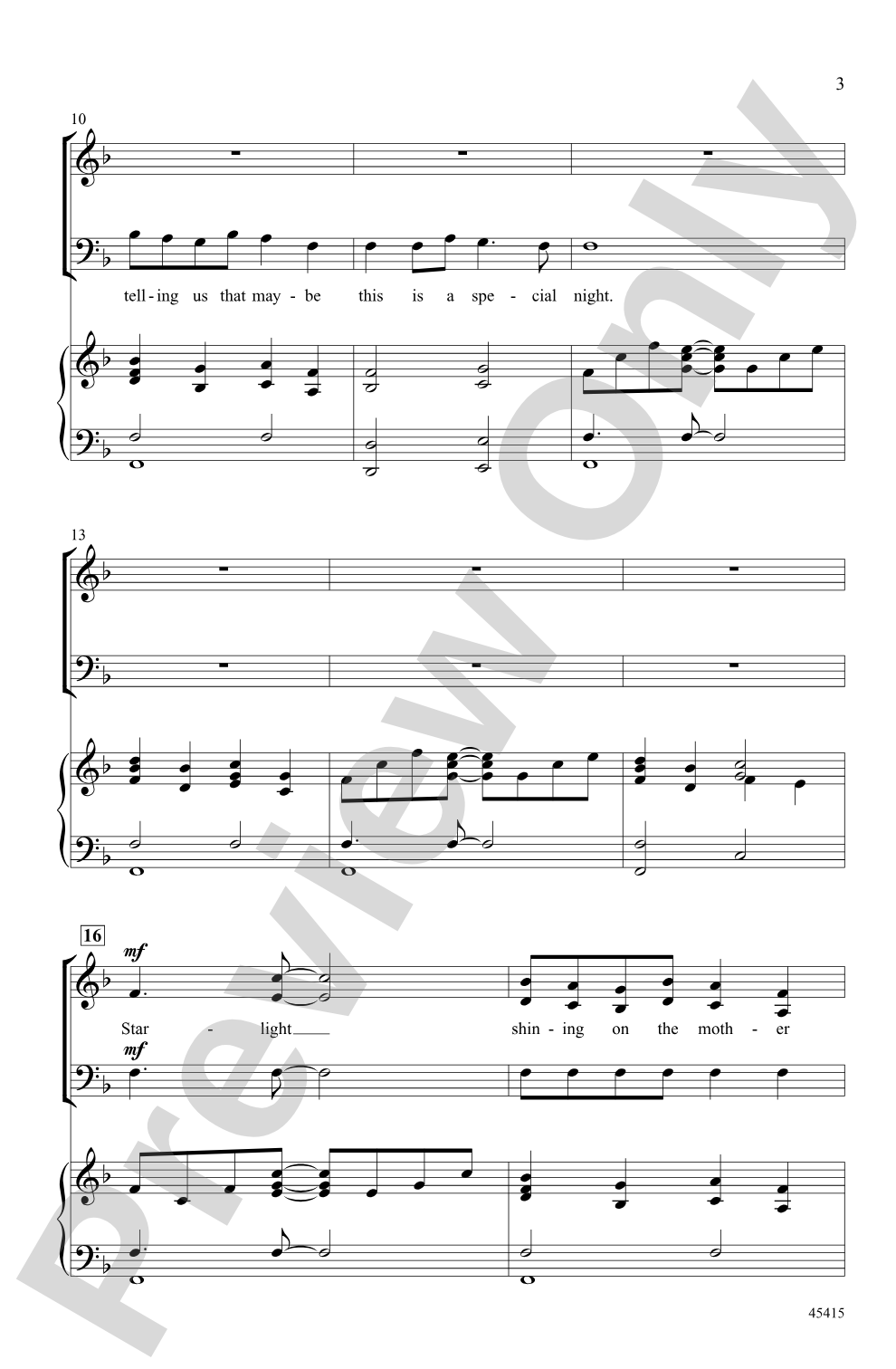

Starlight: SAB Choral Octavo
(Shining on the Baby)
Words and music by Sally K. Albrecht and Jay Althouse
Item: 00-PO-0003659
$1.90
Minimum order quantity: 20 copies
Pickup currently not available
Related Items
Starlight: SoundTrax Digital Audio Download |
$27.99
|
View | |
Starlight: SATB Choral Octavo |
$1.90
|
View | |
Starlight: 2-Part Choral Octavo |
$1.90
|
View | |
Starlight: SATB Choral Octavo |
$1.90
|
View | |
Starlight: SAB Choral Octavo |
$1.90
|
View | |
Starlight: 2-Part Choral Octavo |
$1.90
|
View | |
Starlight: Choral Octavo SoundTrax CD |
$27.99
|
View |
Description
A symbolic ascending fifth opens the main melodic idea in this bright original for Christmas. Taking inspiration from "Angels We Have Heard on High," the chorus moves in a new harmonic direction, while a brief bridge quotes the traditional carol. Simply stellar! Appropriate for both school and church.


Starlight: SAB Choral Octavo isn't in MakeMusic Cloud just yet...but it could be. Let us know you'd like to see it, and you'll help shape what comes next. In the meantime, start a free trial and dive into thousands of interactive titles your students can play along with today.
Request This Title
Tell us you want it.
Start Your Free Trial
Explore everything that's ready to play right now.
Sample Audio
1
Audio File
--:--
0:00
0:00
Sample Video
No sample videos found.
Additional Details
Series:
Alfred Choral Designs
Publisher:
Alfred Music
Page Count:
12
SKU:
00-PO-0003659
More about this title
About the Composer: Sally K. Albrecht
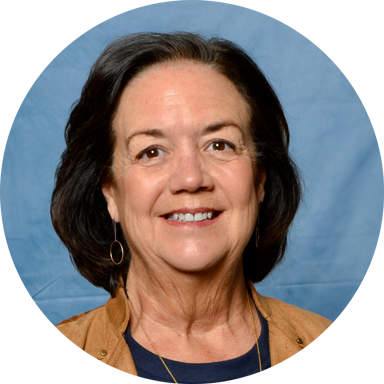
Sally K. Albrecht brings three decades of experience shaping choral music education, having served as Director of School Choral, Vocal, and Elementary Publications at major educational publishers, most recently Alfred Music. A sought-after clinician and conductor, she has led honor choirs at Lincoln Center, Carnegie Hall, and The Kennedy Center, while maintaining a prolific output as a composer. Since 1987, she has received the ASCAP Special Music Award annually and published over 600 choral works alongside 75 larger songbooks and musicals.
Albrecht holds degrees from Rollins College (B.A. in Music and Theater, 1976) and the University of Miami (M.A. in Drama and M.M. in Accompanying). She has taught at Oakland University, Jersey City State College, and Meredith College. A 2021 recipient of the Distinguished Alumna Award from both the University of Miami Frost School of Music and Rollins College, she has also chaired the Board of Trustees for the Omicron Delta Kappa National Leadership Honor Society and earned their "Pillar of Leadership" award.
Why we love this
Albrecht and Althouse craft an original melody with genuine appeal while honoring the tradition of "Angels We Have Heard on High" through harmonic reimagining and strategic quotation. The SAB voicing keeps the piece accessible without sacrificing musicality, and the ascending fifth opening gives your singers a memorable hook that sits naturally in their voices. Recorded accompaniments make rehearsal flexible, whether you're building independence or shaping blend.
What to expect
Bright and contemplative in equal measure, "Starlight" captures the quiet wonder of Christmas through an original lens. The ascending fifth feels like a prayer lifting upward; the harmonic journey keeps ears engaged without demanding harmonic sophistication from singers.
Who it's for
Choirs seeking fresh Christmas repertoire that works equally well in concert halls and sanctuary settings will find this piece answers the call. SAB voicing opens doors for mixed ensembles with developing upper voices or those bridging between two-part and four-part literature.
How to get the most out of it
- Let the opening fifth breathe. This interval is your piece's signature gesture; singers should sense its lift and aspiration before the main melody emerges.
- Balance the chorus's harmonic shifts carefully. Since the piece moves away from familiar progressions, mark the moments where voices land on new harmony and rehearse those transitions as distinct musical events.
- Highlight the bridge quotation without overdoing it. When "Angels We Have Heard on High" appears, it should feel like recognition rather than announcement; keep the texture intimate.
How to use it
Pair this with more traditional carols to create a "then and now" Christmas concert moment, or use it as a contemporary anchor in a service where text-painting and original composition feel at home. The piece's moderate length and accessibility make it ideal for mid-December programming when rehearsal time grows short.
Skills your students will build
- Singing in SAB voicing with secure part independence
- Following harmonic movement away from diatonic progressions
- Recognizing and performing a quoted traditional melody within new harmonic context
- Interpreting musical symbolism (ascending interval as thematic gesture)