

Ständchen: TTBB Choral Octavo
(Serenade)
Music by Franz Schubert / arr., with English Words, by Kirby Shaw
Item: 00-PO-0006381
$2.05
Minimum order quantity: 20 copies
Pickup currently not available
Description
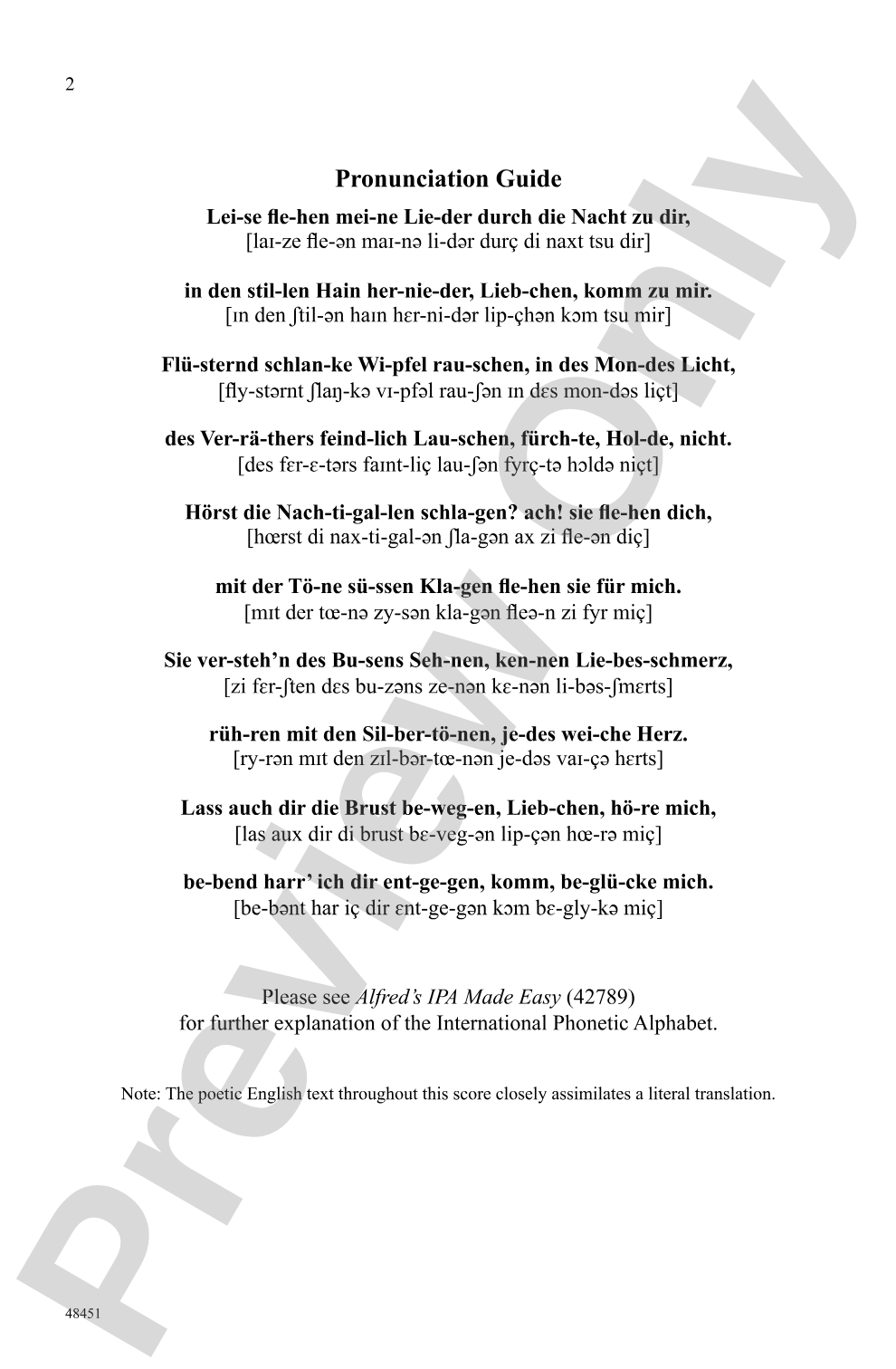
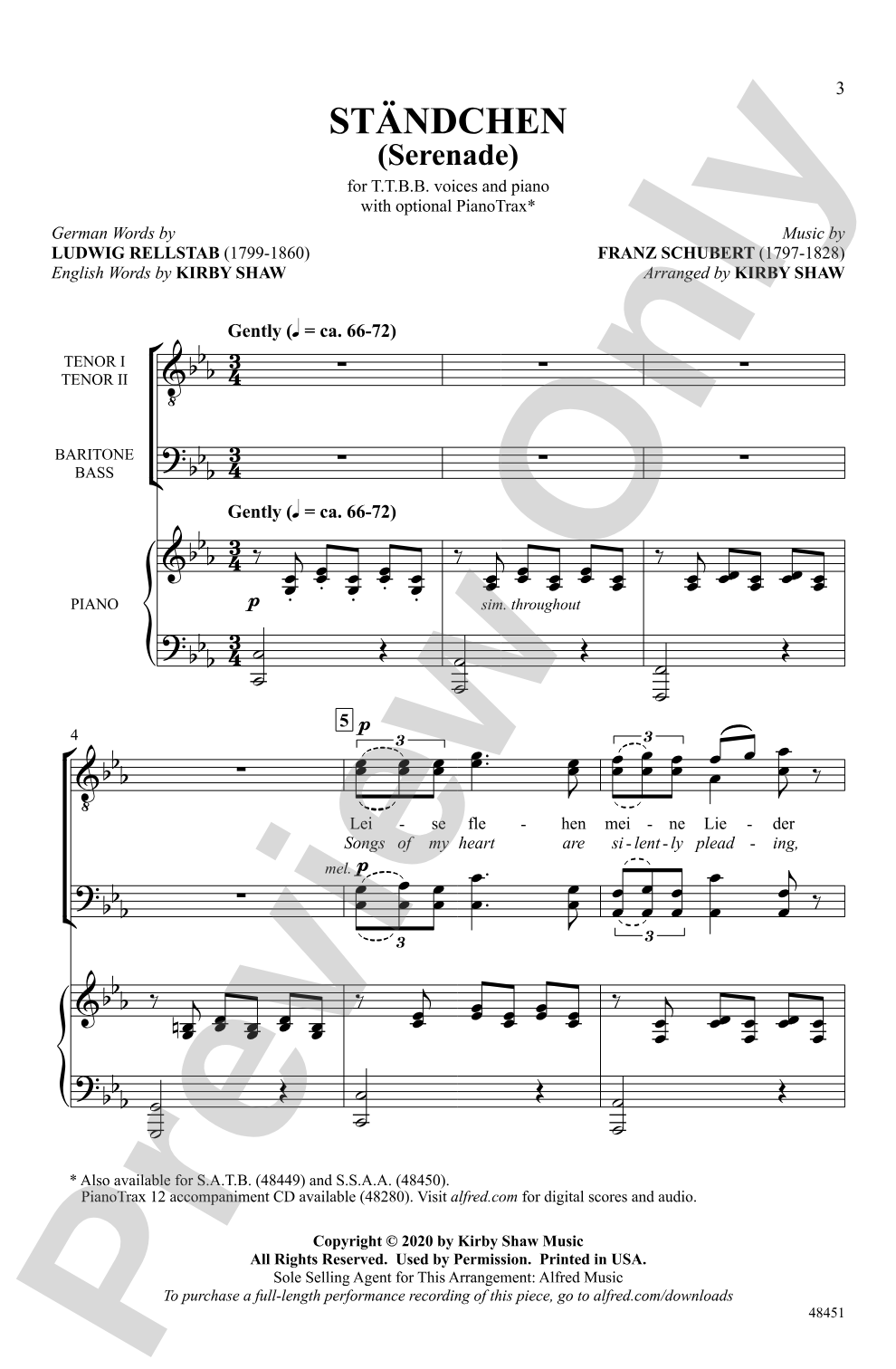
Generations of solo singers have cherished this classic art song, and now Alfred Music proudly presents the magnificent work designed for sophisticated choirs in an array of voicings. Schubert's original piano part provides the rich chromatic language from which the voice parts are extracted. Study the original German text using the provided IPA pronunciation guide, or choose the singable English translation.


Ständchen: TTBB Choral Octavo isn't in MakeMusic Cloud just yet...but it could be. Let us know you'd like to see it, and you'll help shape what comes next. In the meantime, start a free trial and dive into thousands of interactive titles your students can play along with today.
Request This Title
Tell us you want it.
Start Your Free Trial
Explore everything that's ready to play right now.
Sample Audio
1
Audio File
--:--
0:00
0:00
Sample Video
No sample videos found.
Additional Details
Series:
Alfred Choral Designs
Publisher:
Alfred Music
Page Count:
12
SKU:
00-PO-0006381
More about this title
About the Composer: Franz Schubert
Franz Schubert (1797-1828) composed over 600 works across all major genres despite his brief life, leaving an indelible mark on the art song tradition. His genius lay in merging lyrical melody with sophisticated harmonic language, creating music that remains accessible to singers while offering infinite depth for interpretive exploration. Schubert's lieder became the gold standard for how composers should treat poetry and voice, influencing choral writing for generations to come.
For choral musicians, Schubert's output offers repertoire that demands both musical maturity and emotional authenticity. His works reward careful attention to text, nuanced phrasing, and the kind of ensemble balance that separates competent singing from compelling performance.
Why we love this
Kirby Shaw's arrangement makes one of the most beloved lieder in the vocal repertoire accessible to men's choirs without sacrificing the chromatic richness that defines Schubert's harmonic language. The dual-text option (German with IPA and English translation) means your singers can deepen their connection to the original poetry or move freely with a singable English version. At 12 pages, this sits at an ideal length for contest programs and special concert features where you want substance without overextending rehearsal time.
What to expect
Intimate and deeply romantic, built on a foundation of yearning rather than bombast. The chromatic harmonies create a sense of emotional complexity; nothing is quite as it initially appears, and every phrase seems to contain a gentle surprise that deepens the song's meaning.
Who it's for
Men's choirs seeking sophisticated repertoire that moves audiences without requiring soloists or extensive performance experience. This arrangement works equally well for advanced high school choruses, college groups, and established community ensembles preparing for festival competition or special concert programming.
How to get the most out of it
- Balance the voice parts so the melody emerges clearly while the harmonic foundation remains full; Schubert's chromatic movement can blur if the lower voices aren't singing with intention and independence.
- Shape each phrase according to the text's natural breathing points rather than resting on barlines; the music's emotional arc depends on singers recognizing where thoughts complete and new ones begin.
- Let the recorded accompaniment guide your ensemble's phrasing initially, but work toward independence so your singers respond to each other rather than following the track.
- Invest time in the pronunciation guide if singing in German; these vowels and consonant placements are integral to how the music lands with an audience.
How to use it
Position this as a concert highlight, either solo or paired with other Schubert arrangements to create a thematic arc around the German lied tradition. It works beautifully as a closing piece for an evening when your ensemble is fully warmed and capable of the vulnerability this music requires.
Skills your students will build
- Reading and interpreting chromatic harmony in close-voiced writing
- Sustaining independent vocal lines while maintaining ensemble blend
- Pronunciation and diction in German (with IPA guide)
- Phrase shaping that follows poetic text rather than metric structure
- Balance between melody projection and harmonic support