

Ständchen: SATB Choral Octavo
(Serenade)
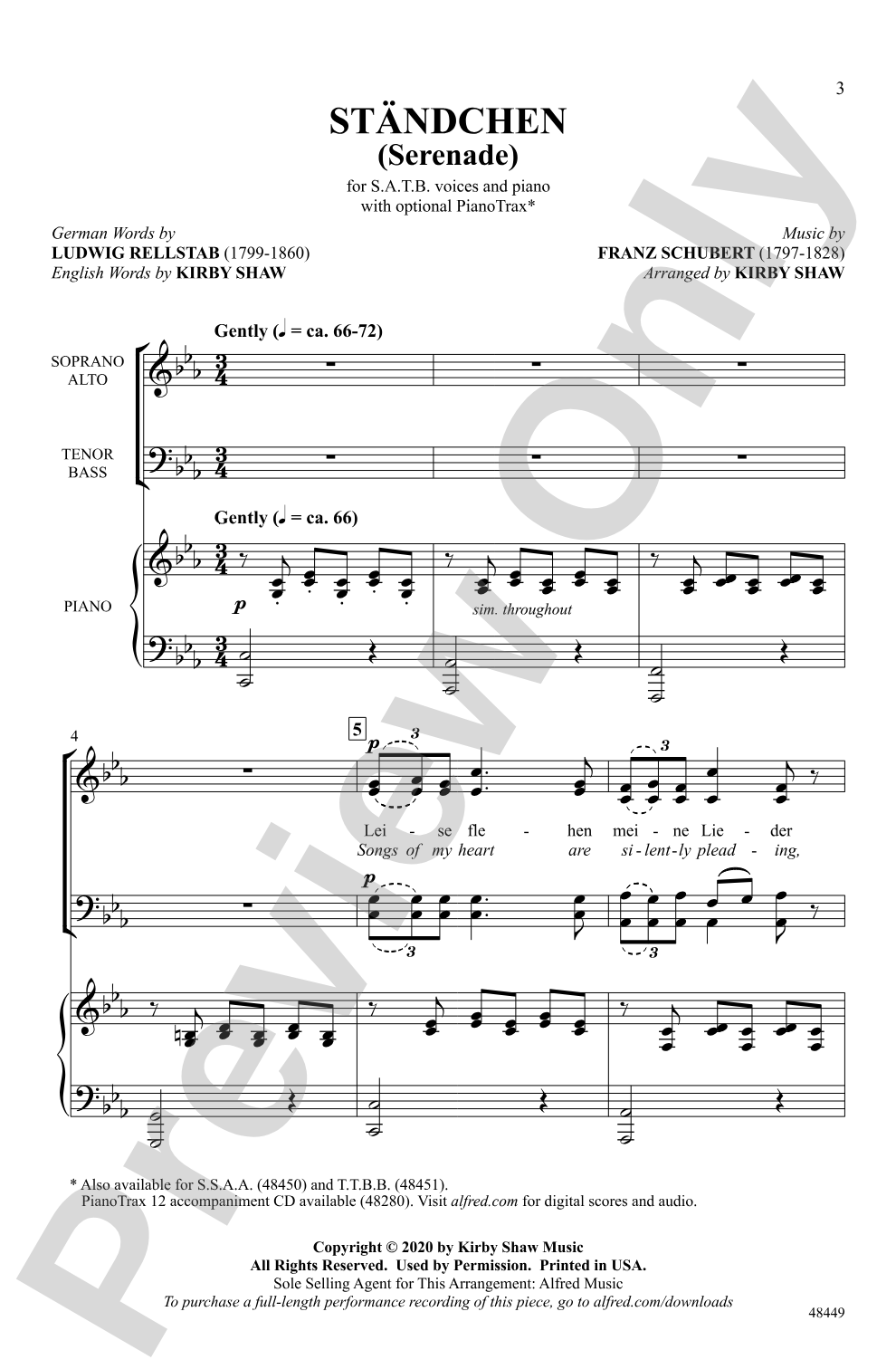
Music by Franz Schubert / arr., with English words, by Kirby Shaw
Item: 00-PO-0006379
$2.05
Minimum order quantity: 20 copies
Pickup currently not available
Description
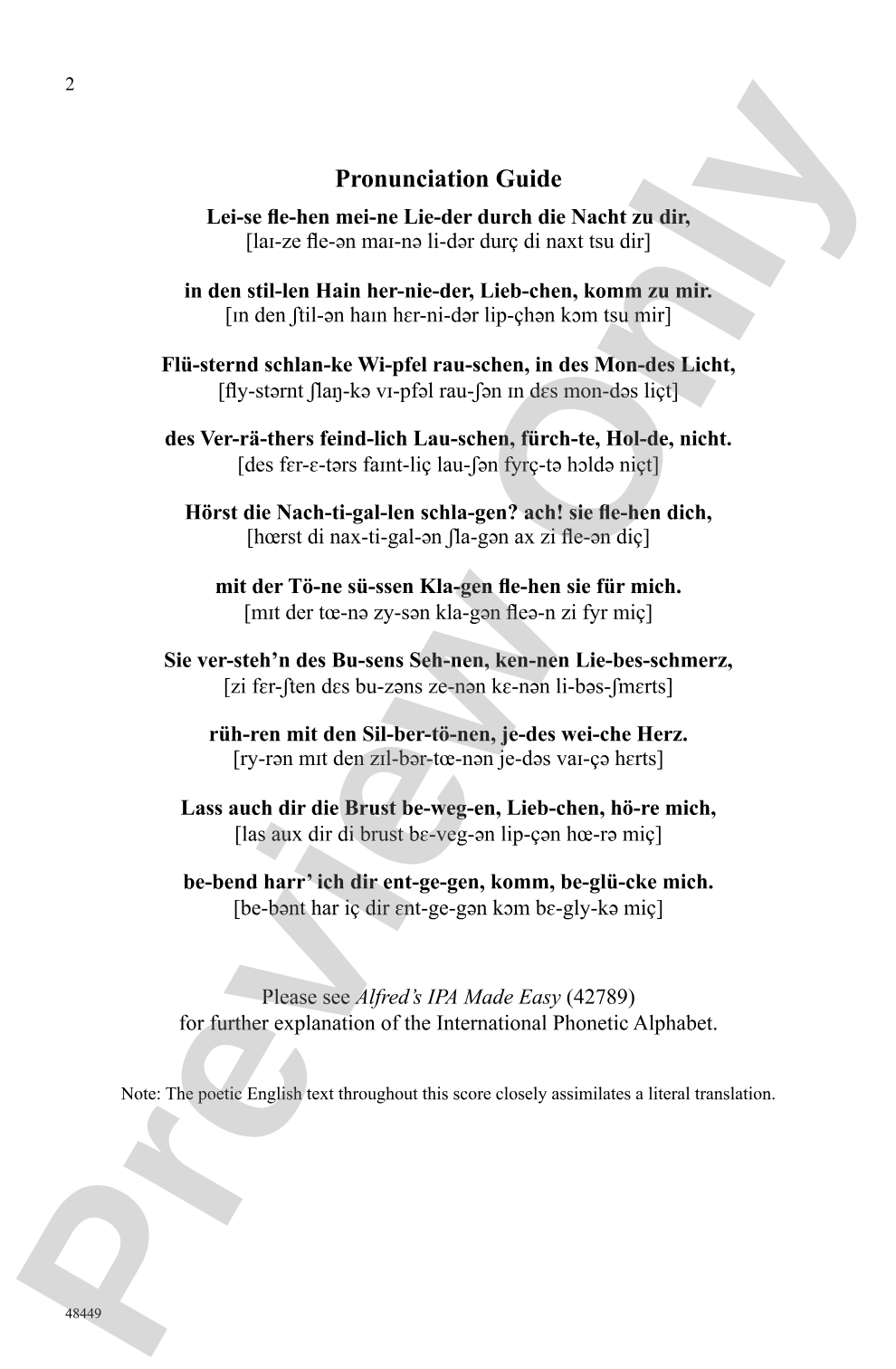
Generations of solo singers have cherished this classic art song, and now Alfred Music proudly presents the magnificent work designed for sophisticated choirs in an array of voicings. Schubert's original piano part provides the rich chromatic language from which the voice parts are extracted. Study the original German text using the provided IPA pronunciation guide, or choose the singable English translation.


Ständchen: SATB Choral Octavo isn't in MakeMusic Cloud just yet...but it could be. Let us know you'd like to see it, and you'll help shape what comes next. In the meantime, start a free trial and dive into thousands of interactive titles your students can play along with today.
Request This Title
Tell us you want it.
Start Your Free Trial
Explore everything that's ready to play right now.
Sample Audio
1
Audio File
--:--
0:00
0:00
Sample Video
Additional Details
Series:
Alfred Choral Designs
Publisher:
Alfred Music
Page Count:
12
SKU:
00-PO-0006379
More about this title
About the Composer: Franz Schubert
Franz Schubert (1797-1828) spent his short life in Vienna composing across every major genre: symphonies, chamber music, piano works, and over 600 art songs that fundamentally shaped the lied tradition. His gift for melody combined with harmonic sophistication made him one of the most prolific and influential composers of the Romantic era, and his songs remain central to vocal literature.
Schubert's art songs draw on German Romantic poetry and feature piano parts that are equally important to the vocal line, often telling the story alongside the voice. His ability to capture intimate emotion in miniature form makes his works enduring favorites for singers and choirs seeking repertoire with genuine artistic depth.
Why we love this
Kirby Shaw's SATB treatment opens Schubert's most beloved serenade to the choir repertoire without sacrificing the sophistication that made the original a cornerstone of the vocal recital tradition. The arrangement honors Schubert's chromatic piano writing by distributing it across the voice parts, creating rich harmonic color while remaining singable for choirs comfortable with art song style. Competitive choirs and concert ensembles alike will find a piece that commands attention and rewards careful musical preparation.
What to expect
Tenderness and longing flow through this serenade, a lover's gentle address to a beloved that never becomes cloying or sentimental. The harmonic language shifts with quiet expressiveness, and the piece inhabits that twilight space between intimacy and grandeur that Schubert mastered.
Who it's for
Choirs with solid musicianship and comfort with chromatic harmony will thrive with this piece. SATB ensembles preparing for festivals, concert programs, or competition will find a work that showcases both technical skill and artistic maturity without requiring a solo vocalist.
How to get the most out of it
- Secure the intonation in the chromatic passages by rehearsing the chord progressions separately; mark where the harmony shifts unexpectedly and drill those moments until they lock.
- Choose your language early (German or English) and commit fully to one. If performing in German, use the IPA guide to refine vowel consistency across the ensemble, especially in sustained phrases.
- Shape the melodic contour across sections rather than treating each phrase independently; this Romantic-era piece breathes as one extended musical statement, not a collection of separate ideas.
- Balance the voice parts so the original melody (typically in soprano) remains clear without drowning out the harmonic support; the piano part was conceived to accompany a soloist, not to be replaced by ensemble voices.
How to use it
Pair this with other Romantic art song arrangements or German choral literature to create a thematic program focused on 19th-century vocal elegance. It works equally well as a concert centerpiece or as the refined anchor in a mixed program where technical and musical growth matter.
Skills your students will build
- Reading and executing chromatic voice leading across four parts
- Singing with independence while maintaining blend in jazz-like harmonic progressions
- Interpreting Romantic-era phrasing and text expression in German and English
- Intonation in sustained chords with active harmonic movement
- Balancing melody and accompaniment roles within ensemble singing