

Ständchen: SSAA Choral Octavo
(Serenade)
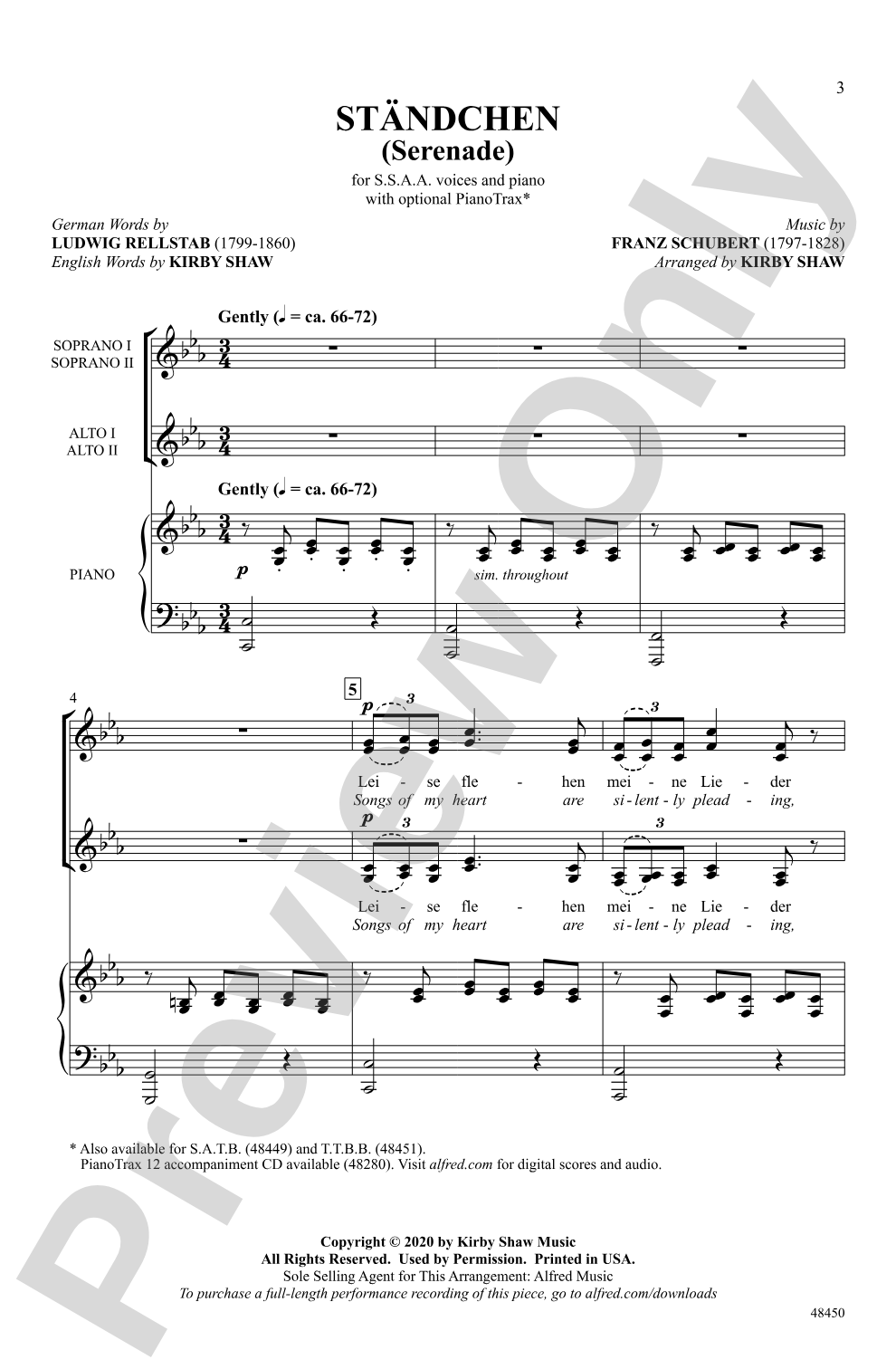
Music by Franz Schubert / arr., with English Words, by Kirby Shaw
Item: 00-PO-0006380
$2.05
Minimum order quantity: 20 copies
Pickup currently not available
Description
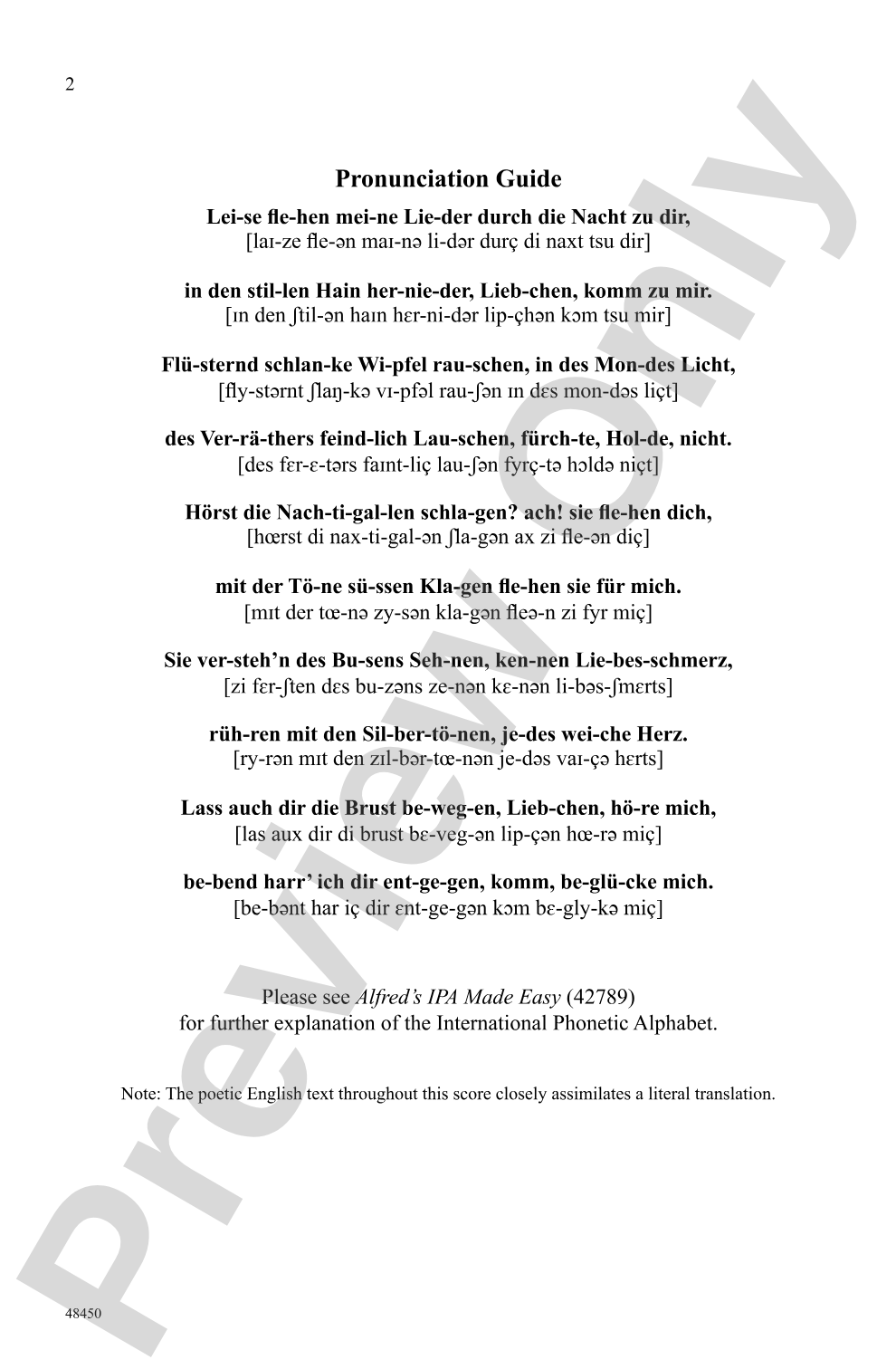
Generations of solo singers have cherished this classic art song, and now Alfred Music proudly presents the magnificent work designed for sophisticated choirs in an array of voicings. Schubert's original piano part provides the rich chromatic language from which the voice parts are extracted. Study the original German text using the provided IPA pronunciation guide, or choose the singable English translation.


Ständchen: SSAA Choral Octavo isn't in MakeMusic Cloud just yet...but it could be. Let us know you'd like to see it, and you'll help shape what comes next. In the meantime, start a free trial and dive into thousands of interactive titles your students can play along with today.
Request This Title
Tell us you want it.
Start Your Free Trial
Explore everything that's ready to play right now.
Sample Audio
1
Audio File
--:--
0:00
0:00
Sample Video
No sample videos found.
Additional Details
Series:
Alfred Choral Designs
Publisher:
Alfred Music
Page Count:
12
SKU:
00-PO-0006380
More about this title
About the Composer: Franz Schubert
Franz Schubert (1797-1828) composed over 600 works across every major genre, yet he is remembered most vividly for his art songs. His gift for melody and harmonic innovation transformed the lied into a vehicle for profound emotional expression, influencing generations of composers and singers who followed.
Schubert's ability to marry intimate poetry with sophisticated musical language made him a natural master of the miniature form. His songs remain central to vocal literature precisely because they achieve grandeur within economy, offering performers and listeners inexhaustible depth across repeated encounters.
Why we love this
Kirby Shaw's arrangement honors Schubert's harmonic architecture while giving choirs a sophisticated work that sounds like a natural ensemble piece rather than a squeezed solo transcription. The SSAA voicing keeps the intimate character of the original intact, and the chromatic richness of Schubert's piano writing carries through the voice parts, rewarding careful intonation and blend.
What to expect
A gentle serenade suffused with longing. Schubert's chromaticism creates a bittersweet harmonic environment where each shift of color deepens the mood rather than disrupting it. The piece unfolds with the intimate vulnerability of a soloist singing by lamplight, translated into the warmth of multiple voices breathing together.
Who it's for
This arrangement suits choirs with solid musicianship and a commitment to refined blend and intonation. Singers need maturity to navigate the chromatic voice-leading and sustain the emotional arc across the piece, making it ideal for upper-level high school ensembles, college choirs, and community ensembles with advanced singers.
How to get the most out of it
- Shape the phrase lines as you would a vocal soloist would: find the emotional arch in each section and resist the urge to treat sustained chords as static. The chromatic language demands continuous forward motion.
- Balance the four parts so that no single voice pulls the ensemble out of tune. In passages with chromatic movement, lock the tuning by listening upward to the part above you.
- Use the IPA pronunciation guide to achieve consistent vowel shapes across all four parts, especially on sustained notes where blend becomes audible.
- If performing with the recorded accompaniment, rehearse with it early and often; the piano's independence requires precise ensemble cohesion to sound integrated rather than accompanied.
How to use it
Program this alongside other Romantic-era vocal works to demonstrate how art song masterpieces translate to the choral medium. It works beautifully as a concert closer or as part of a German lied-focused program, and its sophistication makes it equally at home in festival or competition settings.
Skills your students will build
- Reading and executing chromatic voice-leading with consistent intonation
- Balancing four independent lines while maintaining phrase shape
- Applying IPA pronunciation to achieve unified diction across parts
- Interpreting art song style and emotional arc in ensemble context