

Sound Innovations for String Orchestra: Sound Development (Intermediate): Conductor Book & Online Media
$39.99 USD
Sale price
$39.99 USD
Regular price
Skip to product information


Sound Innovations for String Orchestra: Sound Development (Intermediate): Conductor Book & Online Media
Warm up Exercises for Tone and Technique
By Bob Phillips and Kirk Moss
Item: 00-34606
$39.99
One moment…
Description
Sound Innovations: Sound Development emphasizes playing with a characteristic beautiful sound. The components of producing this sound are broken into four levels, consistent with the revolutionary Sound Innovations structure: (1) Sound Tone, (2) Sound Bowings, (3) Sound Shifting, and (4) Sound Scales, Arpeggios, Chorales, and Rhythms. The flexible levels can be used in the order that is best for your students, as individual warm-ups or as structured units. Your students will learn the proper use of the bow with the variables of tone, the next group of bowings needed for intermediate repertoire, and how to shift and play with vibrato. These skills are reinforced with comprehensive scales, arpeggios, sight-reading materials, rhythm exercises, and warm-up chorales. Video demonstrations of key skills are referenced in the book and can be viewed online at www.alfred.com/SoundDevelopmentVideo.
This title is available in MakeMusic Cloud.


This title is available in MakeMusic Cloud.
Sound Innovations for String Orchestra: Sound Development (Intermediate): Conductor Book & Online Media isn't in MakeMusic Cloud just yet...but it could be. Let us know you'd like to see it, and you'll help shape what comes next. In the meantime, start a free trial and dive into thousands of interactive titles your students can play along with today.
Request This Title
Tell us you want it.
Start Your Free Trial
Explore everything that's ready to play right now.
Sample Audio
No sample audio found.
Sample Video
No sample videos found.
Additional Details
More about this title
About the Authors
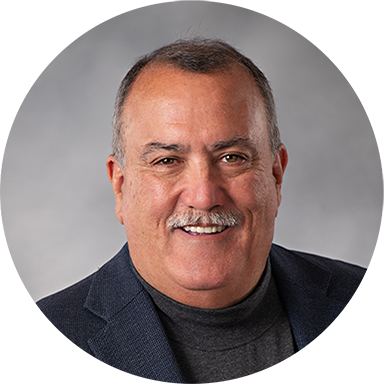
Bob Phillips, born in 1953, is an acclaimed composer, author, conductor, and string pedagogue who has fundamentally shaped how large group string education is taught. Recognized as a leading innovator in developing diverse musical styles for string students, his educational materials and compositions are used by thousands of young musicians annually.
His prolific output includes more than 25 classroom book series, among them all six levels of Sound Innovations and pioneering eclectic style collections such as Fiddlers Philharmonic, Jazz Philharmonic, Rock Philharmonic, and Mariachi Philharmonic. Over 200 of his compositions have been published for orchestras and bands, earning him recognition as an award-winning ASCAP composer whose works appear regularly on Midwest Clinic programs. His instructional DVDs, String Clinics to Go, have become essential resources for music teachers nationwide.
During his 27 years directing the string program in Saline, Michigan, Phillips built a nationally recognized model program of over 700 students excelling in both classical and eclectic repertoire. He founded the Saline Fiddlers Philharmonic ensemble, which achieved international prominence under his direction while performing more than 80 shows annually, including multiple appearances at the White House and Midwest Clinic. Phillips has also served as guest conductor for numerous youth orchestras and all-state ensembles across the country and spent 12 years as resident conductor and arranger for Seattle's Wintergrass Festival.
His prolific output includes more than 25 classroom book series, among them all six levels of Sound Innovations and pioneering eclectic style collections such as Fiddlers Philharmonic, Jazz Philharmonic, Rock Philharmonic, and Mariachi Philharmonic. Over 200 of his compositions have been published for orchestras and bands, earning him recognition as an award-winning ASCAP composer whose works appear regularly on Midwest Clinic programs. His instructional DVDs, String Clinics to Go, have become essential resources for music teachers nationwide.
During his 27 years directing the string program in Saline, Michigan, Phillips built a nationally recognized model program of over 700 students excelling in both classical and eclectic repertoire. He founded the Saline Fiddlers Philharmonic ensemble, which achieved international prominence under his direction while performing more than 80 shows annually, including multiple appearances at the White House and Midwest Clinic. Phillips has also served as guest conductor for numerous youth orchestras and all-state ensembles across the country and spent 12 years as resident conductor and arranger for Seattle's Wintergrass Festival.
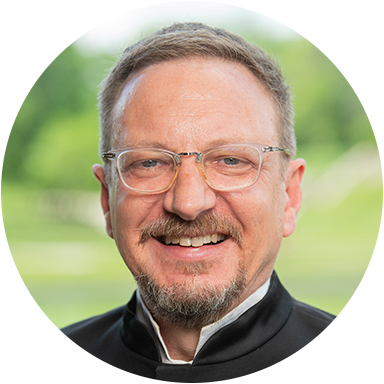
Kirk D. Moss, Ph.D., is Vice Provost for Faculty and Academic Programs at University of Northwestern – St. Paul. He earned recognition as a Faculty Award recipient for Excellence in Scholarship in 2021. A respected leader in string music education, Moss previously served as national president of the American String Teachers Association and chaired the ASTA National Orchestra Festival on five separate occasions.
His contributions to music pedagogy include coauthoring the Sound Innovations series method books published by Alfred Music alongside numerous string orchestra arrangements. Moss has worked extensively as a guest conductor, clinician, and adjudicator across nearly forty states and Australia. His academic achievements include six ASTA National Citations for Leadership and Merit, as well as an Alumni Outstanding Achievement Award from the University of Florida School of Music.
Throughout his twelve year career directing orchestras at the elementary, middle, and high school levels, Moss guided ensembles to achievements at state, national, and international competitions. One of his former high schools established a college string scholarship bearing his name. He holds a Ph.D. in Music Education with a conducting emphasis from University of Florida, a Master of Music degree with string pedagogy cognate from University of Cincinnati College-Conservatory of Music, and a Bachelor of Music degree with high distinction from University of Michigan. Moss and his wife Deb have been married for over thirty-five years and have three children.
His contributions to music pedagogy include coauthoring the Sound Innovations series method books published by Alfred Music alongside numerous string orchestra arrangements. Moss has worked extensively as a guest conductor, clinician, and adjudicator across nearly forty states and Australia. His academic achievements include six ASTA National Citations for Leadership and Merit, as well as an Alumni Outstanding Achievement Award from the University of Florida School of Music.
Throughout his twelve year career directing orchestras at the elementary, middle, and high school levels, Moss guided ensembles to achievements at state, national, and international competitions. One of his former high schools established a college string scholarship bearing his name. He holds a Ph.D. in Music Education with a conducting emphasis from University of Florida, a Master of Music degree with string pedagogy cognate from University of Cincinnati College-Conservatory of Music, and a Bachelor of Music degree with high distinction from University of Michigan. Moss and his wife Deb have been married for over thirty-five years and have three children.