
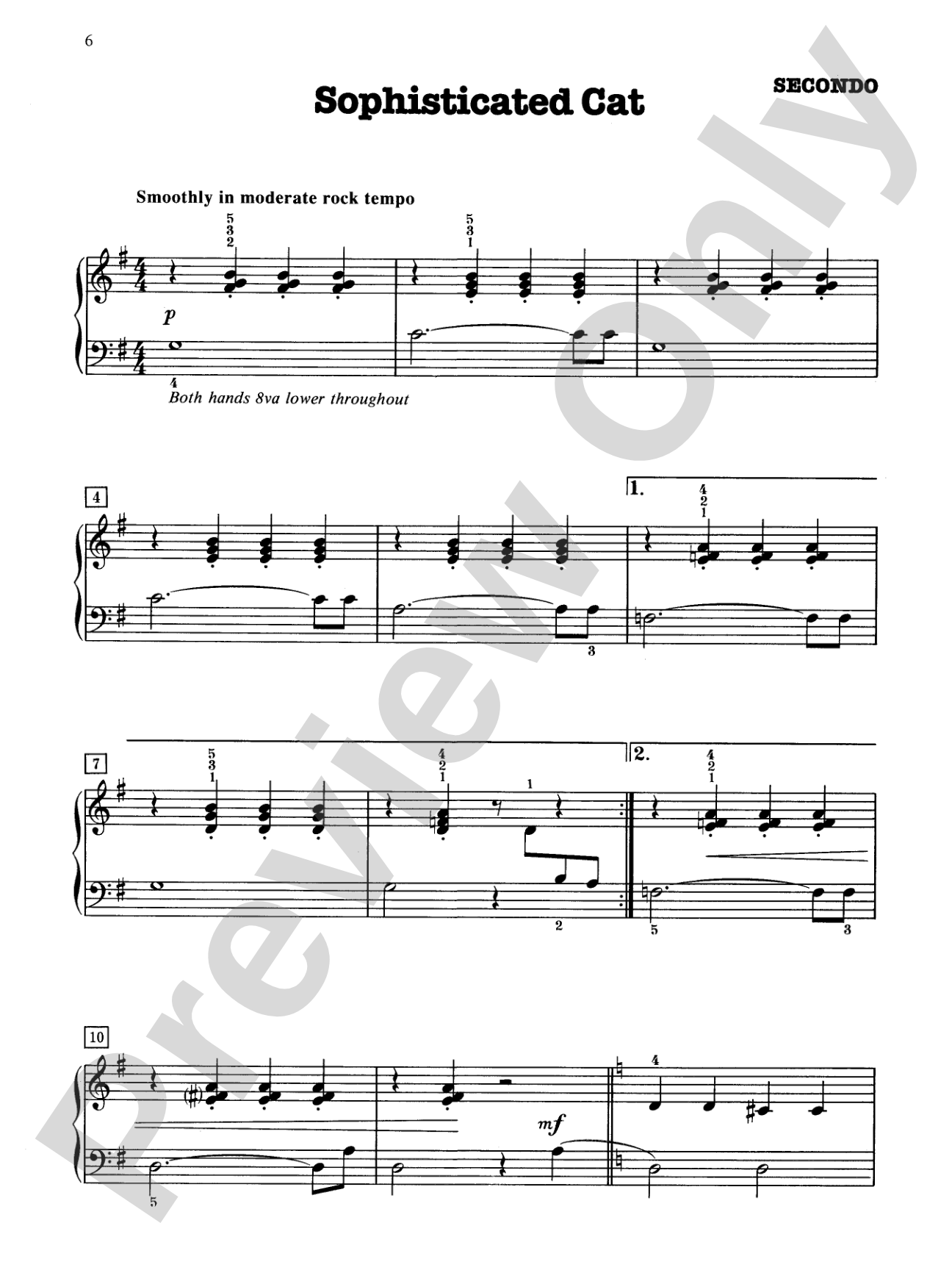

Sophisticated Cat - Piano Duet (1 Piano, 4 Hands): Piano Duet (1 Piano, 4 Hands)
Late Elementary Duets for 1 Piano, 4 Paws
By Margaret Goldston
Level: Late Elementary
Item: 00-PS-0017483
$5.99
Pickup currently not available
Related Items
Kitten Kisses (A Minuet) - Piano Duet (1 Piano, 4 Hands): Piano Duet (1 Piano, 4 Hands) |
$4.99
|
View | |
Meow March - Piano Duet (1 Piano, 4 Hands): Piano Duet (1 Piano, 4 Hands) |
$4.99
|
View | |
Purring Tune - Piano Duet (1 Piano, 4 Hands): Piano Duet (1 Piano, 4 Hands) |
$4.99
|
View | |
Duets for Cat Lovers: Piano Duet (1 Piano, 4 Hands) Book |
$5.99
|
View |
Description
A collection of elementary duets for one piano and four paws! The primo and secondo parts are equal in difficulty and the hand positions are shown for each piece. Some pieces feature easy position shifts. These are indispensible collections to add variety to the lesson plan and help make practicing the piano become less work and more fun! A Federation Festivals 2024-2028 selection.


Discover MakeMusic Cloud: thousands of interactive titles your students can play along with today.
Sample Audio
No sample audio found.
Sample Video
No sample videos found.
Additional Details
Publisher:
Alfred Music
Page Count:
16
SKU:
00-PS-0017483
More about this title
About the Composer: Margaret Goldston

Margaret Goldston spent her career bridging the gap between rigorous musicianship and joyful learning. A North Carolina-based studio teacher, composer, and clinician, she earned her Bachelor of Music in piano performance from Louisiana State University and studied composition privately with Pulitzer Prize winner Robert Ward. Her work earned recognition from the North Carolina Federation of Music Clubs, which named her Composer of the Year in both 1983 and 1994.
Goldston's influence extended well beyond her studio walls. She led masterclasses and teacher workshops across the United States and Canada, and her compositions became fixtures on festival and contest lists. In 2020, three years after her death, the Music Teachers National Association honored her with a Foundation Fellowship. Her pieces remain essential resources for teachers seeking music that works in real lessons with real students.
Why we love this
Goldston understood what late elementary pianists actually need: pieces that sound sophisticated without demanding hand positions or technique far beyond their reach. Equal primo and secondo parts mean both students feel genuinely involved in making music together, and the carefully marked hand positions remove guesswork from your lesson planning.
What to expect
These pieces sparkle with charm and personality. Each duet unfolds with clear musical purpose; the writing is idiomatic to the piano, and there's genuine wit in how Goldston balances the two parts so neither student takes a back seat to the other.
Who it's for
Studio teachers managing diverse student levels will find these duets invaluable for lessons where a student needs to experience real ensemble playing without waiting for a peer of equal ability. Group classes and piano labs also benefit from having multiple duets at the same level that students can rotate through across the year.
How to get the most out of it
- Balance the texture by letting students know when one part should sit slightly behind the other; read through each piece first to identify which hand needs prominence at any given moment.
- Pay close attention to the position shifts Goldston includes. Work through them slowly in rehearsal and have students mark the exact moment of transition with a pencil so they can practice them separately at home.
- Record a performance of your own playing both parts, then have students listen while following their individual score; this helps them hear how their part fits into the whole before adding their own sound.
How to use it
Use duets from this collection as special performance opportunities at recitals, especially when you have multiple late elementary students performing on the same program. They also work beautifully as rewards during the academic year when a student reaches a milestone in their progress, breaking up daily practice routines with the collaborative energy that duet playing provides.
Skills your students will build
- Reading two independent melodic lines simultaneously
- Listening to and balancing with a partner's part
- Executing hand position shifts smoothly
- Following basic ensemble cues (breathing, phrasing, tempo)
- Developing independence from a teacher's guidance during performance