
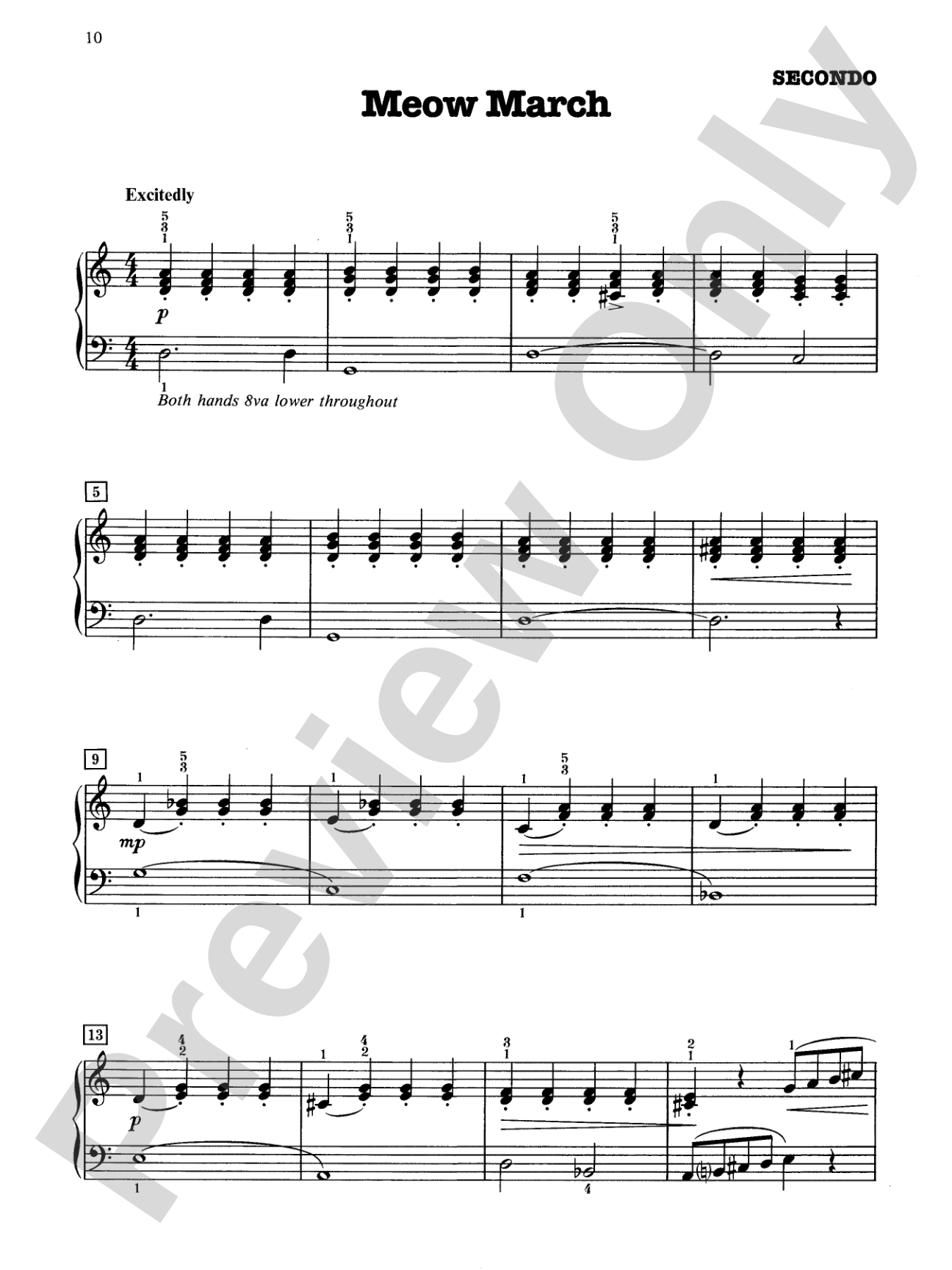

Meow March - Piano Duet (1 Piano, 4 Hands): Piano Duet (1 Piano, 4 Hands)
Late Elementary Duets for 1 Piano, 4 Paws
By Margaret Goldston
Level: Late Elementary
Item: 00-PS-0017481
$4.99
Pickup currently not available
Related Items
Kitten Kisses (A Minuet) - Piano Duet (1 Piano, 4 Hands): Piano Duet (1 Piano, 4 Hands) |
$4.99
|
View | |
Purring Tune - Piano Duet (1 Piano, 4 Hands): Piano Duet (1 Piano, 4 Hands) |
$4.99
|
View | |
Sophisticated Cat - Piano Duet (1 Piano, 4 Hands): Piano Duet (1 Piano, 4 Hands) |
$5.99
|
View | |
Duets for Cat Lovers: Piano Duet (1 Piano, 4 Hands) Book |
$5.99
|
View |
Description
A collection of elementary duets for one piano and four paws! The primo and secondo parts are equal in difficulty and the hand positions are shown for each piece. Some pieces feature easy position shifts. These are indispensible collections to add variety to the lesson plan and help make practicing the piano become less work and more fun! A Federation Festivals 2024-2028 selection.


Discover MakeMusic Cloud: thousands of interactive titles your students can play along with today.
Sample Audio
No sample audio found.
Sample Video
No sample videos found.
Additional Details
Publisher:
Alfred Music
Page Count:
16
SKU:
00-PS-0017481
More about this title
About the Composer: Margaret Goldston
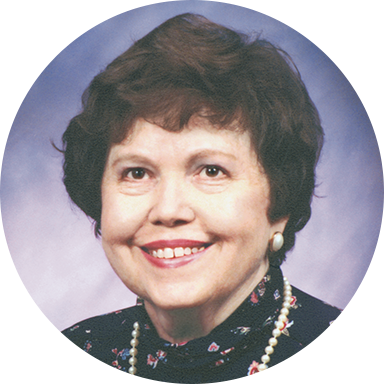
Margaret Goldston spent decades shaping young musicians in her North Carolina studio, where she taught across all age levels and proficiency. She held a Bachelor of Music in piano performance from Louisiana State University and studied composition privately with Pulitzer Prize winner Robert Ward, eventually earning LSU's Alumnus of the Year distinction in 1991.
Goldston's contributions to music education were recognized consistently throughout her career. The North Carolina Federation of Music Clubs named her Composer of the Year twice (1983 and 1994), and she presented clinics and masterclasses across the United States and Canada. Her works remain fixtures on NFMC festival lists, and the Music Teachers National Association honored her posthumously as a Foundation Fellow in 2020.
Why we love this
These duets solve a genuine teaching challenge: finding equal-difficulty primo and secondo parts that actually hold students' interest. Goldston's attention to hand position notation and gradual position shifts means you spend rehearsal time making music rather than troubleshooting logistics. The Federation Festivals selection confirms what your students will discover, these pieces are engaging enough to feel like genuine ensemble music, not just pedagogical exercises.
What to expect
Playful, accessible, and genuinely fun. The pieces carry a lighthearted character that motivates students to practice duets seriously while maintaining the joy that drew many of them to piano in the first place.
Who it's for
Piano teachers working with late elementary students who are ready for collaborative music but need material where both parts feel equally rewarding. Students benefit from the clear hand position guidance, which removes guesswork and keeps focus on ensemble listening and balance.
How to get the most out of it
- Balance the melody between hands before adding the accompaniment; have the primo player identify which hand carries the main theme in each piece.
- Work the secondo part to independence first, since a solid foundation allows the primo player freedom to shape the top line expressively.
- Mark the hand position shifts clearly in both parts so position changes happen together and don't create rhythmic disruptions.
How to use it
Pair these with student recitals throughout the year as short, engaging opener pieces that showcase ensemble work without requiring weeks of rehearsal. They also fit naturally into studio group classes or workshop settings where multiple student pairs can perform the same material on a single program.
Skills your students will build
- Reading and executing hand position notations and position shifts
- Listening for balance between primo and secondo parts
- Maintaining rhythmic independence while coordinating with a partner
- Recognizing and reinforcing melodic contours across distributed hands