
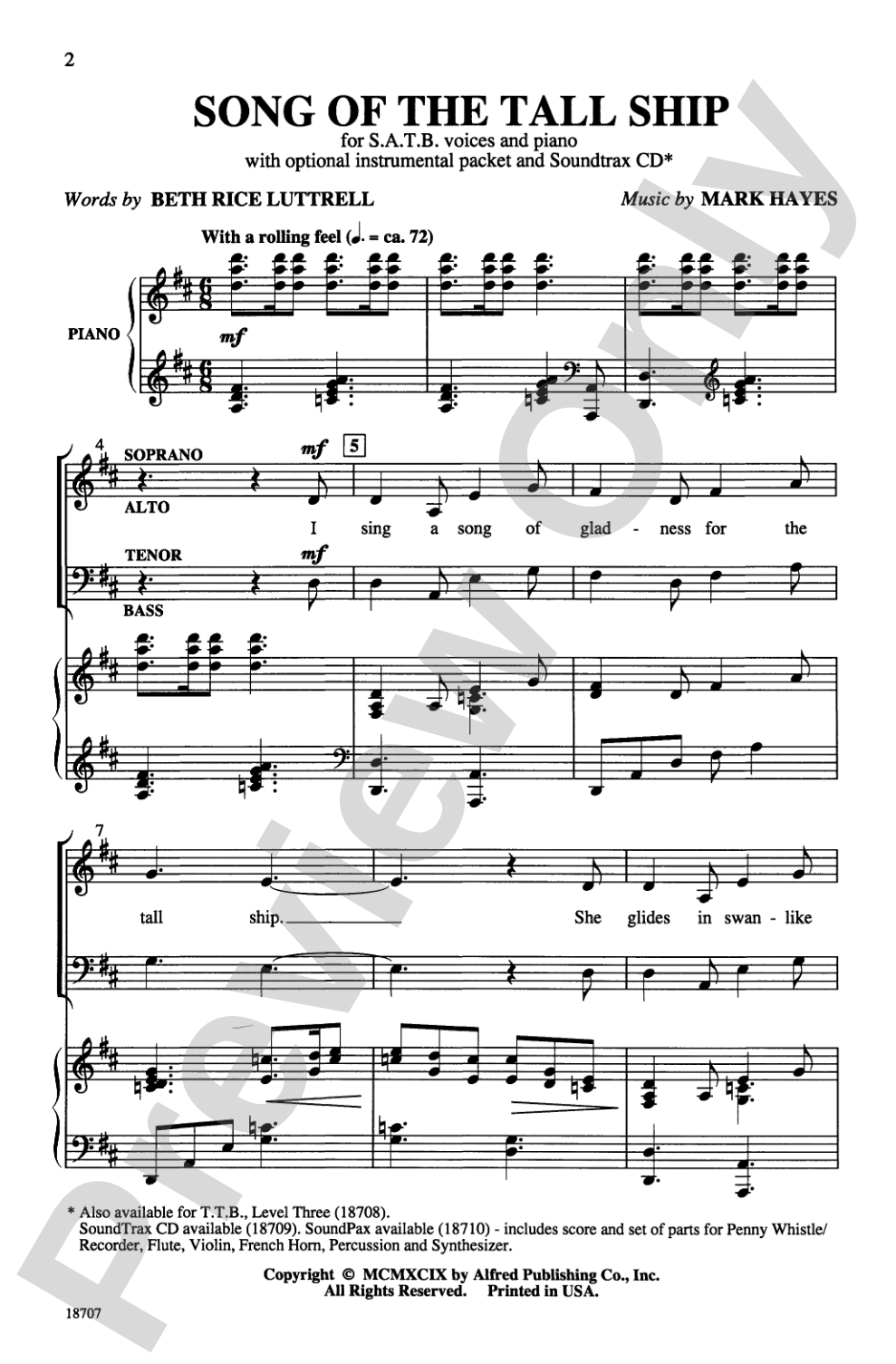
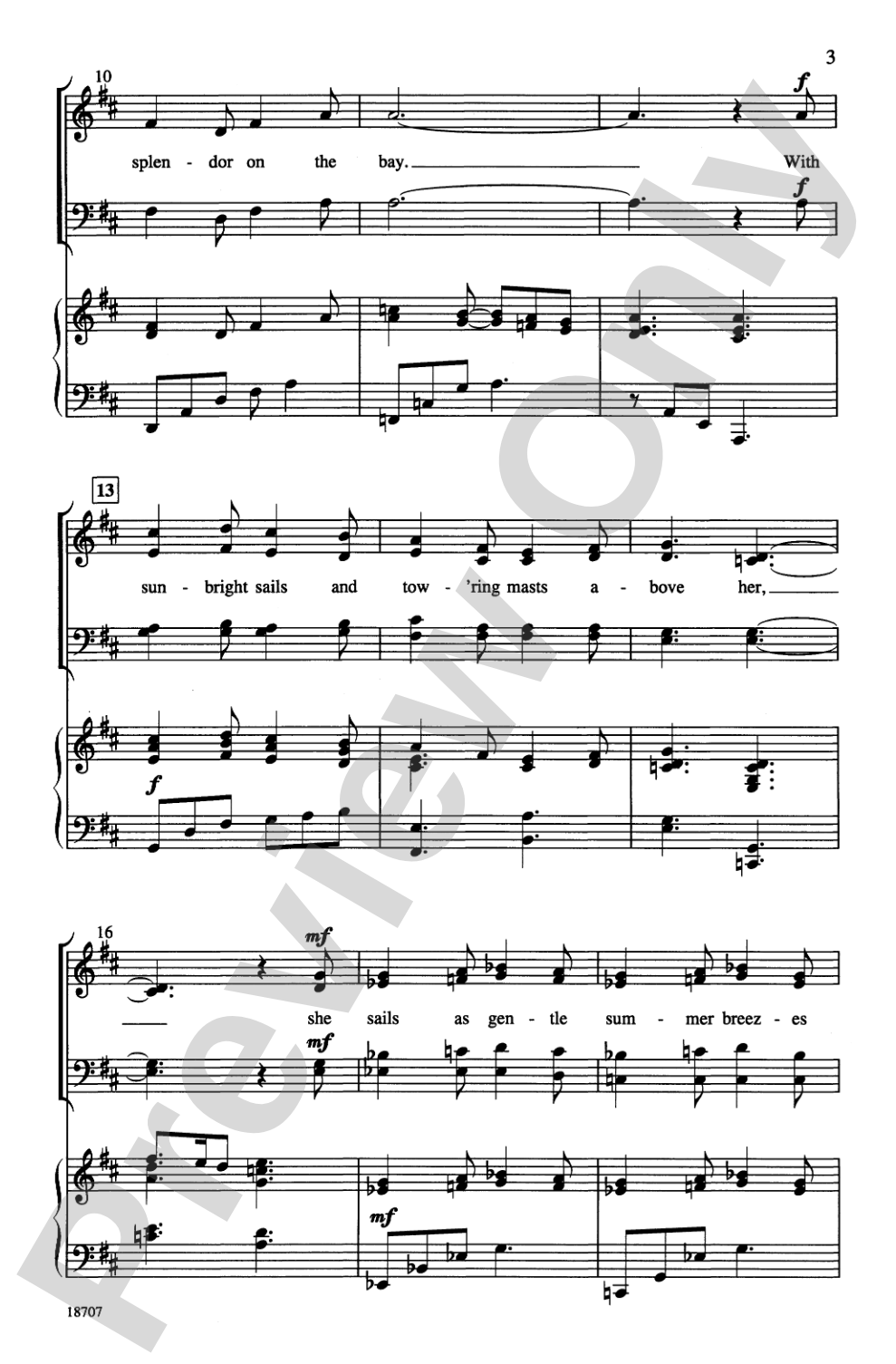
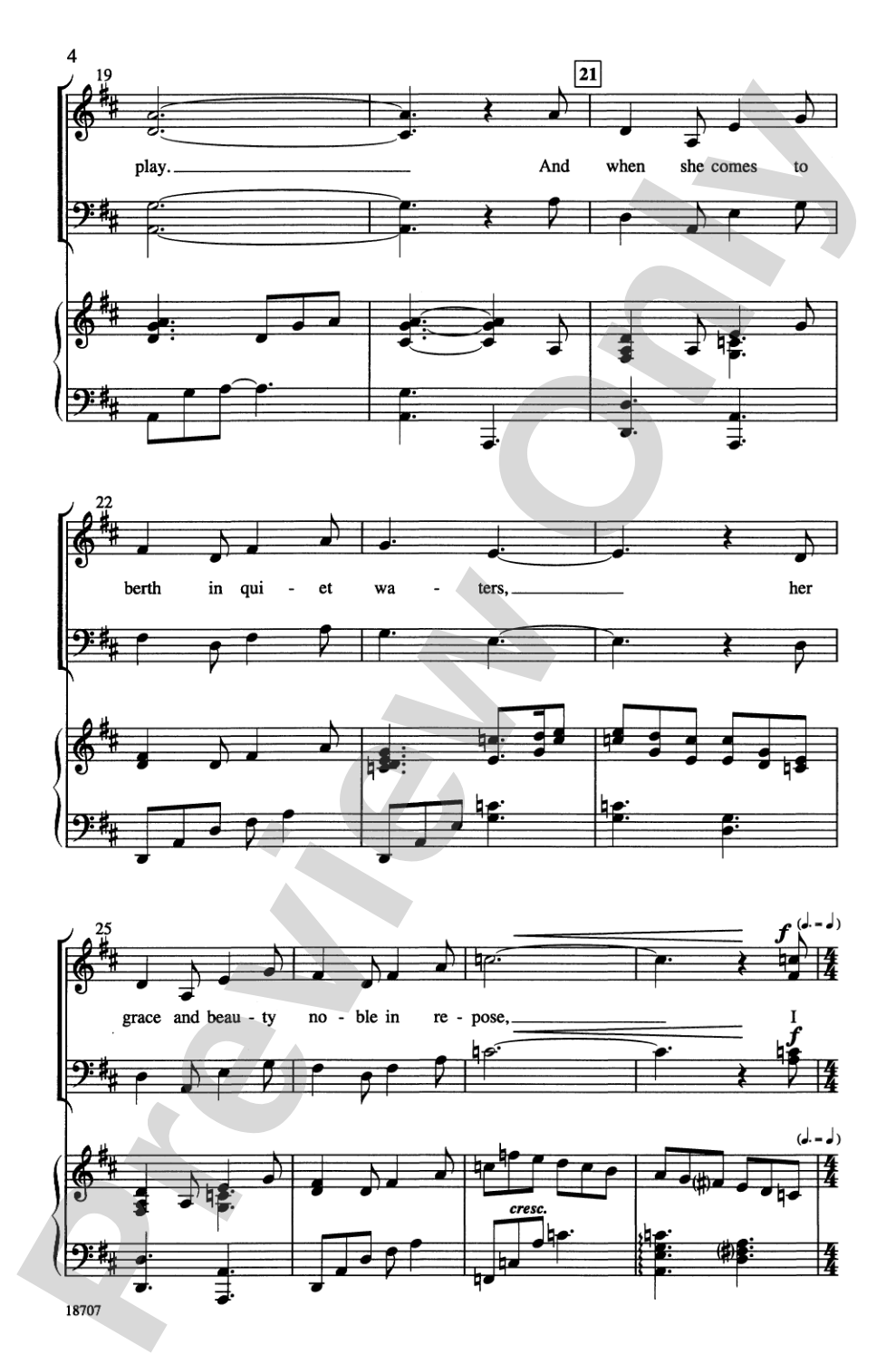

Song of the Tall Ship: SATB Choral Octavo
Words by Beth Rice Luttrell, music by Mark Hayes
Item: 00-PO-0004091
$2.25
Minimum order quantity: 20 copies
Pickup currently not available
Description
The Celtic musical tradition comes alive in this homage to the splendor of the tall ships. But when "raging winds bring punding waves," text painting creates images of sea squalls and freezing ocean spray. A unique, well crafted choral work. Powerful for men's choirs, too.


Song of the Tall Ship: SATB Choral Octavo isn't in MakeMusic Cloud just yet...but it could be. Let us know you'd like to see it, and you'll help shape what comes next. In the meantime, start a free trial and dive into thousands of interactive titles your students can play along with today.
Request This Title
Tell us you want it.
Start Your Free Trial
Explore everything that's ready to play right now.
Sample Audio
1
Audio File
--:--
0:00
0:00
Sample Video
No sample videos found.
Additional Details
Series:
Alfred Archive Edition: Alfred Choral Designs
Publisher:
Alfred Music
Page Count:
12
SKU:
00-PO-0004091
More about this title
About the Composer: Mark Hayes
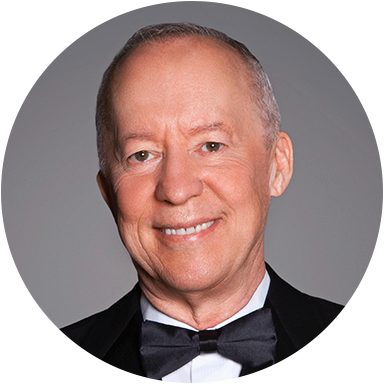
Mark Hayes has established himself as a prolific composer, pianist, and conductor with more than 1,750 published works across multiple genres. His training in piano performance (summa cum laude, Baylor University, 1975) anchors a career spanning concert performance, conducting, orchestration, and record production. He has guest conducted at Lincoln Center, the National Cathedral, and Carnegie Hall, and has premiered major works including his Requiem at Lincoln Center in 2013 and again in Rome at St. Ignatius Basilica in 2014.
Beyond his choral output, Hayes maintains a deep commitment to piano literature; over 100 piano books in his catalog span gospel, classical, jazz, and Broadway styles. His versatility extends to theatrical work as well, including orchestration for the musical Madame Buttermilk and arrangements for We'll Meet Again. In 2010, Baylor University recognized his contributions to Christian music with its Award for Exemplary Leadership. Based in Kansas City, Missouri, Hayes continues to compose across sacred and secular contexts.
Why we love this
Hayes captures the Celtic narrative arc with genuine sophistication, moving from maritime pageantry into visceral storm imagery through sharp text painting that keeps singers engaged and audiences riveted. The piece demands serious musicianship while remaining accessible to intermediate choirs, and its effectiveness with men's ensembles makes it a strategic programming choice when you need repertoire that bridges gender-specific and mixed voicings.
What to expect
The Celtic idiom grounds the opening in warmth and stateliness, evoking the romance of maritime tradition. When the text turns to squalls and freezing spray, the harmonic and rhythmic language shifts decisively, creating a thrilling tonal painting that feels both musically coherent and dramatically alive.
Who it's for
Directors seeking a substantial yet singable secular work for SATB choirs at intermediate to advanced levels will find this piece immediately rewarding. The piece works equally well for all-male ensembles, making it a versatile choice for choirs seeking gender-specific literature without sacrificing musical substance.
How to get the most out of it
- Shape the opening phrases to evoke the grandeur of tall ships under full sail; resist rushing the lyrical sections, which set up the textural contrast when the storm arrives.
- Balance the text painting of wind and waves so it enhances rather than overwhelms the harmonic language; mark dynamic swells carefully in the ensemble to keep the effect musical rather than theatrical.
- Use the recorded accompaniment to lock tempos in the tumultuous passages, where ensemble rhythmic precision matters most for clarity.
- If performing with instrumental parts, rehearse the choral line independent of orchestration first; this reveals the strength of the writing and helps singers own their parts before adding complexity.
How to use it
Program this as a centerpiece in a concert featuring sea shanties or folk traditions, or pair it with other Hayes choral works to showcase his distinctive blend of accessibility and craft. Its dramatic arc makes it a strong closer for a concert set, especially when you want to leave audiences with an impression of ensemble power and musical storytelling.
Skills your students will build
- Text painting and dramatic interpretation in secular choral music
- Harmonic contrast and tonal coherence across extended phrases
- Rhythmic precision during complex accompanimental textures
- Blending and balance in four-part writing with varied dynamic shapes