

Sometimes I Feel Like a Motherless Child: SAB Choral Octavo
Traditional Spiritual / arr. Jay Althouse
Item: 00-PO-0003267
$1.90
Minimum order quantity: 20 copies
Pickup currently not available
Related Items
Sometimes I Feel Like a Motherless Child: PianoTrax Digital Download |
$9.99
|
View | |
Sometimes I Feel Like a Motherless Child: SATB Choral Octavo |
$1.90
|
View | |
Sometimes I Feel Like a Motherless Child: SSA Choral Octavo |
$1.90
|
View | |
Sometimes I Feel Like a Motherless Child: SATB Choral Octavo |
$1.90
|
View | |
Sometimes I Feel Like a Motherless Child: SAB Choral Octavo |
$1.90
|
View | |
Sometimes I Feel Like a Motherless Child: SSA Choral Octavo |
$1.90
|
View |
Description
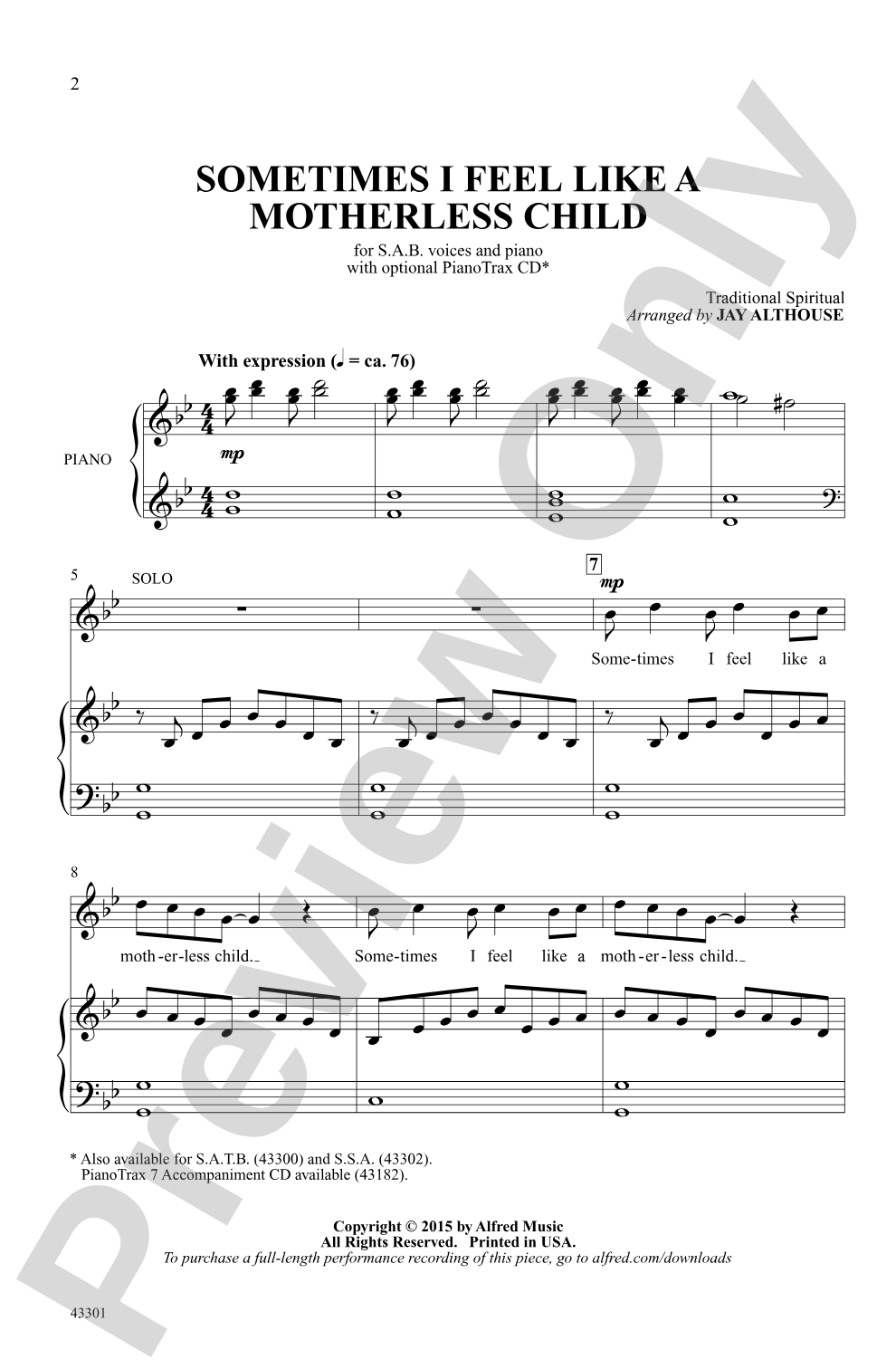
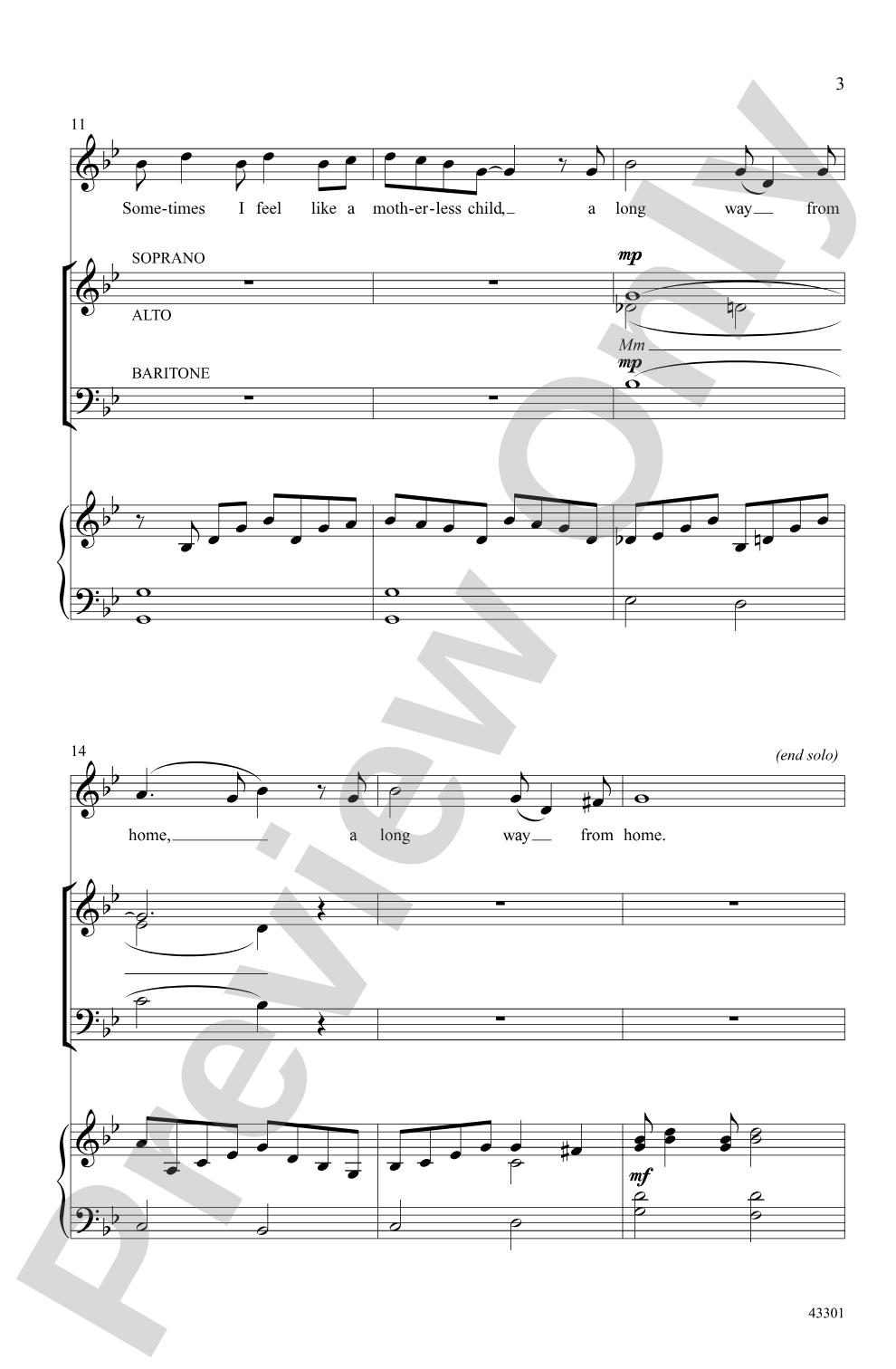
Adapted from Jay's popular American Folk Songs for Solo Singers, this remarkable new choral arrangement works beautifully. The languid minor-key melody is passed from soloist to choir and part to part, often accompanied by mournful background vocals. Not difficult to perform, but appropriately weighty.


Sometimes I Feel Like a Motherless Child: SAB Choral Octavo isn't in MakeMusic Cloud just yet...but it could be. Let us know you'd like to see it, and you'll help shape what comes next. In the meantime, start a free trial and dive into thousands of interactive titles your students can play along with today.
Request This Title
Tell us you want it.
Start Your Free Trial
Explore everything that's ready to play right now.
Sample Audio
1
Audio File
--:--
0:00
0:00
Sample Video
No sample videos found.
Additional Details
Series:
Alfred Choral Designs
Publisher:
Alfred Music
Page Count:
8
SKU:
00-PO-0003267
More about this title
About the Arranger: Jay Althouse

Jay Althouse holds degrees in Music Education and Music from Indiana University of Pennsylvania, where he was honored as a Distinguished Alumni recipient. His career spans both publishing and composition; he spent eight years managing rights and licenses for a major educational music publisher and served on the Executive Board of the Music Publishers Association of America. As a composer, he has over 800 choral works in print performed across the English-speaking world.
Althouse is a prolific arranger and editor, having compiled and arranged celebrated vocal collections including Folk Songs for Solo Singers. He co-authored The Complete Choral Warm-up Book and Accent on Composers, and has written classroom resources such as Ready to Read Music and One-Page Composer Bios. A writer member of ASCAP with numerous Special Awards for his compositions, Althouse has also collaborated with his wife Sally K. Albrecht on children's musicals and choral works, including I Hear America Singing, performed at President Obama's 2009 Inauguration. He has served on the boards of the North Carolina Master Chorale and the Folk Art Society of America.
Why we love this
Althouse brings genuine understanding of how spirituals sit in the voice when he arranges them. The melody's journey through soloists and ensemble feels organic, not contrived, and the mournful background writing supports rather than competes with the tune. This is music that respects the tradition while remaining performable by intermediate choirs.
What to expect
The minor-key melody has the quality of memory itself: it returns in different voices, each adding layers of texture and emotional weight. There's a restraint here that honors the spiritual's origins, letting silence and space do as much work as the notes themselves. Singing it feels like bearing witness to something sacred.
Who it's for
Choirs with intermediate musicianship and secure intonation in minor keys. The SAB voicing works well for treble-dominant ensembles or mixed choirs learning to balance three-part writing. Directors seeking a spiritual arrangement that feels authentic without demanding advanced vocal technique will find this especially useful.
How to get the most out of it
- Establish the minor-key landscape in your warm-up. Spend time letting singers hear and feel the pitch center before rehearsal begins; it sets the emotional ground for everything that follows.
- Shape the solo passages with breath and flexibility. The languid quality depends on singers releasing tension and allowing the melody room to breathe, not rushing toward the next phrase.
- Balance the background voices carefully in rehearsal. They should feel like a distant, mournful presence, not a competing melodic layer. Record a section run-through to hear how the blend sits.
- Prepare transitions between soloists and full choir. Mark these moments clearly so the handoff feels seamless and the narrative arc of the piece never breaks.
How to use it
Program this in a concert exploring spirituals, folk traditions, or themes of resilience and faith. It pairs well alongside other arrangements of American spirituals or contemporary settings of traditional songs. The piece's moderate length and emotional impact also make it effective as a centerpiece in a program focused on a single cultural tradition or historical moment.
Skills your students will build
- Singing sustained minor-key melodies with pitch stability
- Shifting between solo and ensemble singing without losing musical cohesion
- Balancing accompanimental voice parts that support rather than compete with the melody
- Interpreting and shaping a stylistically appropriate interpretation of a spiritual tradition
- Breathing and phrasing across longer melodic lines in three-part writing