

Sometimes I Feel Like a Motherless Child: SATB Choral Octavo
Traditional Spiritual / arr. Jay Althouse
Item: 00-PO-0003266
$1.90
Minimum order quantity: 20 copies
Pickup currently not available
Related Items
Sometimes I Feel Like a Motherless Child: PianoTrax Digital Download |
$9.99
|
View | |
Sometimes I Feel Like a Motherless Child: SAB Choral Octavo |
$1.90
|
View | |
Sometimes I Feel Like a Motherless Child: SSA Choral Octavo |
$1.90
|
View | |
Sometimes I Feel Like a Motherless Child: SATB Choral Octavo |
$1.90
|
View | |
Sometimes I Feel Like a Motherless Child: SAB Choral Octavo |
$1.90
|
View | |
Sometimes I Feel Like a Motherless Child: SSA Choral Octavo |
$1.90
|
View |
Description
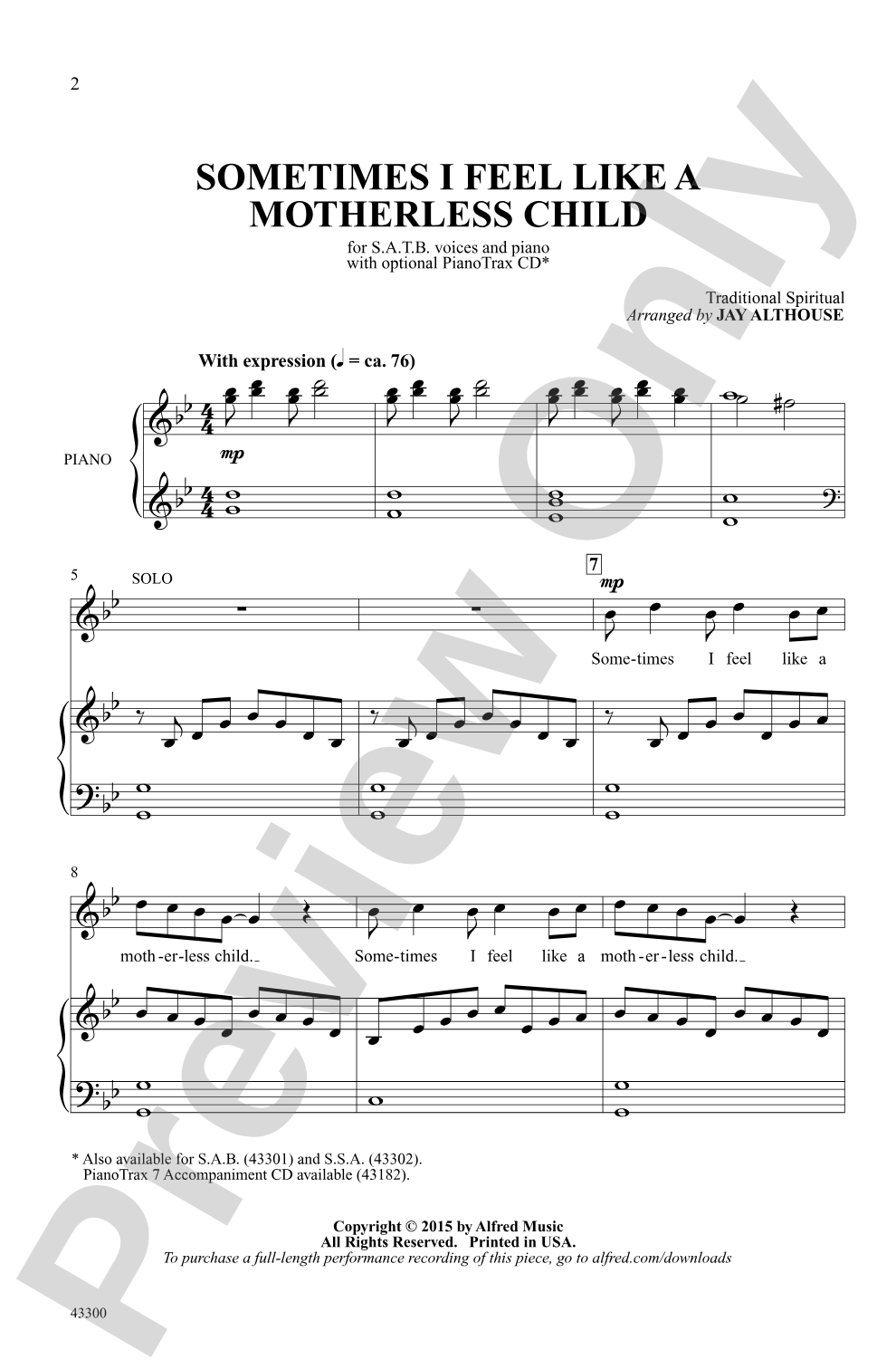
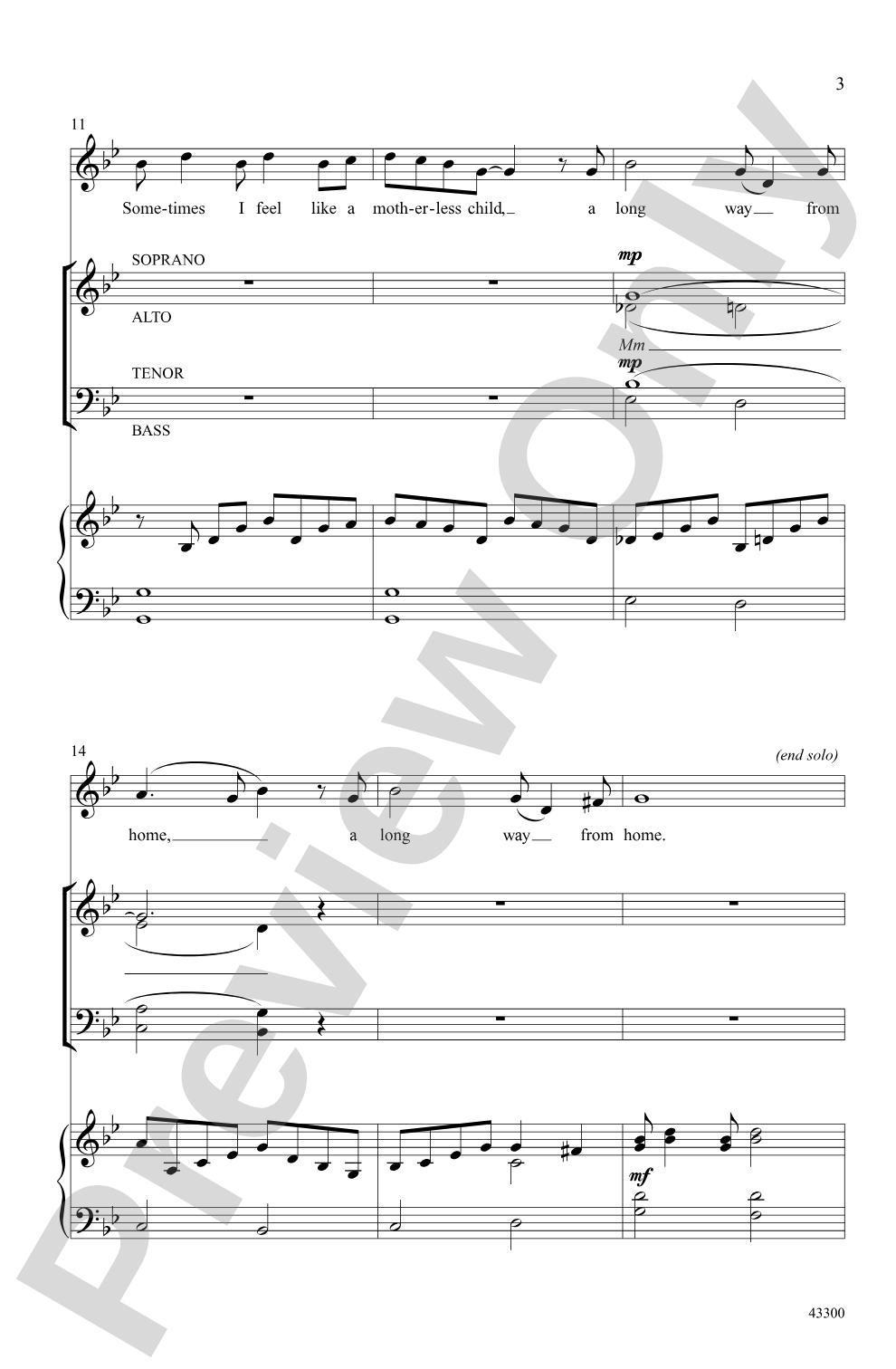
Adapted from Jay's popular American Folk Songs for Solo Singers, this remarkable new choral arrangement works beautifully. The languid minor-key melody is passed from soloist to choir and part to part, often accompanied by mournful background vocals. Not difficult to perform, but appropriately weighty.


Sometimes I Feel Like a Motherless Child: SATB Choral Octavo isn't in MakeMusic Cloud just yet...but it could be. Let us know you'd like to see it, and you'll help shape what comes next. In the meantime, start a free trial and dive into thousands of interactive titles your students can play along with today.
Request This Title
Tell us you want it.
Start Your Free Trial
Explore everything that's ready to play right now.
Sample Audio
1
Audio File
--:--
0:00
0:00
Sample Video
No sample videos found.
Additional Details
Series:
Alfred Choral Designs
Publisher:
Alfred Music
Page Count:
8
SKU:
00-PO-0003266
More about this title
About the Arranger: Jay Althouse

Jay Althouse holds degrees in Music Education and Music from Indiana University of Pennsylvania, where he was later recognized as a Distinguished Alumnus. His eight years working as a rights and licenses administrator for a major educational music publisher gave him deep insight into the field he now serves as a prolific composer; during that tenure, he also held a position on the Executive Board of the Music Publishers Association of America.
With more than 800 choral compositions in print across all skill levels, Althouse's music circulates widely throughout English-speaking choirs. A writer member of ASCAP and regular recipient of the Special Award for standard music, he has also compiled respected vocal solo collections, co-authored bestselling instructional texts including The Complete Choral Warm-up Book and Accent on Composers, and created reproducible classroom resources. His choral work I Hear America Singing, co-written with his wife Sally K. Albrecht, was performed by the San Francisco Girls and Boys Choirs at President Barack Obama's 2009 Inauguration. Althouse currently serves on the National Advisory Board of the Folk Art Society of America and contributes articles to its quarterly periodical.
Why we love this
This arrangement honors the spiritual's profound emotional weight without demanding technical virtuosity from your singers. The passing of the minor-key melody between soloist, full choir, and individual voice parts creates natural dynamic shape and keeps the piece engaging across its eight pages. Althouse's skill at adapting his own solo vocal work shows in every measure: the writing sits comfortably, the text breathes clearly, and the mournful accompanying voices deepen rather than clutter the primary line.
What to expect
The minor key settles into you slowly, anchoring the piece in sorrow and introspection. As the melody moves between voices and the background voices rise and fall, the spiritual unfolds with the quiet dignity of a hymn passed through generations, each voice adding its own layer of witness and mourning.
Who it's for
This octavo suits choirs comfortable with minor-key spirituals and capable of balancing solo passages with ensemble support. It works equally well in community choirs, church ensembles, and school choral programs seeking repertoire with substance but reasonable technical demands.
How to get the most out of it
- Allow the minor key to breathe. Resist rushing through phrases; the languid quality depends on space and stillness between phrases.
- Balance the soloist carefully against the background vocals. The accompanying voices should provide harmonic and emotional depth without overwhelming the melody bearer.
- Shape the piece through the voice-part exchanges. Mark where the melody passes from soprano to alto to tenor to bass, treating each moment as a slight shift in perspective rather than an abrupt handoff.
- Use the text as your emotional anchor. The weight of the words should inform your approach to dynamics, tone, and pacing more than any tempo marking.
How to use it
Program this as part of a spiritual-focused concert set or a broader American choral heritage program. Its modest difficulty and profound character make it suitable for February or Black History Month celebrations, as well as services or events where spirituals are thematically central.
Skills your students will build
- Balancing solo melody against sustained harmonic accompaniment
- Singing in minor keys with appropriate tonal quality and phrasing
- Passing a melody fluidly between voice parts
- Performing spirituals with historical and cultural awareness
- Creating depth through layered vocal textures without loss of clarity