
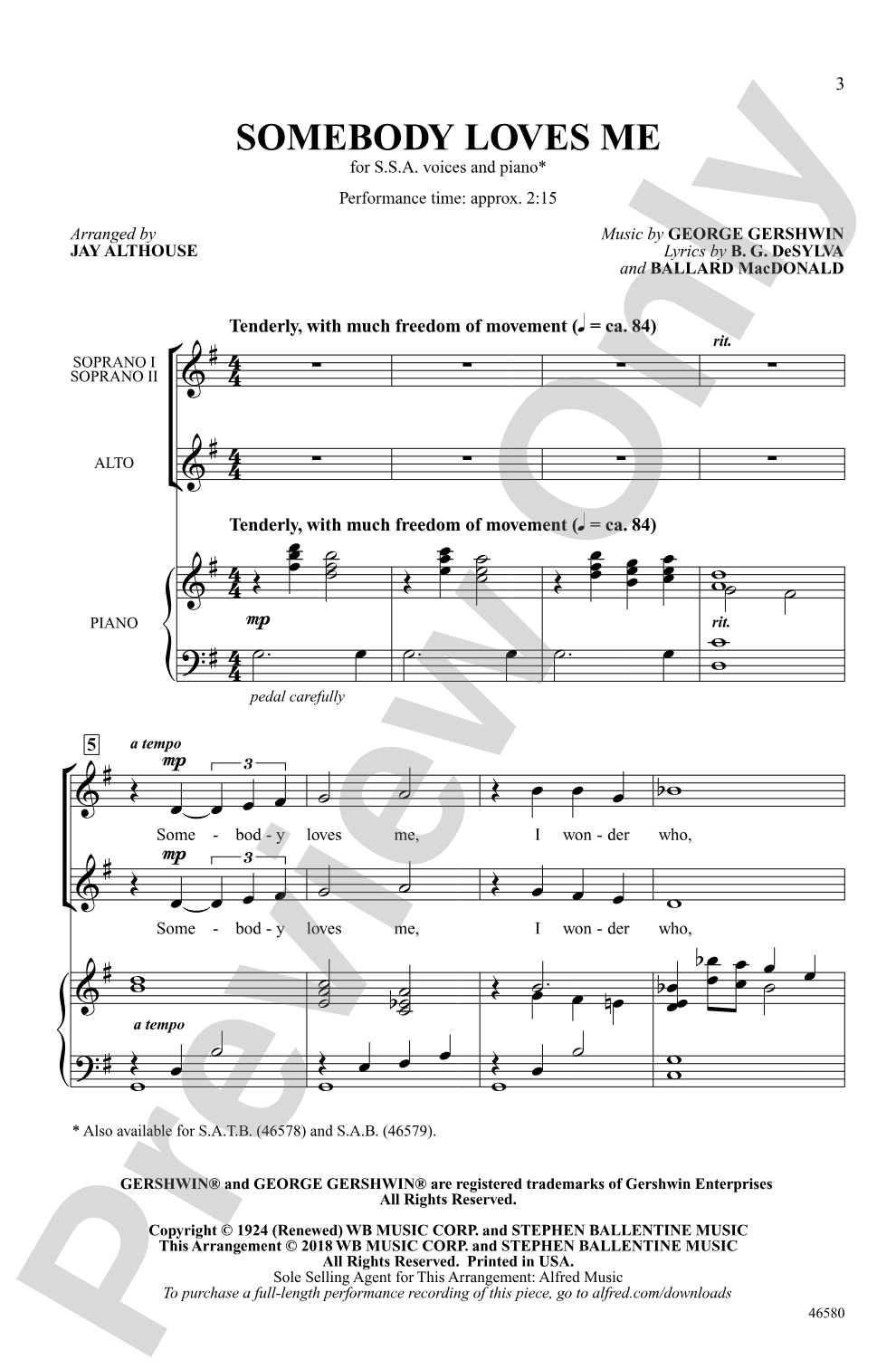

Somebody Loves Me: SSA Choral Octavo
Music by George Gershwin, lyrics by B. G. DeSylva and Ballard MacDonald / arr. Jay Althouse
Item: 00-PO-0005746
$2.10
Minimum order quantity: 20 copies
Pickup currently not available
Description
Jay Althouse revisits a little-known gem by George Gershwin from nearly 100 years ago: a winsome melody winds over a terrain of jazz chords before melting into lush choral harmony. Flexible tempos and expressive phrases lend themselves well to poignant, heartfelt singing.


Somebody Loves Me: SSA Choral Octavo isn't in MakeMusic Cloud just yet...but it could be. Let us know you'd like to see it, and you'll help shape what comes next. In the meantime, start a free trial and dive into thousands of interactive titles your students can play along with today.
Request This Title
Tell us you want it.
Start Your Free Trial
Explore everything that's ready to play right now.
Sample Audio
1
Audio File
--:--
0:00
0:00
Sample Video
No sample videos found.
Additional Details
Series:
Alfred Pop Choral Series
Publisher:
Alfred Music
Page Count:
8
SKU:
00-PO-0005746
More about this title
About the Composer: George Gershwin
George Gershwin (1898-1937) bridged the worlds of concert music and American popular song with an ease few composers have matched. His ability to blend jazz idioms, blues inflections, and sophisticated harmonic language into accessible melodies made him a defining voice of the 1920s and 1930s. For choral educators, Gershwin's Great American Songbook standards offer melodic warmth and harmonic richness that engage singers across ability levels while introducing them to a distinctly American musical language.
Why we love this
Jay Althouse's arrangement respects the song's Jazz Age DNA while making it genuinely singable for SSA voices. The voicing allows younger or less experienced singers to navigate the changes without sacrificing the lush, sophisticated sonority that makes Gershwin's harmony so distinctive. Programming this piece signals to your audience that your choir values American songwriting tradition, not just classical repertoire.
What to expect
Warm, elegant, and touched by nostalgia. The melody unfolds with the ease of a familiar story, supported by jazz harmonies that shimmer underneath. By the final phrases, the piece opens into full, lush voicing that feels both intimate and expansive.
Who it's for
SSA or SSAA choirs seeking accessible yet sophisticated repertoire. This works equally well for intermediate high school choirs, college non-majors, and adult community ensembles. Any director looking to represent American songwriting tradition will find this piece engages singers and audiences alike.
How to get the most out of it
- Let the jazz chord movement breathe; resist the urge to rush through harmonic changes. The arrangement's beauty lies in how those colorful sonorities resolve.
- Shape the expressive phrases with dynamic flexibility rather than strict tempo. Gershwin's melodies reward singers who listen to the text and respond emotionally.
- Balance the melody against the inner voices carefully during the lush harmonic sections. Too much soprano dominance flattens the arrangement's depth.
- Experiment with subtle swing feels in the rhythmic figures, especially in the opening. A light, conversational approach suits the song's winsome character better than metronomic precision.
How to use it
This sits comfortably on a concert that blends popular and classical traditions, or as a standalone set with other Great American Songbook selections. Consider programming it early in a show where you want to establish accessibility and warmth before moving into heavier choral works. Its eight pages and moderate difficulty make it realistic for a spring or holiday program with limited rehearsal time.
Skills your students will build
- Navigating jazz chord progressions and chromatic voice leading
- Balancing expressiveness with metric precision
- Singing sustained harmonic sonorities with blend and intonation
- Responding to text-driven phrasing rather than purely structural cadences
- Understanding American popular song as a legitimate choral repertoire tradition