
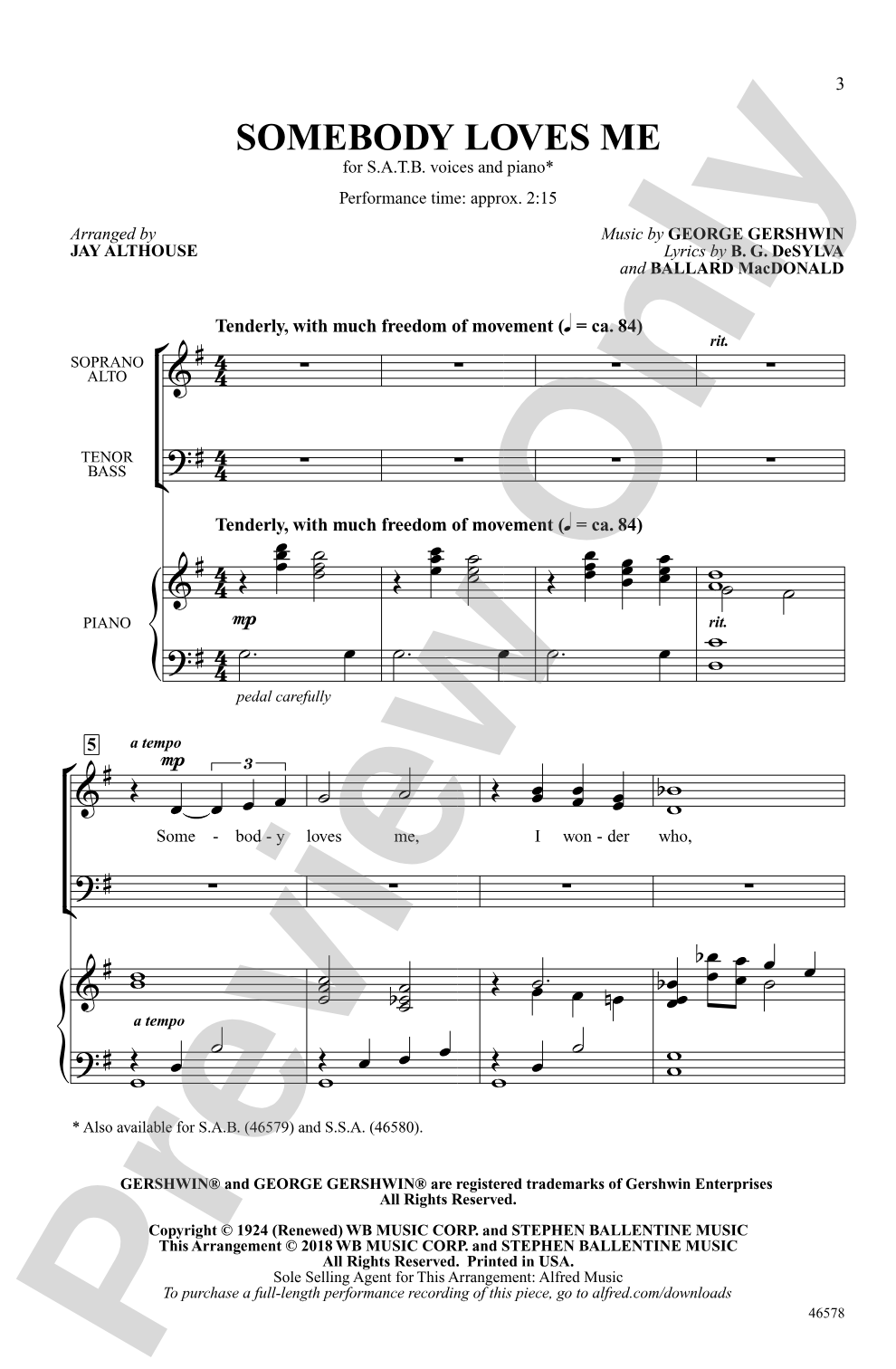

Somebody Loves Me: SATB Choral Octavo
Music by George Gershwin, lyrics by B. G. DeSylva and Ballard MacDonald / arr. Jay Althouse
Item: 00-PO-0005744
$2.10
Minimum order quantity: 20 copies
Pickup currently not available
Description
Jay Althouse revisits a little-known gem by George Gershwin from nearly 100 years ago: a winsome melody winds over a terrain of jazz chords before melting into lush choral harmony. Flexible tempos and expressive phrases lend themselves well to poignant, heartfelt singing.


Somebody Loves Me: SATB Choral Octavo isn't in MakeMusic Cloud just yet...but it could be. Let us know you'd like to see it, and you'll help shape what comes next. In the meantime, start a free trial and dive into thousands of interactive titles your students can play along with today.
Request This Title
Tell us you want it.
Start Your Free Trial
Explore everything that's ready to play right now.
Sample Audio
1
Audio File
--:--
0:00
0:00
Sample Video
Additional Details
Series:
Alfred Pop Choral Series
Publisher:
Alfred Music
Page Count:
8
SKU:
00-PO-0005744
More about this title
About the Composer: George Gershwin
George Gershwin (1898-1937) bridged classical concert music and American popular song with uncommon fluency. His melodies became standards precisely because they combined accessible lyricism with sophisticated harmonic language, making him essential listening for understanding twentieth-century American composition.
Gershwin's catalog reveals a composer equally at home writing for Broadway, the concert hall, and Hollywood. His influence on music education extends beyond performance repertoire; his work demonstrates how vernacular styles can sustain serious artistic ambition.
Why we love this
Jay Althouse's arrangement captures the allure of Gershwin's original without overwhelming ensemble singers; the jazz harmonies remain present but the texture stays warm and accessible for SATB voices. This is the kind of standard that sounds fresh every time you rehearse it because the harmonic vocabulary keeps revealing new details.
What to expect
The piece unfolds with gentle inevitability, as if confessing something sincere over cocktails. Gershwin's melody carries warmth and a hint of wistfulness, supported by harmonies that shimmer with chromatic color and subtle jazz inflection without becoming dissonant or demanding.
Who it's for
This octavo works for mixed choral ensembles with modest jazz harmonic experience and solid blend. It suits programs that welcome Great American Songbook repertoire and audiences who respond to accessible melody paired with sophisticated harmony.
How to get the most out of it
- Shape the melody line through dynamic nuance rather than tempo changes. The "winsome" quality lives in phrase breathing and subtle dynamic shaping, not in rushing or dragging.
- Let the jazz chords resonate. These harmonies deserve space; resist the urge to push through them quickly. Block out chord changes early so singers hear how the harmony moves underneath the text.
- Balance the melody against inner parts with care. Althouse's arrangement likely features the tune in soprano or tenor depending on section; ensure accompanying voices support rather than compete.
How to use it
Position this as a contrast to heavier concert repertoire or as a bridge between classical and popular traditions in a season focused on American song. Its eight-page length and moderate difficulty make it an ideal opener or encore that won't strain rehearsal time while delivering musical satisfaction.
Skills your students will build
- Reading jazz harmonies within a traditional SATB framework
- Balancing melody and harmonic accompaniment in close voicing
- Executing flexible tempo and expressive phrasing decisions together
- Sustaining supported vocal tone across chromatic harmonic movement