
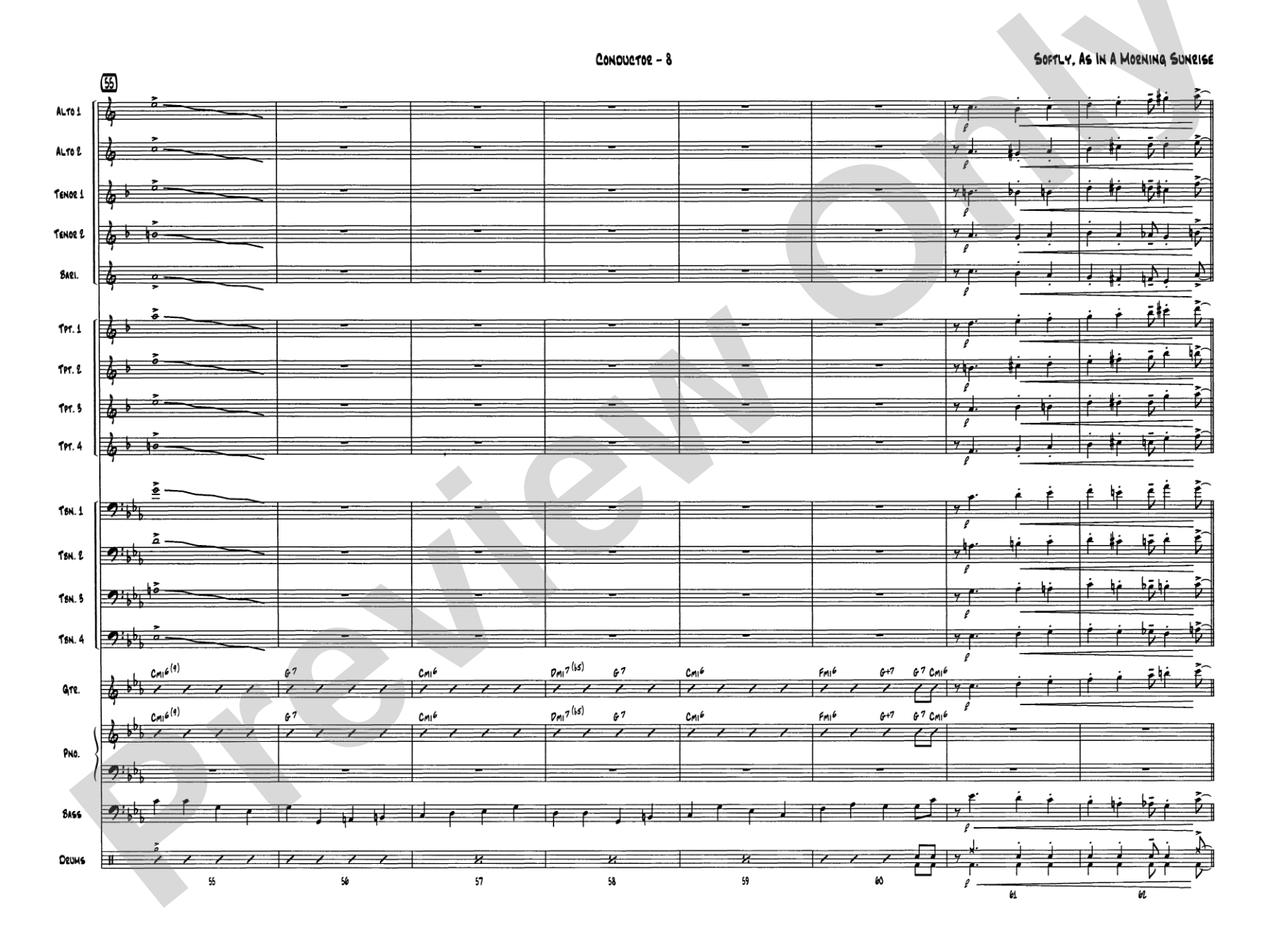
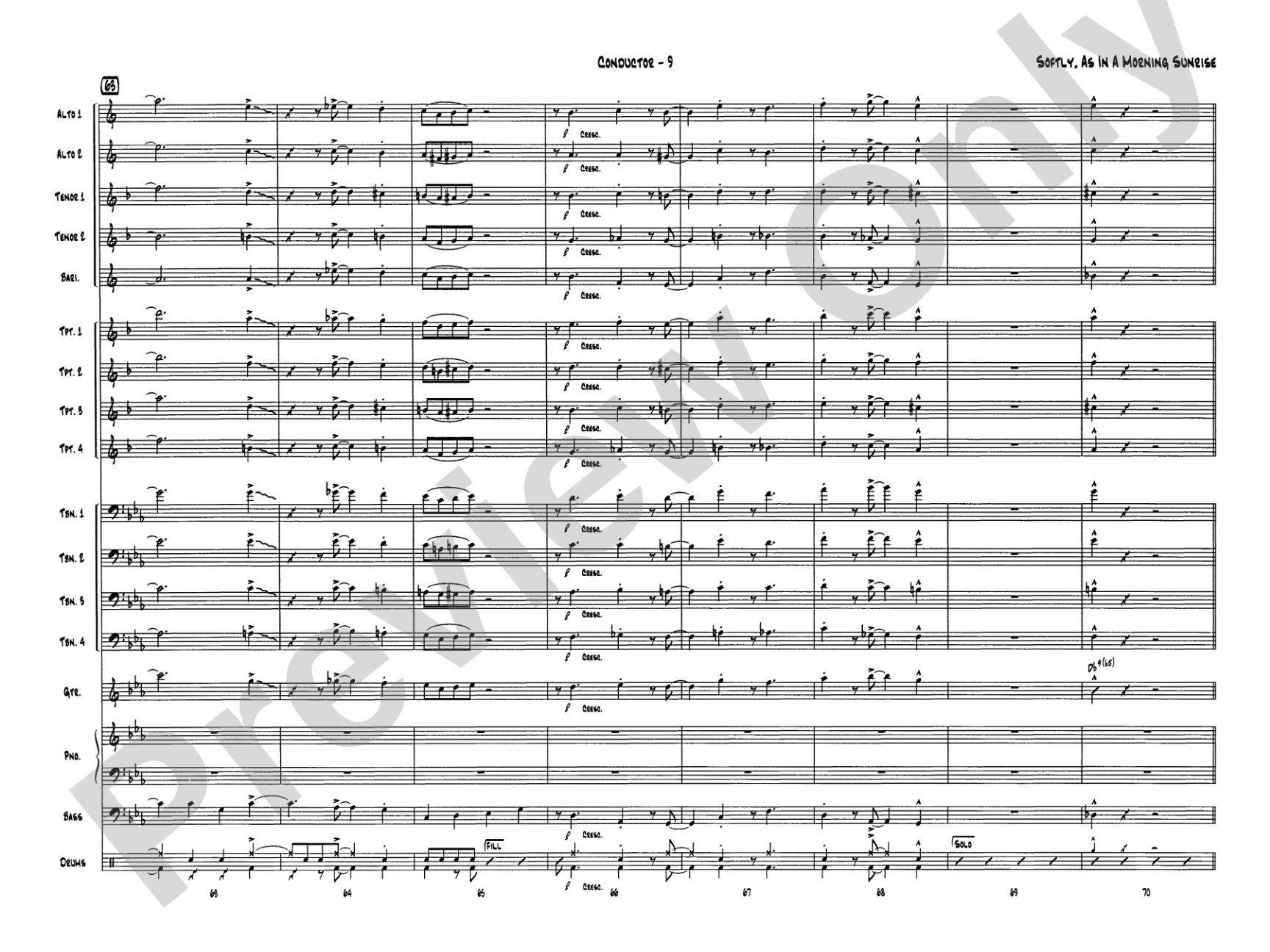
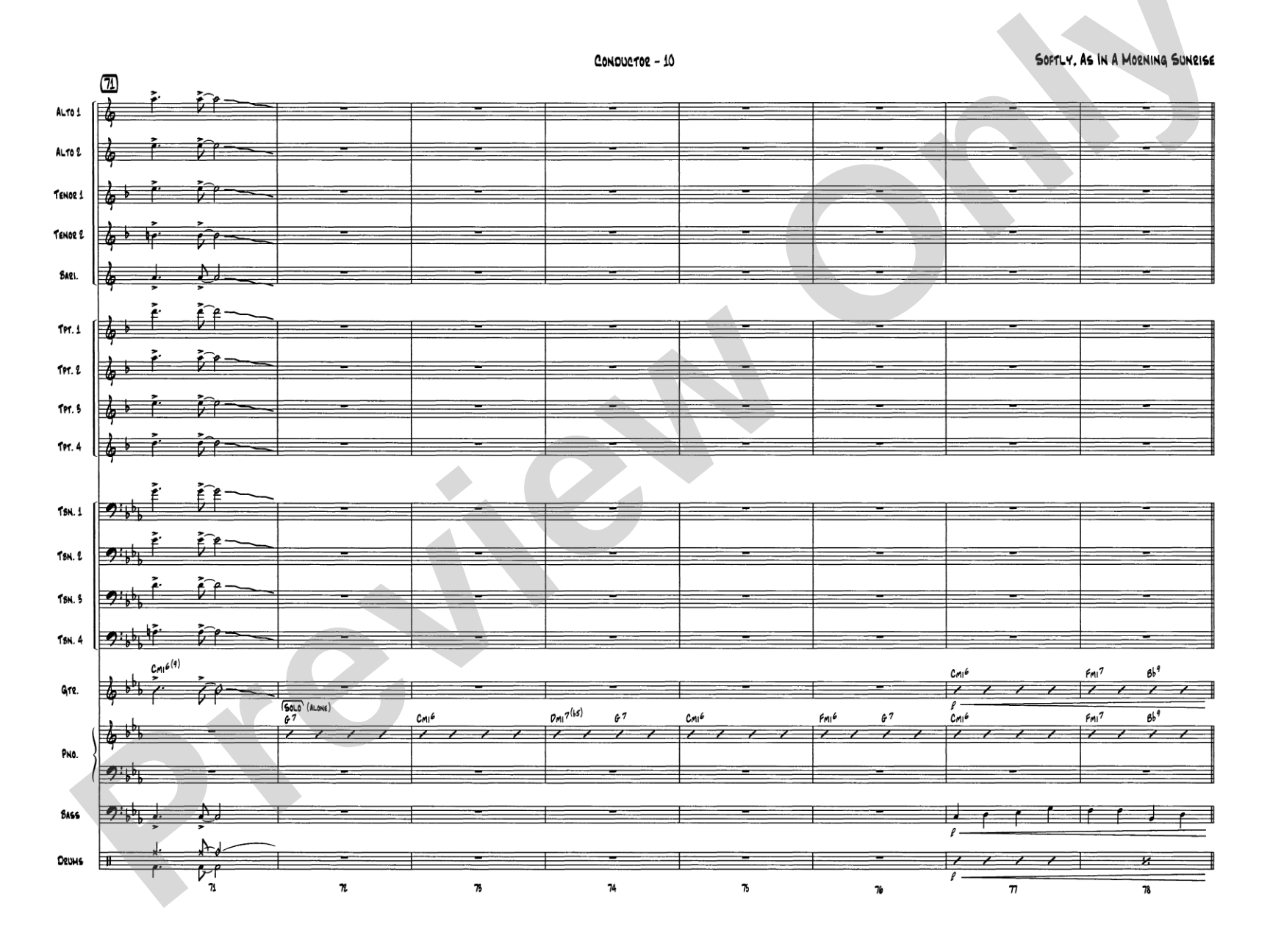
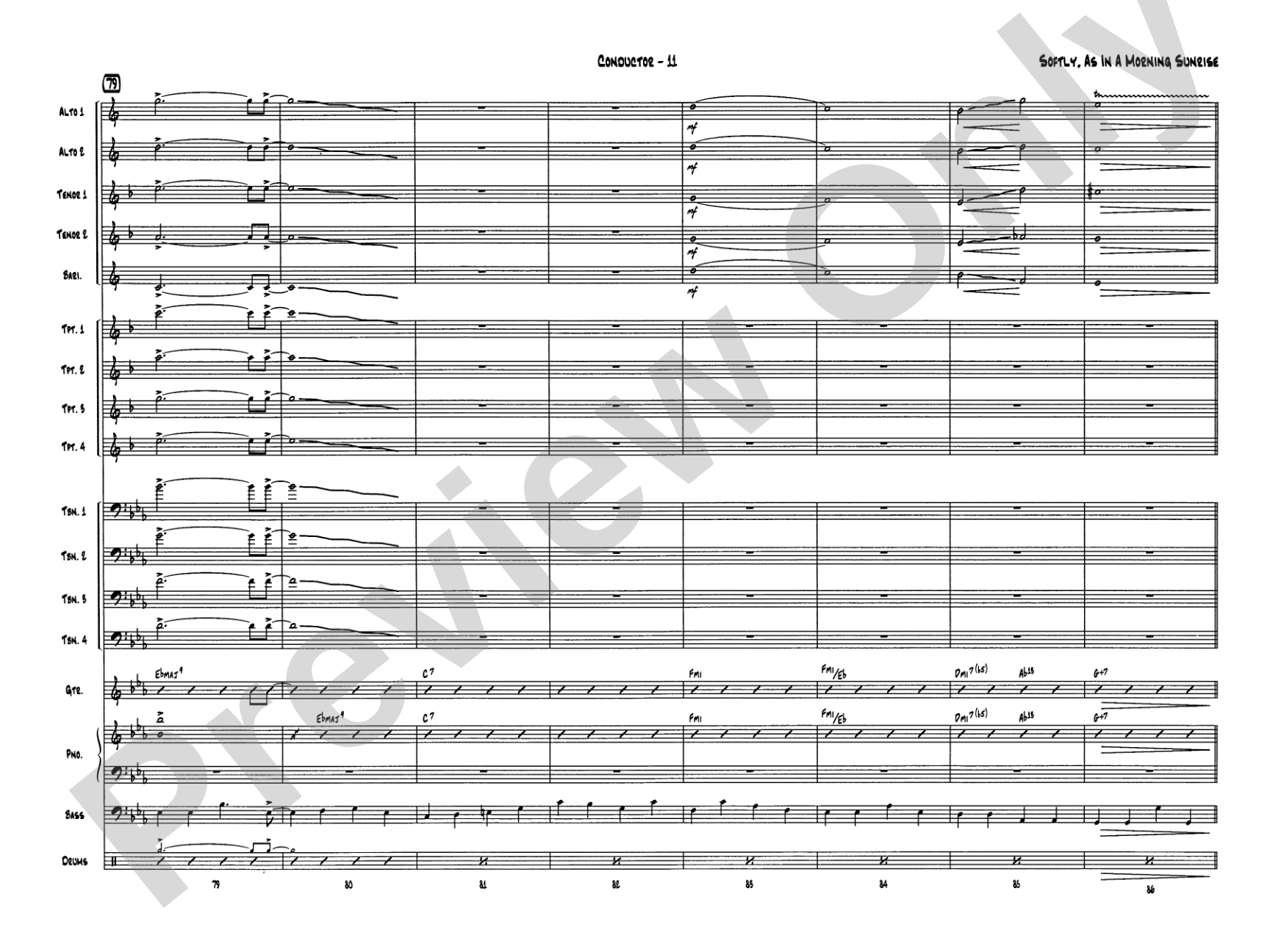


Softly, As in a Morning Sunrise: Jazz Ensemble Conductor Score & Parts
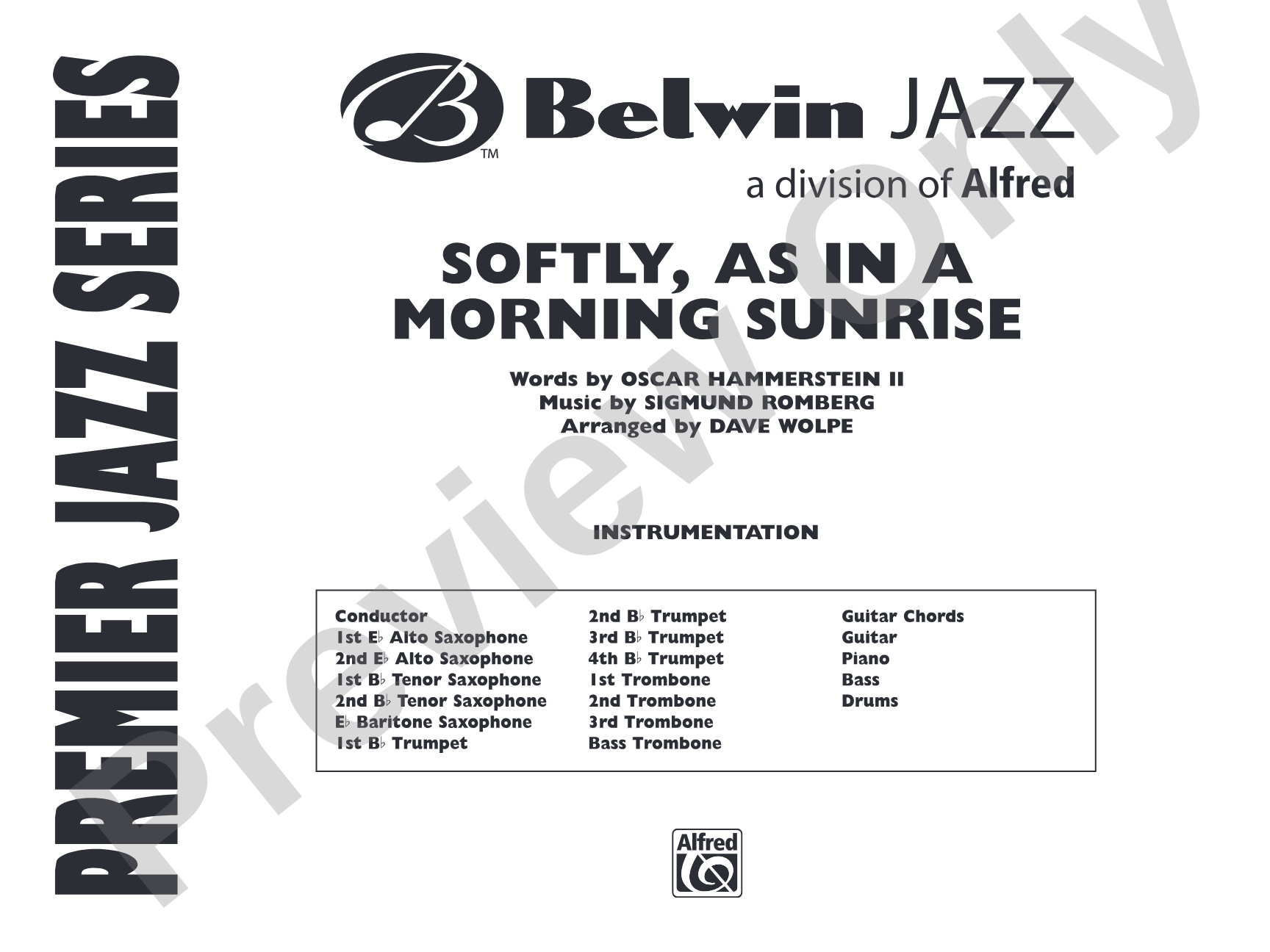
Words by Oscar Hammerstein II, music by Sigmund Romberg / arr. Dave Wolpe
Grade: 4.5 (Medium Advanced / Difficult)
Item: 00-PK-0002495

$60.00
One moment…
Description
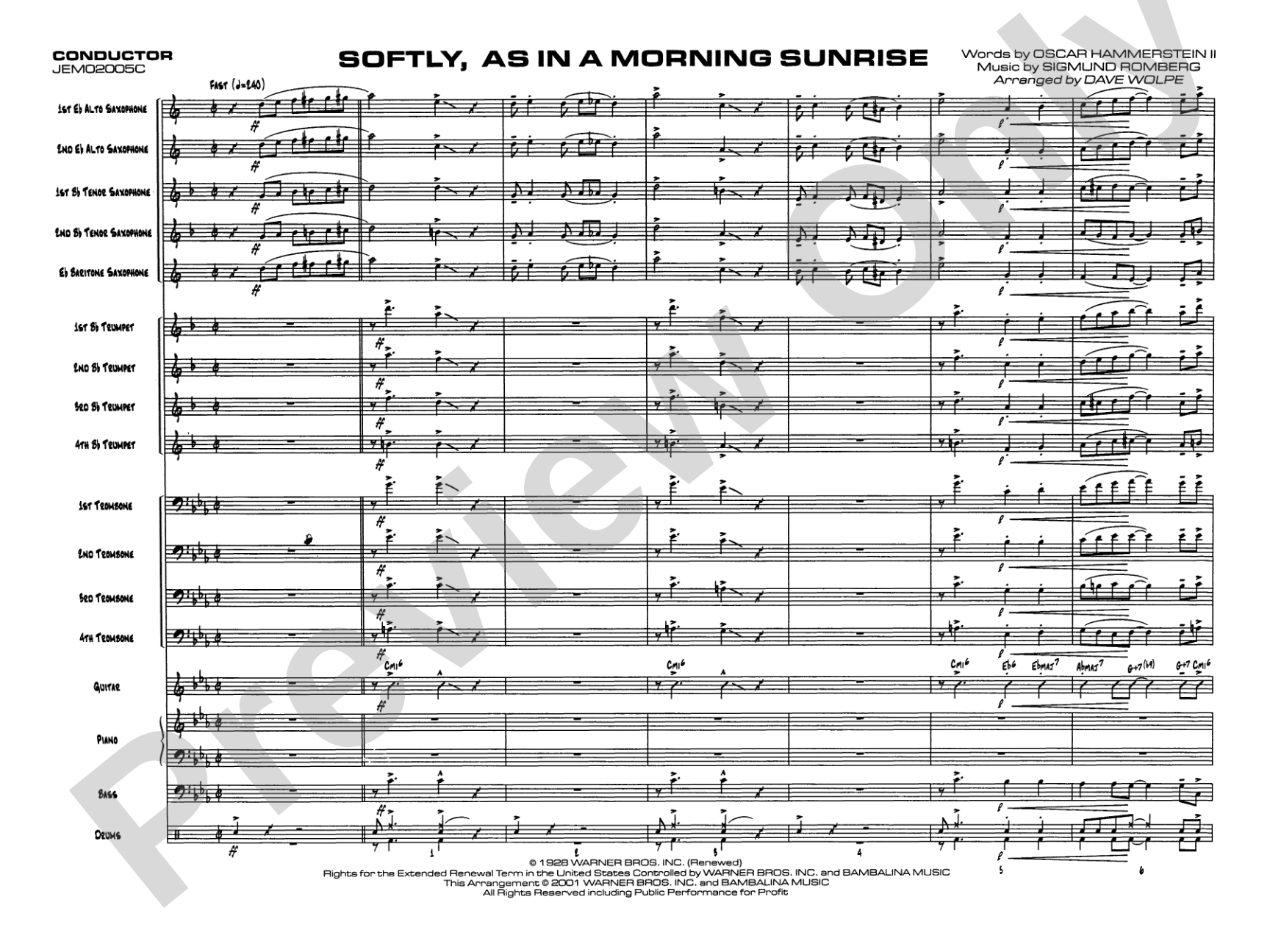
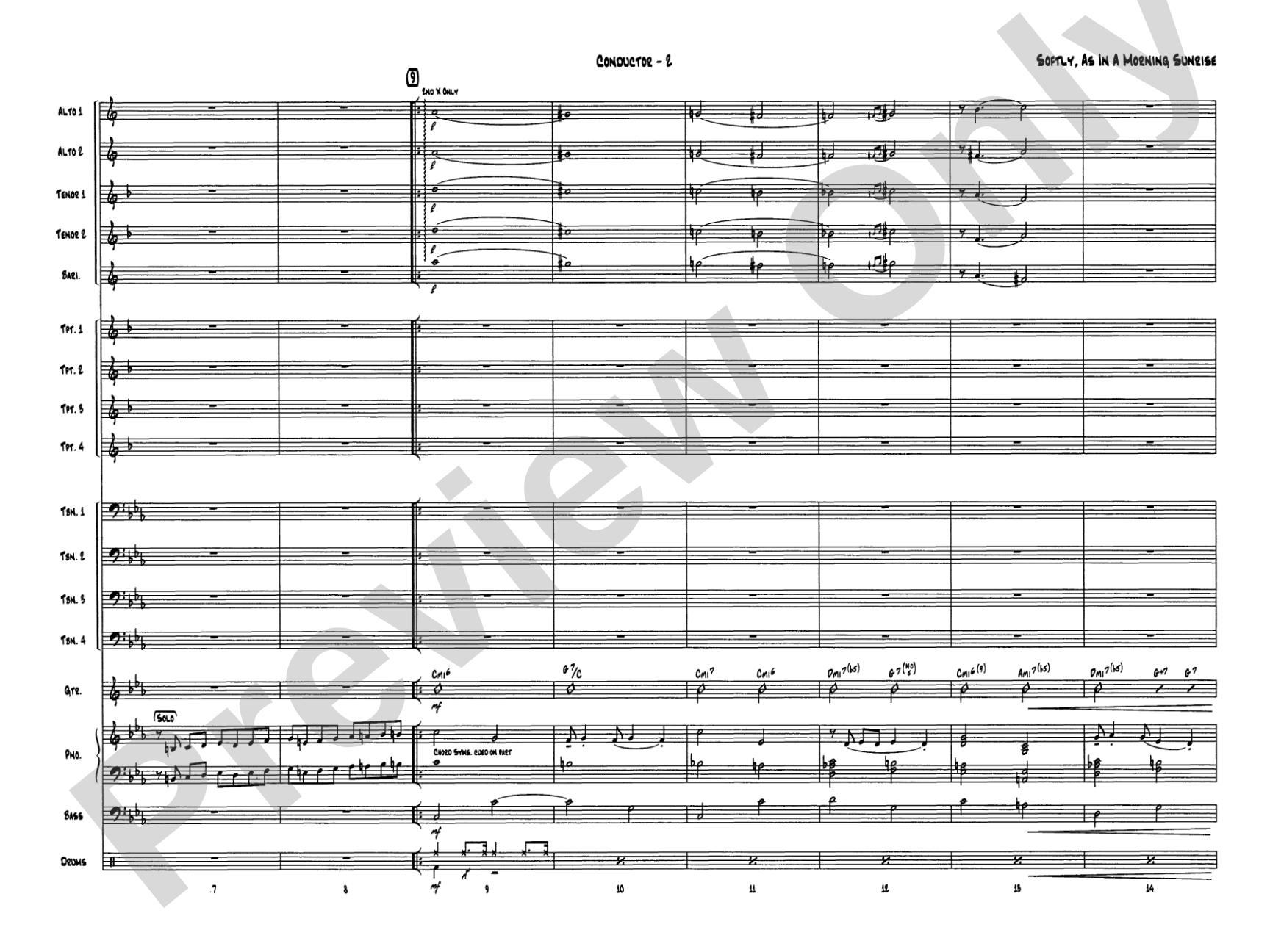
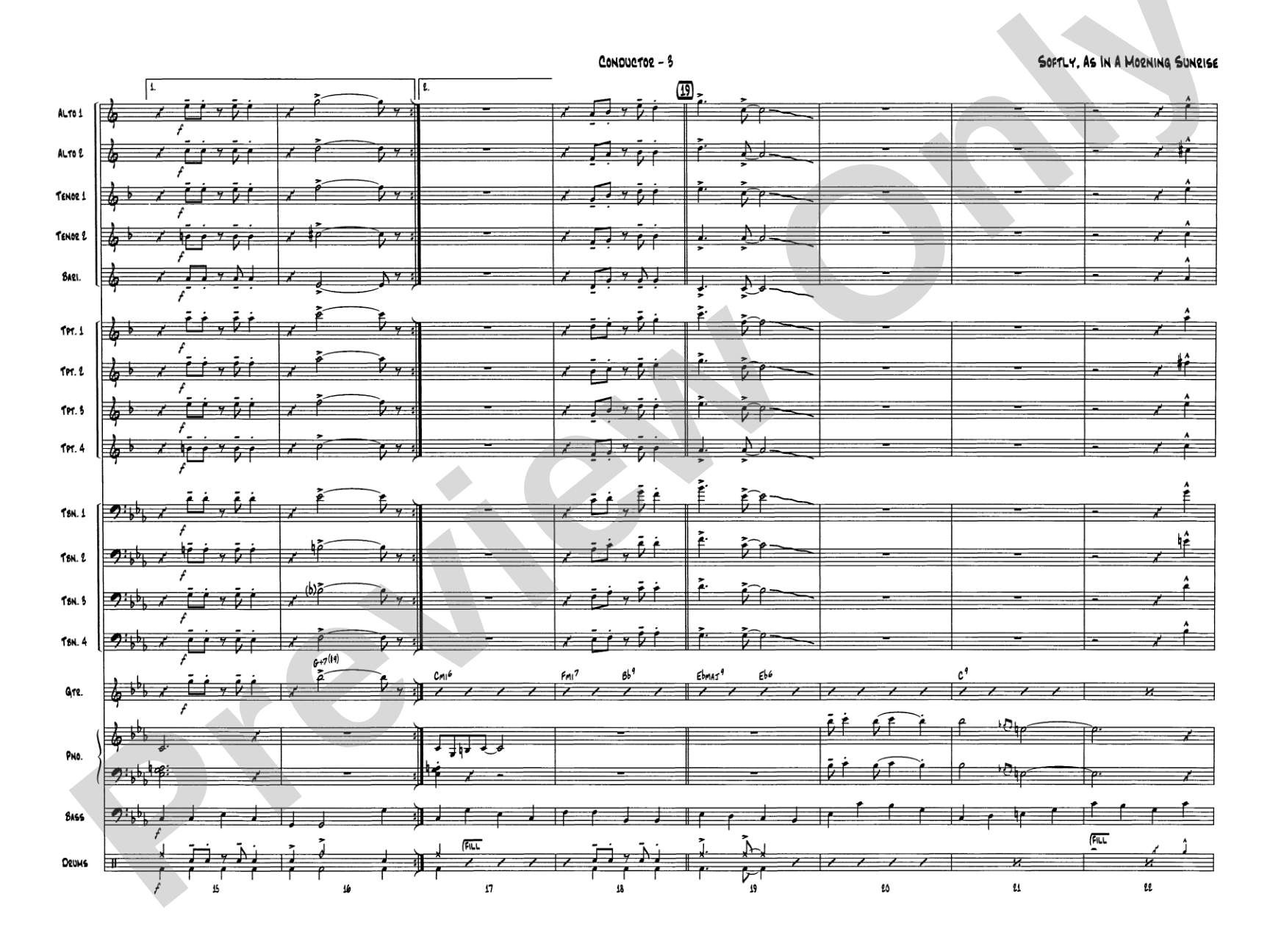
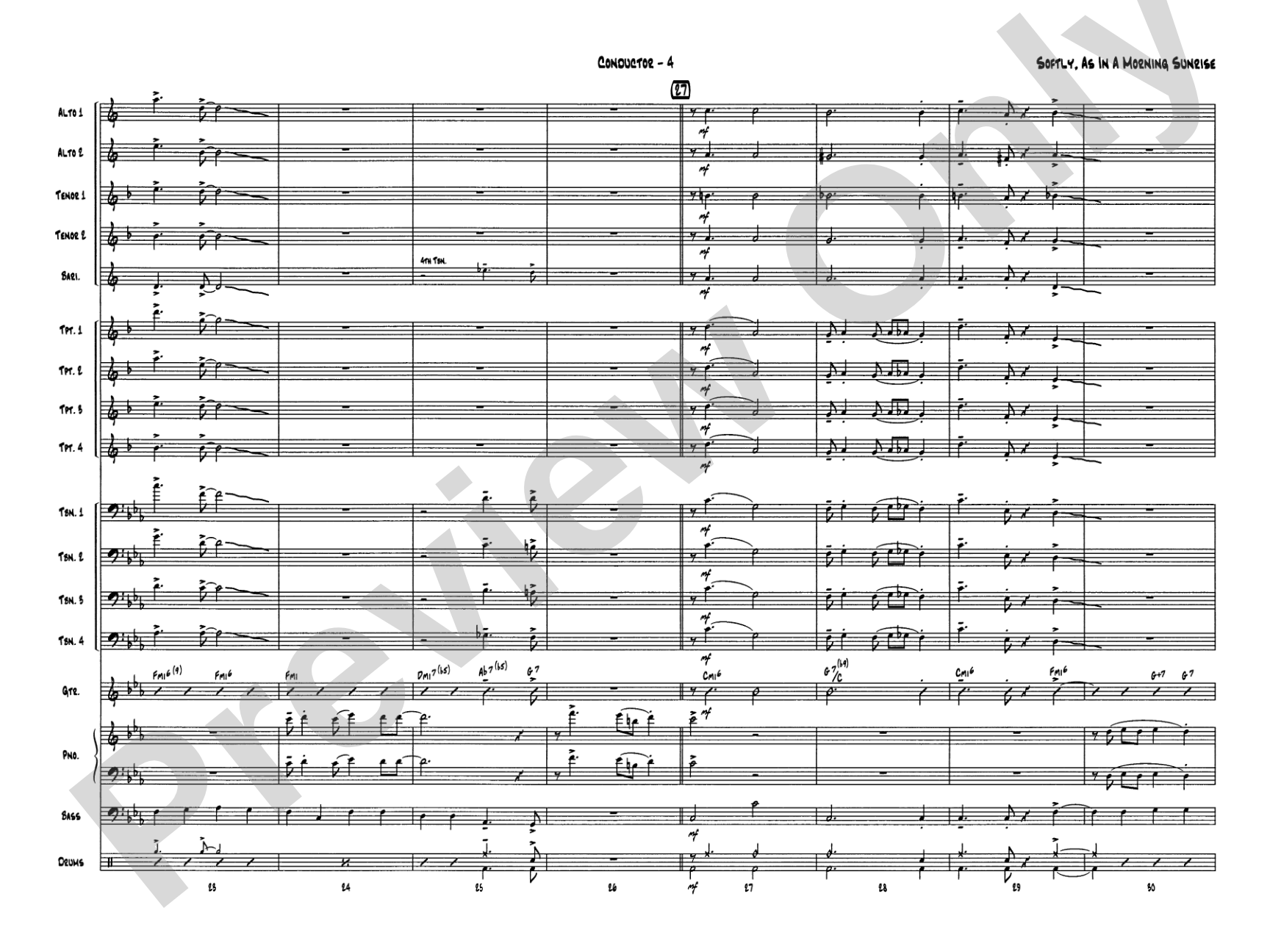
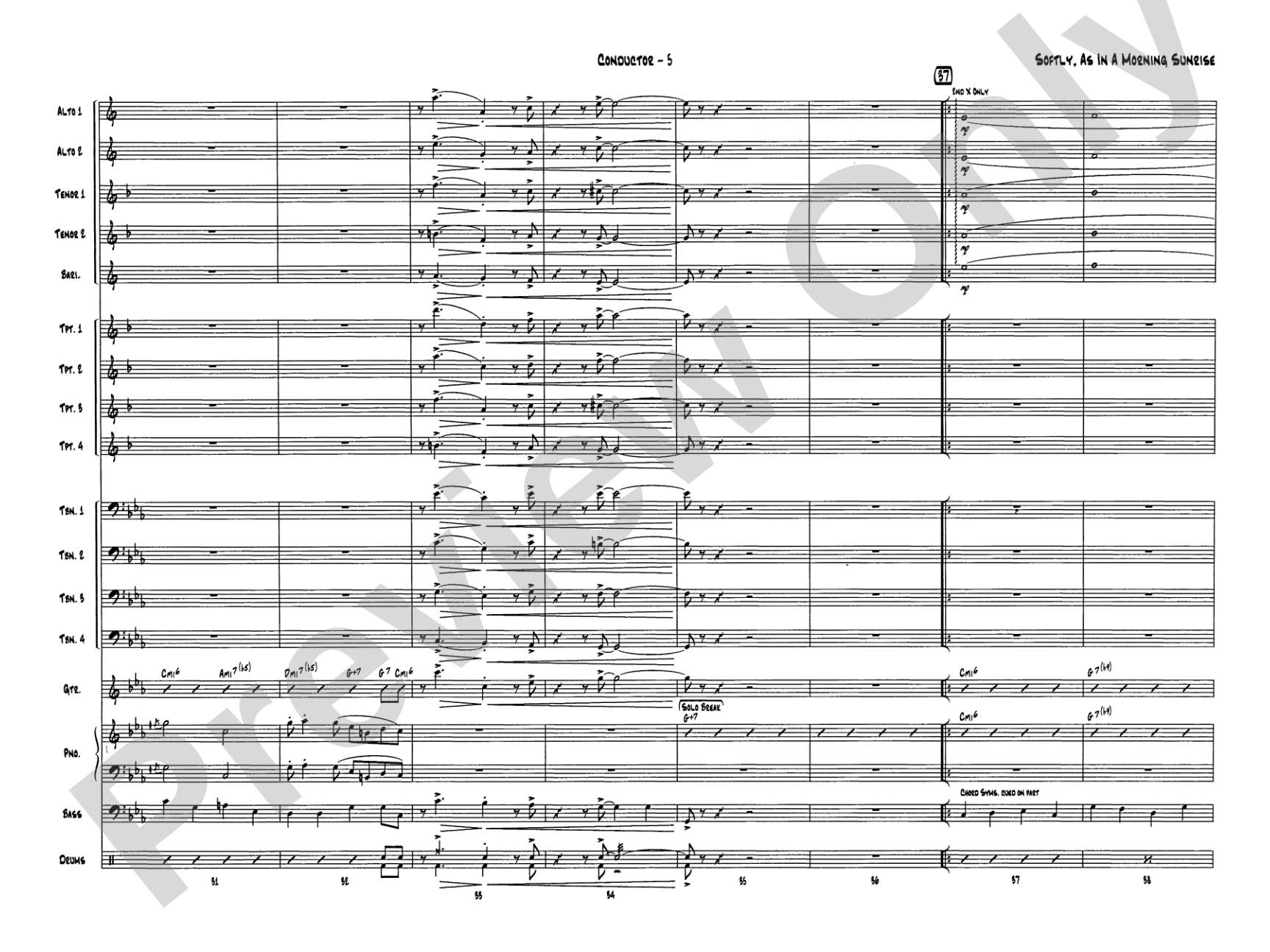
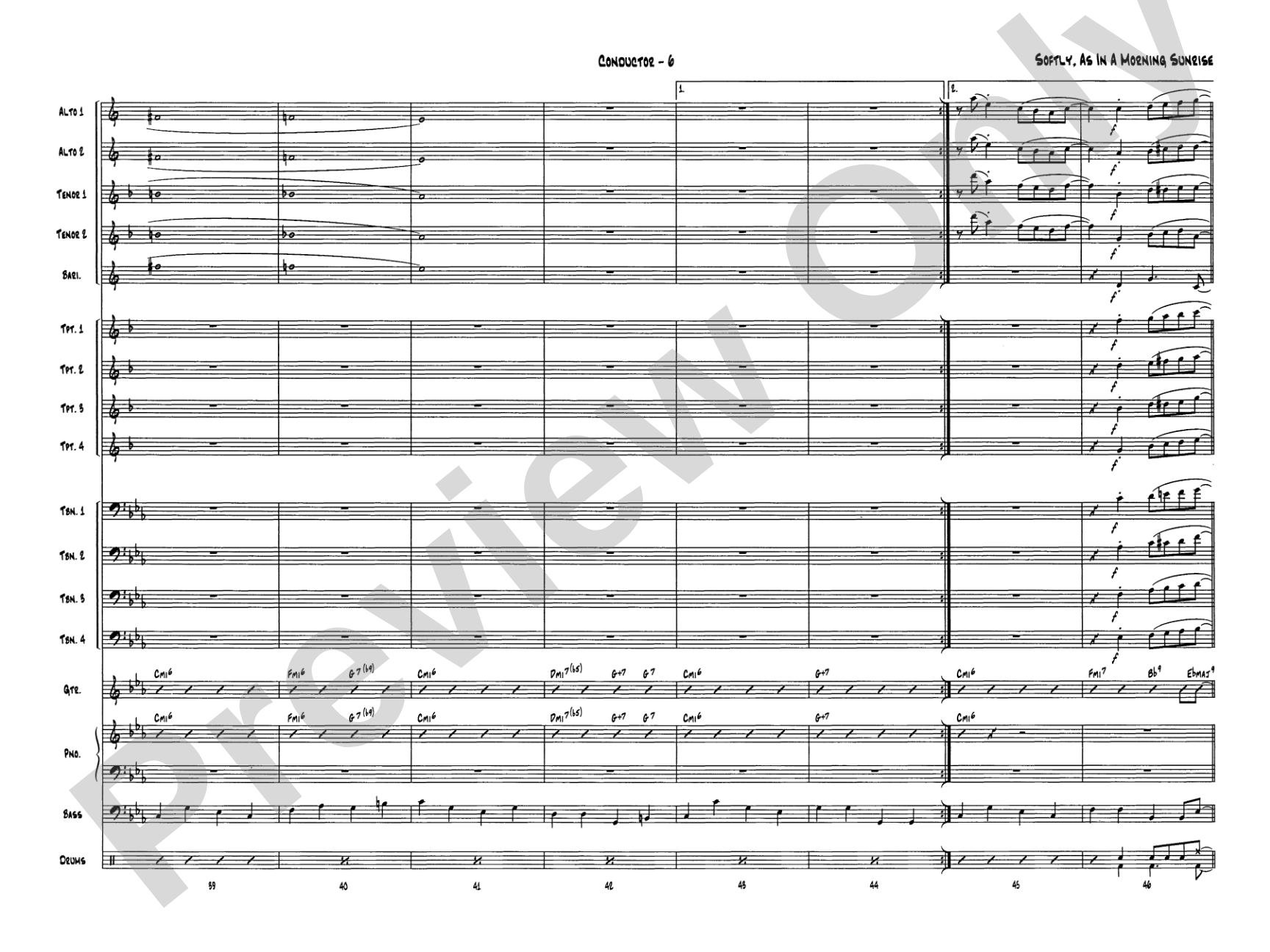
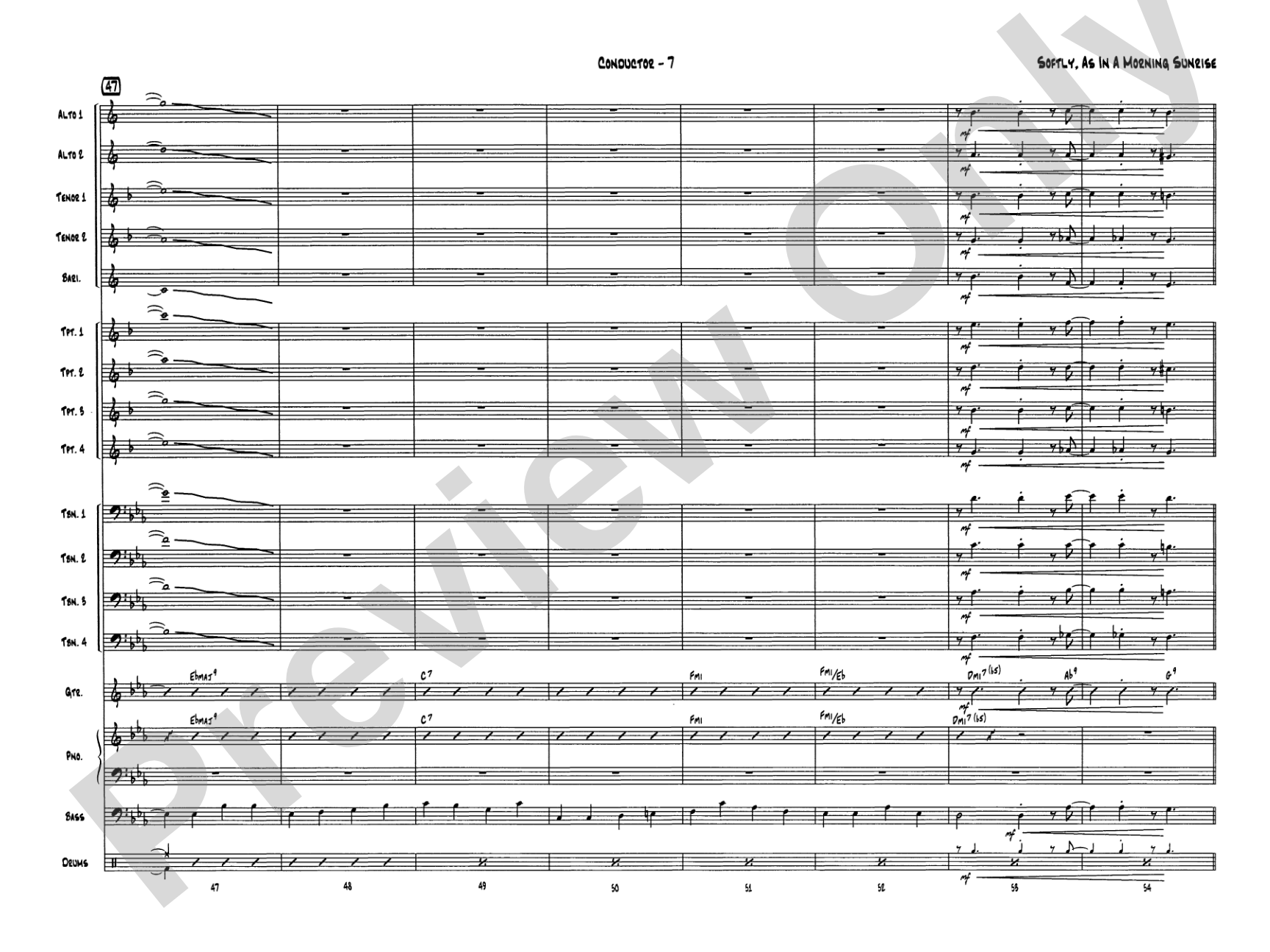
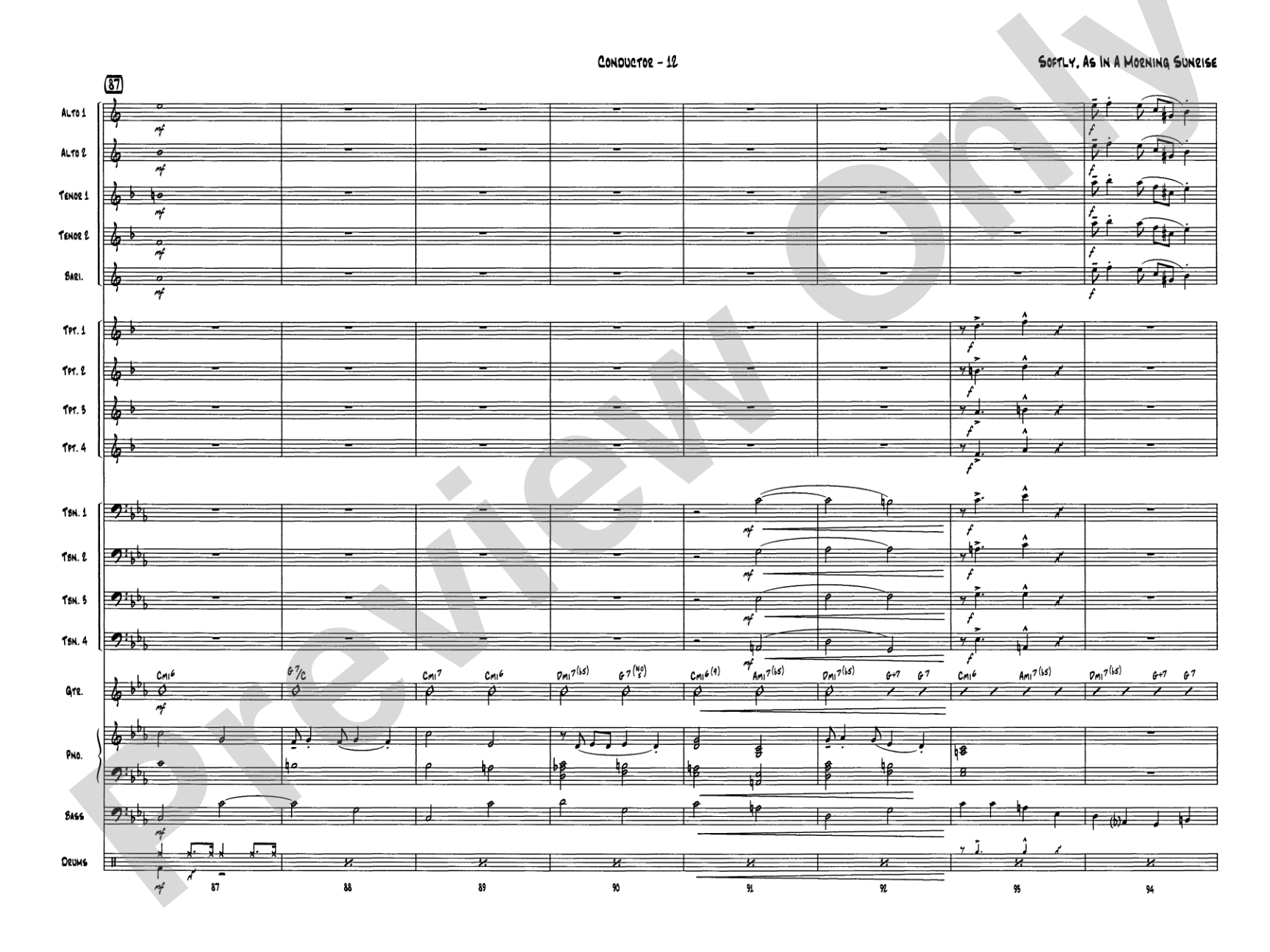
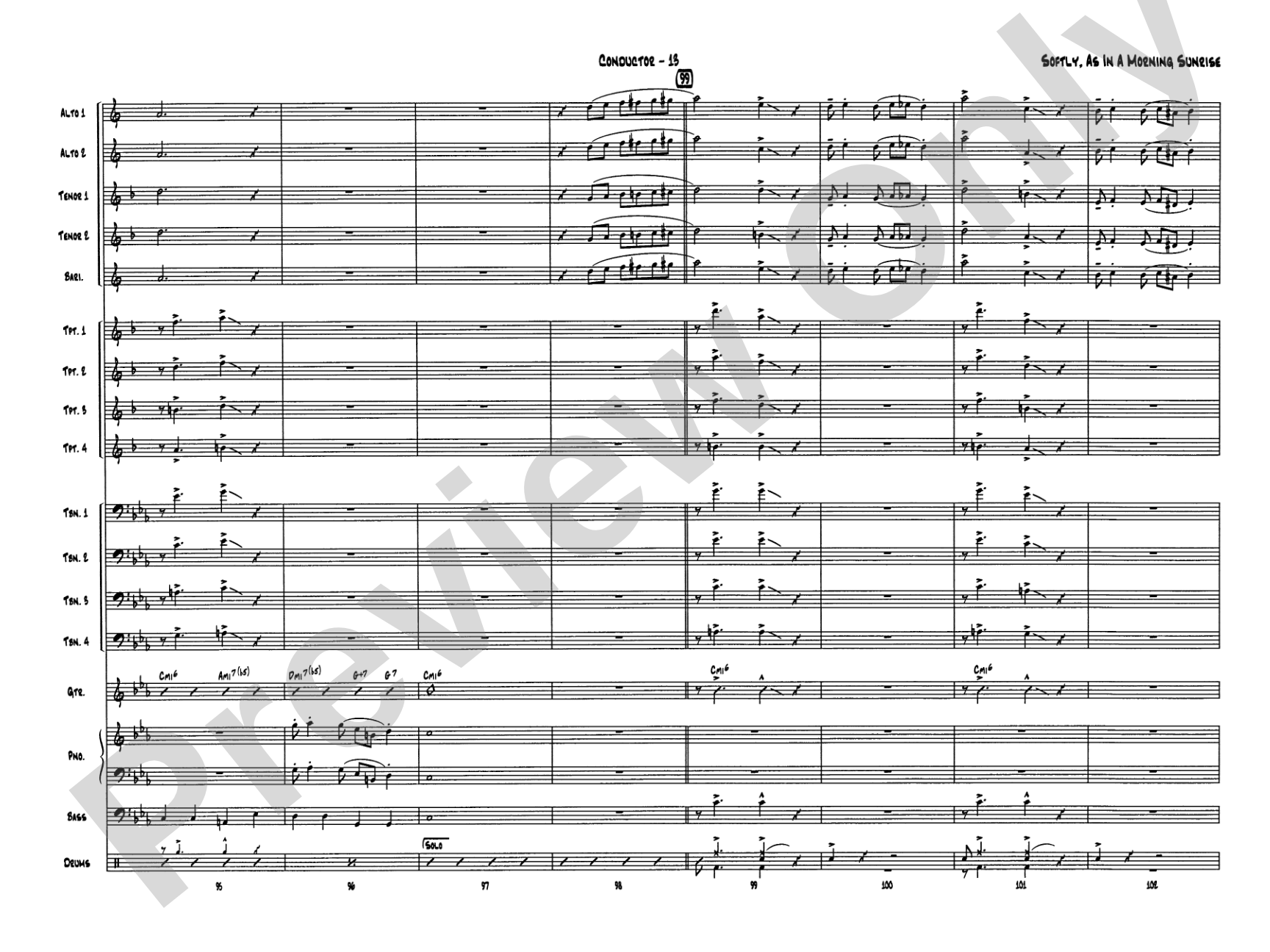
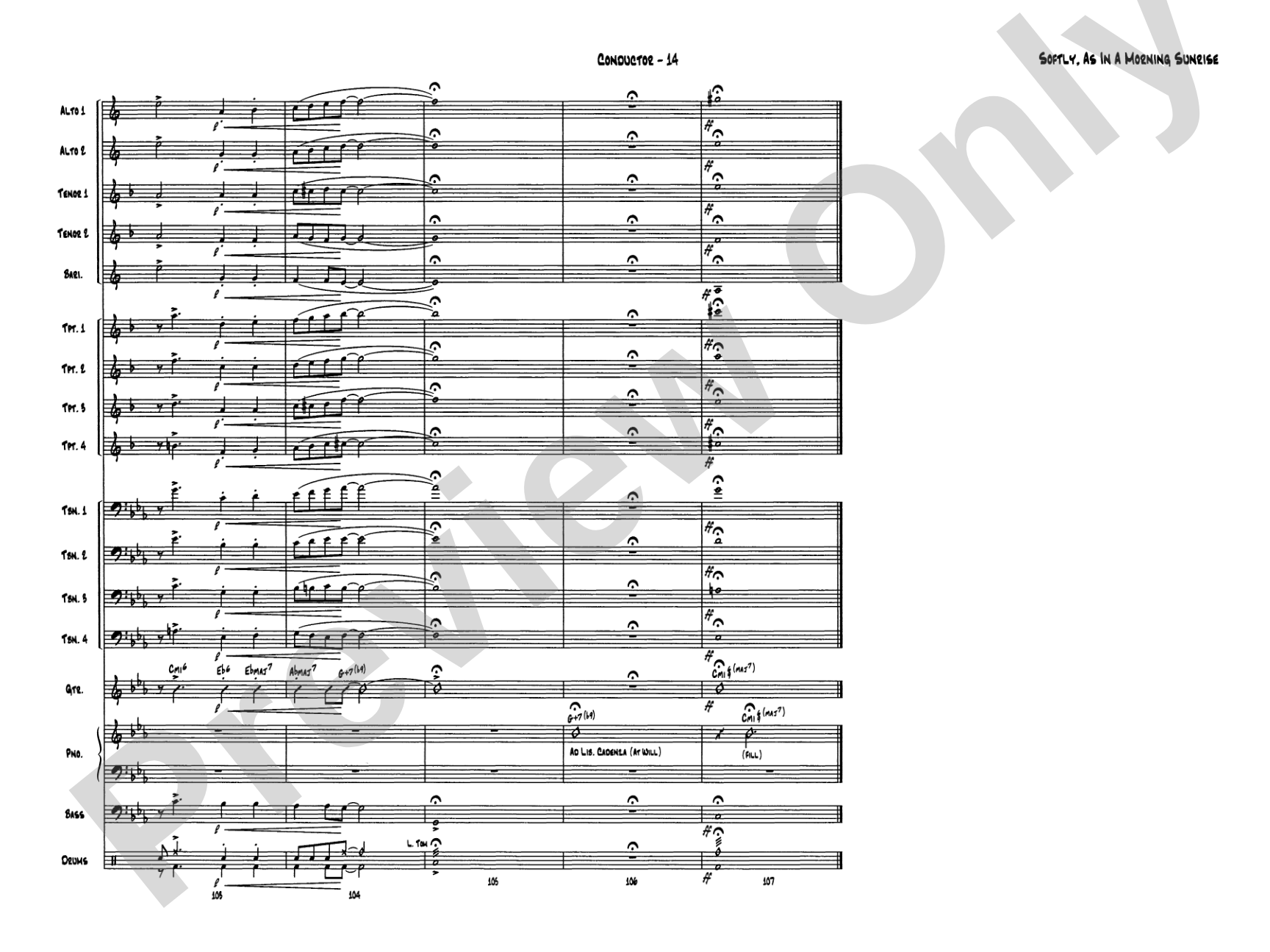
This is a high-energy piano feature that is perfect for your concert opener or closer. Master arranger Dave Wolpe has produced a brilliant chart out of this great jazz standard. Outstanding ensemble writing along with interludes, exchanges with the soloists and a stop time section will put your piano player on the map. If you have a strong jazz pianist, this is a must have chart! (2:28)


Don't just read it, hear it, play along with it, and watch your students grow with it. In MakeMusic Cloud, Softly, As in a Morning Sunrise: Jazz Ensemble Conductor Score & Parts comes alive with professional accompaniment, adjustable tempo, and built-in practice tools that turn solo practice into real progress.
Open in the Player
Jump straight in and assign it today.
Start Your Free Trial
Open this title and explore the full library in minutes.
Sample Audio
1
Audio File
--:--
0:00
0:00
Sample Video
No sample videos found.
Additional Details
Series:
Premier Jazz Series
Publisher:
Alfred Music
Page Count:
94
SKU:
00-PK-0002495
More about this title
About the Composer: Sigmund Romberg
Sigmund Romberg (1887-1951) was a Hungarian-American composer who became one of Broadway's most prolific and successful operetta writers. His gifts for melody and orchestration made him a fixture of American musical theater during the 1920s and 1930s, and his songs have endured through countless jazz interpretations and standards recordings.
For jazz educators, Romberg's work represents a rich vein of compositional sophistication. His melodies contain the kind of harmonic and structural depth that rewards imaginative reharmonization and improvisation, making them ideal vehicles for student soloists and ensemble arrangements at the secondary and collegiate level.
Why we love this
Dave Wolpe's arrangement recognizes what makes this standard so appealing to jazz musicians: a melody with genuine substance and harmonic interest that can sustain both ensemble interplay and extended solo space. The stop-time section and planned exchanges between soloists give your ensemble genuine conversation moments rather than just trading four-bar or eight-bar chunks, which deepens everyone's listening and rhythmic responsibility.
What to expect
The morning light in the title becomes tangible here: bright, energetic, and full of forward motion. The ensemble writing propels the soloist rather than cushioning them, creating a sense of collaborative momentum even when the piano steps fully into the spotlight.
Who it's for
This arrangement serves jazz ensembles with strong pianists and confident readers at the upper high school or college level. Directors programming concerts for audiences who expect both accessibility and musical substance will find this charts delivers on both fronts.
How to get the most out of it
- Build the ensemble sound from the rhythm section outward. Lock the bass and drums into a unified pocket first, letting the piano soloist settle into that foundation before bringing in the horns.
- Shape the interludes as musical punctuation, not filler. Each one creates an opportunity to reset energy and give the soloist a moment to reset before the next statement.
- Treat the stop-time section as a conversation starter. The ensemble's hits matter as much as the soloist's notes; they're part of the melodic content, not just accompaniment.
- Let the piano feature breathe. With 94 pages and a sophisticated arrangement, your pianist needs rehearsal space to own both the technical and interpretive demands.
How to use it
Open a concert with this chart to establish immediate energy and musicianship, or close one to send audiences out with a high-caliber performance that showcases both ensemble discipline and individual artistry. At grade 4.5, it also serves as a capstone arrangement for strong student performers heading into college jazz programs.
Skills your students will build
- Listening and responding to a soloist's phrasing and harmonic choices while maintaining ensemble cohesion
- Stop-time section precision (rhythmic accuracy in ensemble hits against silence)
- Trading and interplay between soloists and full ensemble
- Interpretation of jazz articulation and phrasing at a more advanced level
- Reading complex jazz ensemble scores with multiple rhythmic and harmonic layers