

Sing with Pleasure (from Saul): 2-Part Choral Octavo
From Saul
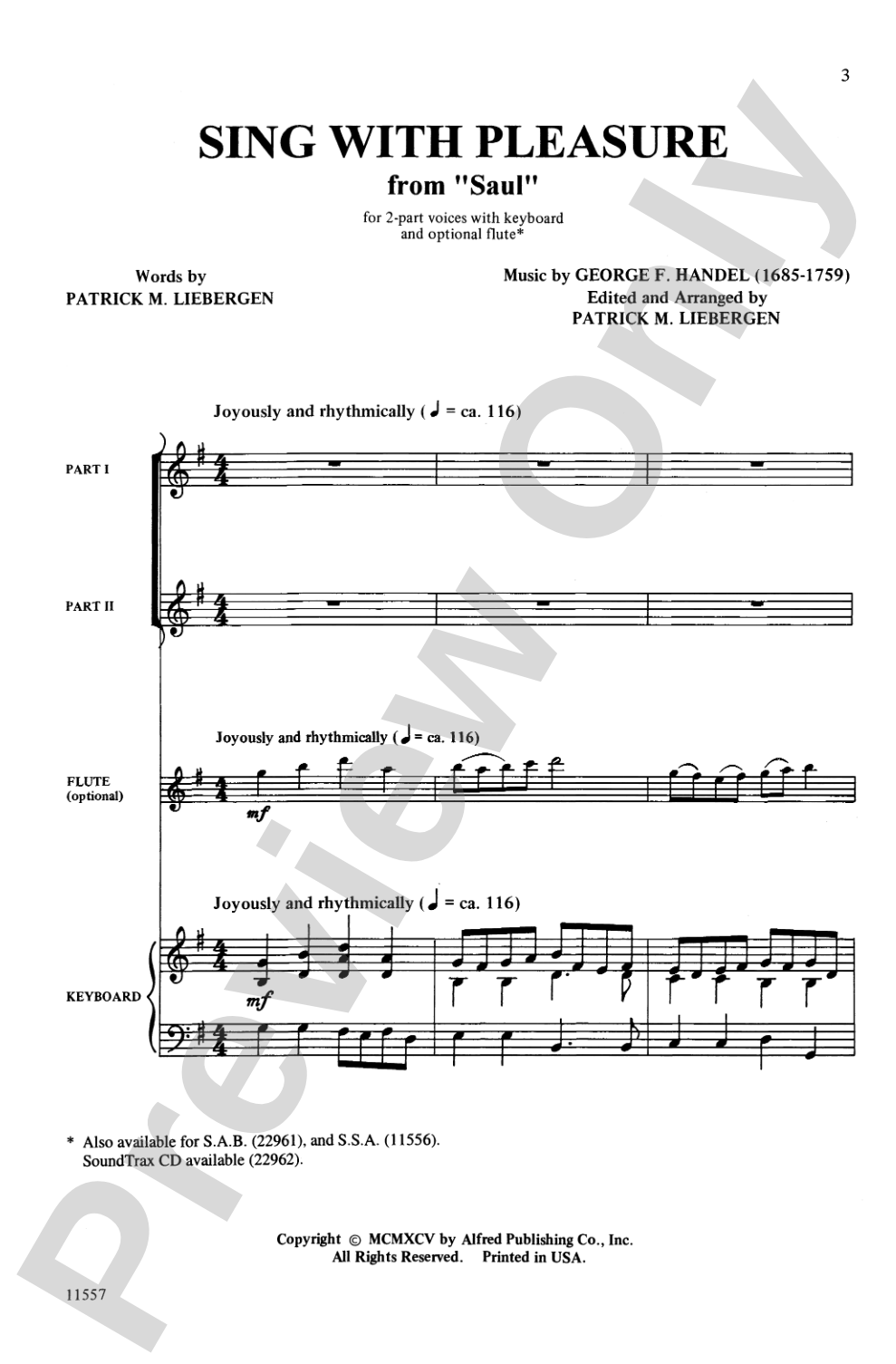
Music by George Frideric Handel / arr. Patrick M. Liebergen
Item: 00-PO-0002843
$2.25
Minimum order quantity: 20 copies
Pickup currently not available
Related Items
Sing with Pleasure (from Saul): SAB Choral Octavo |
$2.25
|
View | |
Sing with Pleasure (from Saul): SSA Choral Octavo |
$2.25
|
View | |
Sing with Pleasure: SAB Choral Octavo |
$2.25
|
View | |
Sing with Pleasure: SSA Choral Octavo |
$2.25
|
View | |
Sing with Pleasure: 2-Part Choral Octavo |
$2.25
|
View | |
Sing with Pleasure: Choral Octavo SoundTrax CD |
$27.99
|
View |
Description
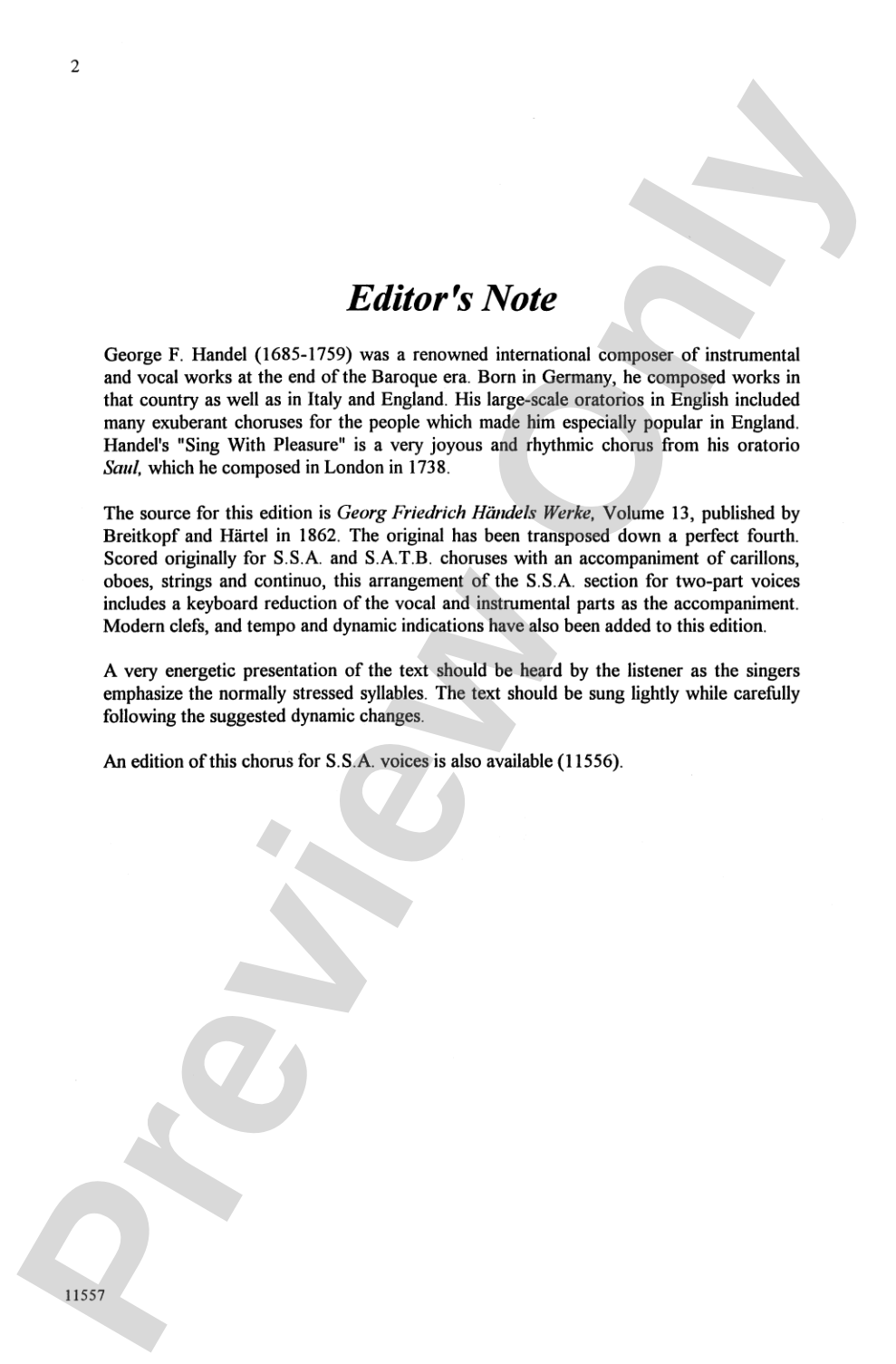
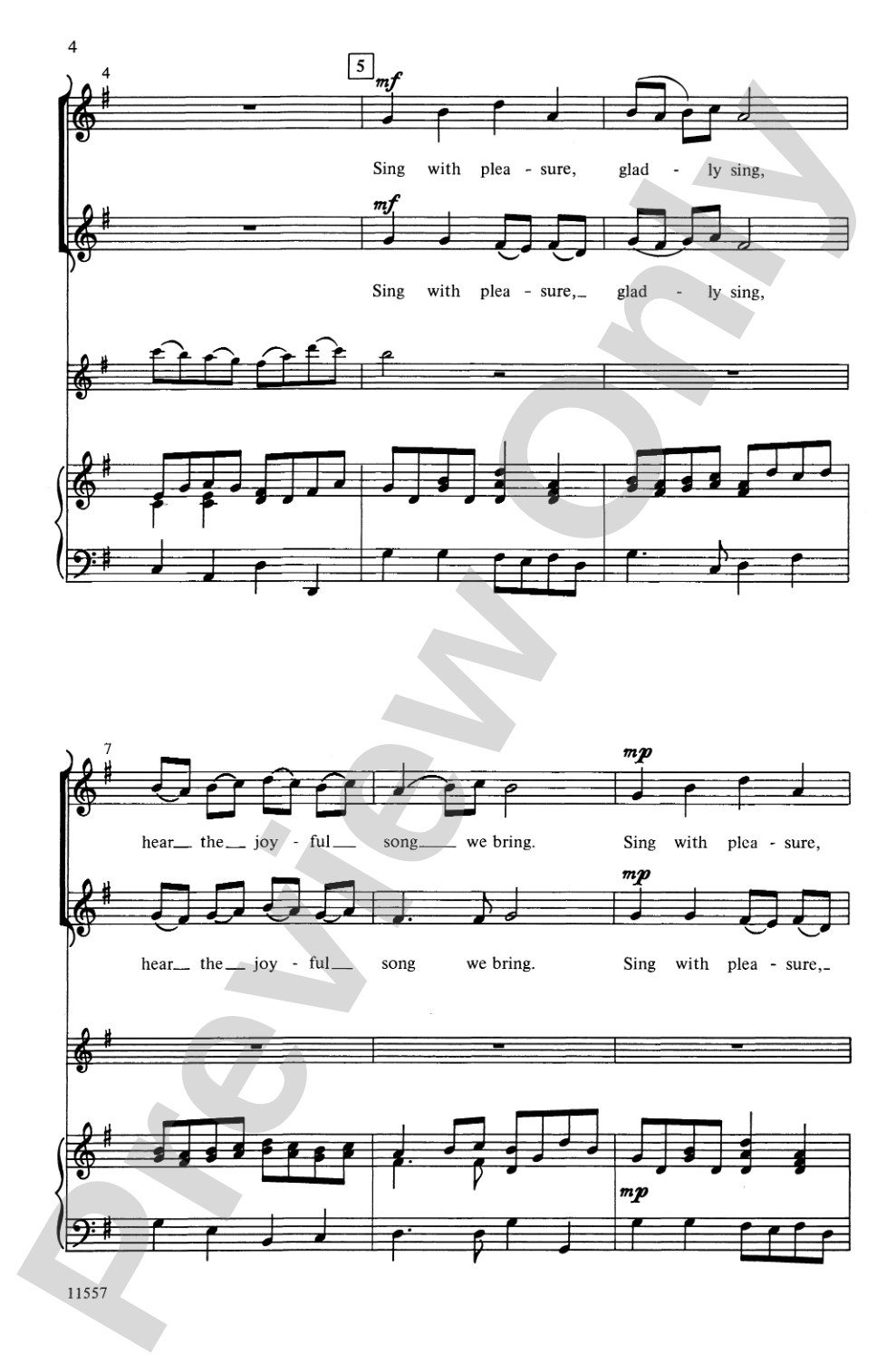
A classic choral work from the oratorio "Saul" by Handel, carefully edited and arranged exclusively for treble voices by Patrick Liebergen. New secular text by the arranger makes it ideal for the school use. Optional easy flute part is simple to add. An excellent introduction to the Baroque style for any treble choir.


Sing with Pleasure (from Saul): 2-Part Choral Octavo isn't in MakeMusic Cloud just yet...but it could be. Let us know you'd like to see it, and you'll help shape what comes next. In the meantime, start a free trial and dive into thousands of interactive titles your students can play along with today.
Request This Title
Tell us you want it.
Start Your Free Trial
Explore everything that's ready to play right now.
Sample Audio
1
Audio File
--:--
0:00
0:00
Sample Video
No sample videos found.
Additional Details
Series:
Alfred Archive Edition: Alfred Choral Designs
Publisher:
Alfred Music
Page Count:
12
SKU:
00-PO-0002843
Instrumentation:
Opt. Flute
More about this title
About the Composer: George Frideric Handel
George Frideric Handel (1685-1759) was a German-born composer who spent most of his career in England, where he became a dominant figure in Baroque music. His works span opera, oratorio, instrumental music, and sacred compositions, all marked by memorable melodies, brilliant orchestration, and dramatic power. Handel's oratorios, including Saul, represent some of the most enduring choral literature in Western music and remain central to music education because of their direct emotional appeal and technical accessibility across skill levels.
Handel's influence on choral writing cannot be overstated. His approach to voice leading, harmonic clarity, and text setting established models that choral composers followed for generations. For school choirs, Handel's music offers an entry point into sophisticated musical thinking: the melodic lines are singable, the harmonies are rich but logical, and the dramatic content engages both singers and audiences.
Why we love this
Liebergen's arrangement strips away the oratorio's grandeur without sacrificing its musical integrity, creating something genuinely playable for treble choirs while preserving the unmistakable Baroque character that makes Handel's music so rewarding to sing. The new secular text opens this masterwork to school repertoire in ways the original religious text cannot, expanding programming possibilities across the calendar year. Adding the optional flute part transforms a simple choral piece into something more textured, giving directors flexibility in how they deploy their resources.
What to expect
Handel's characteristic brightness and energy animate this piece. The melody is buoyant and elegant, supported by harmonies that feel both warm and luminous. There's a formality to the Baroque style that lends dignity to whatever text is sung, paired with an underlying joy that makes it genuinely pleasurable to perform.
Who it's for
This arrangement serves treble choirs at the middle and high school level, as well as community and church choirs seeking accessible yet substantive Baroque repertoire. Directors looking to introduce secular repertoire with genuine musical substance will find a piece that sounds far more sophisticated than its technical demands suggest. The 2-part voicing keeps it within reach for younger or developing singers while the Handel pedigree provides musical credibility.
How to get the most out of it
- Shape the two-part writing with clear phrase direction. Baroque music relies on forward momentum, so avoid the temptation to linger; let the natural arch of each phrase guide your tempo and dynamics.
- Balance the parts evenly even though they're labeled differently. Both lines carry musical significance, and when one part dominates, the harmonic beauty flattens. Rehearse them separately first, then bring them together with equal weight.
- If you're using the flute part, double-check that it doesn't overshadow the singers. The optional instrumentation should enhance the texture, not replace it; adjust volume and placement in rehearsal to find the right blend.
- Attend to diction with the same care you'd give a language other than English. The secular text is new, but Handel's phrasing still expects clarity and forward articulation of consonants to carry the musical line.
How to use it
Program this as a showcase for your treble voices on a spring or holiday concert, where its elegance and brightness can shine without heavy competition from darker works. It pairs naturally with other Baroque selections, or it can stand alone as a stylistic bridge piece that opens a program for audiences unfamiliar with the era. Its relative brevity makes it ideal as a transitions piece or encore, and the optional flute part gives you a chance to feature instrumental soloists alongside your choir.
Skills your students will build
- Singing sustained lines with forward harmonic momentum characteristic of Baroque style
- Reading and balancing two-part treble voicing with independent musical lines
- Executing clear diction and articulation in secular text set to Baroque phrasing
- Understanding the basic structure and sound of 17th/18th-century choral writing