

Sing with Pleasure (from Saul): SSA Choral Octavo
From Saul
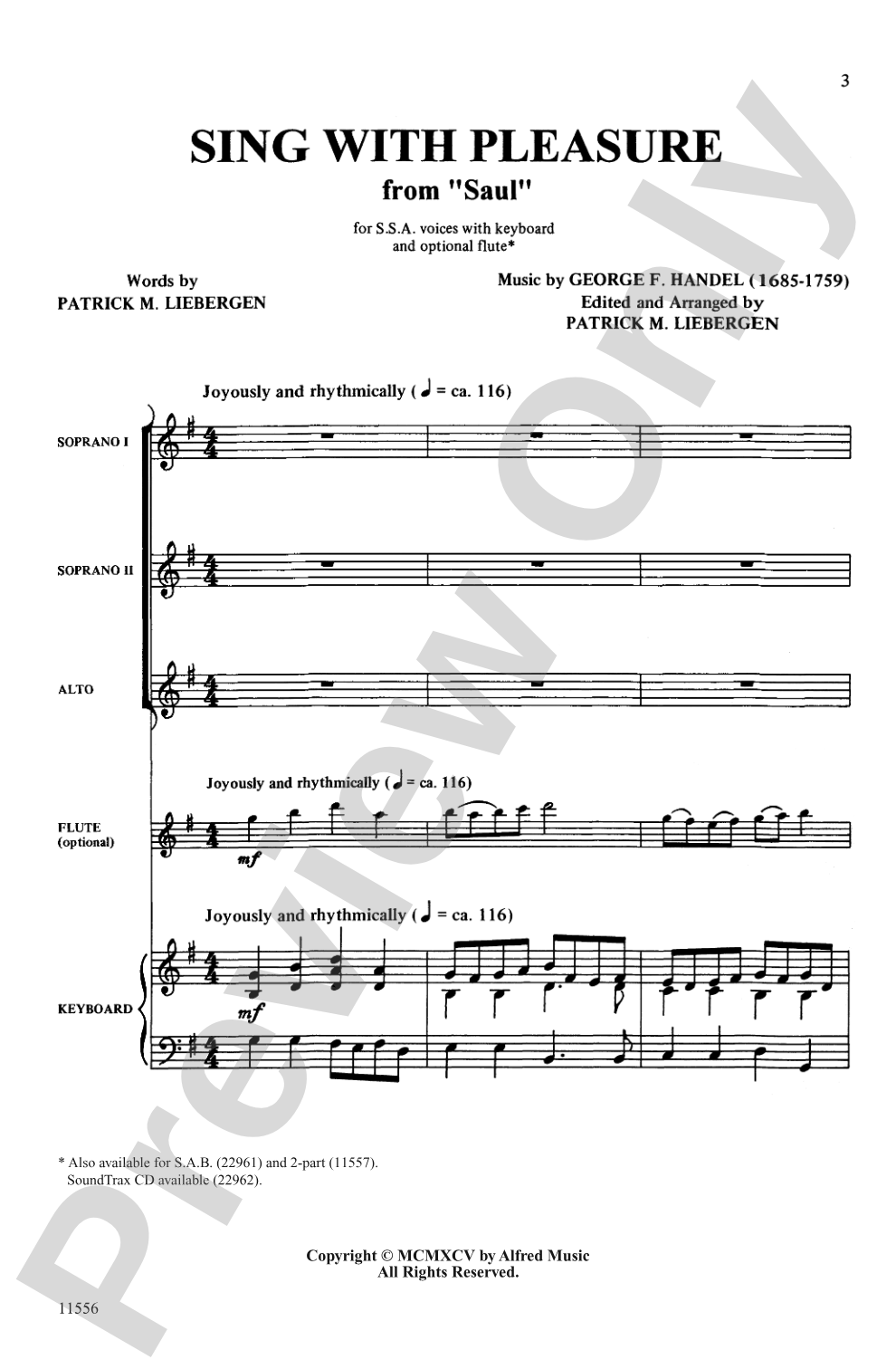
Music by George Frideric Handel / arr. Patrick M. Liebergen
Item: 00-PO-0002842
$2.25
Minimum order quantity: 20 copies
Pickup currently not available
Related Items
Sing with Pleasure (from Saul): SAB Choral Octavo |
$2.25
|
View | |
Sing with Pleasure (from Saul): 2-Part Choral Octavo |
$2.25
|
View | |
Sing with Pleasure: SAB Choral Octavo |
$2.25
|
View | |
Sing with Pleasure: SSA Choral Octavo |
$2.25
|
View | |
Sing with Pleasure: 2-Part Choral Octavo |
$2.25
|
View | |
Sing with Pleasure: Choral Octavo SoundTrax CD |
$27.99
|
View |
Description
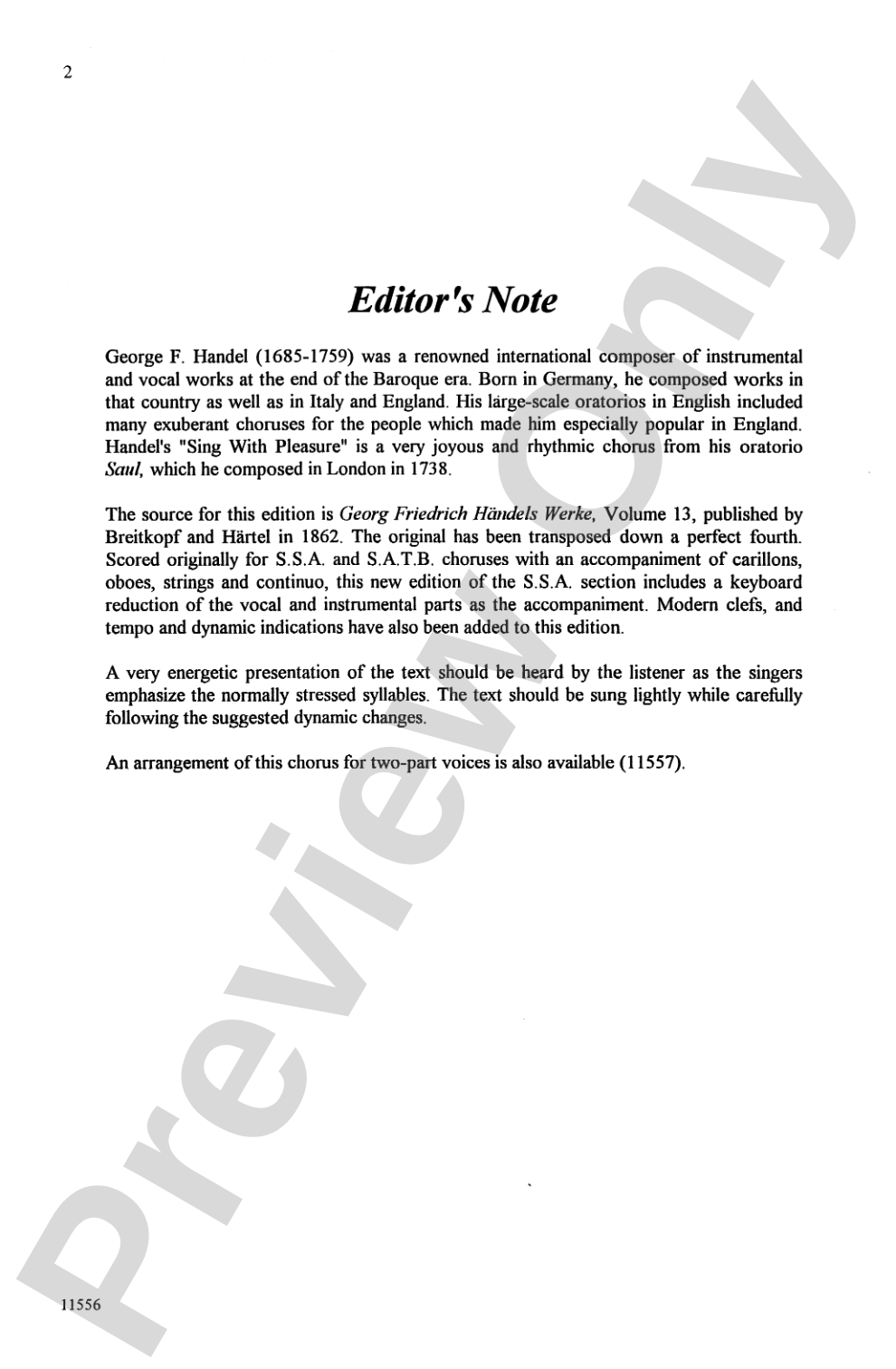
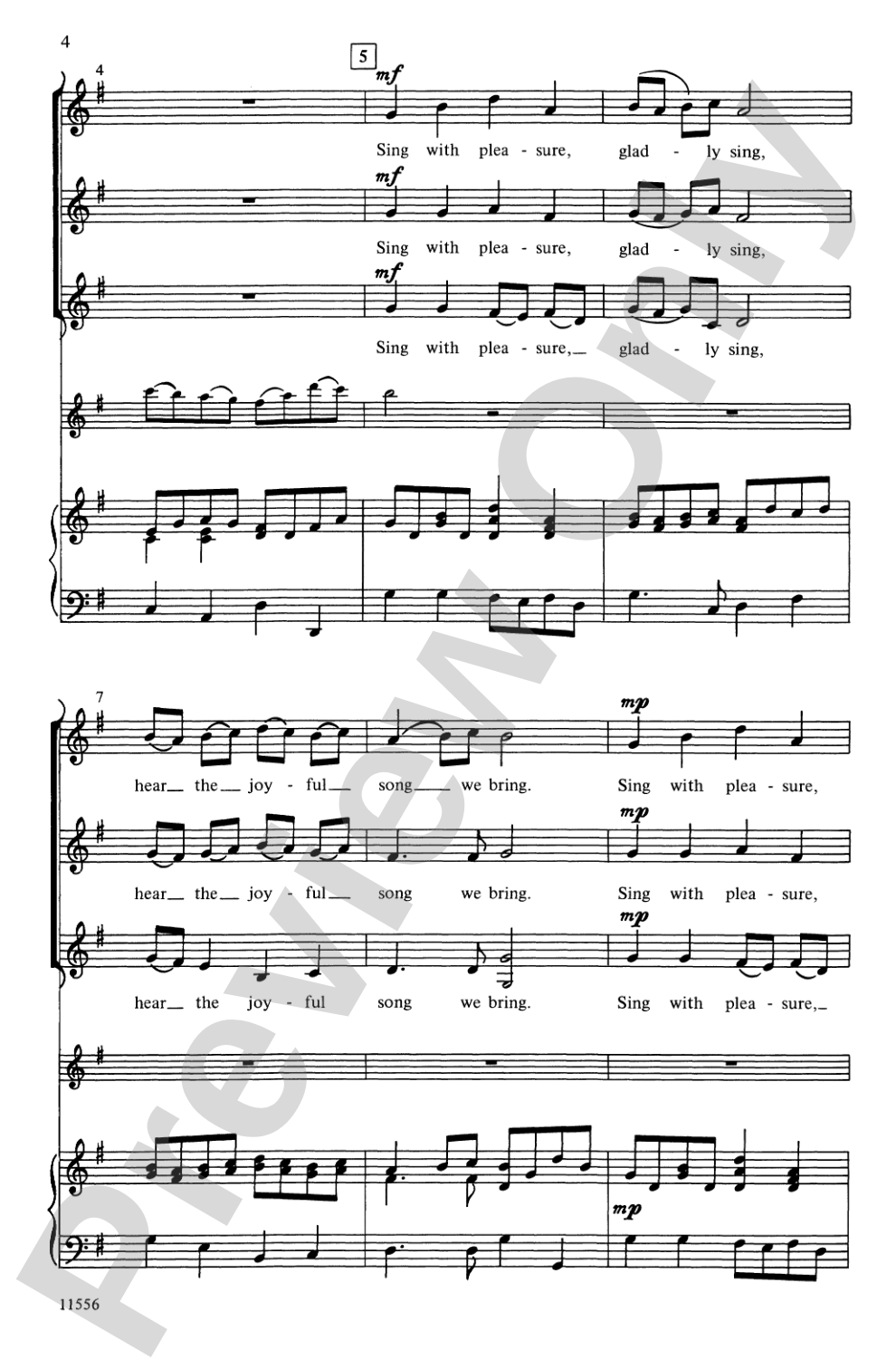
A classic choral work from the oratorio "Saul" by Handel, carefully edited and arranged exclusively for treble voices by Patrick Liebergen. New secular text by the arranger makes it ideal for the school use. Optional easy flute part is simple to add. An excellent introduction to the Baroque style for any treble choir.


Sing with Pleasure (from Saul): SSA Choral Octavo isn't in MakeMusic Cloud just yet...but it could be. Let us know you'd like to see it, and you'll help shape what comes next. In the meantime, start a free trial and dive into thousands of interactive titles your students can play along with today.
Request This Title
Tell us you want it.
Start Your Free Trial
Explore everything that's ready to play right now.
Sample Audio
1
Audio File
--:--
0:00
0:00
Sample Video
No sample videos found.
Additional Details
Series:
Alfred Archive Edition: Alfred Choral Designs
Publisher:
Alfred Music
Page Count:
12
SKU:
00-PO-0002842
Instrumentation:
Opt. Flute
More about this title
About the Composer: George Frideric Handel
George Frideric Handel (1685-1759) dominated the musical life of 18th-century England, composing across opera, oratorio, and instrumental music with extraordinary productivity and craft. His oratorios, including "Saul," represent a pinnacle of Baroque choral writing, combining accessible melody with harmonic sophistication and dramatic text-painting that still captivates singers and audiences today.
Handel's influence on choral pedagogy remains profound. His works appear in curricula worldwide because they balance musical substance with relative accessibility, offering students genuine encounters with Baroque style without requiring virtuosic technical demands.
Why we love this
Patrick Liebergen's adaptation strips away the oratorio context while preserving Handel's melodic brilliance and harmonic language, making genuine Baroque repertoire immediately viable for school choirs. The new secular text removes any religious performance concerns while the optional flute part gives you flexibility to perform with or without instrumental support, depending on your ensemble's resources.
What to expect
Elegant and purposeful, with the clarity of Baroque melody supported by functional harmony that sounds both familiar and refined. The writing sits naturally for young treble voices, allowing singers to experience the joy of shaping genuine musical material rather than performing simplified versions of the masters.
Who it's for
Treble choirs at the middle school through early high school level seeking substantial Baroque repertoire that doesn't require years of vocal maturity. Directors programming festival concerts, competitions, or year-end performances will find a work that demonstrates musicianship while remaining achievable within a typical rehearsal timeline.
How to get the most out of it
- Shape the phrases with gentle dynamic shaping rather than static volume; Baroque style benefits from natural breathing at phrase cadences that allow the harmonic rhythm to settle.
- Balance the three voices so the top line sings through without drowning the lower parts; the inner voices carry important harmonic color in this arrangement.
- If using the optional flute part, let it double the soprano line lightly for support during transitions, then drop back to blend with the choir on tutti sections.
- Keep the tempo steady and measured; resist rushing during passages with shorter note values, which is common when singers encounter unfamiliar rhythmic patterns.
How to use it
This works beautifully as a centerpiece in a Baroque-focused concert or as the sophisticated anchor in a mixed-era program, particularly when paired with contemporaneous works or as a contrast to Romantic-era pieces. Its manageable length and strong identity also make it effective for festival adjudication or as the season closer for ensembles introducing their singers to style period repertoire.
Skills your students will build
- Understanding Baroque phrase structure and harmonic function
- Balancing three-part texture with independent voice leading
- Interpreting text-driven expression in instrumental style melody
- Singing with historical awareness of style and period conventions
- Reading the optional flute part as a collaborative score element