

Sing We and Chant It: SATB, a cappella Choral Octavo
Words by Michael Grayton, music by Thomas Morley / arr. Russell Robinson
Item: 00-PO-0004152

$2.25
Minimum order quantity: 20 copies
Pickup currently not available
Related Items
Sing We and Chant It: 3-Part Mixed, a cappella Choral Octavo |
$2.05
|
View | |
Sing We and Chant It: SSA, a cappella Choral Octavo |
$2.25
|
View | |
Sing We and Chant It: TTBB, a cappella Choral Octavo |
$1.90
|
View | |
Sing We and Chant It: SATB, a cappella Choral Octavo |
$2.25
|
View | |
Sing We and Chant It: 3-Part Mixed, a cappella Choral Octavo |
$2.05
|
View | |
Sing We and Chant It: SSA, a cappella Choral Octavo |
$2.25
|
View | |
Sing We and Chant It: TTBB, a cappella Choral Octavo |
$1.90
|
View |
Description
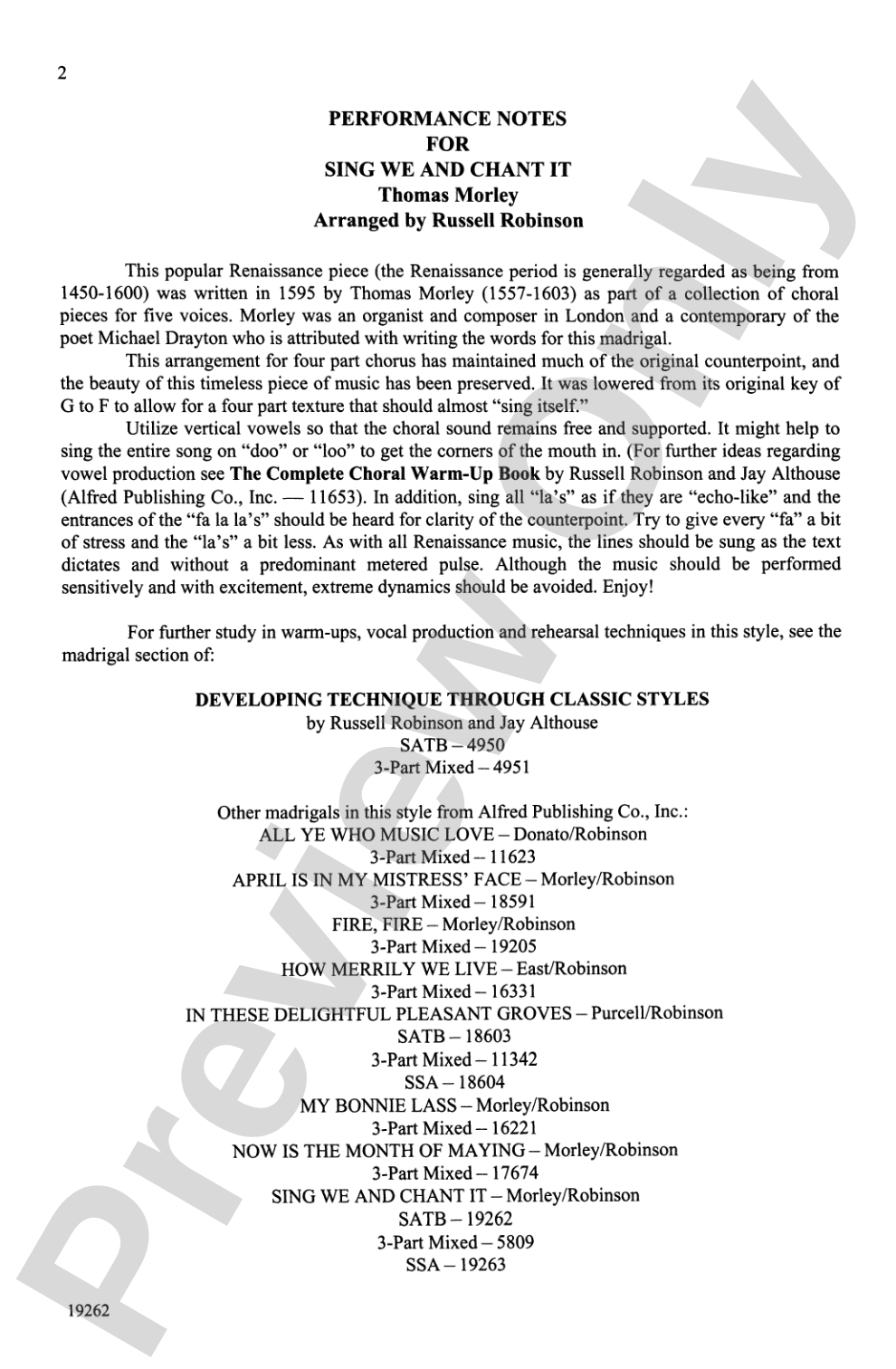
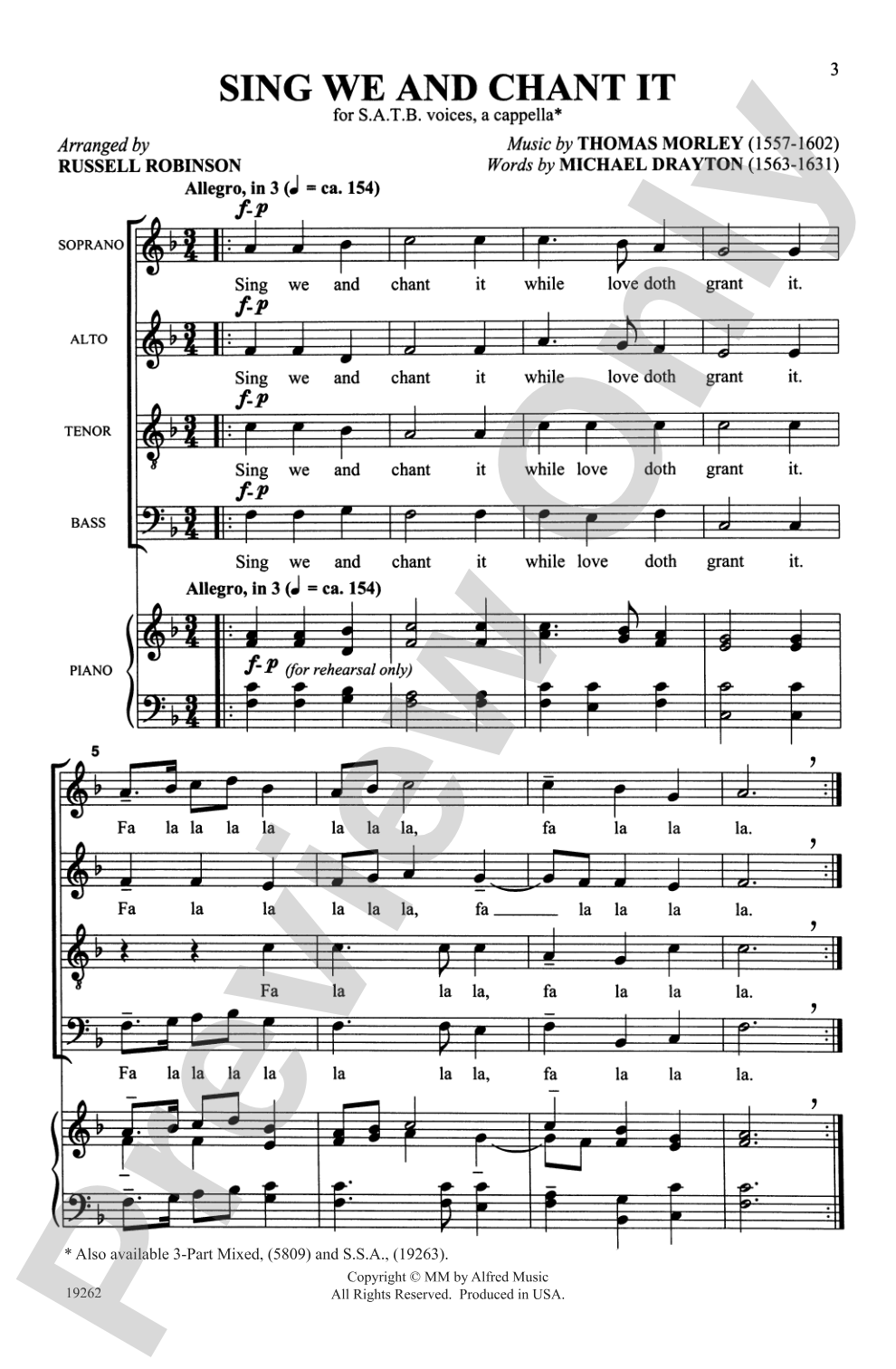
New for SSA and SATB! Russell Robinson has now adapted this widely performed madrigal for treble and SATB choirs. It's superbly reduced to preserve the harmonic and melodic structure of the original 5-part work. The quintessential madrigal, it features dynamic variations, much repetition for quick learning, and an open score for easy reading. A top-seller in 3-Part Mixed.


Don't just read it, hear it, play along with it, and watch your students grow with it. In MakeMusic Cloud, Sing We and Chant It: SATB, a cappella Choral Octavo comes alive with professional accompaniment, adjustable tempo, and built-in practice tools that turn solo practice into real progress.
Open in the Player
Jump straight in and assign it today.
Start Your Free Trial
Open this title and explore the full library in minutes.
Sample Audio
1
Audio File
--:--
0:00
0:00
Sample Video
No sample videos found.
Additional Details
Series:
Alfred Archive Edition: Alfred Choral Designs
Publisher:
Alfred Music
Page Count:
8
SKU:
00-PO-0004152
More about this title
About the Composer: Thomas Morley
Thomas Morley (1557-1602) was the most prolific English madrigalist of the Renaissance and served as a gentleman of the Chapel Royal under Elizabeth I. His madrigals and canzonets established many of the genre's defining characteristics: rhythmic vitality, text painting, and the interplay of independent vocal lines that make the form both challenging and deeply rewarding for singers.
Morey's compositional output shaped English choral music for generations. His treatise "A Plaine and Easie Introduction to Practicall Musicke" remains a window into Renaissance music-making practices, and his secular vocal works continue to anchor repertoire for advanced high school and college choirs.
Why we love this
Russell Robinson's adaptation strips away nothing essential from Morley's ingenious 5-part original. The harmonic and melodic architecture remains intact, which means your singers experience authentic Renaissance counterpoint without the reading complexity of the full score. The repetition built into this piece accelerates learning considerably, so you can spend rehearsal time on interpretation rather than note-drilling.
What to expect
Buoyant and conversational, with voices weaving in and out of focus. There's a genuine lightness to the piece, even when voices stack; the Renaissance harmonic language and driving rhythm create momentum that feels both ancient and utterly alive. It's music that invites listeners into an intimate circle of singers rather than addressing them from a stage.
Who it's for
SATB choirs at the intermediate to advanced level who want to tackle Renaissance repertoire without the score density of multi-part originals. This arrangement works equally well in high school mixed choirs, college ensembles, and community singing groups preparing for festival performance.
How to get the most out of it
- Shape the repeated text fragments as micro-phrases rather than static blocks. Each restatement should have slightly different character, articulation, or dynamics to keep the repetition fresh and conversational.
- Balance the four voices so that the bass line is clearly audible. This part carries harmonic movement that listeners need to hear; it's not accompaniment.
- Approach the dynamic variations marked in the score as purposeful structural markers. Let them breathe naturally rather than execute them mechanically.
- Practice the piece with attention to vowel consistency across the choir. A cappella voicing demands precision in timbre.
How to use it
"Sing We and Chant It" pairs beautifully on a concert that explores the continuum from Renaissance to contemporary choral writing. Its brevity and energy make it an excellent opener or palate-cleanser between heavier works. For festival and contest performance, it demonstrates your choir's command of period style and harmonic independence without requiring specialized early-music preparation.
Skills your students will build
- Independent voice leading in four-part harmony
- Text painting and expressive interpretation of repeated phrases
- Balancing four equally important lines in a cappella texture
- Sight-reading Renaissance notation and harmonic language
- Rhythmic precision and ensemble blend without instrumental support