
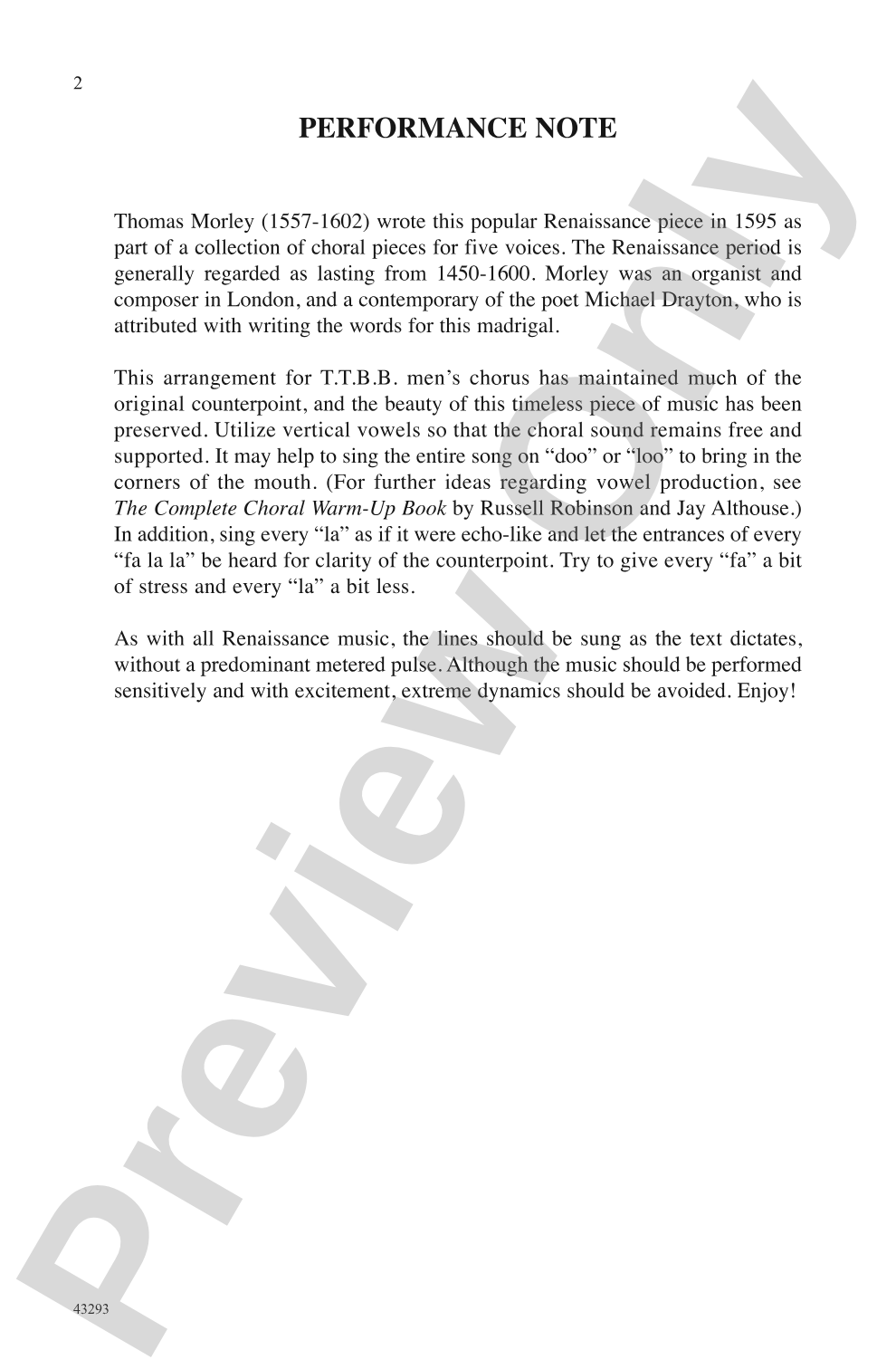
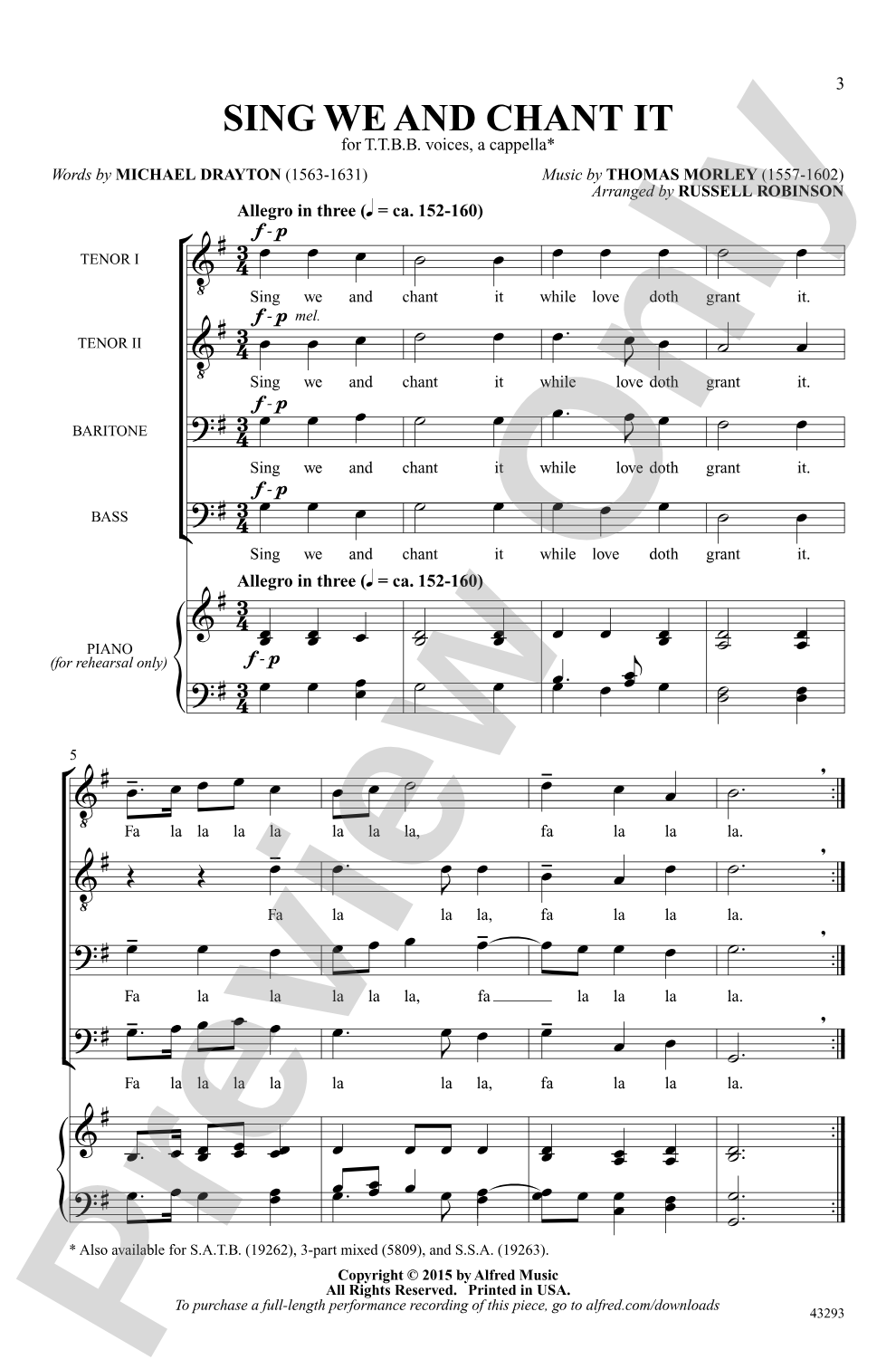

Sing We and Chant It: TTBB, a cappella Choral Octavo
Words by Michael Grayton, music by Thomas Morley / arr. Russell Robinson
Item: 00-PO-0003259

$1.90
Minimum order quantity: 20 copies
Pickup currently not available
Related Items
Sing We and Chant It: SATB, a cappella Choral Octavo |
$2.25
|
View | |
Sing We and Chant It: 3-Part Mixed, a cappella Choral Octavo |
$2.05
|
View | |
Sing We and Chant It: SSA, a cappella Choral Octavo |
$2.25
|
View | |
Sing We and Chant It: SATB, a cappella Choral Octavo |
$2.25
|
View | |
Sing We and Chant It: 3-Part Mixed, a cappella Choral Octavo |
$2.05
|
View | |
Sing We and Chant It: SSA, a cappella Choral Octavo |
$2.25
|
View | |
Sing We and Chant It: TTBB, a cappella Choral Octavo |
$1.90
|
View |
Description
Introduce madrigal singing with this wonderful edition of the Thomas Morley classic. This new men's choir arrangement sounds full and effectively captures the character and spirit of early music. Suitable for large groups or small ensembles, this excellent teaching piece will be a staple of your choral library.


Don't just read it, hear it, play along with it, and watch your students grow with it. In MakeMusic Cloud, Sing We and Chant It: TTBB, a cappella Choral Octavo comes alive with professional accompaniment, adjustable tempo, and built-in practice tools that turn solo practice into real progress.
Open in the Player
Jump straight in and assign it today.
Start Your Free Trial
Open this title and explore the full library in minutes.
Sample Audio
1
Audio File
--:--
0:00
0:00
Sample Video
No sample videos found.
Additional Details
Series:
Alfred Choral Designs
Publisher:
Alfred Music
Page Count:
8
SKU:
00-PO-0003259
More about this title
About the Composer: Thomas Morley
Thomas Morley (1557-1602) was among the most influential English composers of the late Renaissance, known for establishing the English madrigal as a sophisticated vocal genre. His works for voices span sacred motets and anthems, but his secular madrigals remain his most enduring legacy, prized for their rhythmic vitality, word painting, and accessibility to singers of varying abilities.
Morely's treatise "A Plaine and Easie Introduction to Practicall Musicke" (1597) shaped how generations learned composition and music theory. His madrigals appeared in landmark collections like "The Triumphes of Oriana" and influenced composers across Europe. For music educators, Morley's catalog offers repertoire that teaches musicianship through joyful, singable lines rather than technical demand.
Why we love this
Russell Robinson's arrangement captures Morley's original brilliance while tailoring the writing for men's voices without sacrificing the madrigal's essential character. The piece moves between intimate ensemble moments and fuller sonorities, making it equally rewarding whether your choir numbers eight singers or thirty. You get a genuine masterwork that teaches early music literacy and style while remaining genuinely fun to perform.
What to expect
Bright and conversational, with the sense of voices gathered around to share a musical story. The a cappella texture creates an intimate sound world despite the piece's spirited character, allowing the four parts to interweave with clarity and warmth.
Who it's for
Men's choirs and TTBB ensembles seeking an accessible entry point into madrigal performance. The range and musical storytelling work equally well for high school select groups, college/university choirs, and community singing organizations.
How to get the most out of it
- Treat each phrase as a unit of text and gesture rather than a series of measures. Morley's madrigals reward singers who listen to the words first and let the music follow the natural speech rhythm.
- Balance the four voices so the harmonic progression remains audible. In a cappella singing, the ear relies on voice independence to track both melody and supporting harmonies.
- Bring clarity to any text painting moments without overplaying them. A madrigal works best when the music enhances the poetry's meaning subtly, not theatrically.
How to use it
Feature this on a concert exploring Renaissance or early music contexts, or position it alongside contemporary secular choral works to show the timelessness of madrigal style. The eight-page length and engaging character make it an excellent closer for a set, leaving audiences with energy and charm.
Skills your students will build
- Renaissance harmonic language and voice leading
- Coordinating independent melodic lines without instrumental support
- Text-driven phrasing and interpretation in early music
- Sight-reading in transposed clefs (particularly for tenor and bass parts)
- Ensemble balance and blend in a cappella singing