

Sing We and Chant It: SSA, a cappella Choral Octavo
Words by Michael Grayton, music by Thomas Morley / arr. Russell Robinson
Item: 00-PO-0002161

$2.25
Minimum order quantity: 20 copies
Pickup currently not available
Related Items
Sing We and Chant It: SATB, a cappella Choral Octavo |
$2.25
|
View | |
Sing We and Chant It: 3-Part Mixed, a cappella Choral Octavo |
$2.05
|
View | |
Sing We and Chant It: TTBB, a cappella Choral Octavo |
$1.90
|
View | |
Sing We and Chant It: SATB, a cappella Choral Octavo |
$2.25
|
View | |
Sing We and Chant It: 3-Part Mixed, a cappella Choral Octavo |
$2.05
|
View | |
Sing We and Chant It: SSA, a cappella Choral Octavo |
$2.25
|
View | |
Sing We and Chant It: TTBB, a cappella Choral Octavo |
$1.90
|
View |
Description
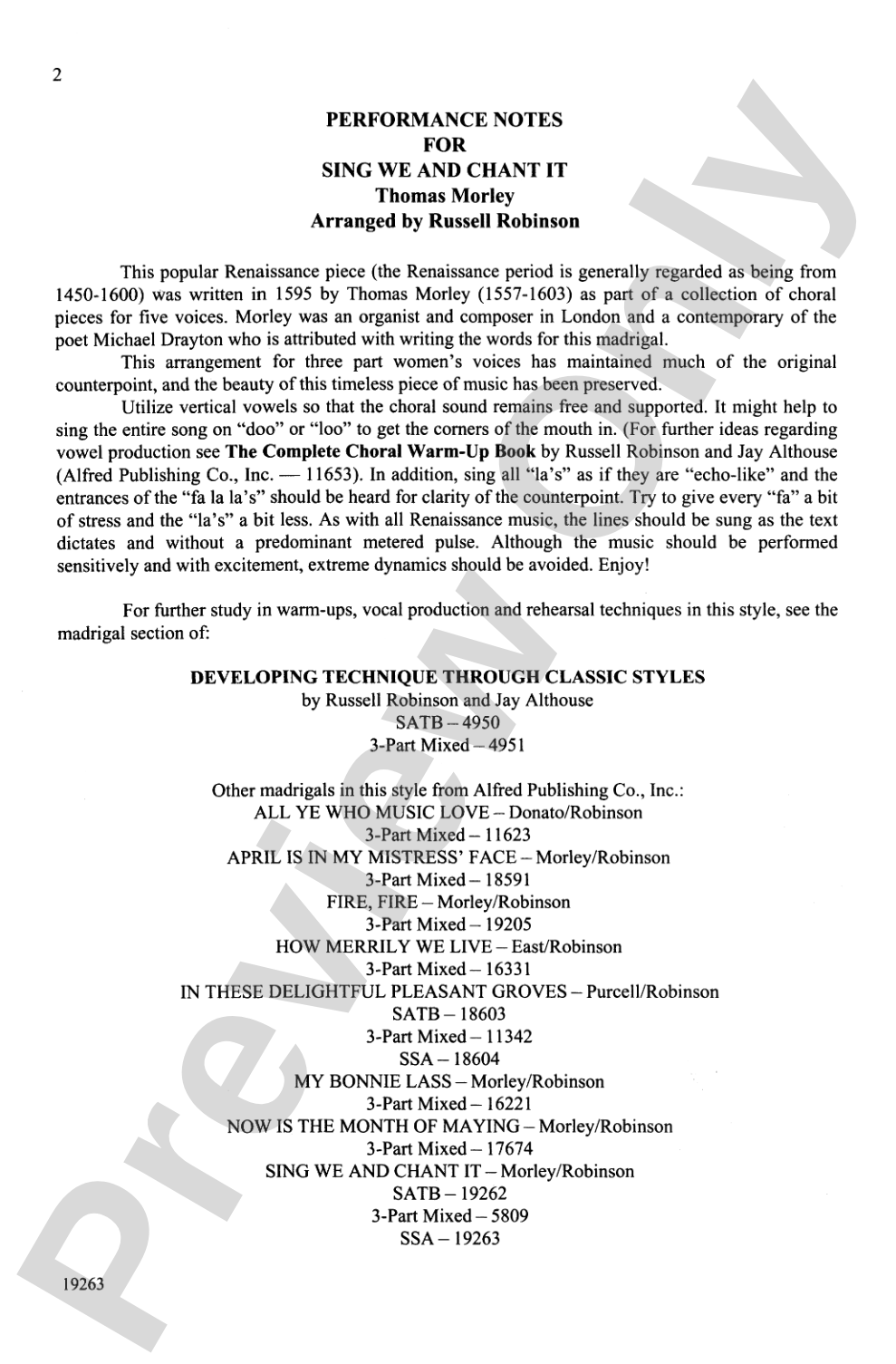
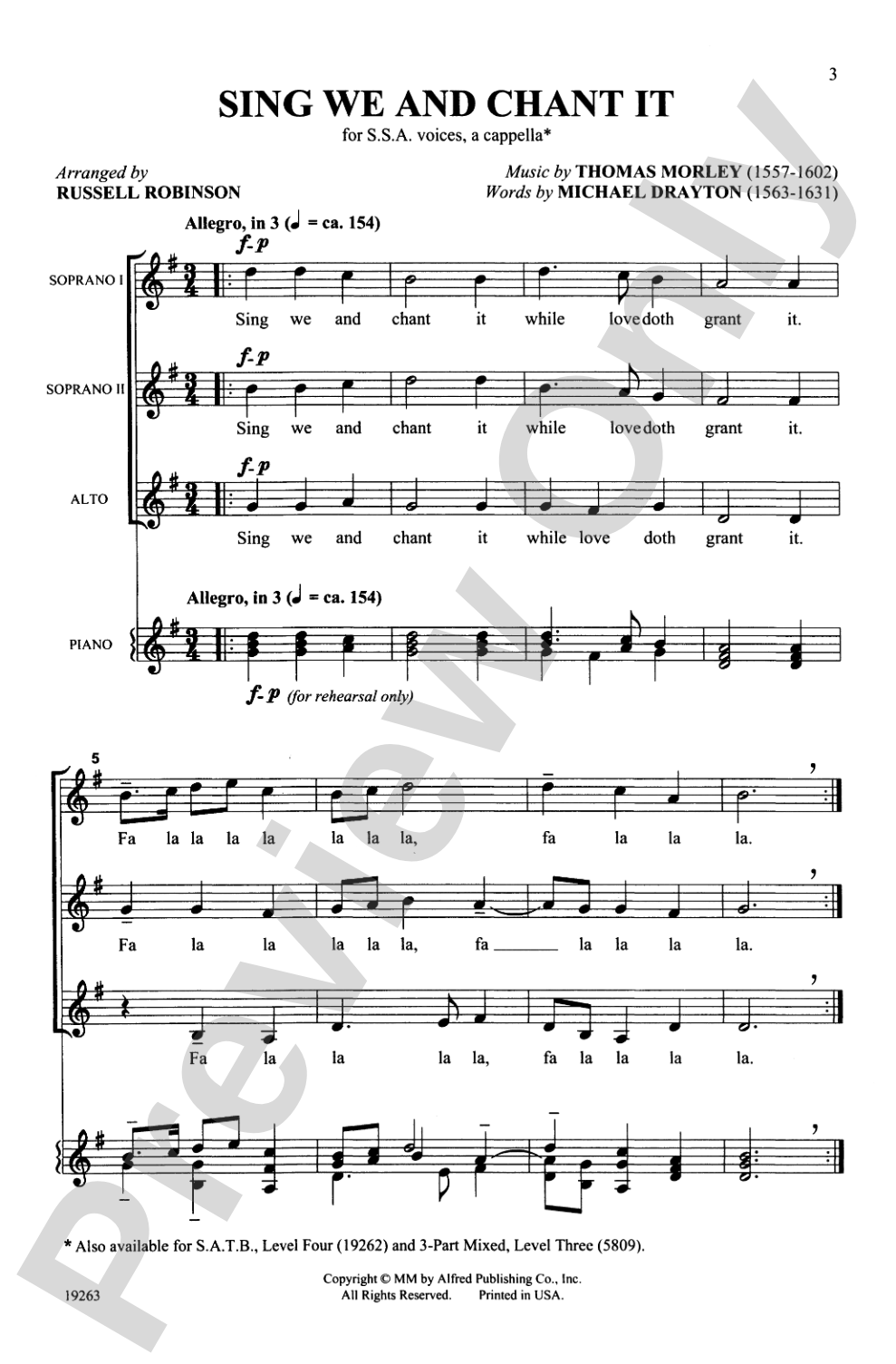
New for SSA and SATB! Russell Robinson has now adapted this widely performed madrigal for treble and SATB choirs. It's superbly reduced to preserve the harmonic and melodic structure of the original 5-part work. The quintessential madrigal, it features dynamic variations, much repetition for quick learning, and an open score for easy reading. A top-seller in 3-Part Mixed.


Don't just read it, hear it, play along with it, and watch your students grow with it. In MakeMusic Cloud, Sing We and Chant It: SSA, a cappella Choral Octavo comes alive with professional accompaniment, adjustable tempo, and built-in practice tools that turn solo practice into real progress.
Open in the Player
Jump straight in and assign it today.
Start Your Free Trial
Open this title and explore the full library in minutes.
Sample Audio
1
Audio File
--:--
0:00
0:00
Sample Video
No sample videos found.
Additional Details
Series:
Alfred Archive Edition: Alfred Choral Designs
Publisher:
Alfred Music
Page Count:
8
SKU:
00-PO-0002161
More about this title
About the Composer: Thomas Morely
Thomas Morley (1557-1602) was one of the most prolific and celebrated composers of the English Renaissance. He held prominent positions at St Paul's Cathedral and served as a member of the Chapel Royal, and his output spans sacred anthems, instrumental fantasias, and secular vocal music. Morley's genius lay in his gift for melody and structural clarity; his madrigals and canzonets became the model for English composers who followed, setting a standard for expressive word-painting and harmonic sophistication that influenced music education for centuries.
His madrigals remain central to choral pedagogy because they demonstrate how to balance accessibility with musical substance. The clarity of his voice-leading and his ear for memorable melodic phrases make his work ideal for building musicianship across skill levels.
Why we love this
Robinson's SSA adaptation honors the integrity of Morley's original harmonic architecture while making this cornerstone madrigal genuinely singable for treble voices. The arrangement preserves the wit and rhythmic vitality that make this piece so rewarding to perform; singers feel the sophistication without drowning in complex counterpoint. It's the rare reduction that actually improves rehearsal efficiency without sacrificing the piece's essential character.
What to expect
Morley's text painting and rhythmic playfulness give this madrigal a buoyant, almost conversational tone. The piece bubbles along with infectious energy, balancing moments of gentle expression with celebratory choral writing that lets singers feel the joy of ensemble singing without technical strain.
Who it's for
This SSA edition serves treble choirs of intermediate ability and above who want to tackle a genuine masterwork without the learning curve of the original five-part voicing. It works equally well for women's choruses, youth choirs, or mixed ensembles looking for secure, short madrigal repertoire that sounds polished in three weeks of focused rehearsal.
How to get the most out of it
- Keep the text rhythmically crisp and slightly articulate. Madrigals thrive on clear consonants and precise attacks; rushing the rhythm or over-legating the syllables softens the piece's inherent sparkle.
- Isolate each voice part separately for at least one rehearsal to hear how the melodic lines interact. Once singers understand their individual contours, blend becomes intuitive rather than forced.
- Shape the dynamic variations marked in the score with intention. The contrast between softer passages and fuller sections is what gives the madrigal its conversational, almost theatrical energy.
- Rehearse this a cappella from the start, even if you plan to use accompaniment in early learning. Singing without instrumental support trains the ensemble's intonation and interdependence faster than any other method.
How to use it
Program this as a palette-cleanser between heavier works on a concert, or cluster it with other madrigals from the Renaissance to build a thematic concert focused on secular vocal music. Its eight pages and straightforward a cappella setup make it ideal for festivals, competitions, and church services where you need repertoire that rehearses efficiently and translates immediately to performance.
Skills your students will build
- Reading SSA voicing and understanding how to voice harmony across three parts
- Performing Renaissance text-painting and word-setting conventions
- Maintaining intonation and ensemble blend without instrumental support
- Balancing individual melodic independence with harmonic cohesion
- Interpreting dynamic and expressive variation in madrigal style