

Sing We and Chant It: 3-Part Mixed, a cappella Choral Octavo
Words by Michael Grayton, music by Thomas Morley / arr. Russell Robinson
Item: 00-PO-0003478

$2.05
Minimum order quantity: 20 copies
Pickup currently not available
Related Items
Sing We and Chant It: SATB, a cappella Choral Octavo |
$2.25
|
View | |
Sing We and Chant It: SSA, a cappella Choral Octavo |
$2.25
|
View | |
Sing We and Chant It: TTBB, a cappella Choral Octavo |
$1.90
|
View | |
Sing We and Chant It: SATB, a cappella Choral Octavo |
$2.25
|
View | |
Sing We and Chant It: 3-Part Mixed, a cappella Choral Octavo |
$2.05
|
View | |
Sing We and Chant It: SSA, a cappella Choral Octavo |
$2.25
|
View | |
Sing We and Chant It: TTBB, a cappella Choral Octavo |
$1.90
|
View |
Description
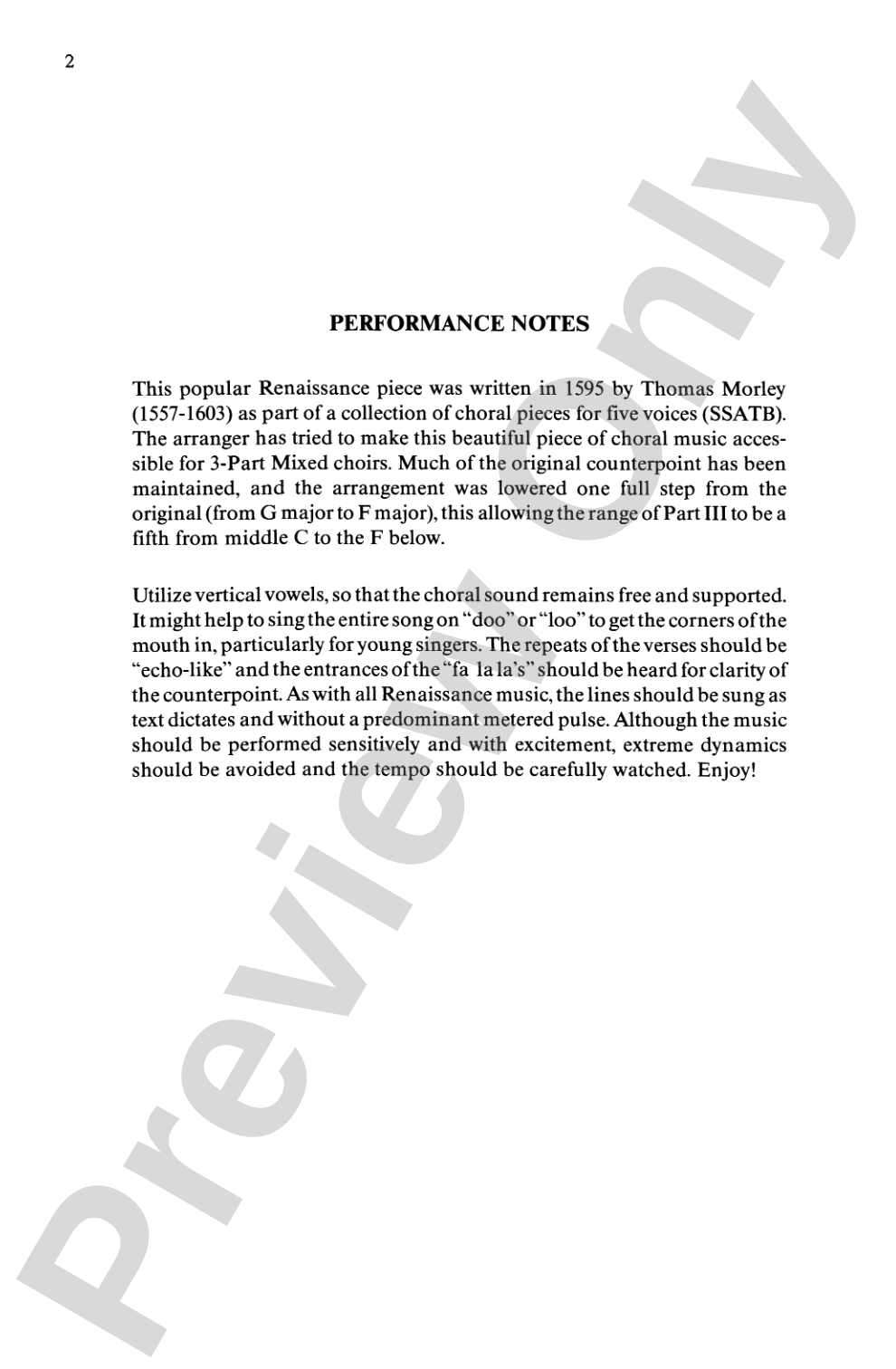
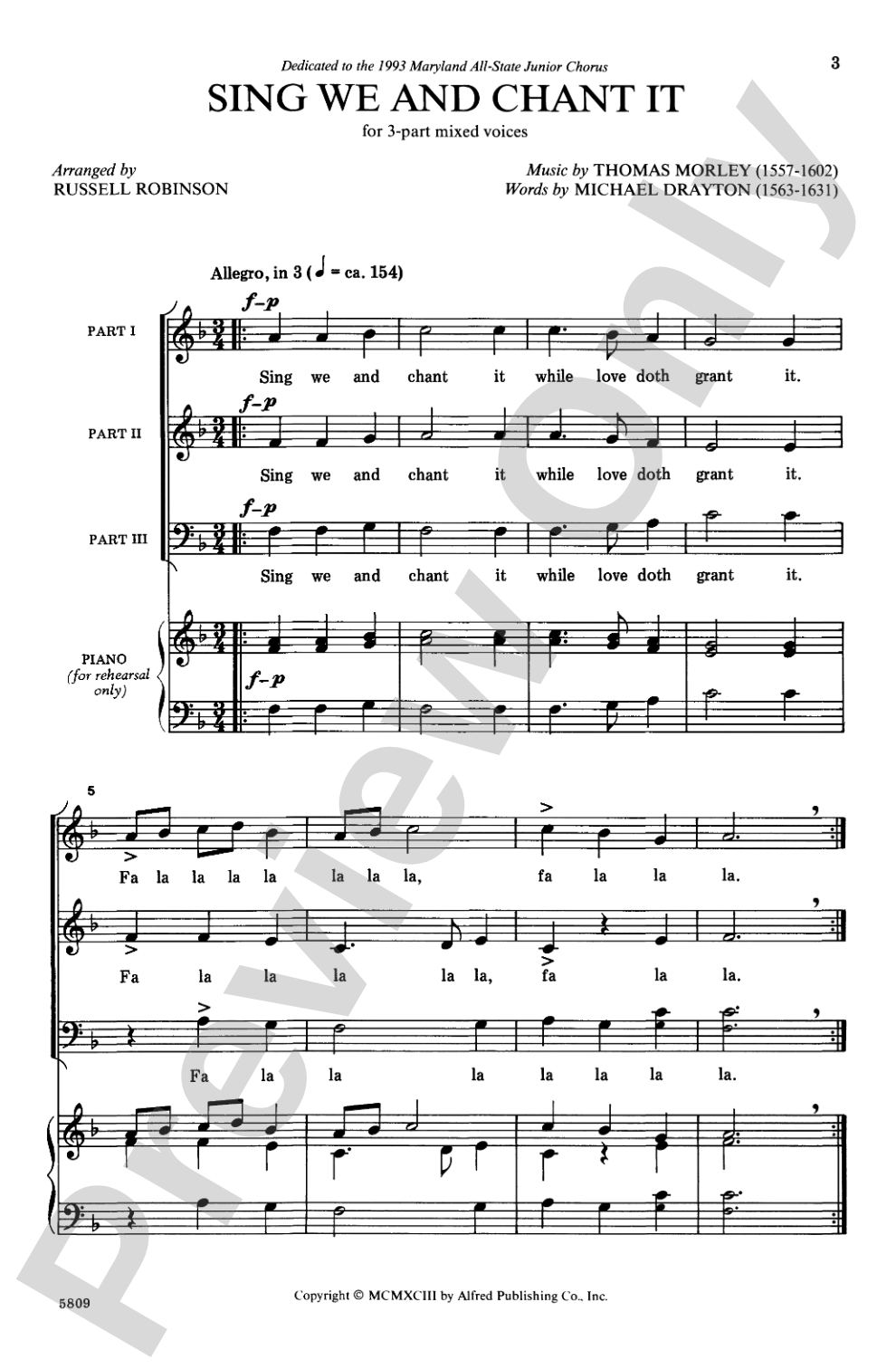
Introduce your 3-part choir to madrigal singing with this wonderful new edition of the Thomas Morley classic designed especially for young singers by Russell Robinson. Reduced to three voice parts, this edition still sounds full and captures all the spirit and joy of madrigal singing. Suitable for large choirs as well as small groups. Add this work to your choral library and use it year after year. An excellent teaching piece...but perform it at concert and festival time, too. This title is available in Music Prodigy.


Don't just read it, hear it, play along with it, and watch your students grow with it. In MakeMusic Cloud, Sing We and Chant It: 3-Part Mixed, a cappella Choral Octavo comes alive with professional accompaniment, adjustable tempo, and built-in practice tools that turn solo practice into real progress.
Open in the Player
Jump straight in and assign it today.
Start Your Free Trial
Open this title and explore the full library in minutes.
Sample Audio
1
Audio File
--:--
0:00
0:00
Sample Video
No sample videos found.
Additional Details
Series:
Alfred Choral Designs
Publisher:
Alfred Music
Page Count:
8
SKU:
00-PO-0003478
More about this title
About the Composer: Thomas Morley
Thomas Morley (1557-1602) was an English composer and music theorist whose madrigals rank among the finest secular vocal works of the Renaissance. His settings balance technical sophistication with immediate appeal, making them accessible to singers across skill levels while rewarding careful musical attention. Morley's influence on English choral tradition remains foundational; his works appear in choral libraries worldwide because they teach genuine musicianship alongside pure musical joy.
Why we love this
Robinson's three-part reduction preserves every essential feature of Morley's original while removing the barrier that four or five voice parts can pose for developing choirs. The piece sparkles with text painting, rhythmic energy, and harmonic color without requiring extensive voice-leading experience from your singers. It's madrigal repertoire that actually sounds like madrigals, not a simplified substitute.
What to expect
Sing We and Chant It captures the playful sophistication of Renaissance madrigal singing, where musical technique and textual expression dance together. The piece moves with infectious energy and charm, inviting singers into a tradition where intellectual rigor and pure musical delight are inseparable. You'll hear the joy that Renaissance composers built into their secular vocal works.
Who it's for
This arrangement serves developing choirs ready to move beyond unison or two-part singing into genuine three-part writing. It works equally well for middle school or high school ensembles, smaller auditioned groups, and larger concert choirs looking to build ensemble musicianship. The piece suits singers who are encountering Renaissance vocal literature for the first time.
How to get the most out of it
- Shape the melodic lines with a sense of forward motion; madrigals thrive on natural speech rhythm and textual clarity rather than strict metering.
- Balance the three parts so that the top line sings through without drowning the inner voices, which often carry crucial harmonic and rhythmic interest.
- Articulate the text distinctly, especially on repeated syllables and word fragments, to bring out the playfulness inherent in the madrigal style.
- Treat the a cappella texture as an opportunity to adjust tuning and blend dynamically; without instrumental support, singers must listen intently to one another.
How to use it
Program this alongside other Renaissance or early music selections to create a thematic concert section, or pair it with contemporary choral works to highlight different approaches to secular vocal writing. Its eight pages and concert-ready length make it ideal for spring or end-of-year performances when your choir has built ensemble confidence. This is also an excellent choice for choral festivals and competitions, where judges recognize strong musicianship in a historically informed context.
Skills your students will build
- Reading three independent vocal lines in a cappella texture
- Renaissance text-painting and expressive phrasing techniques
- Tuning and blend without instrumental accompaniment
- Understanding madrigal form and its relationship to text
- Singing with rhythmic flexibility and natural speech patterns