

Sing We All Noel: SSAA Choral Octavo
Based on "African Noel" and "Angels We Have Heard on High"
Arr. Gary E. Parks
Item: 00-PO-0000316
$1.95
Minimum order quantity: 20 copies
Pickup currently not available
Related Items
Sing We All Noel: SoundTrax Digital Audio Download |
$27.99
|
View | |
Sing We All Noel: SATB Choral Octavo |
$1.95
|
View | |
Sing We All Noel: SSAB Choral Octavo |
$1.95
|
View | |
Sing We All Noel: SATB Choral Octavo |
$1.95
|
View | |
Sing We All Noel: SSAB Choral Octavo |
$1.95
|
View | |
Sing We All Noel: SSAA Choral Octavo |
$1.95
|
View | |
Sing We All Noel: Choral Octavo SoundTrax CD |
$27.99
|
View |
Description
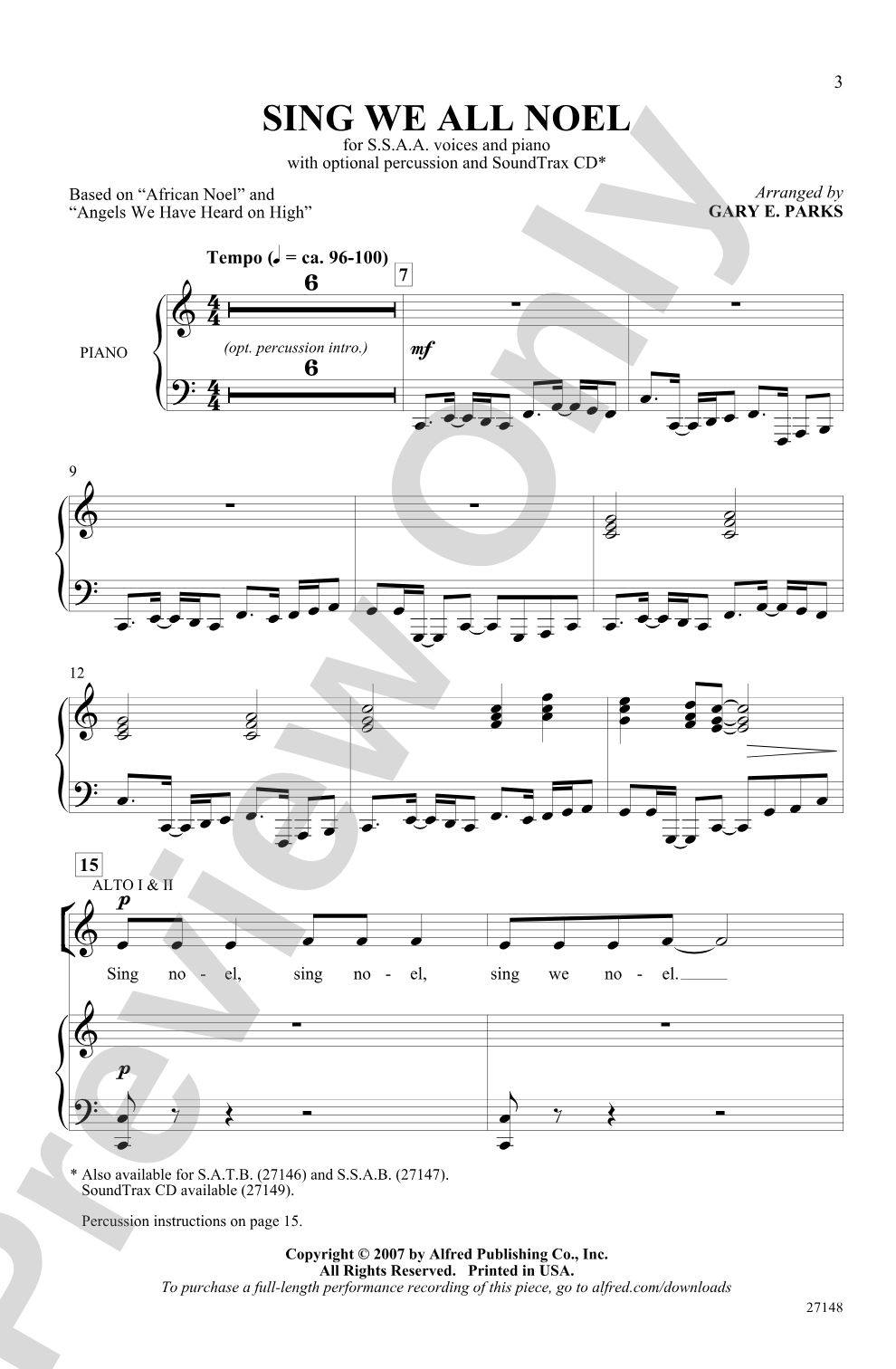
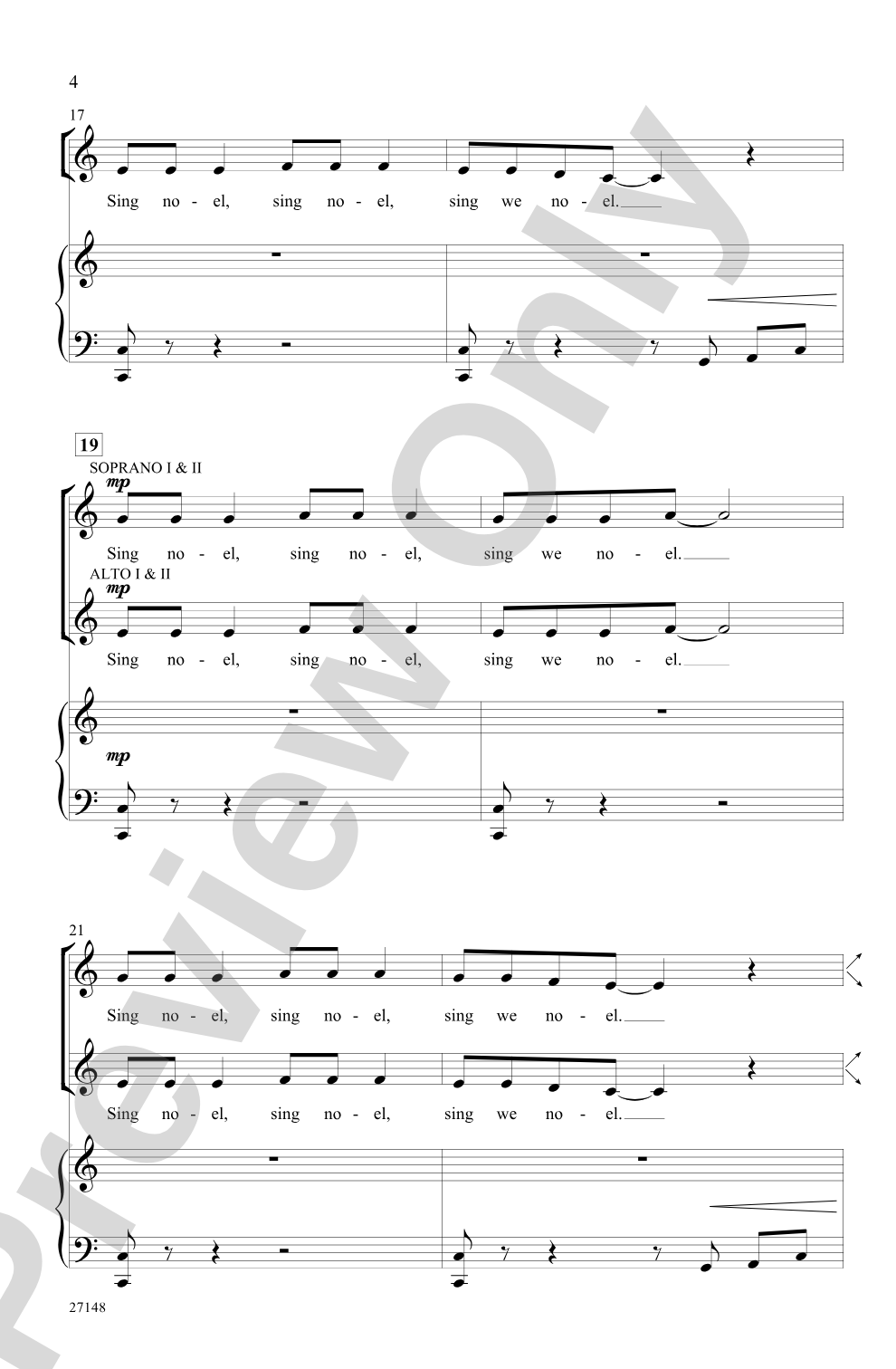
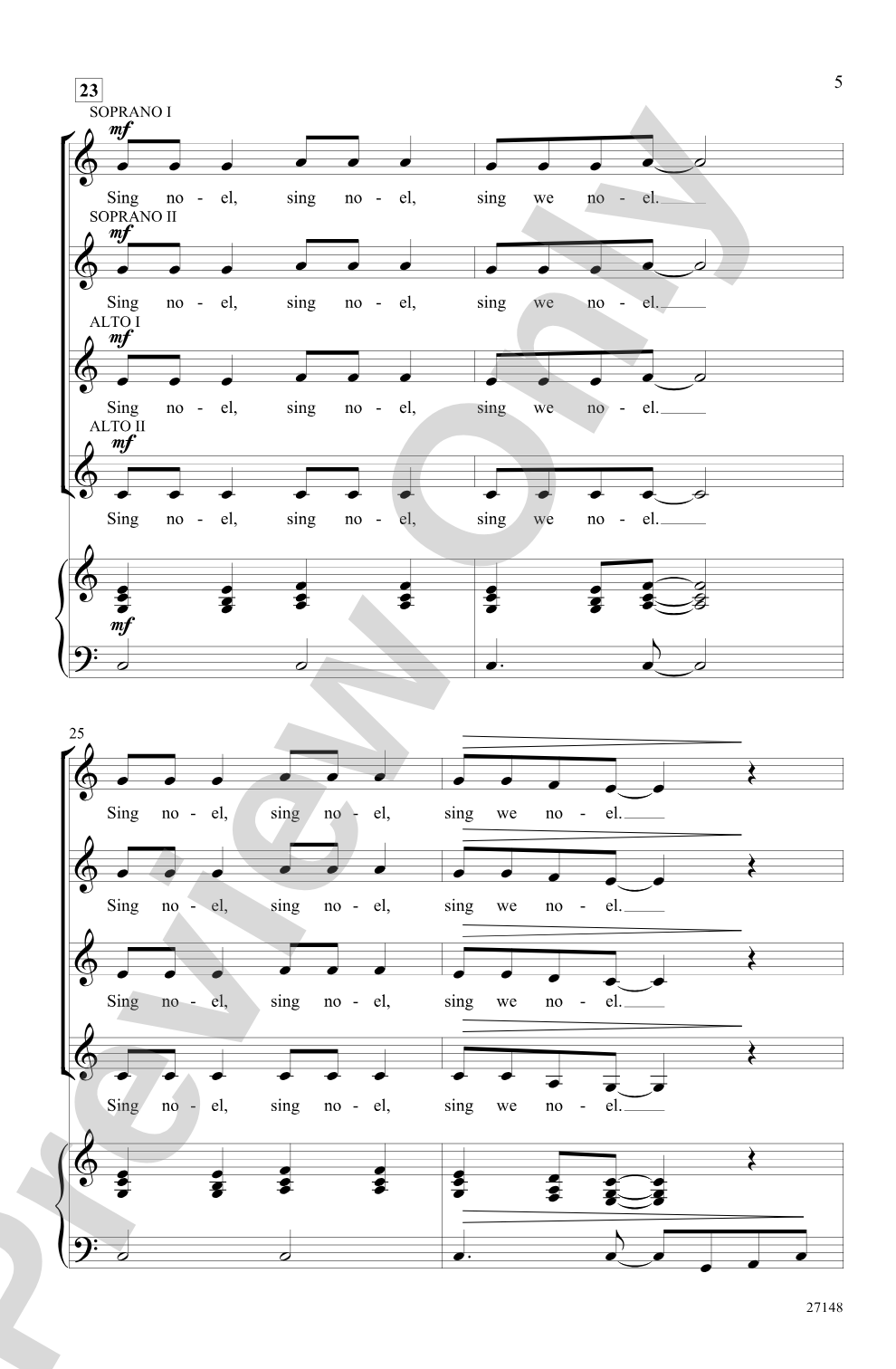
Based on "African Noel" and incorporating words from "Angels We Have Heard on High," this Gary Parks arrangement is like nothing you've heard before. Instruments and sections of the choir are added one-by-one as the piece grows toward a rhythmic explosion of sound. Simple percussion instructions included in the publication make it easy to incorporate rhythm and mallet instruments, or consider using the SoundTrax CD. A multicultural feast for the ears!


Sing We All Noel: SSAA Choral Octavo isn't in MakeMusic Cloud just yet...but it could be. Let us know you'd like to see it, and you'll help shape what comes next. In the meantime, start a free trial and dive into thousands of interactive titles your students can play along with today.
Request This Title
Tell us you want it.
Start Your Free Trial
Explore everything that's ready to play right now.
Sample Audio
1
Audio File
--:--
0:00
0:00
Sample Video
No sample videos found.
Additional Details
Series:
Alfred Choral Designs
Publisher:
Alfred Music
Page Count:
16
SKU:
00-PO-0000316
Instrumentation:
Opt. Percussion
More about this title
About the Arranger: Gary E. Parks
Gary E. Parks has spent decades crafting arrangements that honor cultural traditions while expanding the choral repertoire available to student singers. His work consistently demonstrates a gift for layering texture and building momentum, making complex multicultural material accessible to high school and community choirs.
Why we love this
Parks builds this arrangement with architectural precision, layering voices and instruments so deliberately that your singers experience the joy of becoming part of something larger with each entrance. The piece avoids the polished sameness of typical holiday fare; instead, it draws on African melodic and rhythmic traditions to create genuine musical surprise. Your choir gets to be performers of something genuinely fresh, not a seasonal obligation.
What to expect
The piece opens with restraint and unfolds through deliberate accumulation, each new voice or instrumental color adding texture and urgency. By the final measures, the rhythmic energy becomes unmistakable, creating a sense of collective power and celebration rooted in African musical traditions rather than European carol conventions. It feels earned and joyful in equal measure.
Who it's for
SSAA choirs seeking a Christmas piece that moves beyond conventional arrangements and energizes singers with genuine rhythmic and harmonic interest. This works for groups with modest instrumental resources, since the percussion parts are optional and clearly notated, but it rewards ensembles that can commit to adding mallet and rhythm instruments.
How to get the most out of it
- Attend closely to the layering cues. Each entrance of a new vocal section or instrumental part should register clearly in rehearsal so singers understand their role in the building texture.
- Settle the basic percussion parts early in your rehearsal timeline. The rhythmic "explosion" relies on precision, so lock those patterns before you polish vocal blend.
- If you're not using the recorded accompaniment, use a rehearsal piano or keyboard to anchor the harmonic foundation while your singers locate their parts in the layered sections.
- Encourage singers to listen across sections during the climax. The impact of that final rhythmic swell depends on unified pulse, not individual voice projection.
How to use it
Program this as a second-half opener on a holiday concert, where its building energy lifts the audience's attention after intermission. It pairs naturally with a cappella Christmas selections earlier in the program, letting this arrangement's rhythmic and textural sophistication stand as a different kind of holiday statement. The 16-page length gives you substantial material without overwhelming a concert structure.
Skills your students will build
- Layered entrance cues and listening across multiple vocal lines
- Rhythmic precision and ensemble synchronization in climactic sections
- Reading and performing optional percussion parts with correct mallet techniques
- Blending SSAA voicing while maintaining rhythmic independence
- Interpreting multicultural musical idioms (African rhythmic and melodic traditions)