

Sing in Harmony!: 2-Part Choral Octavo
Words and music by Stephen A. Paparo
Item: 00-PO-0001785
$2.10
Minimum order quantity: 20 copies
Pickup currently not available
Description
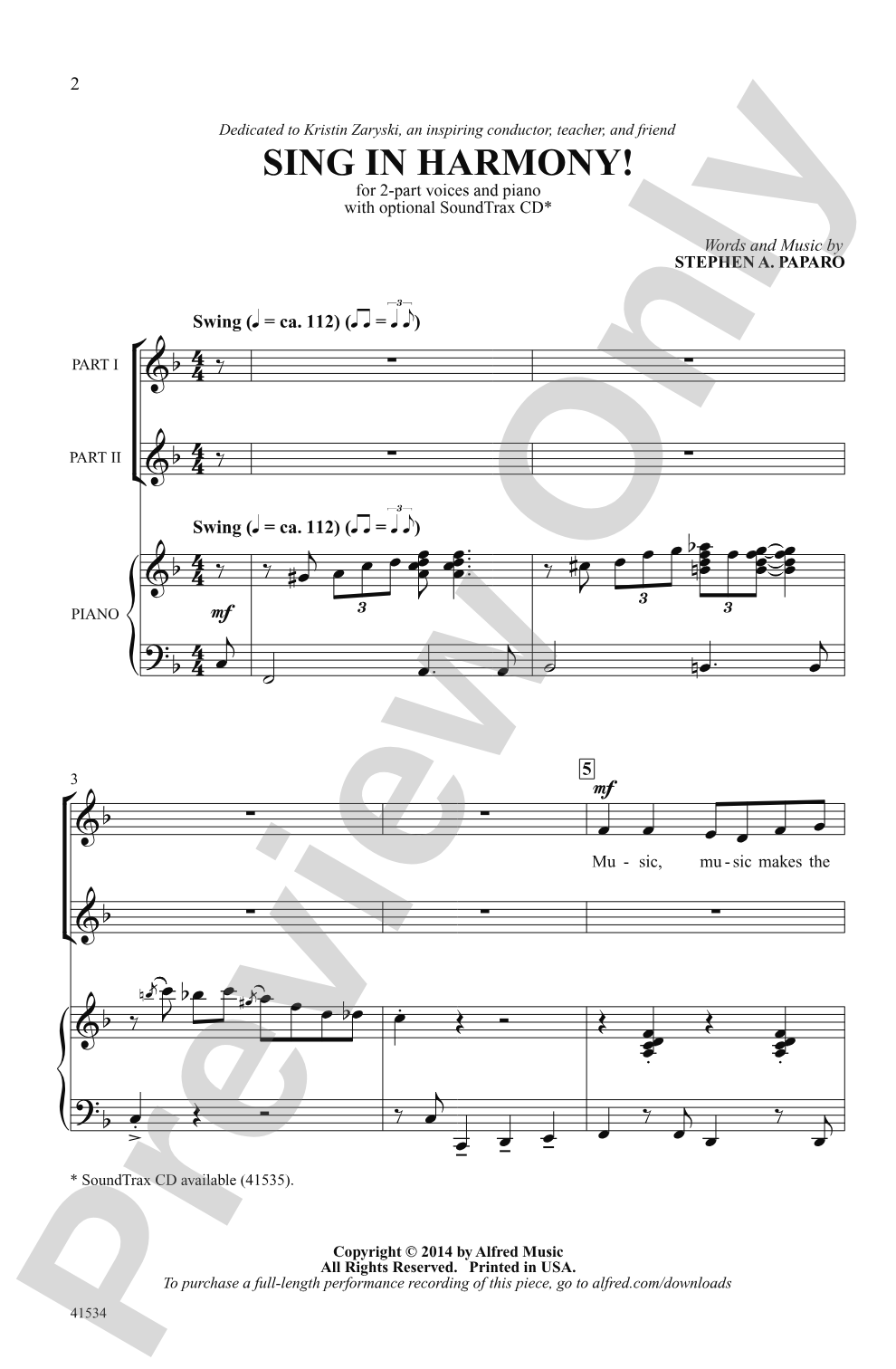
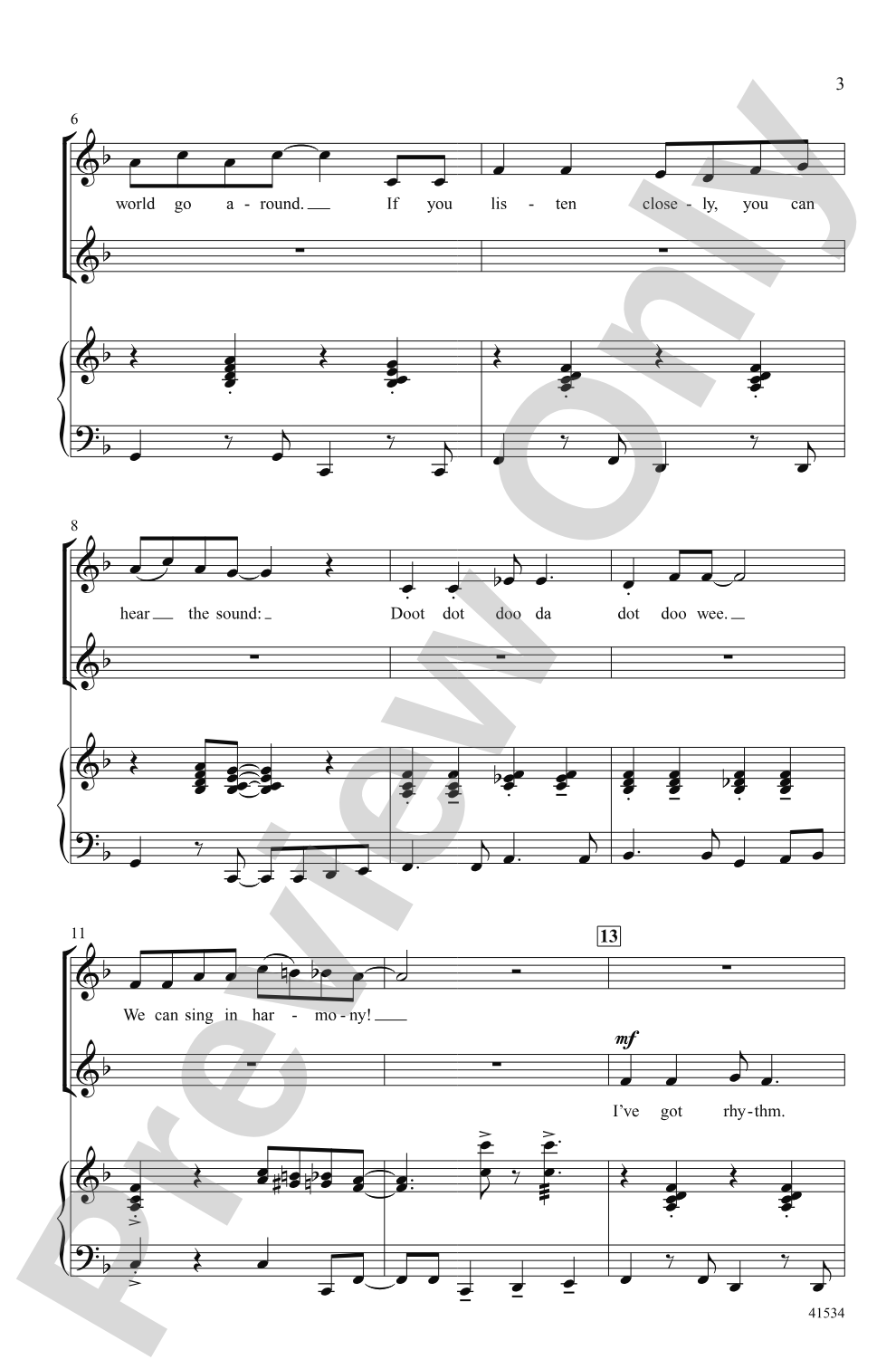
The partner song format of this light swing tune ensures that your kids will successfully sing in two-part harmony! A standard jazz progression effectively supports this introduction to basic scat singing. Highly entertaining, motivating, and educational.


Sing in Harmony!: 2-Part Choral Octavo isn't in MakeMusic Cloud just yet...but it could be. Let us know you'd like to see it, and you'll help shape what comes next. In the meantime, start a free trial and dive into thousands of interactive titles your students can play along with today.
Request This Title
Tell us you want it.
Start Your Free Trial
Explore everything that's ready to play right now.
Sample Audio
1
Audio File
--:--
0:00
0:00
Sample Video
No sample videos found.
Additional Details
Series:
Alfred Choral Designs
Publisher:
Alfred Music
Page Count:
12
SKU:
00-PO-0001785
More about this title
About the Composer: Stephen A. Paparo

Stephen A. Paparo teaches music education at the University of Massachusetts Amherst, where his work centers on innovative approaches to choral teaching. Active as both a conductor and presenter, he serves as President of the Massachusetts chapter of the American Choral Directors Association and publishes research on somatic pedagogy, experimental ensemble models, and inclusive music education practice.
Paparo's compositions for developing choirs appear regularly through Alfred Music. His work reflects deep engagement with how students learn to sing together, balancing accessibility with genuine musical growth.
Why we love this
Partner songs eliminate the isolation that can happen when students first encounter two-part harmony, since each section carries its own complete melodic line. The swing groove and scat singing elements make this feel like a real musical adventure rather than a technical exercise, and the standard jazz progression naturally supports both the harmony learning and the introduction to improvisation.
What to expect
Sing in Harmony! carries the buoyancy and playfulness of swing music, with the partner song structure creating an immediate sense of ensemble success. There's infectious energy in the scat singing elements paired with the light swing groove, making the learning feel effortless and genuinely fun rather than dutiful.
Who it's for
This octavo works beautifully for elementary and middle school choirs encountering two-part harmony for the first time, as well as younger high school groups building confidence in their harmonic awareness. Directors seeking an accessible yet musically legitimate introduction to jazz idioms and scat singing will find this especially valuable.
How to get the most out of it
- Establish the swing feel first without the scat elements. Once your singers are comfortable with the basic pulse and the partner song relationship, layer in the scatting gradually, perhaps starting with one part while the other maintains melody.
- Record a rough performance early in rehearsal, even if it's unpolished. Hearing themselves sing in two parts builds confidence and clarifies the harmonic relationship in ways verbal explanation cannot.
- Work the two parts separately before combining them. This gives each section time to own their line and understand how it functions within the jazz progression before managing the coordination challenge of singing simultaneously.
How to use it
This works wonderfully as a fall concert opener or a spring pops show number, where its contemporary sound and entertainment value set a welcoming tone. It also serves as a perfect anchor piece for a unit on jazz and American popular music, or as a confidence builder mid-year when your ensemble is ready to stretch into harmony but needs something motivating to sustain their engagement.
Skills your students will build
- Singing in two-part harmony with partner song format
- Recognizing and responding to a standard jazz chord progression
- Basic scat singing technique and rhythmic improvisation
- Ensemble blend and balance between two simultaneous melodic lines
- Understanding swing rhythm and genre-specific feel