

Silent Night: SATB Choral Octavo
Arr. Mark Hayes
Item: 00-PO-0002203
$2.25
Minimum order quantity: 20 copies
Pickup currently not available
Related Items
Silent Night: SSAA Choral Octavo |
$2.25
|
View | |
Silent Night: Choral SoundPax |
$20.00
|
View | |
Silent Night: SATB Choral Octavo |
$2.25
|
View | |
Silent Night: SAB Choral Octavo |
$1.65
|
View | |
Silent Night: SSAA Choral Octavo |
$2.25
|
View | |
Silent Night: Choral Octavo SoundTrax CD |
$27.99
|
View | |
Silent Night: Choral SoundPax |
$20.00
|
View |
Description
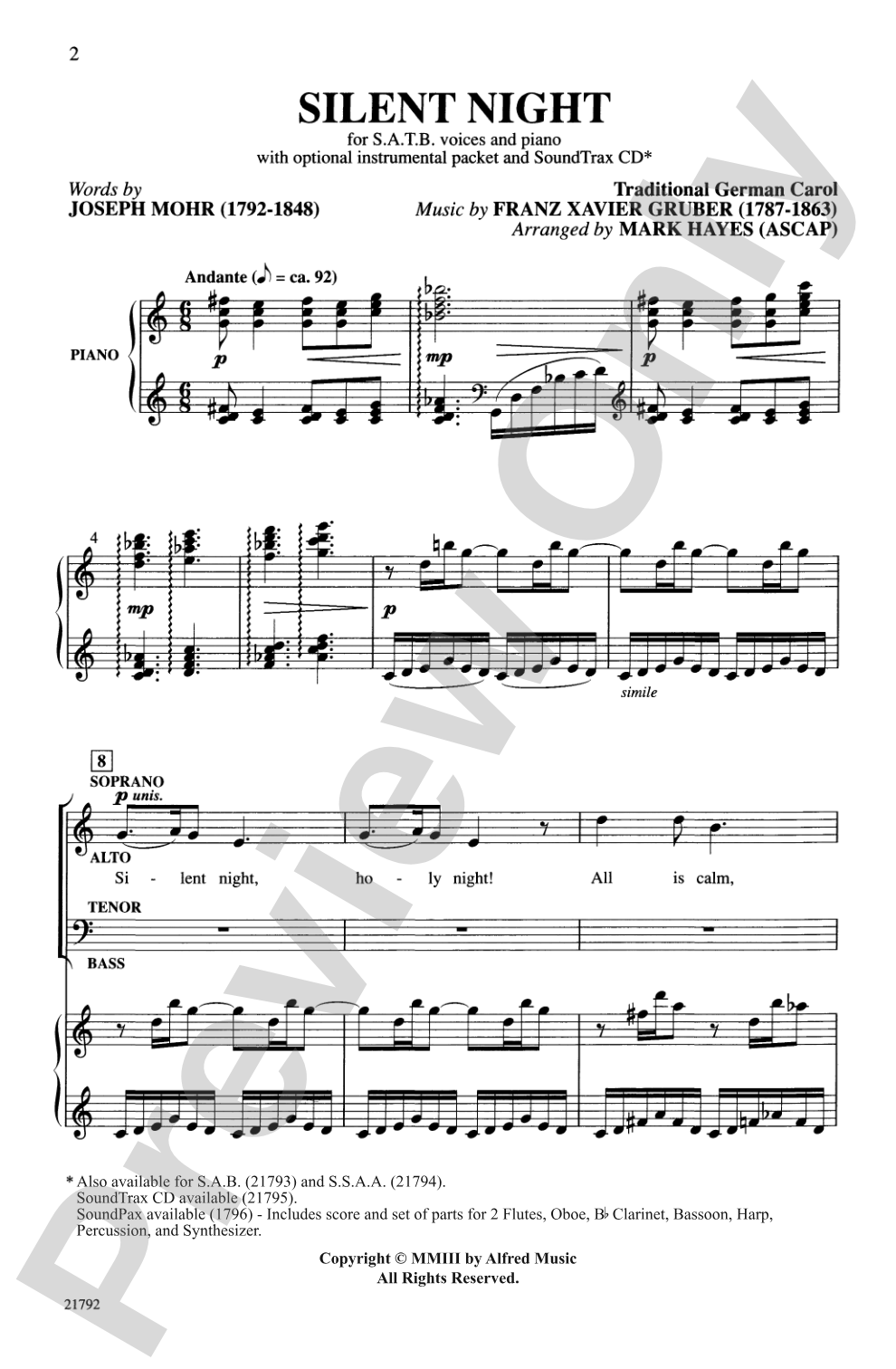
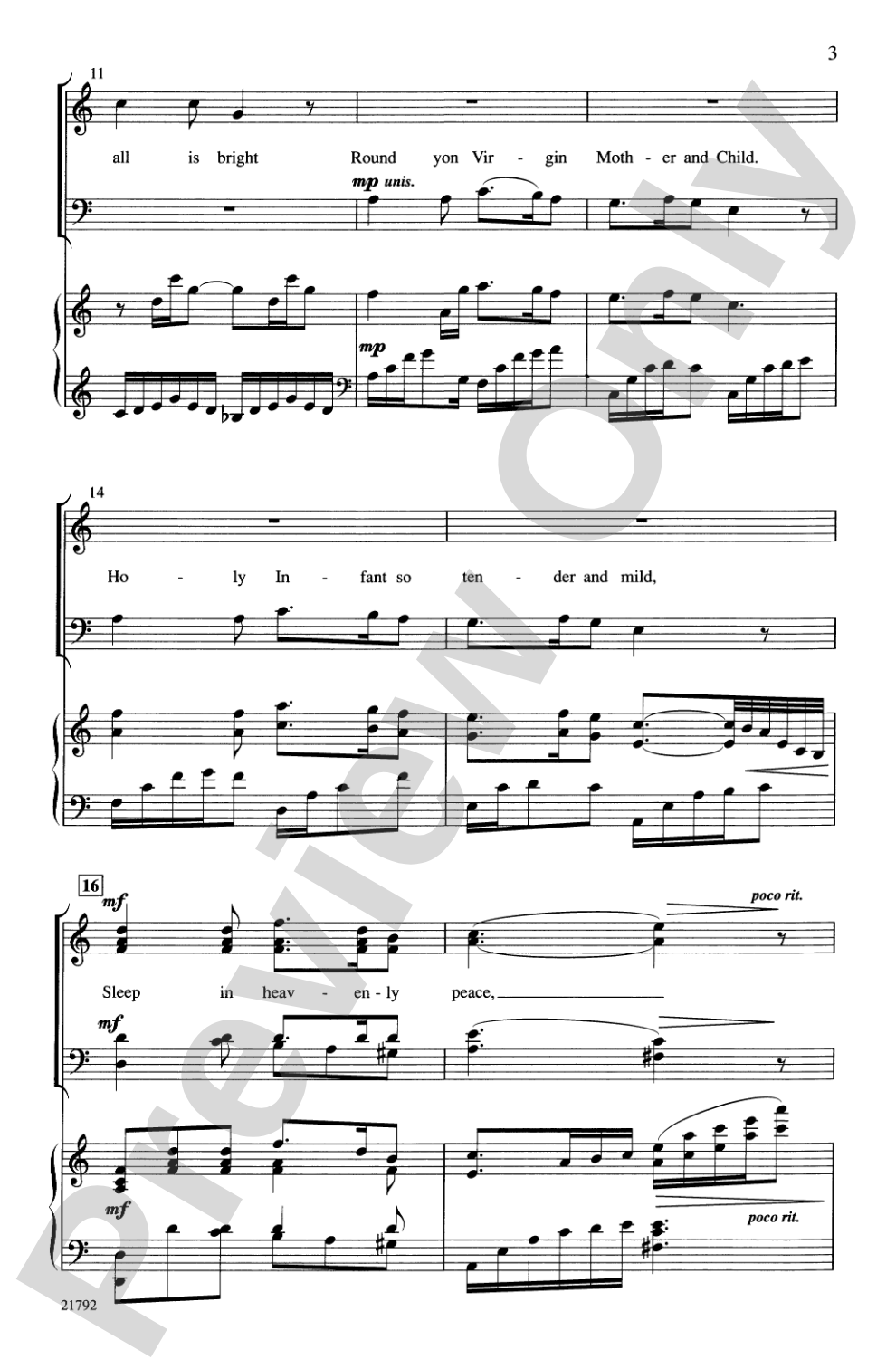
This is the definitive Silent Night arrangement you have been waiting for. An ethereal and contemporary treatment of the cherished carol. The accompaniment shimmers with awe, and the chorus illuminates the senses as they sing the pure unisons and the lush harmonies of accomplished arranger Mark Hayes. Magnificent text painting and tone colors. Each of three verses more striking that the last. The heavenly angels themselves would have chosen this arrangement to sing on that first Christmas night


Silent Night: SATB Choral Octavo isn't in MakeMusic Cloud just yet...but it could be. Let us know you'd like to see it, and you'll help shape what comes next. In the meantime, start a free trial and dive into thousands of interactive titles your students can play along with today.
Request This Title
Tell us you want it.
Start Your Free Trial
Explore everything that's ready to play right now.
Sample Audio
1
Audio File
--:--
0:00
0:00
Sample Video
No sample videos found.
Additional Details
Series:
Alfred Archive Edition: Alfred Choral Designs
Publisher:
Alfred Music
Page Count:
8
SKU:
00-PO-0002203
More about this title
About the Arranger: Mark Hayes
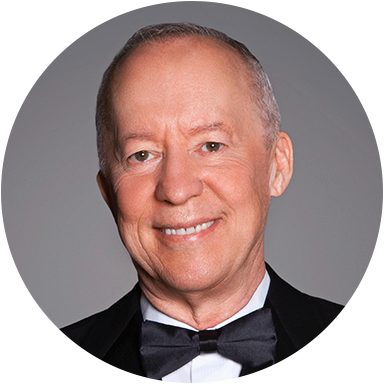
Mark Hayes stands among today's most prolific and performed choral arrangers, with over 1,750 published works spanning sacred and secular genres. A summa cum laude graduate in Piano Performance from Baylor University, he has guest conducted at Lincoln Center, the National Cathedral, and Carnegie Hall, premiering major works including his Requiem at Lincoln Center in 2013 and later at St. Ignatius Basilica in Rome as part of the Vatican-sponsored Festival Pro Musica E Arte Sacra. Beyond his choral and orchestral output, Hayes maintains a deep commitment to piano composition, with more than 100 piano books in print ranging from gospel to classical to jazz to Broadway arrangements.
Hayes's distinctive gift for text painting and harmonic color has earned him the 2010 Award for Exemplary Leadership in Christian Music from Baylor University's Center for Christian Music Studies. He has composed major liturgical works including Te Deum, Magnificat, and Gloria, and his theatrical reach extends to orchestration and score composition for stage works including the award-winning Civil War Voices. Based in Kansas City, Missouri, Hayes continues to compose and conduct internationally, bringing his signature blend of spiritual depth and contemporary musical craftsmanship to choral ensembles worldwide.
Why we love this
Hayes transforms this beloved carol into something luminous without abandoning its spiritual core. Each verse builds with greater sophistication in harmony and text painting, keeping singers engaged and audiences emotionally invested from first note to final chord. The balance between transparent unisons and lush four-part textures gives your choir room to shine while the shimmering accompaniment creates an atmosphere of genuine reverence.
What to expect
Hayes's arrangement captures a sense of quiet wonder that deepens through each verse. The shimmer of the piano surrounds the voices like candlelight, while the harmonic language feels both familiar and fresh, creating an atmosphere of sacred awe that feels earned rather than imposed.
Who it's for
This arrangement works for both experienced and developing SATB choirs seeking a contemporary take on Silent Night that honors the carol's intimacy while showcasing four-part writing and harmonic sophistication. Community choirs, church ensembles, and select high school programs with solid musicianship will find this a rewarding choice for holiday programming.
How to get the most out of it
- Attend carefully to the dynamic shape within each verse; Hayes layers complexity gradually, so resist the urge to sing everything at full volume early on. Let the arrangement itself guide your crescendo.
- The pure unisons at key moments need absolute unanimity of tone and vowel color. Mark these passages in rehearsal and spend time on vowel consistency across the entire choir.
- Balance the inner voices with the melody line. In the lush harmonic passages, the soprano line should rise naturally above the texture without requiring you to ask for extra volume; adjust the lower voices downward instead.
- Coordinate closely with your accompanist on the shimmer of the piano writing. The accompaniment is integral to the arrangement's ethereal quality, so rehearse together early and often.
How to use it
Position this as the emotional anchor of a Christmas concert, perhaps pairing it with contrasting carol arrangements or secular holiday pieces to showcase range. Its eight pages and contemporary harmonic language make it a natural centerpiece for services emphasizing contemplative moments over celebratory ones. The recorded accompaniment option allows for flexible performance contexts, from full ensemble presentations to smaller special music offerings.
Skills your students will build
- Singing pure unisons with tonal blend and unanimity
- Balancing voices in four-part texture with emphasis on inner voice clarity
- Interpreting text through harmonic color and dynamic shape
- Responding to sophisticated harmonic movement and voice leading
- Coordinating with accompaniment to achieve ensemble cohesion and artistic effect