
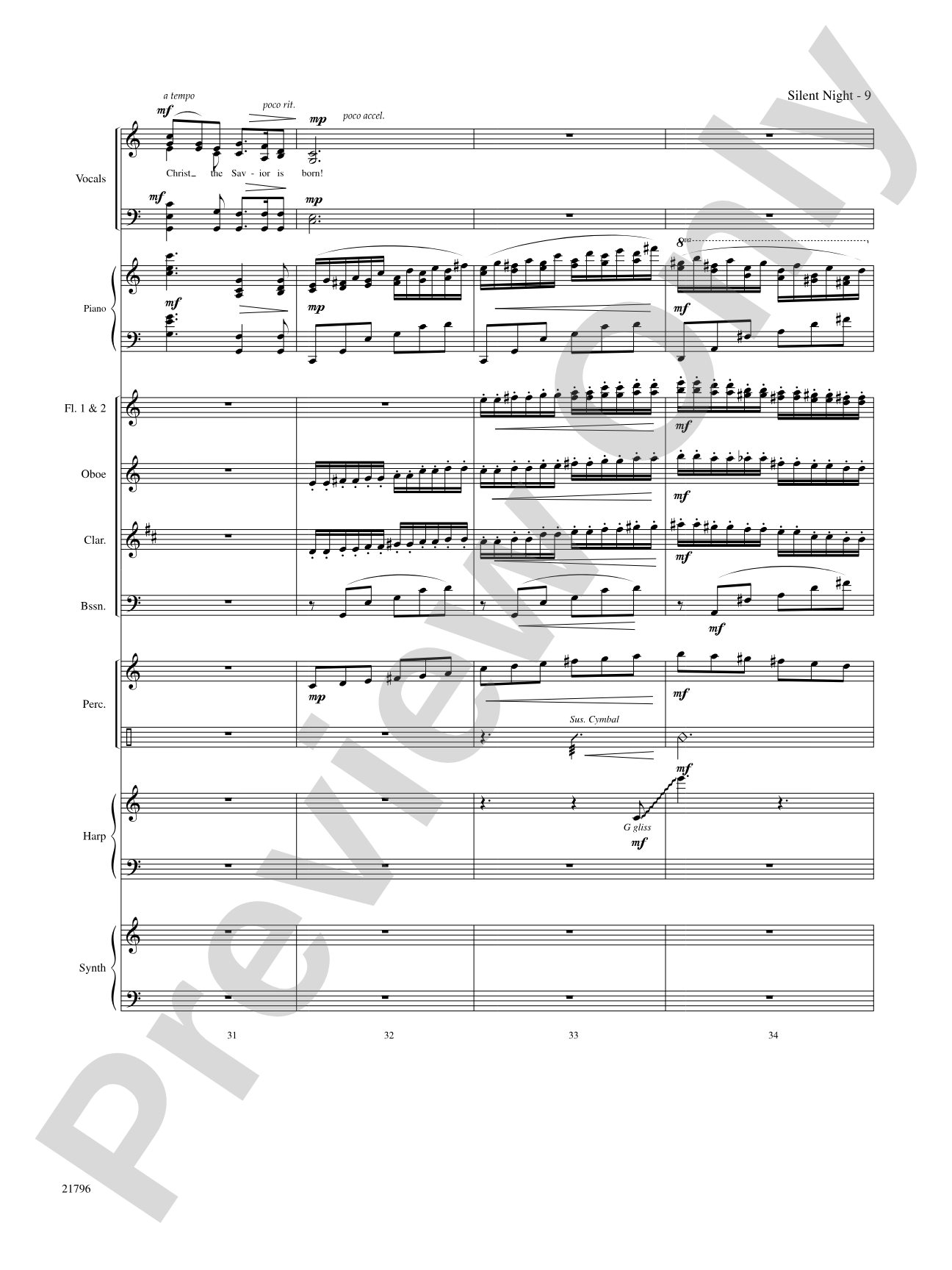
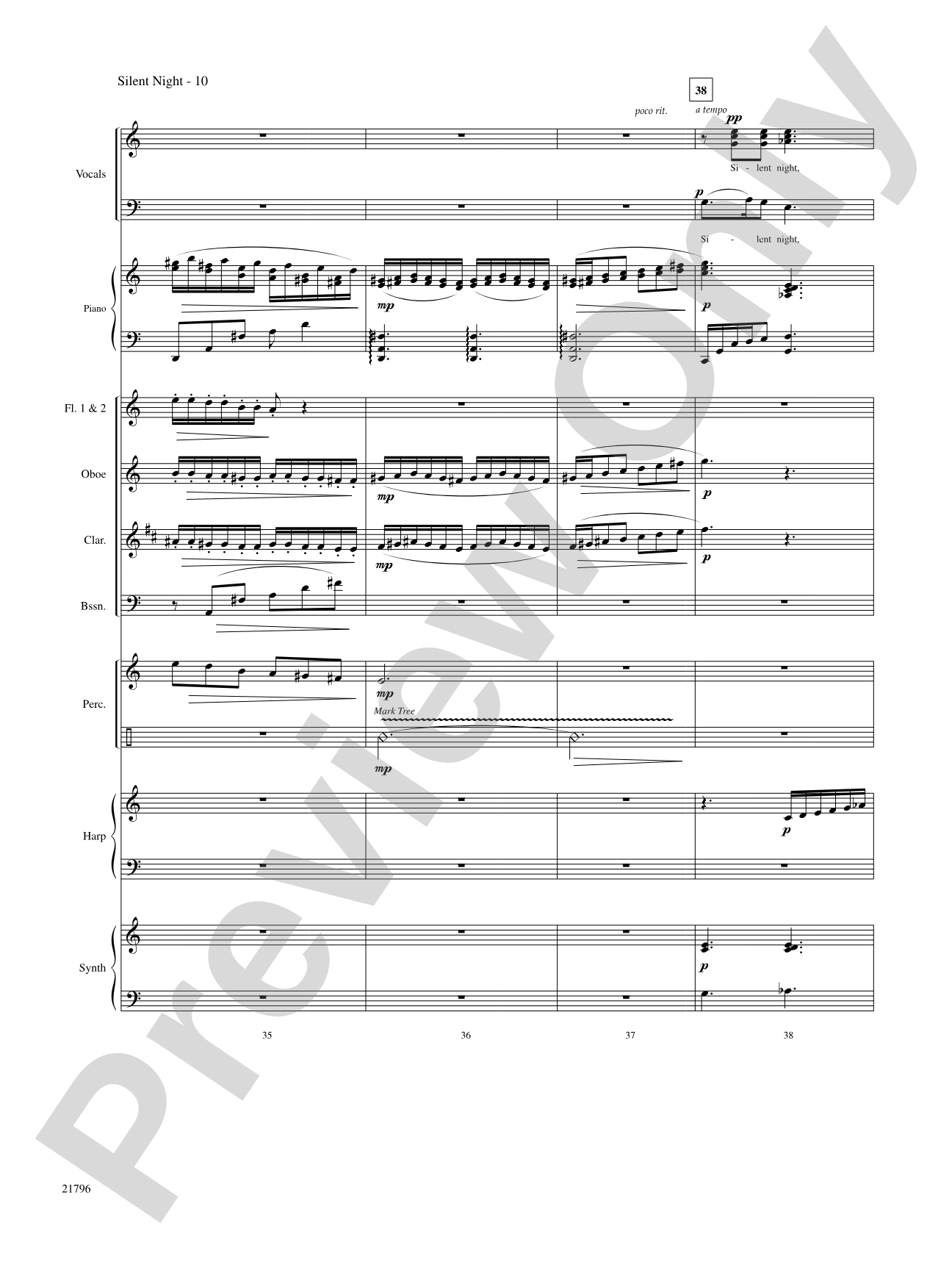
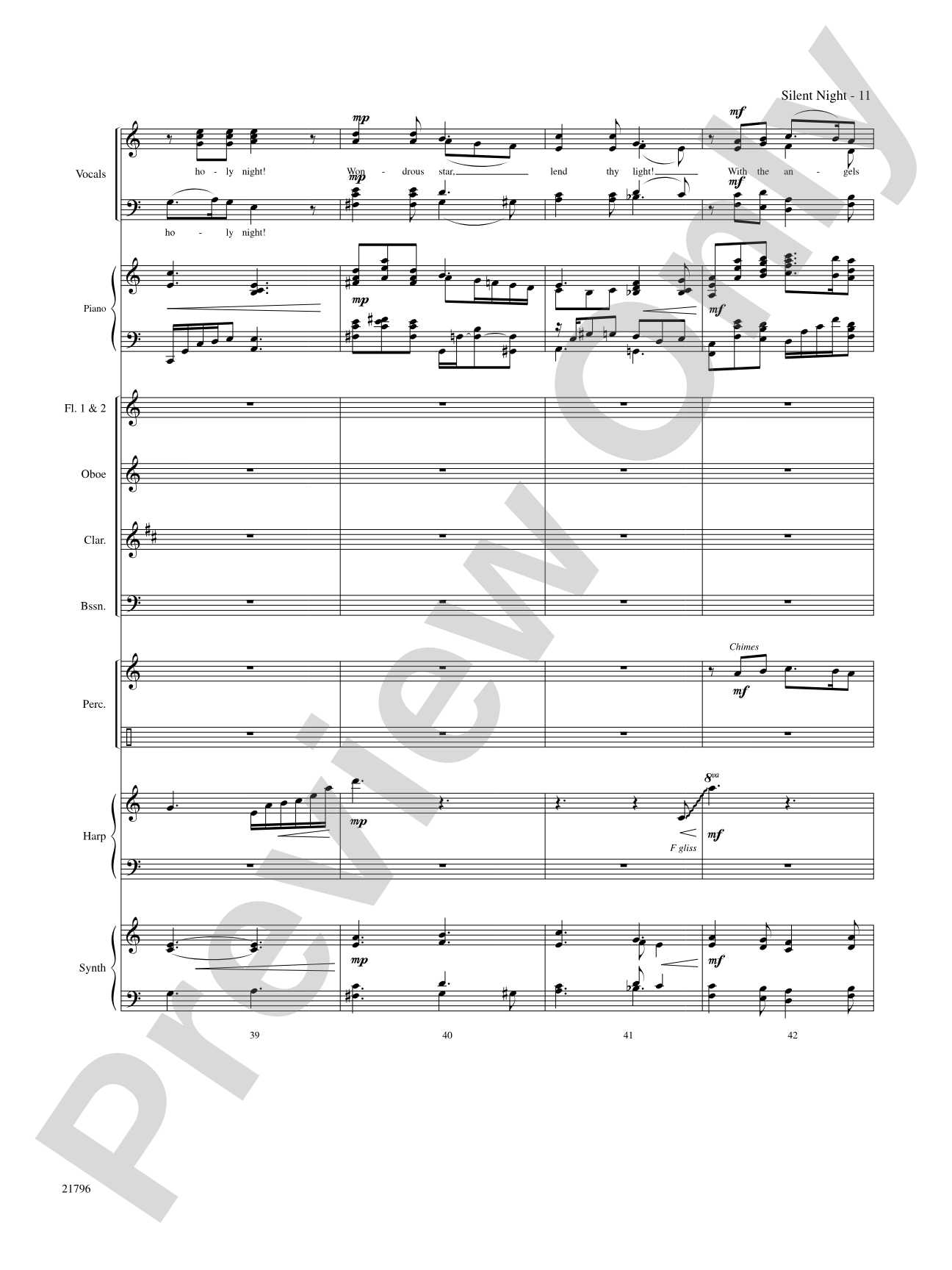
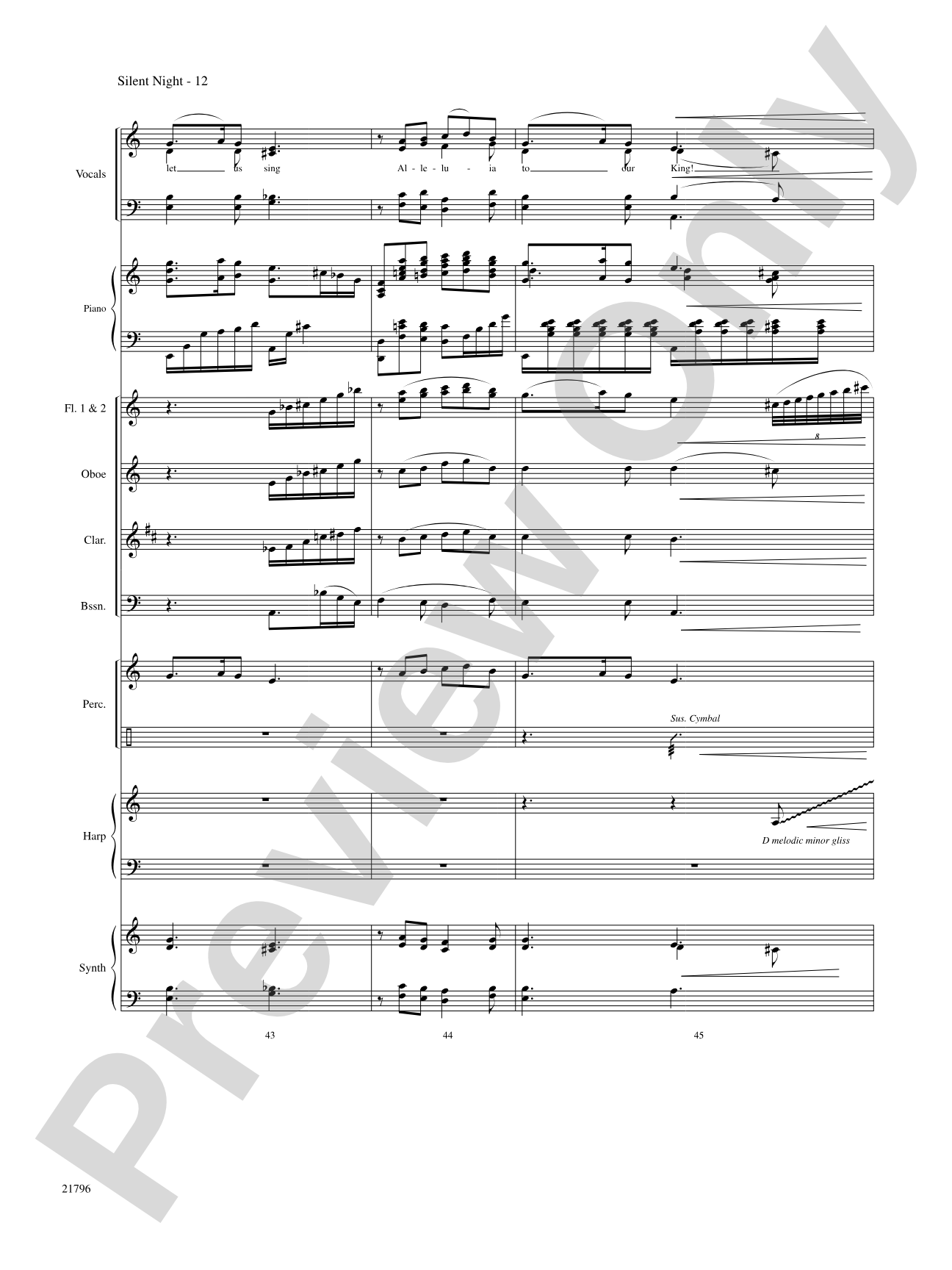
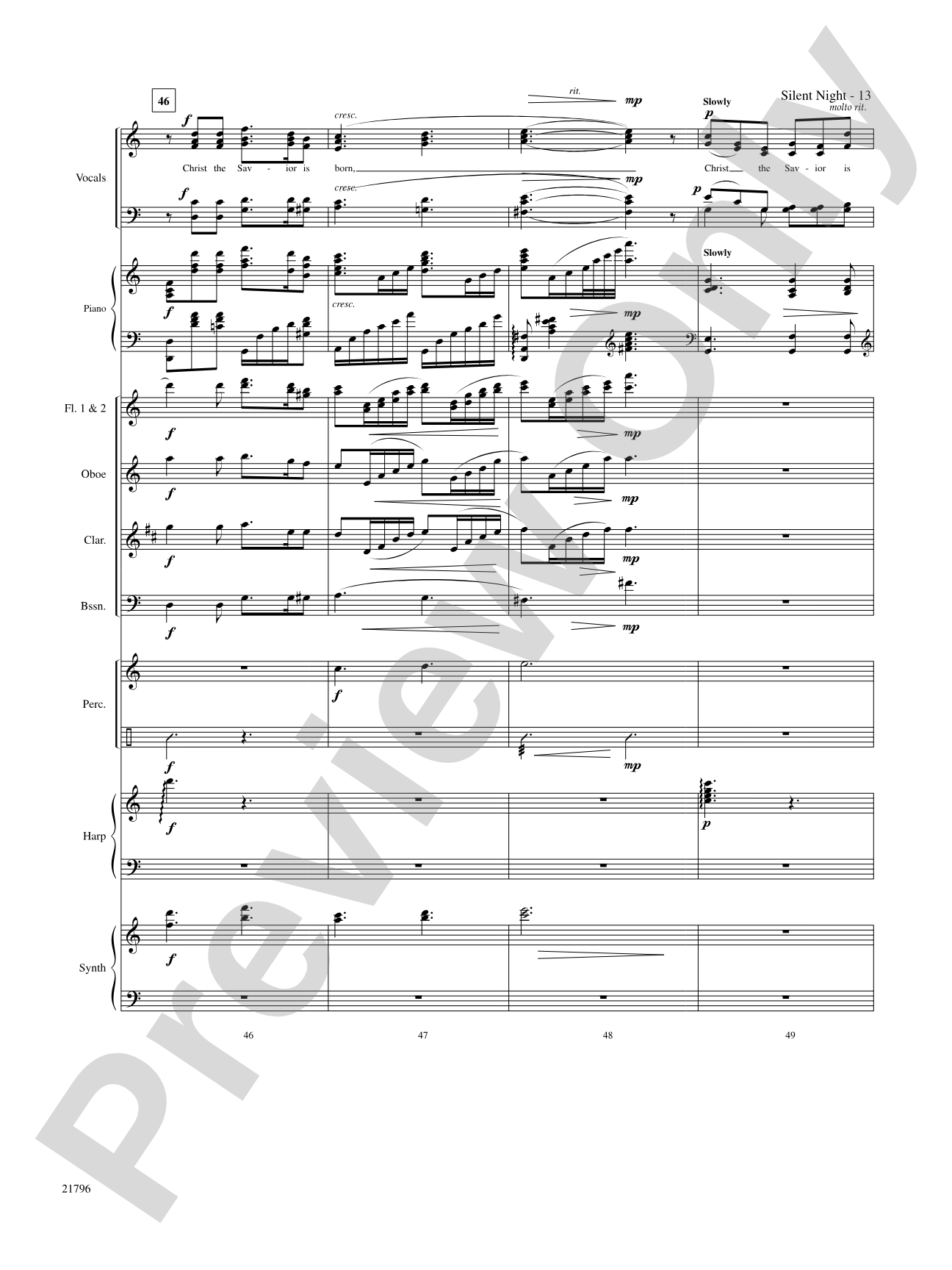
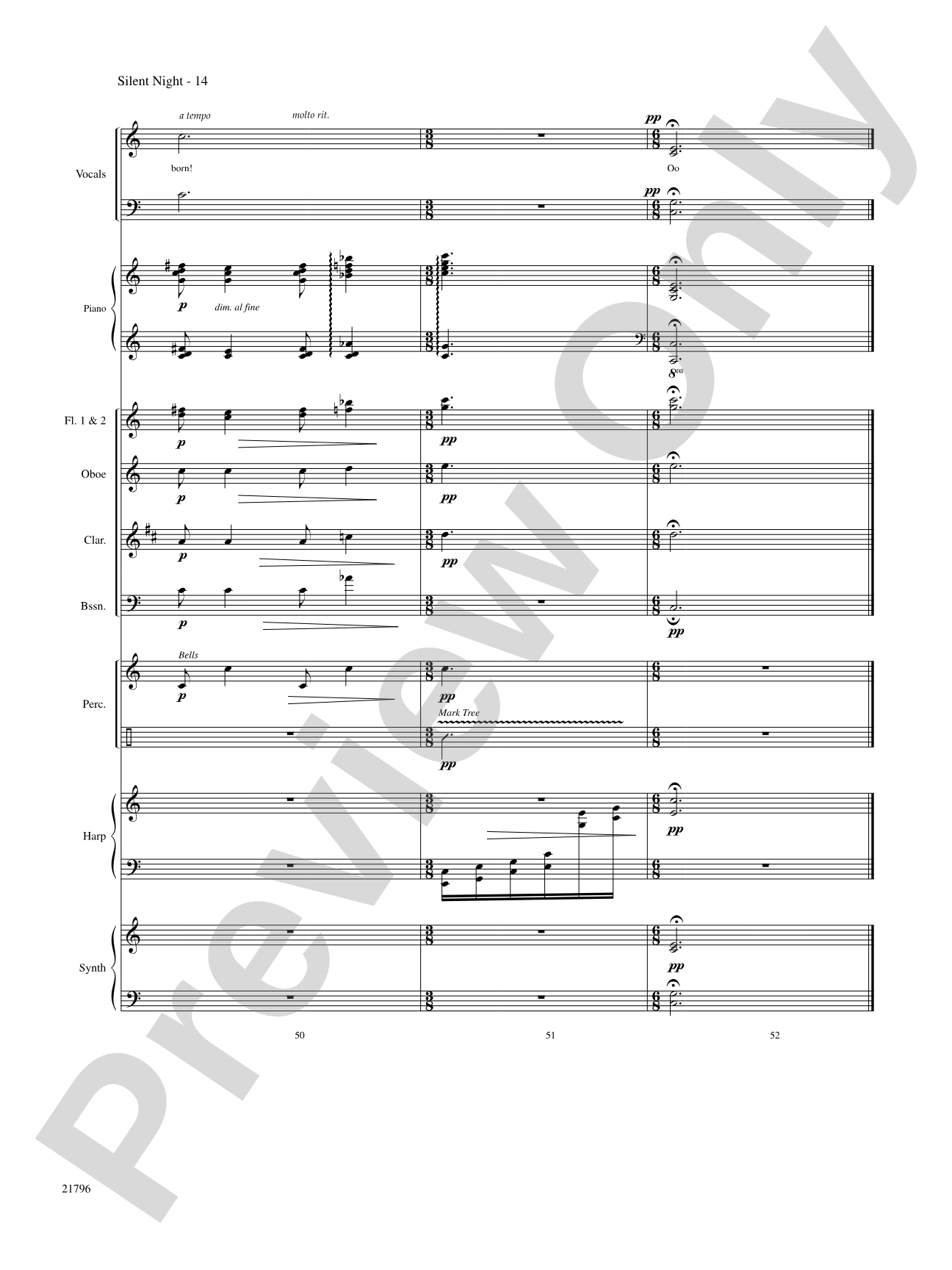



Silent Night: Choral SoundPax
Arr. Mark Hayes
Item: 00-PK-0000490

$20.00
Pickup currently not available
Buy Extra Parts (Digital PDF Download)
Parts Added to Cart!
Related Items
Silent Night: SATB Choral Octavo |
$2.25
|
View | |
Silent Night: SSAA Choral Octavo |
$2.25
|
View | |
Silent Night: SATB Choral Octavo |
$2.25
|
View | |
Silent Night: SAB Choral Octavo |
$1.65
|
View | |
Silent Night: SSAA Choral Octavo |
$2.25
|
View | |
Silent Night: Choral Octavo SoundTrax CD |
$27.99
|
View | |
Silent Night: Choral SoundPax |
$20.00
|
View |
Description
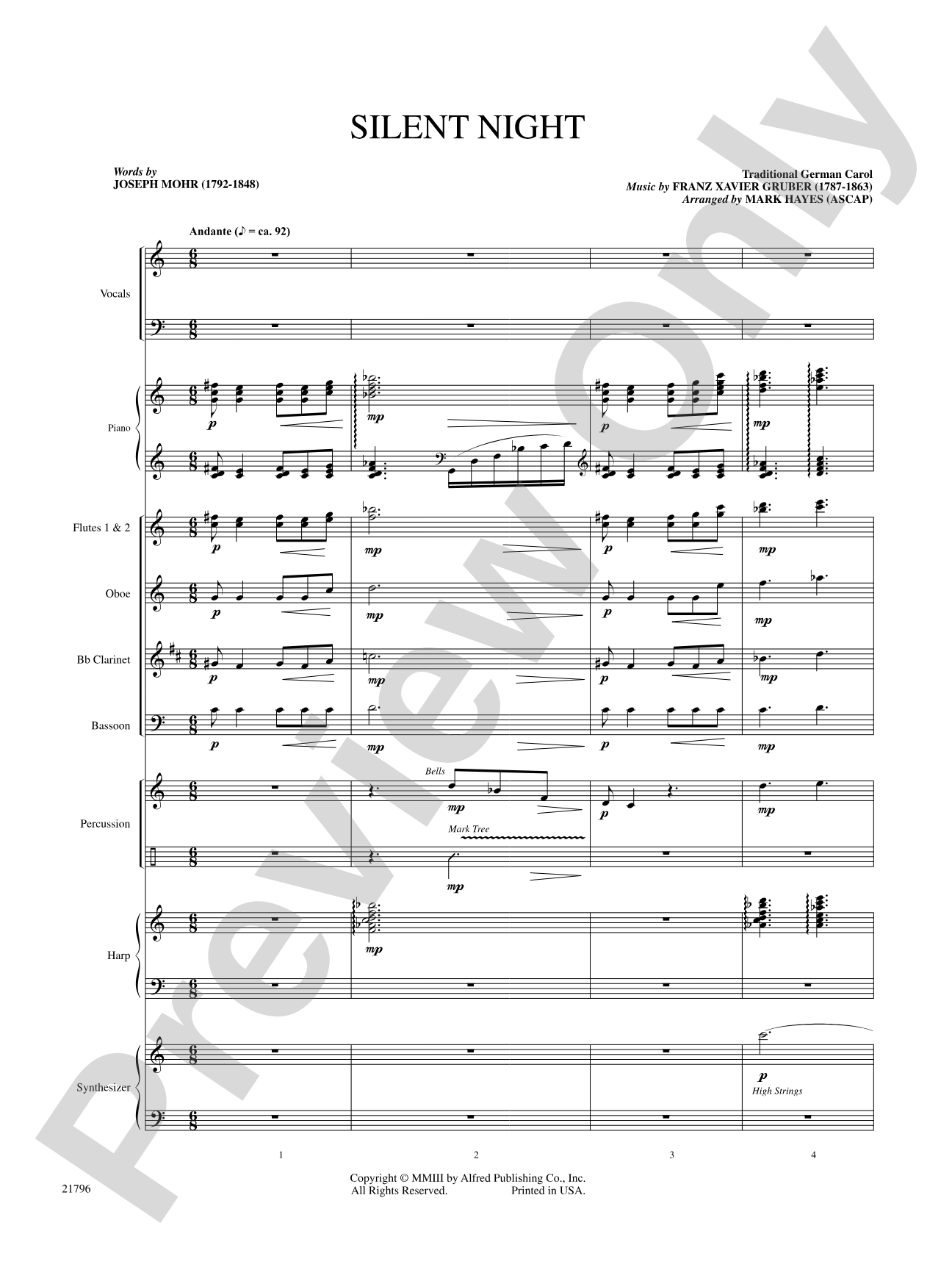
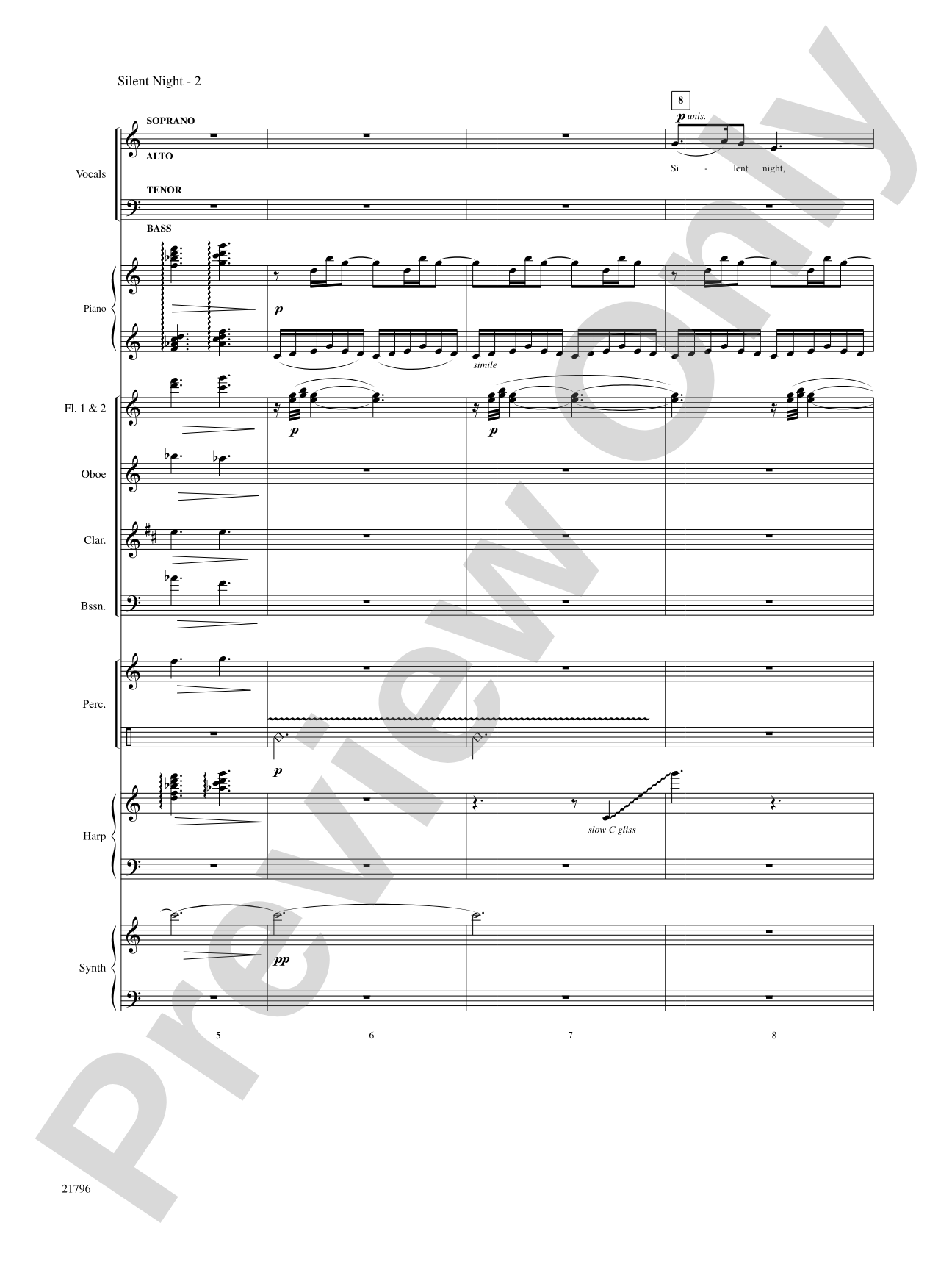
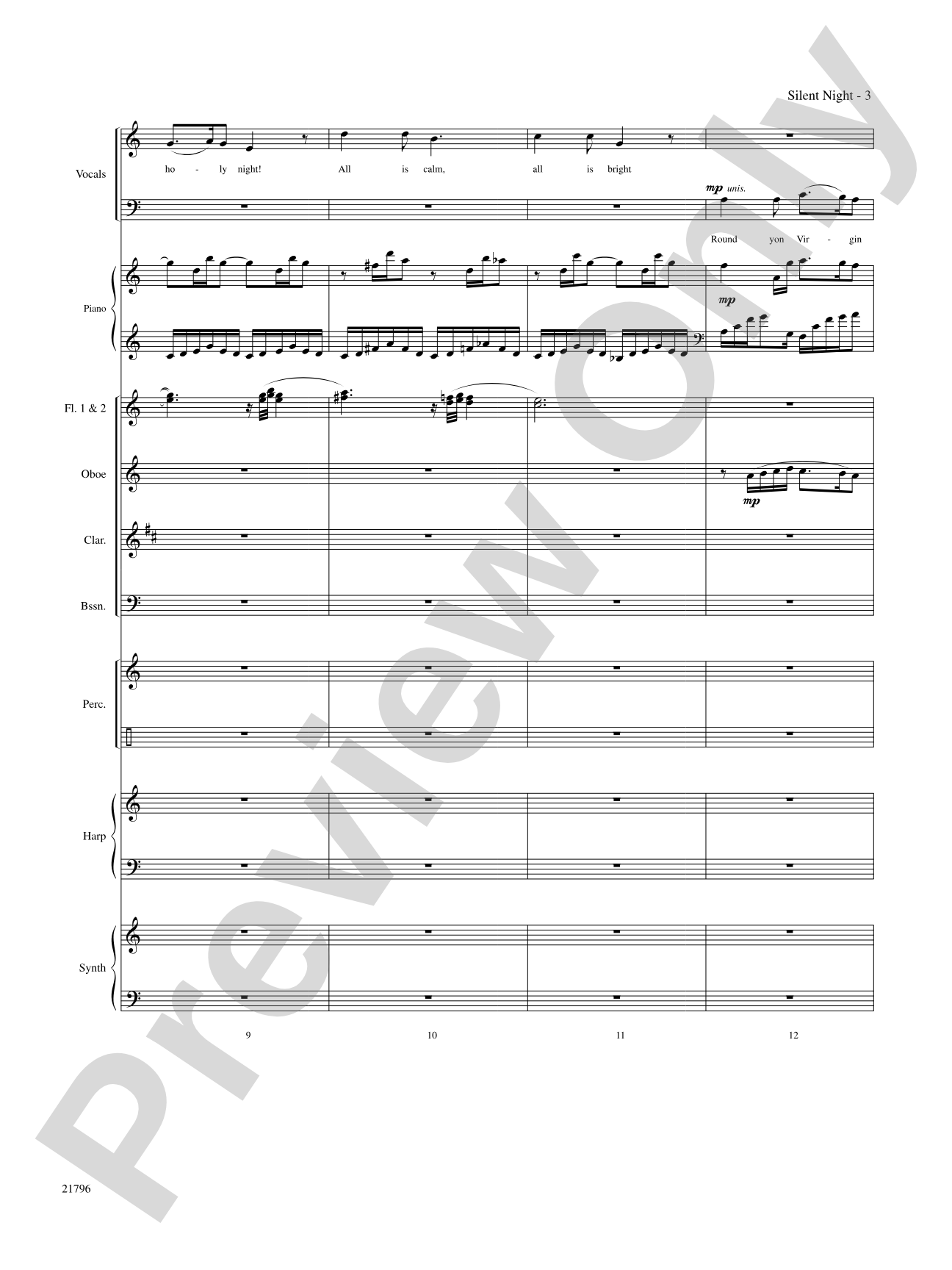
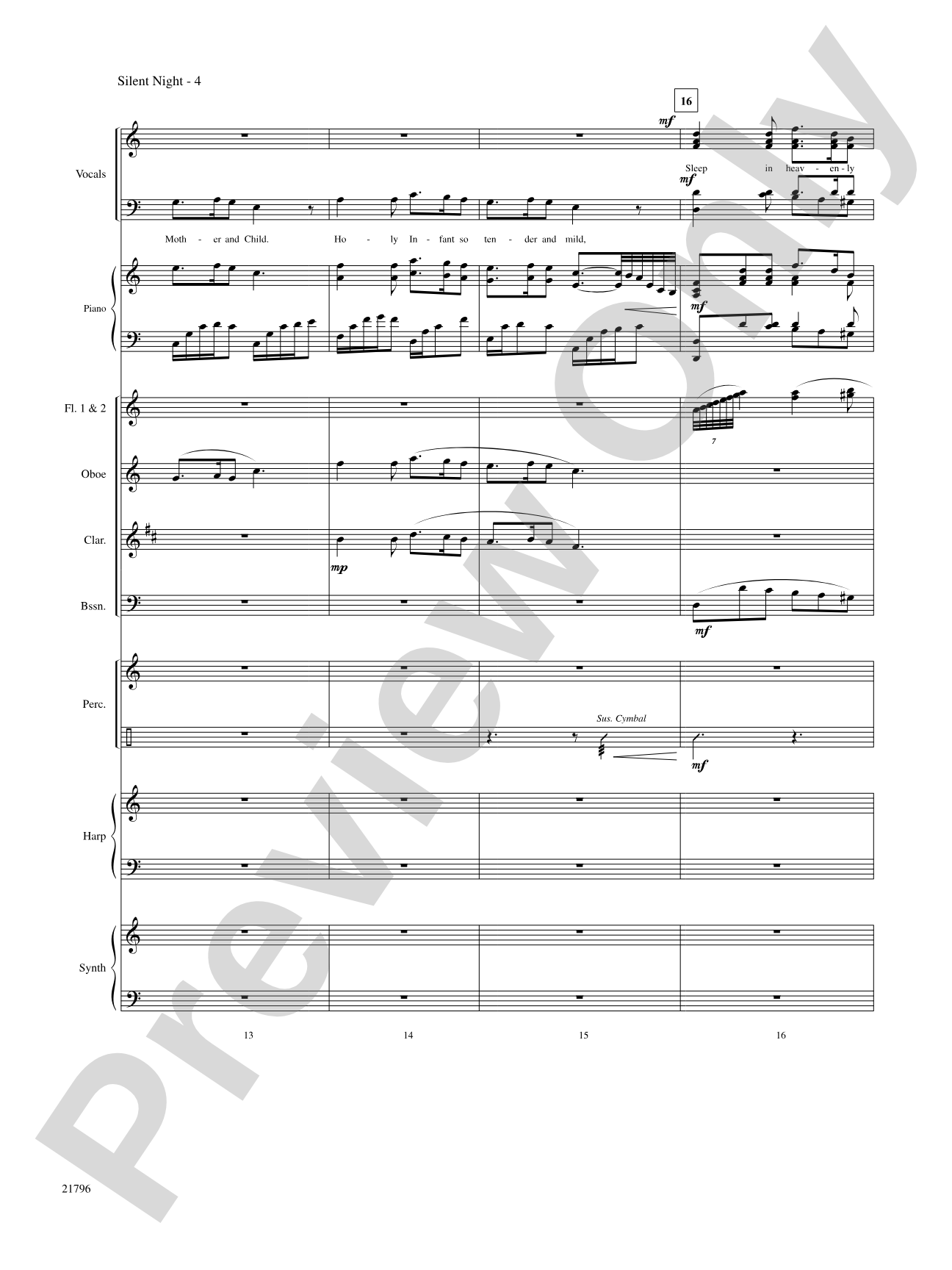
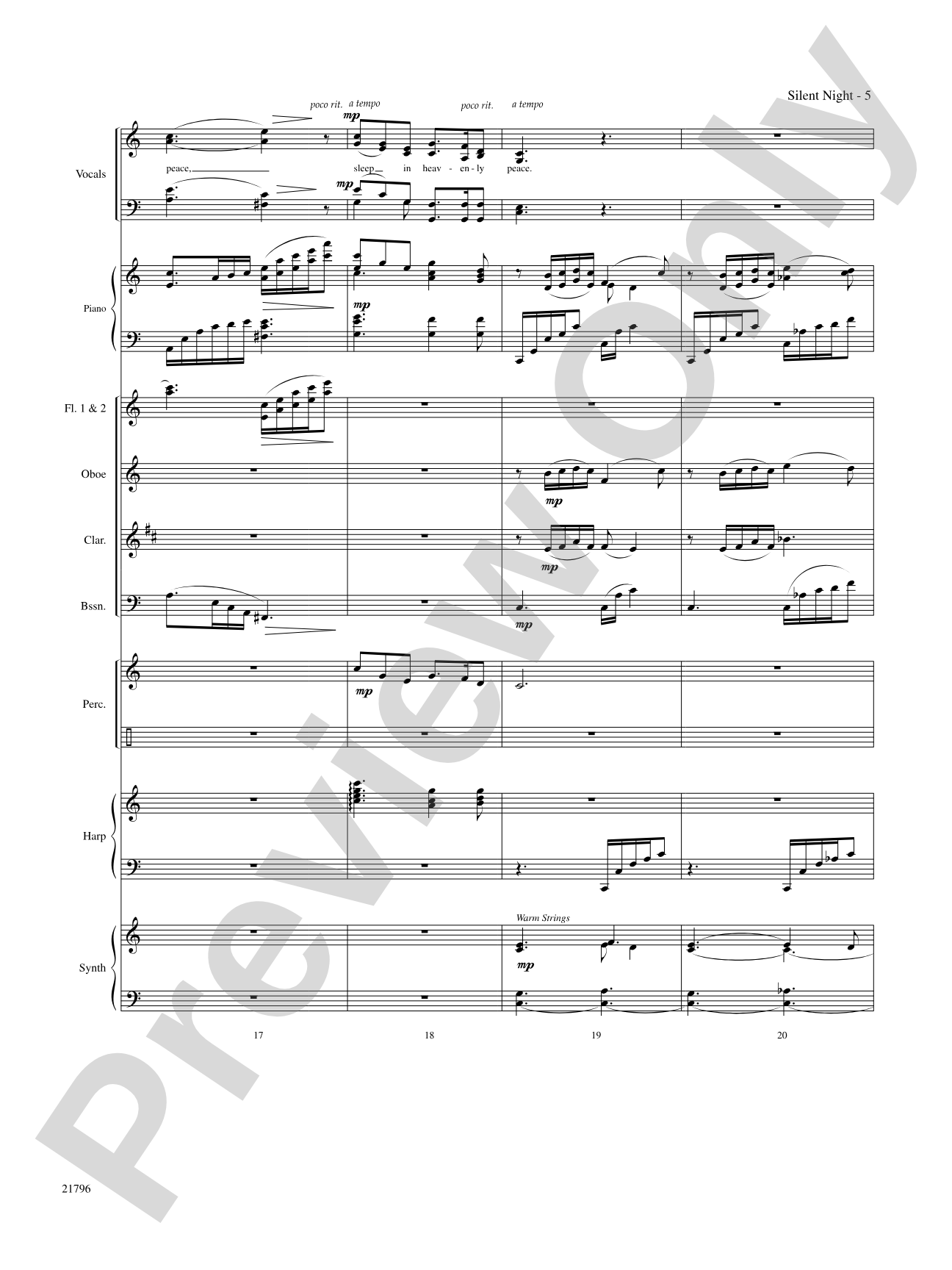
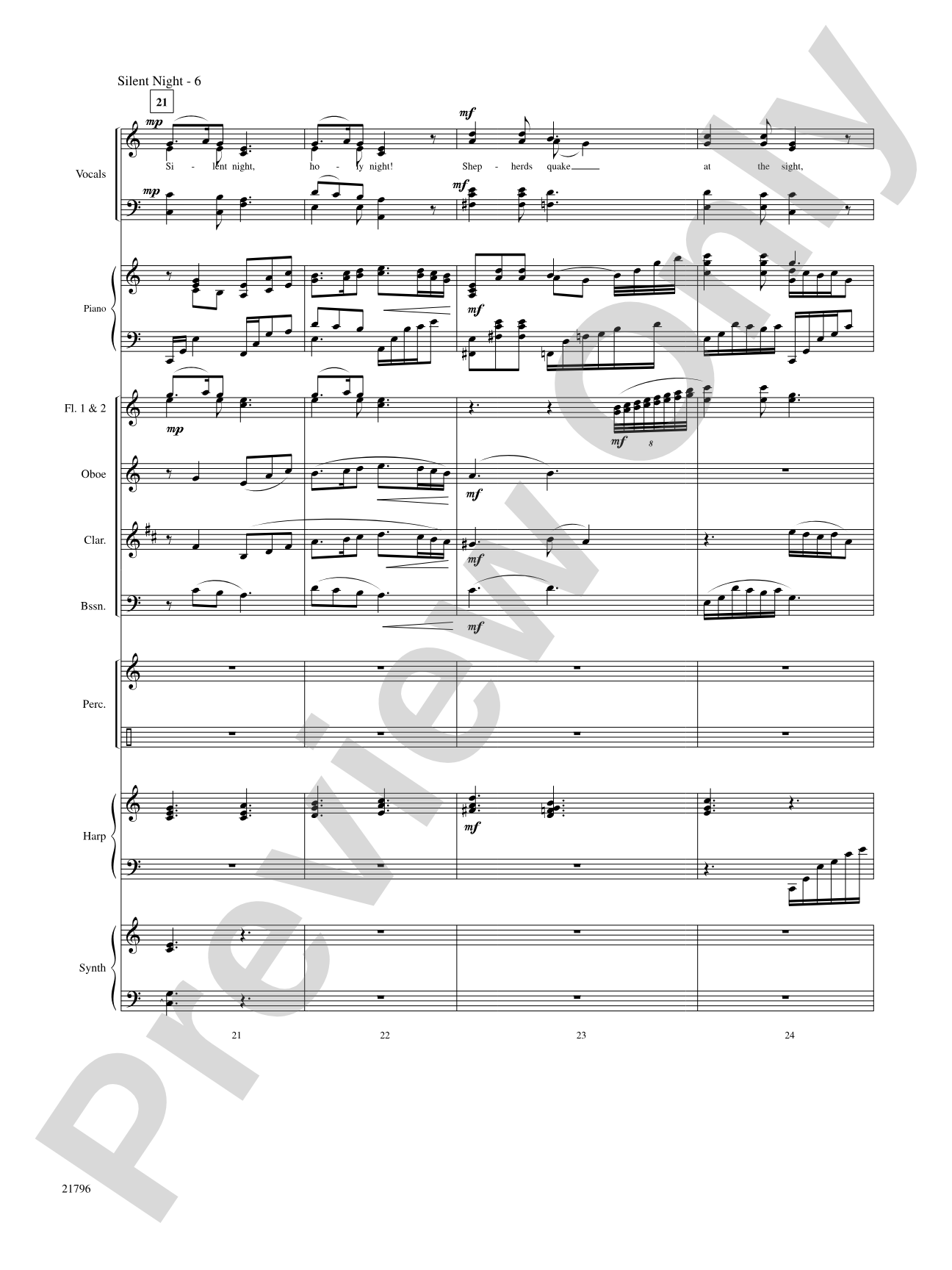
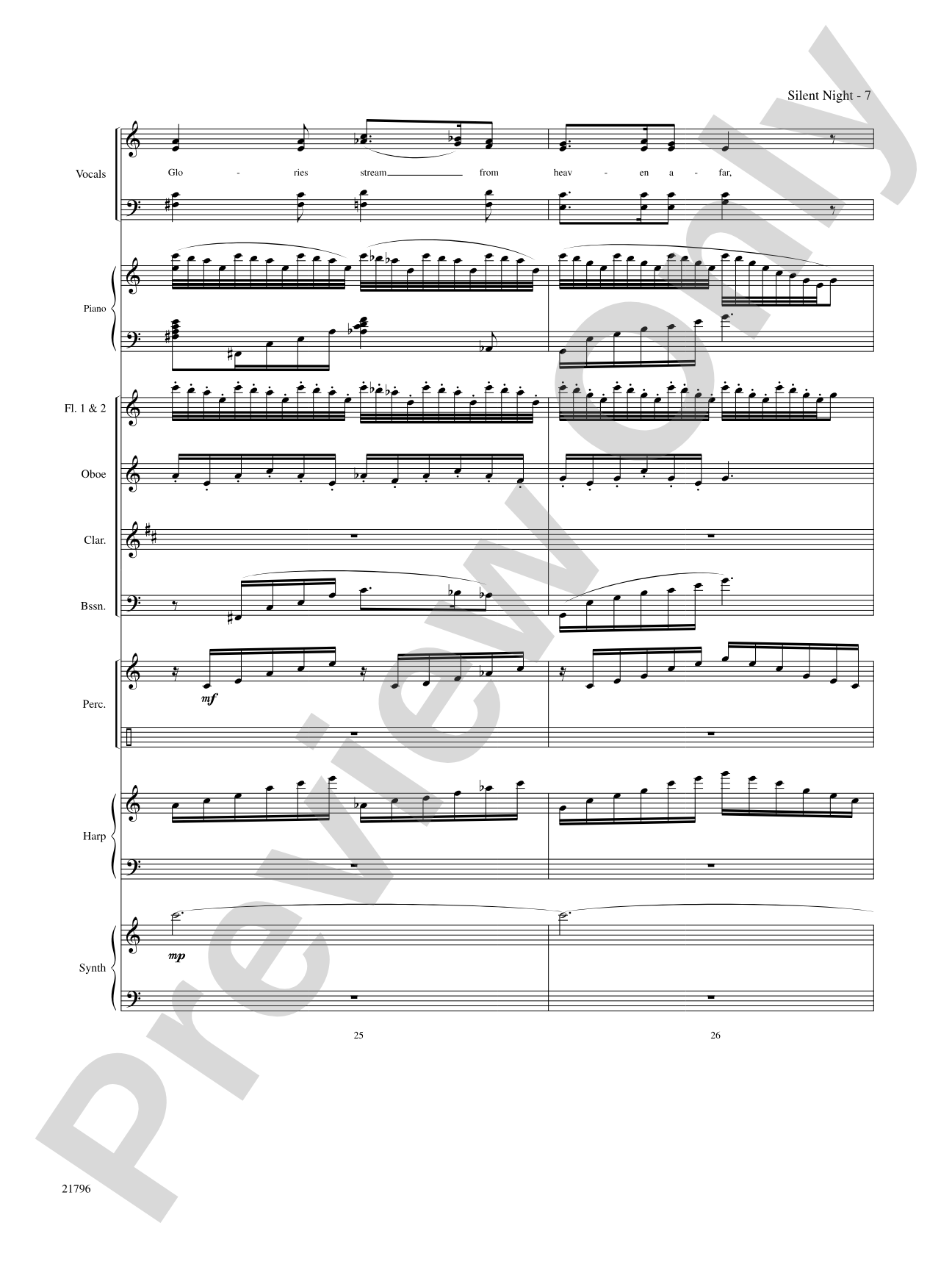
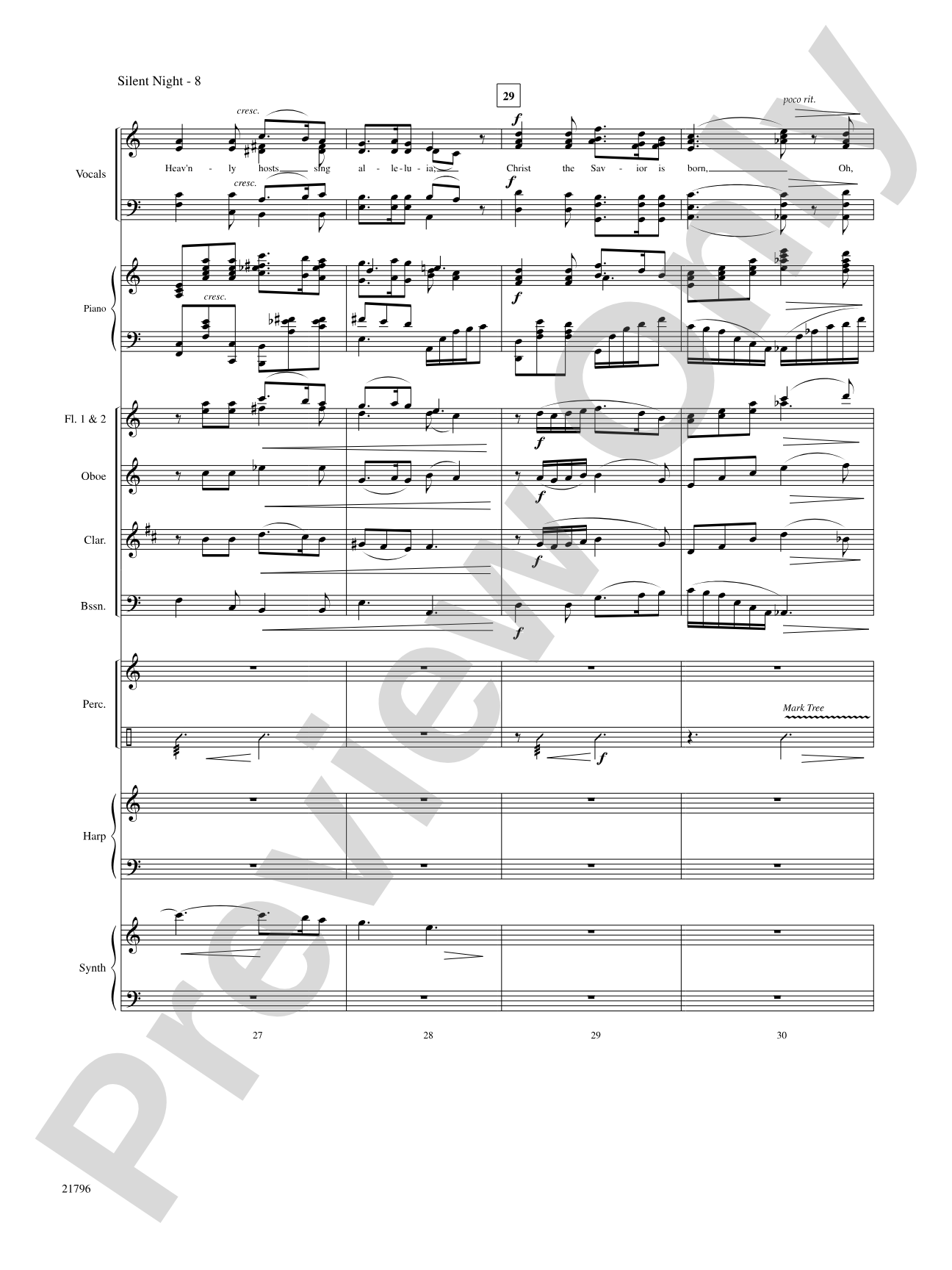
Includes parts for 2 flute, oboe, clarinet, bassoon, harp, 2 percussion and synthesizer.


Don't just read it, hear it, play along with it, and watch your students grow with it. In MakeMusic Cloud, Silent Night: Choral SoundPax comes alive with professional accompaniment, adjustable tempo, and built-in practice tools that turn solo practice into real progress.
Open in the Player
Jump straight in and assign it today.
Start Your Free Trial
Open this title and explore the full library in minutes.
Sample Audio
1
Audio File
--:--
0:00
0:00
Sample Video
No sample videos found.
Additional Details
Series:
Alfred Choral Designs
Publisher:
Alfred Music
Page Count:
20
SKU:
00-PK-0000490
Instrumentation:
2 fl., oboe, cl., bassoon, harp, perc., synth.
More about this title
About the Arranger: Mark Hayes
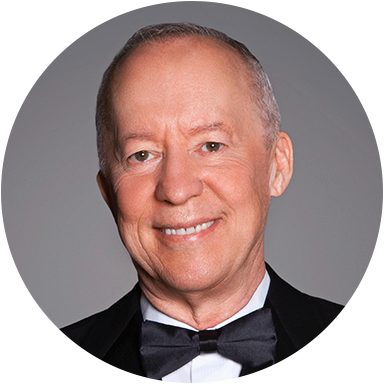
Mark Hayes is a prolific composer and arranger whose published catalog exceeds 1,750 works spanning sacred music, orchestral scores, musical theatre, and piano literature. He holds a Bachelor of Music degree in Piano Performance from Baylor University and has guest conducted at Lincoln Center, the National Cathedral, and Carnegie Hall, premiering major sacred works including his Requiem at Lincoln Center in 2013 and again at St. Ignatius Basilica in Rome as part of the Vatican-sponsored Festival Pro Musica E Arte Sacra.
Beyond his conducting and composing roles, Hayes has orchestrated musical theatre productions and served as a record producer. In 2010, Baylor University honored him with the Award for Exemplary Leadership in Christian Music. His arrangements and original compositions for choir, orchestra, and piano reflect decades of engagement with both sacred and secular traditions, informed by performances and collaborations across the globe.
Why we love this
Mark Hayes brings orchestral sophistication to a beloved carol without overwhelming it. The flute, oboe, clarinet, and bassoon writing creates warm, singable accompaniment, while the harp and synthesizer add shimmer and depth that feel timeless rather than trendy. This is an arrangement that respects the melody while giving your choir something genuinely beautiful to sing into.
What to expect
Intimate and luminous. Hayes honors the meditative quality of the original while creating an arrangement that feels spacious and contemporary, with the harp catching light and the sustained wind writing creating a hushed, contemplative atmosphere. This version lets the familiar melody emerge with warmth rather than sentimentality.
Who it's for
Choirs seeking a fresh yet reverent take on a carol standard will find this arrangement accessible to mixed ensembles of moderate ability while offering professional-sounding orchestral support. The score works equally well for church choirs and concert ensembles preparing holiday programming.
How to get the most out of it
- Balance the choir carefully against the instrumental parts; the orchestration should support rather than compete with the vocal line.
- Use the recorded accompaniment as a rehearsal tool to cement intonation and blend, particularly in passages where the winds sustain beneath the voices.
- Shape the dynamic arc with both the choir and instrumentalists together, treating the arrangement as a single unified sound rather than voices plus accompaniment.
- Pay attention to the harp and synthesizer blend; adjust levels in your venue so neither becomes a muddied wash.
How to use it
Program this as a focal point in your holiday concert or as part of a sacred music set alongside other seasonal repertoire. The lush orchestration makes it equally effective as a standalone feature or paired with simpler carol arrangements to create dynamic contrast.
Skills your students will build
- Singing with sustained instrumental accompaniment and blending with winds
- Maintaining intonation within a dense harmonic texture
- Ensemble coordination between choir and pit musicians
- Responding to orchestral cues and dynamic shaping across multiple parts