
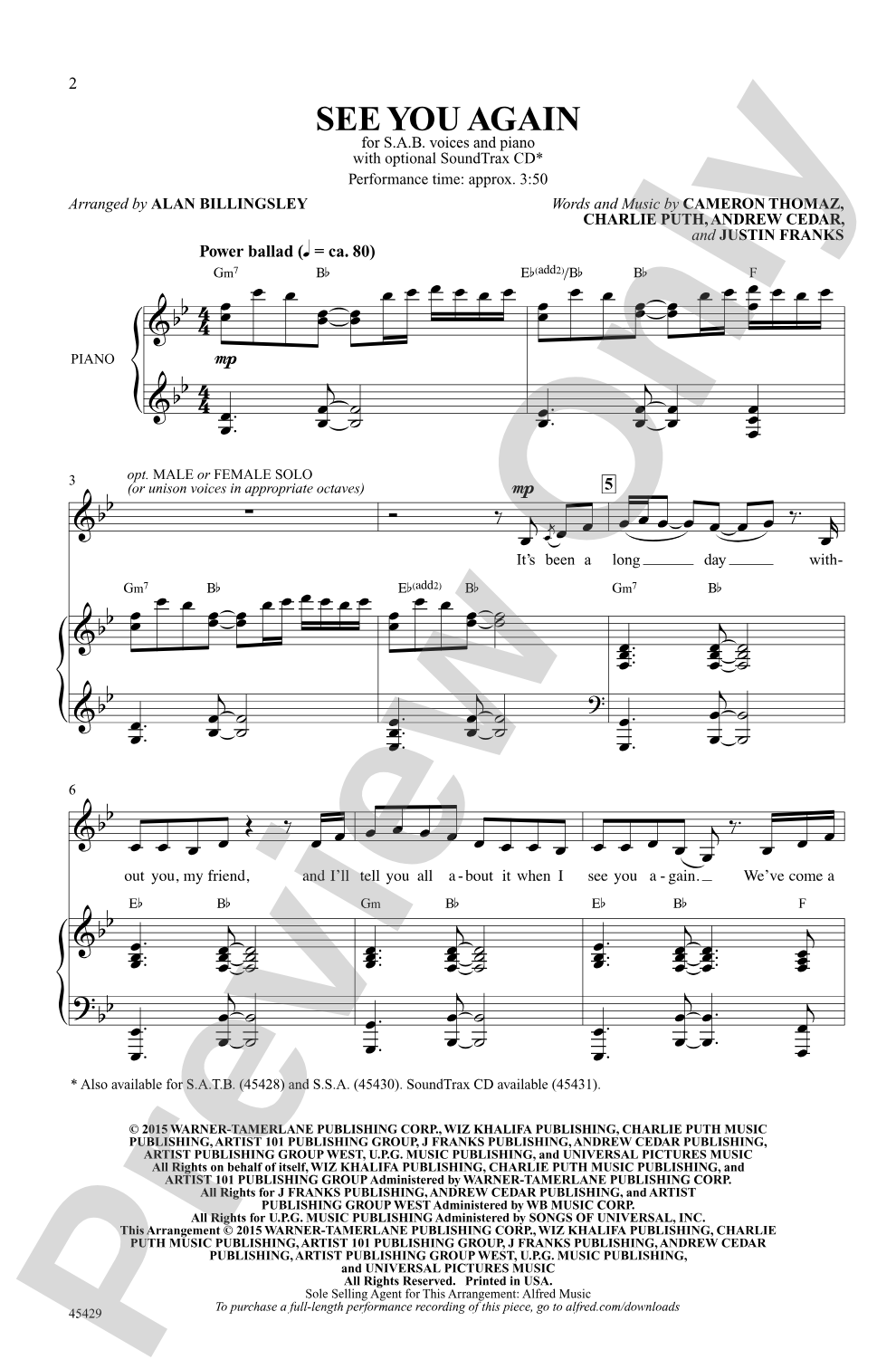
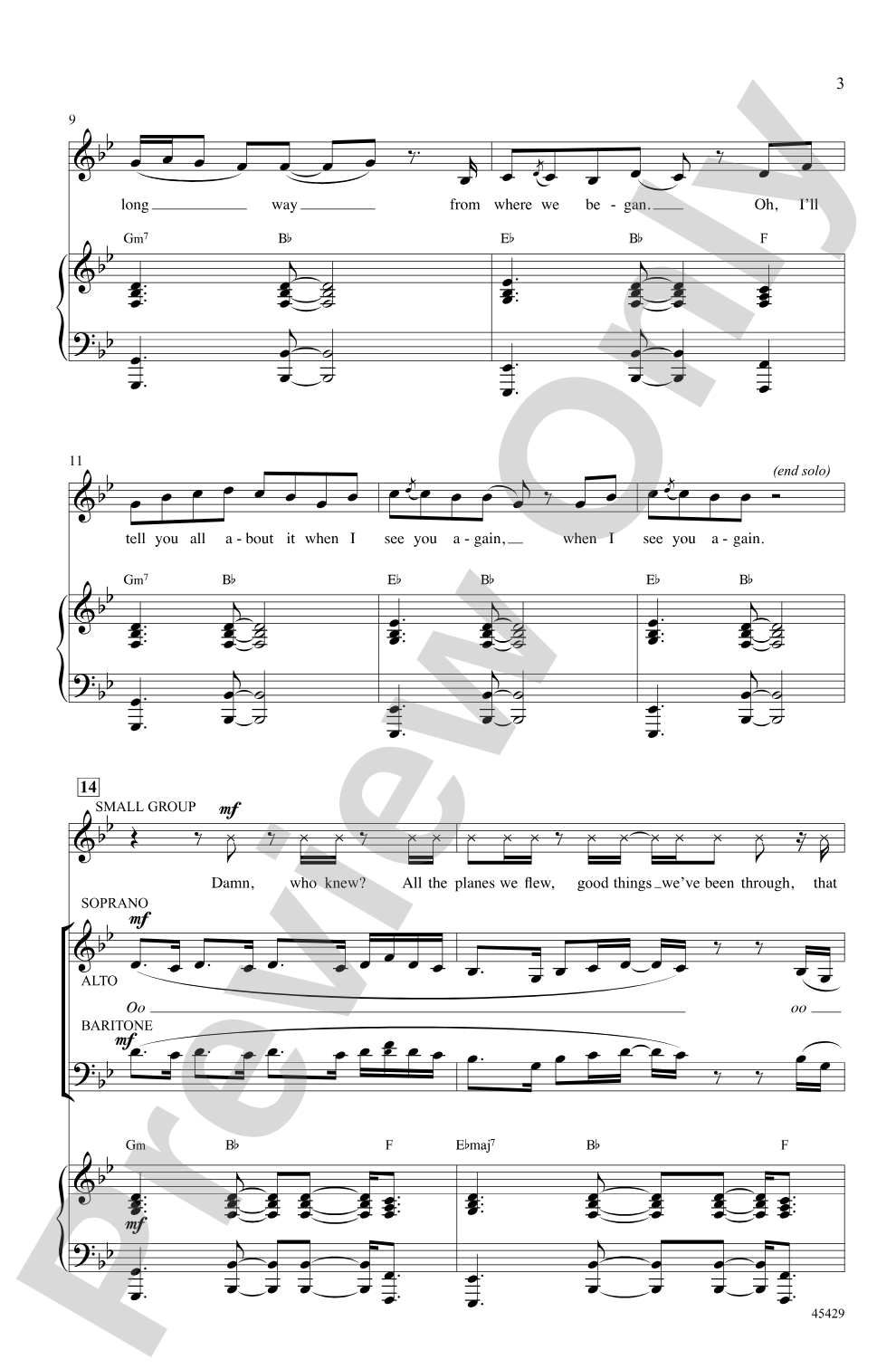
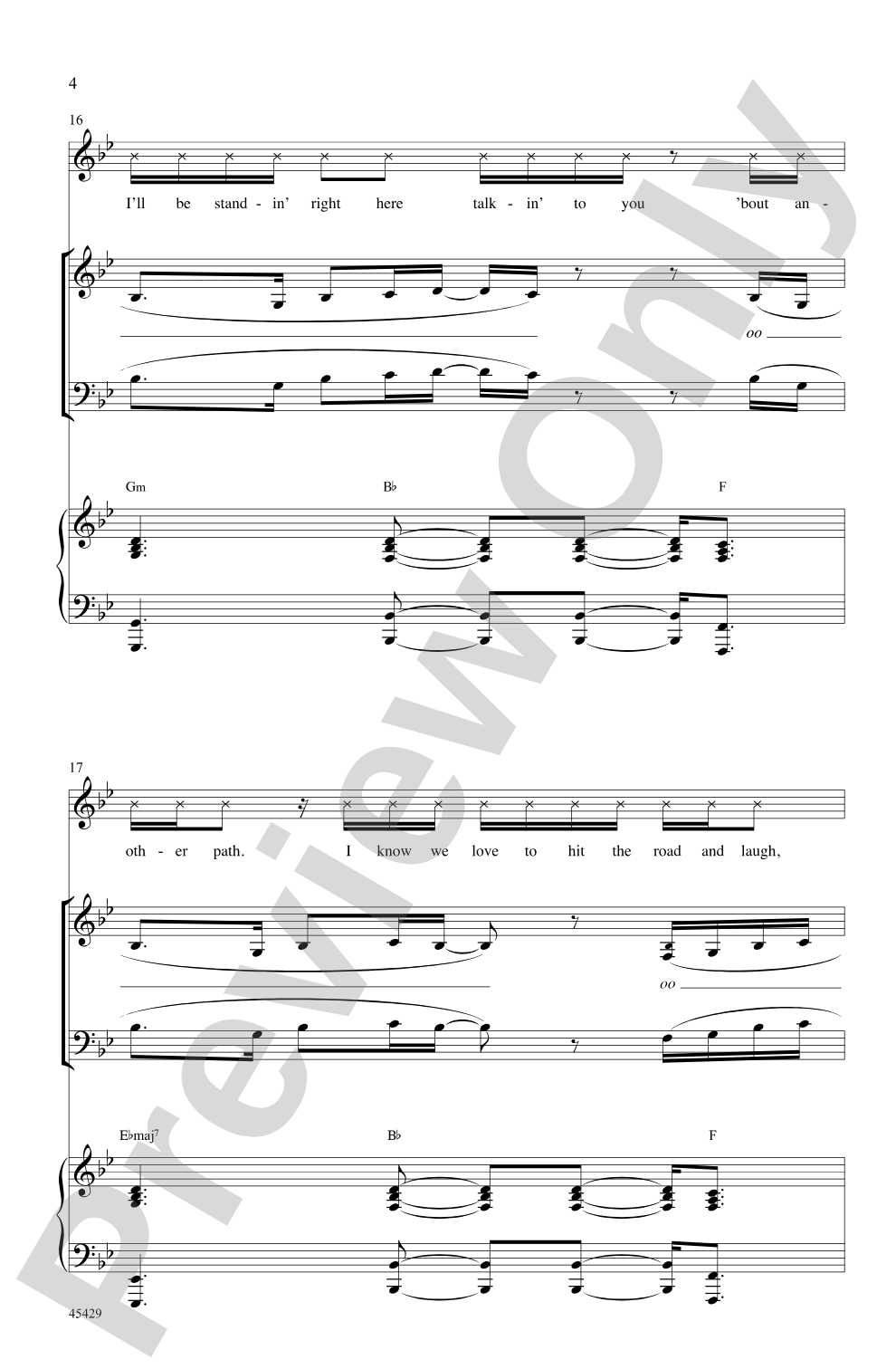

See You Again: SAB Choral Octavo
Words and music by Cameron Thomaz, Charlie Puth, Andrew Cedar, and Justin Franks / arr. Alan Billingsley
Item: 00-PO-0003698
$2.10
Minimum order quantity: 20 copies
One moment…
Related Items
See You Again: SoundTrax Digital Audio Download |
$29.99
|
View | |
See You Again: SATB Choral Octavo |
$2.10
|
View | |
See You Again: SSA Choral Octavo |
$2.10
|
View | |
See You Again: SATB Choral Octavo |
$2.10
|
View | |
See You Again: SAB Choral Octavo |
$2.10
|
View | |
See You Again: SSA Choral Octavo |
$2.10
|
View | |
See You Again: Choral Octavo SoundTrax CD |
$29.99
|
View |
Description
Featured on the Furious 7 soundtrack, this hip-hop ballad about the eternal bonds of friendship will inspire choirs and audiences alike. The reflective character of the popular single originally recorded by Wiz Khalifa and Charlie Puth emanates in this arrangement that starts with a delicate solo and builds to full harmonies. A moving addition to any concert!


See You Again: SAB Choral Octavo isn't in MakeMusic Cloud just yet...but it could be. Let us know you'd like to see it, and you'll help shape what comes next. In the meantime, start a free trial and dive into thousands of interactive titles your students can play along with today.
Request This Title
Tell us you want it.
Start Your Free Trial
Explore everything that's ready to play right now.
Sample Audio
1
Audio File
--:--
0:00
0:00
Sample Video
No sample videos found.
Additional Details
Series:
Alfred Pop Choral Series
Publisher:
Alfred Music
Page Count:
16
SKU:
00-PO-0003698
More about this title
About the Composer: Cameron Thomaz
Cameron Thomaz, known professionally as Wiz Khalifa, is a rapper and singer whose work spans hip-hop, R&B, and pop. Beyond his recording career, his compositions have reached audiences far beyond the hip-hop world, particularly through film and television placements that showcase his ability to craft emotionally resonant melodies. His collaborative approach to songwriting has made his music accessible across multiple genres and performance contexts.
Why we love this
Billingsley's arrangement captures the emotional core of the original without leaning on production gimmicks, making it genuinely rewarding for young singers to perform. The progression from intimate solo line to full SAB texture gives your ensemble a clear dramatic arc and a tangible sense of musical growth within a single piece. Programming this alongside traditional ballads or other contemporary pop songs creates a concert that feels connected to your singers' actual musical lives.
What to expect
The piece opens with quiet introspection, a single voice carrying the weight of memory and connection. As additional harmonies layer in, the texture becomes fuller without losing its intimate quality, creating a soundscape that feels both contemporary and timeless. The progression mirrors the song's message: individual voices finding strength and meaning in unity.
Who it's for
This arrangement serves choirs at the high school and young adult level who are ready to sing contemporary repertoire with emotional maturity. It works equally well for church choirs, community ensembles, and competitive choral programs seeking repertoire that resonates with modern audiences while remaining vocally substantial.
How to get the most out of it
- Balance the opening solo carefully. The vulnerability of that moment sets the emotional stage; ensure the soloist feels supported by the accompaniment while remaining the clear focus.
- Shape the dynamic curve as harmonies enter. Resist the urge to jump to full volume once all three parts join. A gradual swell makes the build more musical and gives the choir agency in the storytelling.
- Maintain legit vowel placement even within the pop idiom. This piece benefits from the resonance and control of classical technique while keeping the contemporary feel intact.
- Listen critically to the recorded accompaniment for tempo and phrasing, but don't let it lock your interpretation. Use it as a reference point, then find what feels right for your specific singers.
How to use it
This works beautifully as the emotional centerpiece of a concert focused on contemporary themes or as part of a finale sequence that acknowledges popular culture alongside classical repertoire. Consider pairing it with other film-inspired pieces or pop arrangements to create a cohesive program that connects with your audience's shared cultural touchstones. It also serves as an excellent vehicle for introducing high schoolers to the possibilities of modern choral literature without compromising musical standards.
Skills your students will build
- Balancing ensemble blend in SAB voicing
- Managing emotional expression in contemporary pop contexts
- Shaping long phrases with breath support
- Transitioning smoothly from solo to choir texture
- Interpreting contemporary repertoire with vocal control and resonance