

See You Again: SATB Choral Octavo
Words and music by Cameron Thomaz, Charlie Puth, Andrew Cedar, and Justin Franks / arr. Alan Billingsley
Item: 00-PO-0003697
$2.10
Minimum order quantity: 20 copies
One moment…
Related Items
See You Again: SoundTrax Digital Audio Download |
$29.99
|
View | |
See You Again: SAB Choral Octavo |
$2.10
|
View | |
See You Again: SSA Choral Octavo |
$2.10
|
View | |
See You Again: SATB Choral Octavo |
$2.10
|
View | |
See You Again: SAB Choral Octavo |
$2.10
|
View | |
See You Again: SSA Choral Octavo |
$2.10
|
View | |
See You Again: Choral Octavo SoundTrax CD |
$29.99
|
View |
Description
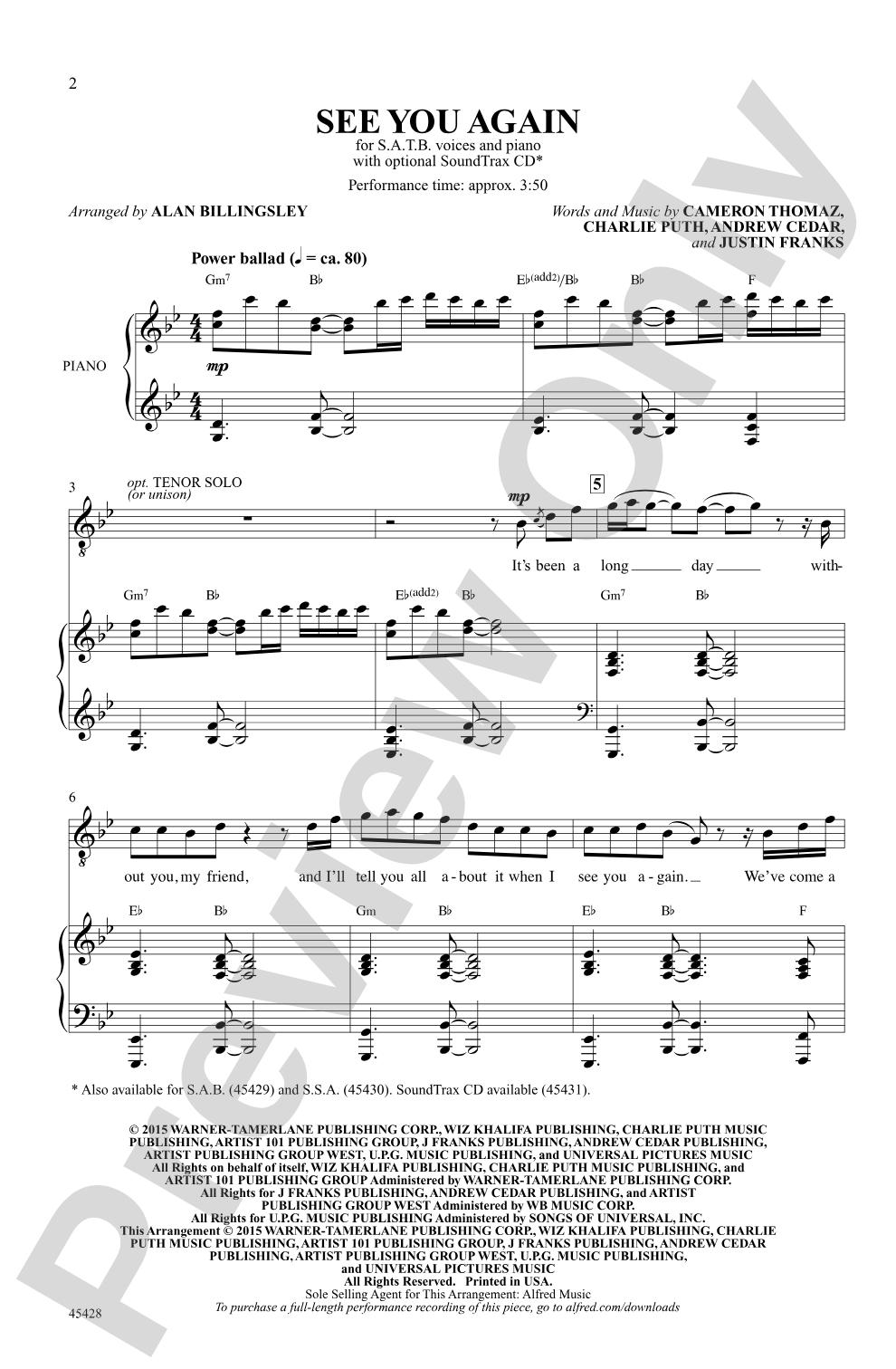
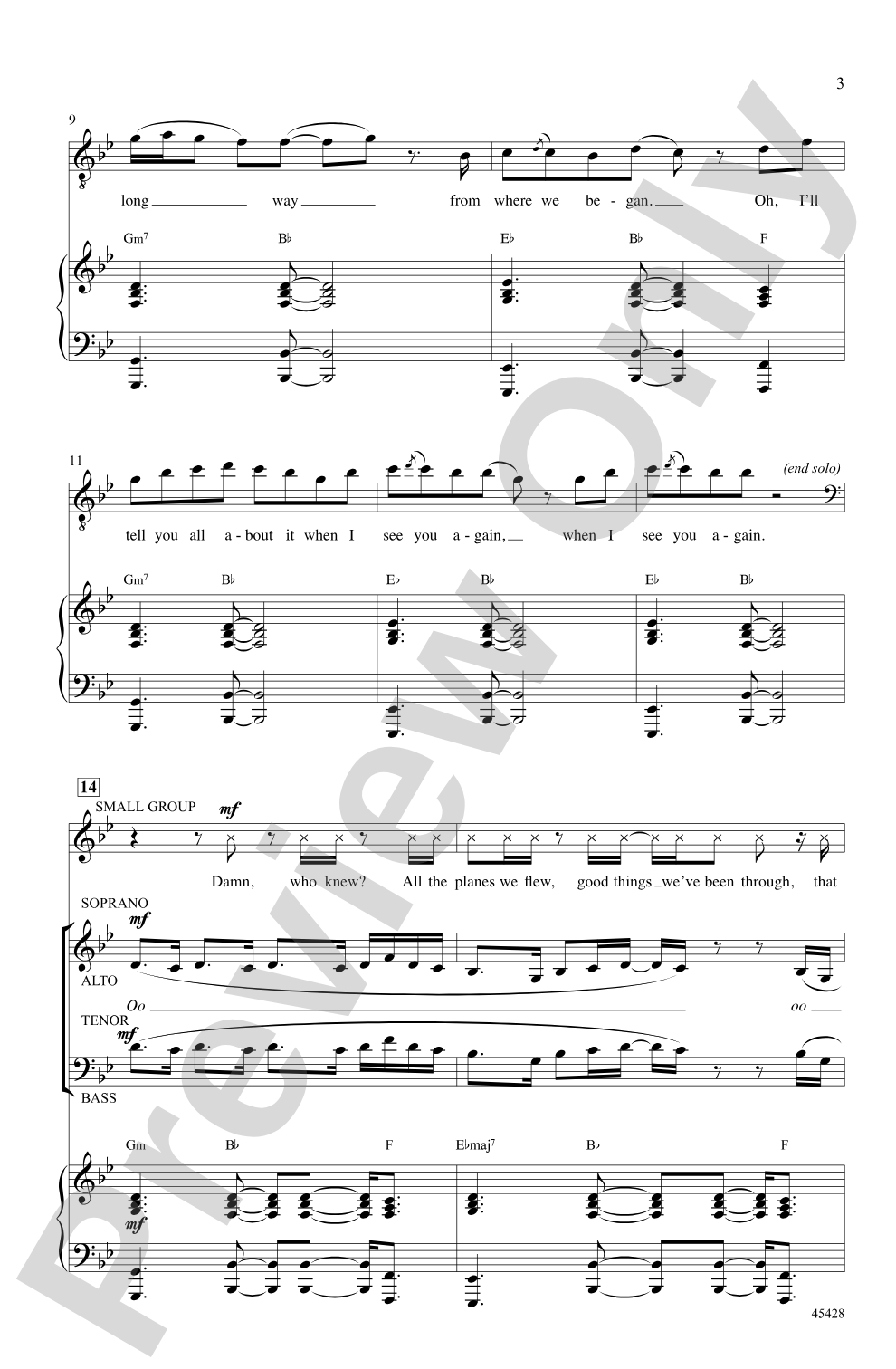
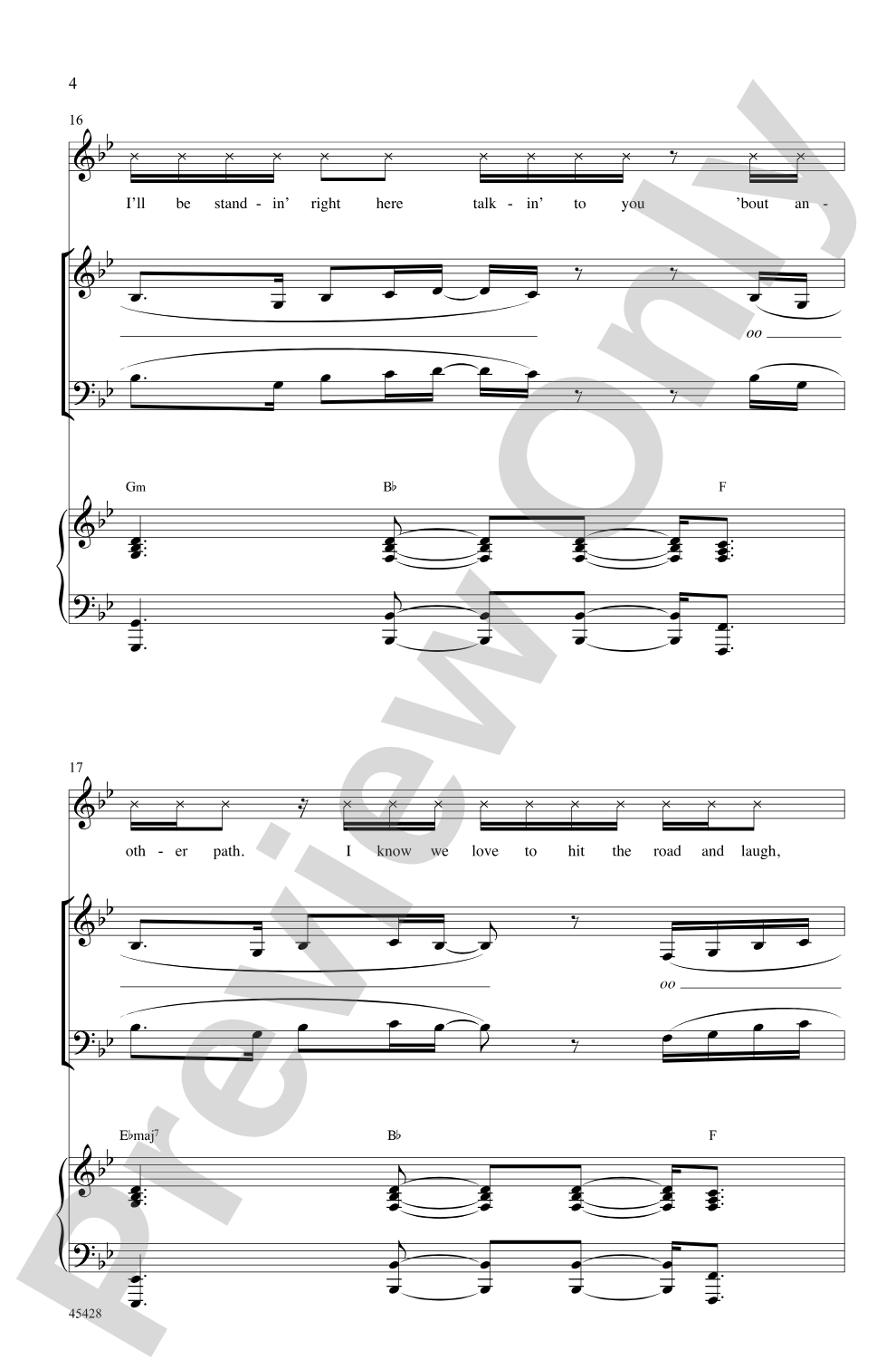
Featured on the Furious 7 soundtrack, this hip-hop ballad about the eternal bonds of friendship will inspire choirs and audiences alike. The reflective character of the popular single originally recorded by Wiz Khalifa and Charlie Puth emanates in this arrangement that starts with a delicate solo and builds to full harmonies. A moving addition to any concert!


See You Again: SATB Choral Octavo isn't in MakeMusic Cloud just yet...but it could be. Let us know you'd like to see it, and you'll help shape what comes next. In the meantime, start a free trial and dive into thousands of interactive titles your students can play along with today.
Request This Title
Tell us you want it.
Start Your Free Trial
Explore everything that's ready to play right now.
Sample Audio
1
Audio File
--:--
0:00
0:00
Sample Video
Additional Details
Series:
Alfred Pop Choral Series
Publisher:
Alfred Music
Page Count:
16
SKU:
00-PO-0003697
More about this title
About the Composer: Cameron Thomaz
Cameron Thomaz, known professionally as Wiz Khalifa, is a rapper and singer whose work has consistently crossed genre boundaries. Beyond hip-hop, he has collaborated with producers and songwriters across pop, R&B, and film soundtracks, bringing his distinctive vocal sensibility to mainstream audiences worldwide.
As a composer and performer, Thomaz contributed to "See You Again" during a pivotal moment in popular music when hip-hop ballads began shaping film narratives. His work on the Furious 7 soundtrack demonstrated how authenticity in songwriting could drive both commercial and emotional resonance.
Why we love this
This arrangement respects the song's emotional core while opening it to four-part harmony in ways that feel organic rather than forced. Alan Billingsley's treatment preserves the intimate vulnerability of the original while giving choirs meaningful harmonic work, making it accessible for intermediate singers without sacrificing musical depth. Audiences recognize the tune immediately, but the choral setting transforms a pop single into a genuine concert moment.
What to expect
The arrangement opens with quiet intimacy, almost like overhearing a personal conversation, then gradually draws listeners into a shared moment of reflection. As voices layer in, there's a sense of community building without sentimentality, capturing that particular quality of friendship songs that acknowledge both presence and absence.
Who it's for
High school and college choirs seeking contemporary repertoire that connects with student musicians and general audiences. Directors building concerts that blend pop culture with genuine musical substance will find this arrangement bridges that gap effectively. Community choirs and select mixed ensembles looking for a reflective piece with modern appeal will also resonate with this material.
How to get the most out of it
- Start the opening solo section with conversational phrasing rather than operatic delivery; the song's power comes from restraint and sincerity, not dramatic vocal projection.
- Balance the inner voices carefully as harmonies enter, particularly in the lower parts, so they support rather than overwhelm the melody line.
- Use the recorded accompaniment to establish the groove and harmonic context, then gradually reduce reliance on it during rehearsal to build the choir's independence.
- Shape the build toward full harmonies with gradual dynamic growth rather than sudden volume jumps; the arc works best when it feels inevitable rather than imposed.
How to use it
Program this alongside other contemporary pieces to show your choir's range, or use it as a closing number on a concert that mixes genres. It works well following classical or sacred repertoire, as the tonal shift feels intentional rather than jarring. The song's themes of loyalty and connection make it particularly effective in benefit concerts or end-of-year programs.
Skills your students will build
- Blending pop vocal stylings with choral ensemble technique
- Layering harmonies while maintaining melodic clarity
- Building dynamic arc across a multipart structure
- Singing in close harmonic proximity without loss of individual voice independence