
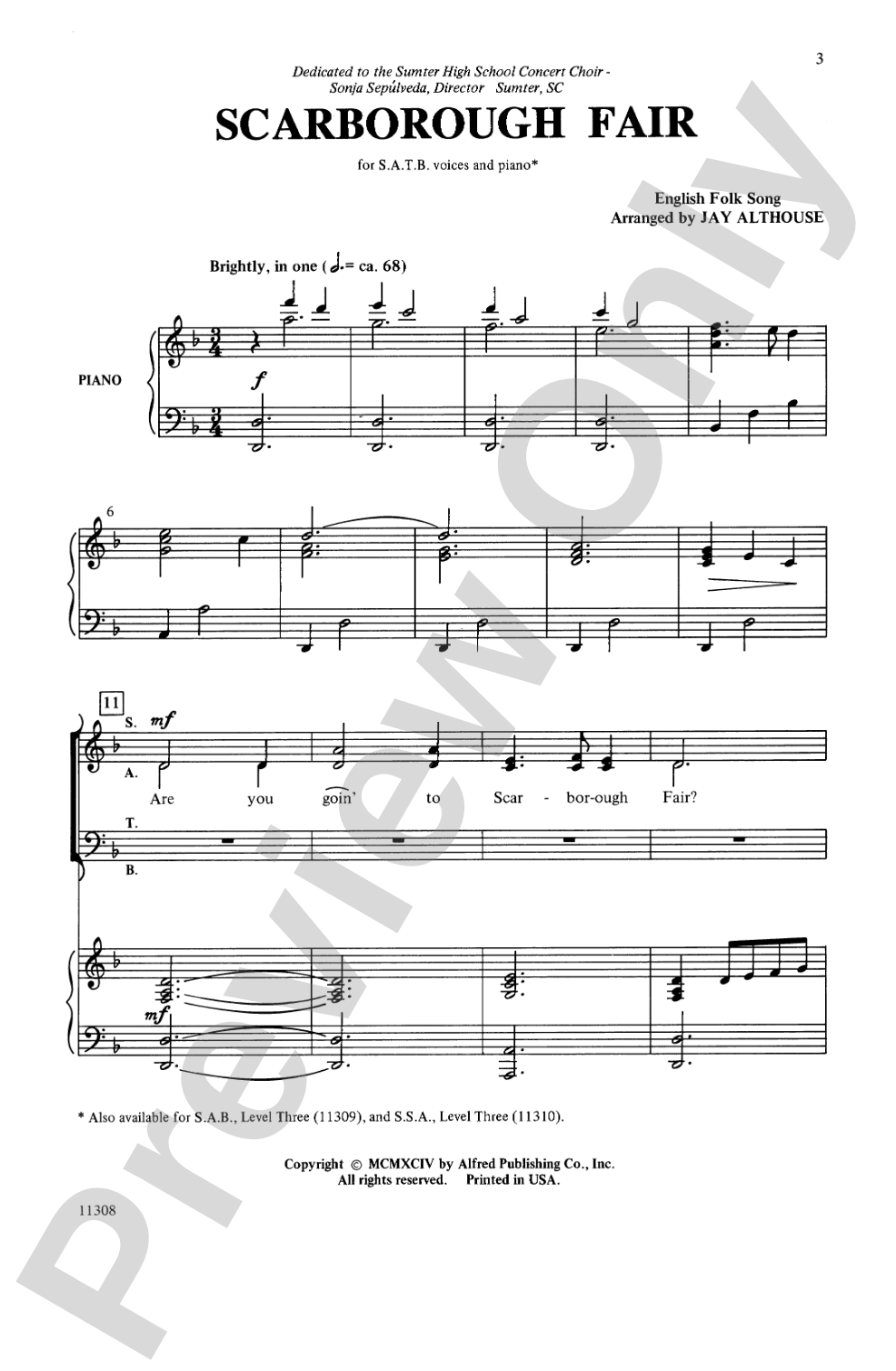

Scarborough Fair: SATB Choral Octavo
Arr. Jay Althouse
Item: 00-PO-0003778
$2.25
Minimum order quantity: 20 copies
Pickup currently not available
Description
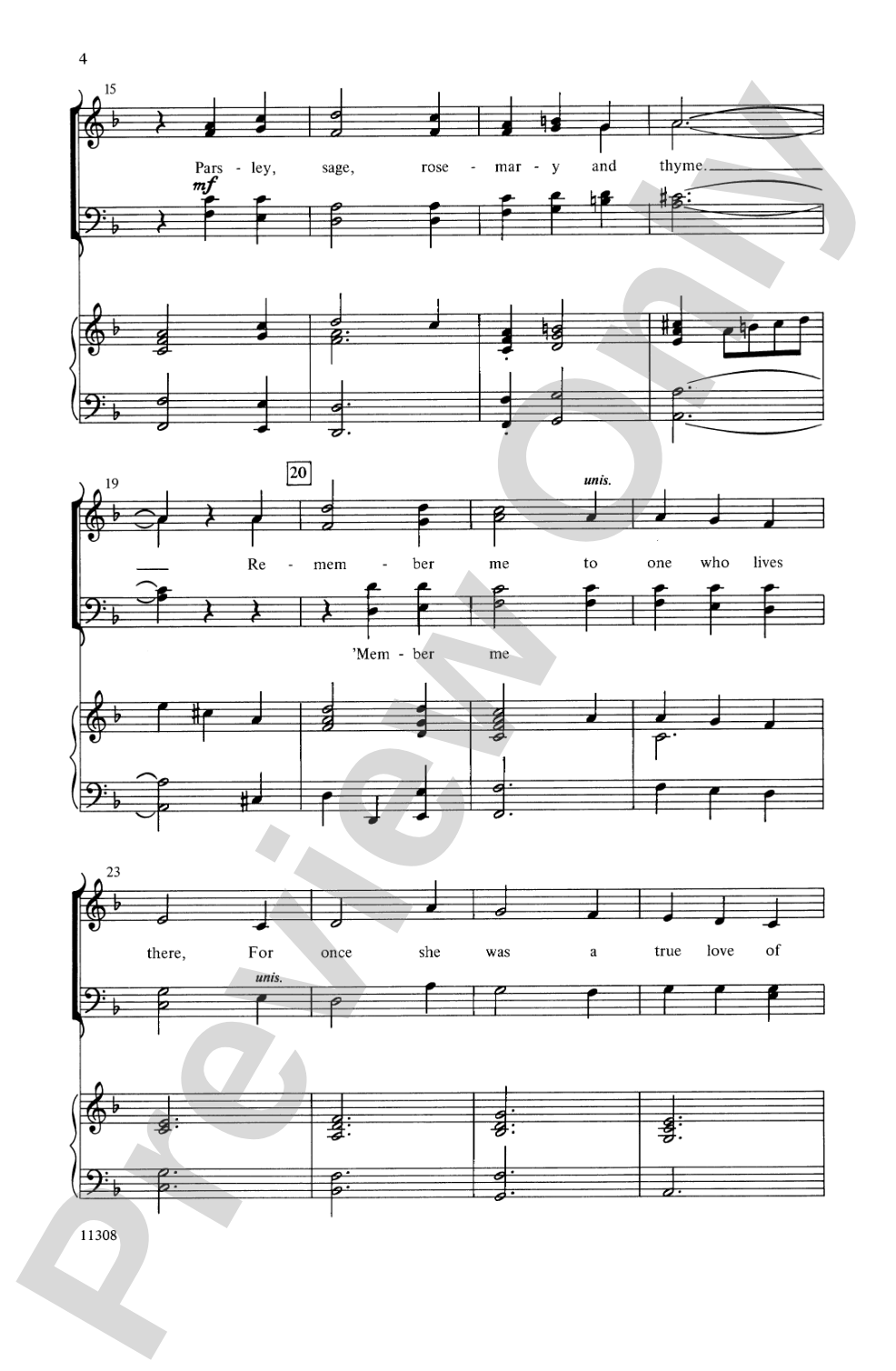
A fresh, new, up-tempo arrangement of the popular English folk song. A great piano part drives this Jay Althouse arrangement from the opening measures. The familiar melody and superb voice leading make this an excellent concert and contest piece to show off your choir's talents. Unique!


Scarborough Fair: SATB Choral Octavo isn't in MakeMusic Cloud just yet...but it could be. Let us know you'd like to see it, and you'll help shape what comes next. In the meantime, start a free trial and dive into thousands of interactive titles your students can play along with today.
Request This Title
Tell us you want it.
Start Your Free Trial
Explore everything that's ready to play right now.
Sample Audio
No sample audio found.
Sample Video
No sample videos found.
Additional Details
Series:
Alfred Archive Edition: Alfred Choral Designs
Publisher:
Alfred Music
Page Count:
12
SKU:
00-PO-0003778
More about this title
About the Arranger: Jay Althouse

Jay Althouse holds degrees in Music Education and Music from Indiana University of Pennsylvania, where he was later honored as a Distinguished Alumnus. Early in his career, he spent eight years managing rights and licensing for a major educational music publisher and served on the Executive Board of the Music Publishers Association of America. His compositional output spans over 800 published works for choirs at every level, performed regularly across the English-speaking world.
As an ASCAP member, Althouse has earned multiple Special Awards for his contributions to standard music. Beyond composition, he has collaborated with his wife Sally K. Albrecht on children's musicals and compiled influential vocal collections including Folk Songs for Solo Singers. His published educational resources include The Complete Choral Warm-up Book, Accent on Composers, Ready to Read Music, and Sixty Music Quizzes. He serves on the National Advisory Board of the Folk Art Society of America and has contributed articles to the organization's quarterly publication.
Why we love this
Althouse's arrangement strips away the ballad's typical languorous pacing and replaces it with forward momentum, giving singers something energetic to sink their teeth into rather than the predictable treatments found in most collections. The piano writing is genuinely interesting, which means your accompanist stays engaged and your singers respond to strong harmonic support. It's an arrangement that respects both the folk melody's integrity and your singers' need to perform something that feels alive.
What to expect
This is Scarborough Fair with its sleeves rolled up. The up-tempo treatment strips away melancholy introspection and replaces it with narrative drive, making the tragic elements of the text feel urgent rather than wistful. The piano's rhythmic vitality lifts the arrangement into something almost dance-like, while the four-part harmony keeps the piece grounded in the folk tradition.
Who it's for
Any SATB choir seeking a contemporary take on a beloved standard, whether for concert programming or competition. The piece works equally well for high school and college ensembles, community choirs, and adult singers who appreciate fresh arrangements of repertoire they think they already know.
How to get the most out of it
- Let the piano establish the tempo and energy from the very opening. The rhythmic drive is essential to this arrangement's personality; pushing the tempo slightly forward prevents the piece from settling into a funeral pace.
- Balance the familiar melody carefully in the soprano line. Because audiences know this tune, soprano voices need to sing with clarity and conviction without overwhelming the inner harmony.
- Shape the harmonic movement in each phrase rather than singing statically. Althouse's voice leading invites singers to follow the chord progressions, especially where inner voices support the melody's contour.
- Articulate the text crisply, particularly in the faster passages. Diction becomes more important at this tempo, and clear consonants help the narrative of the text land with impact.
How to use it
Pair this with other contemporary folk arrangements to create a themed concert segment, or use it as a contrast piece between slower works to reinvigorate audience and singers alike. It works particularly well as a closing number in a mixed choral concert, where the energy can propel the ensemble toward the final bow.
Skills your students will build
- Singing with consistent rhythmic drive and forward motion
- Balancing melody and harmony in a four-part texture
- Shaping phrases through harmonic progression rather than lyrical phrasing alone
- Articulating text clearly at a brisk tempo