
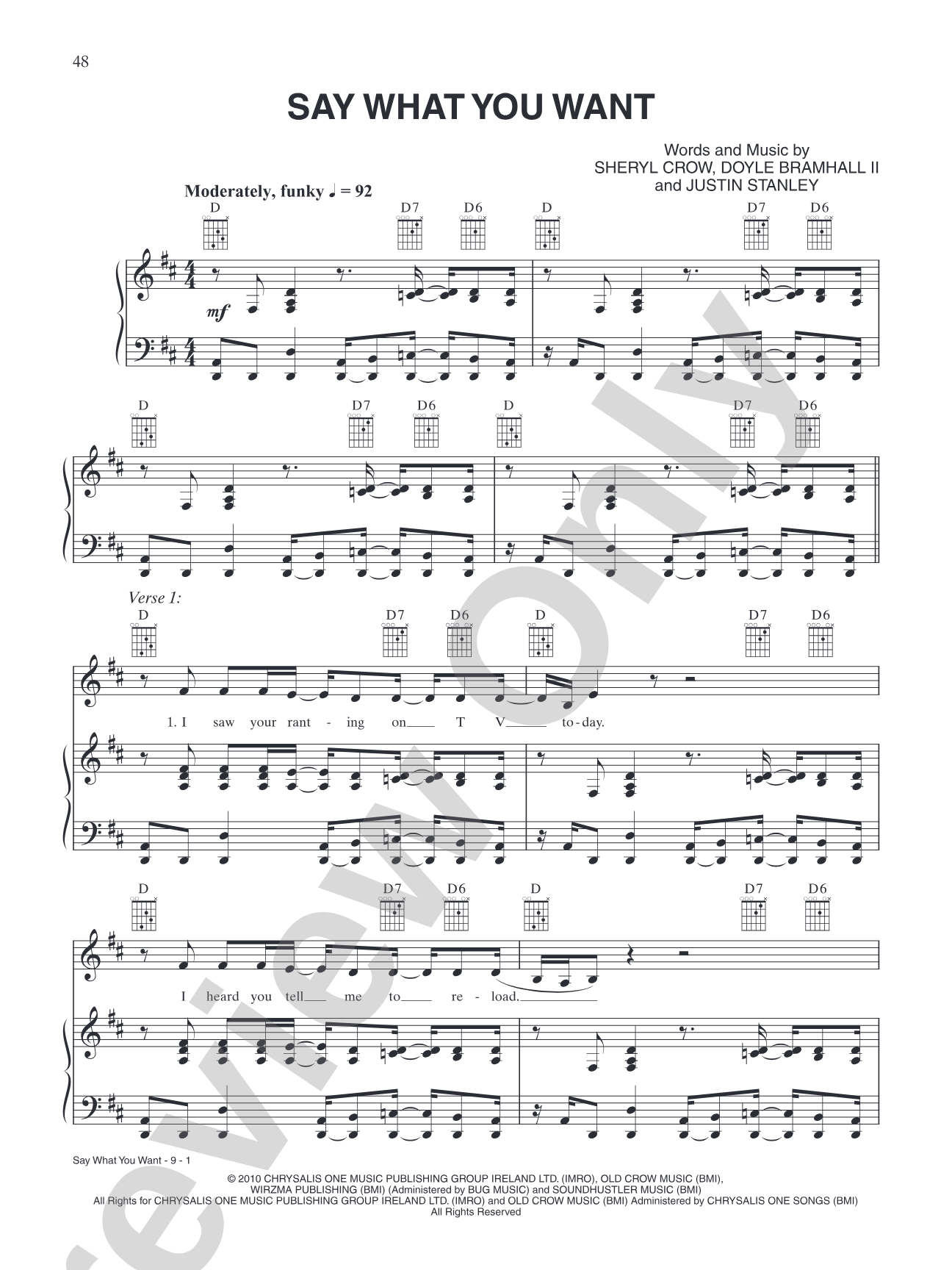
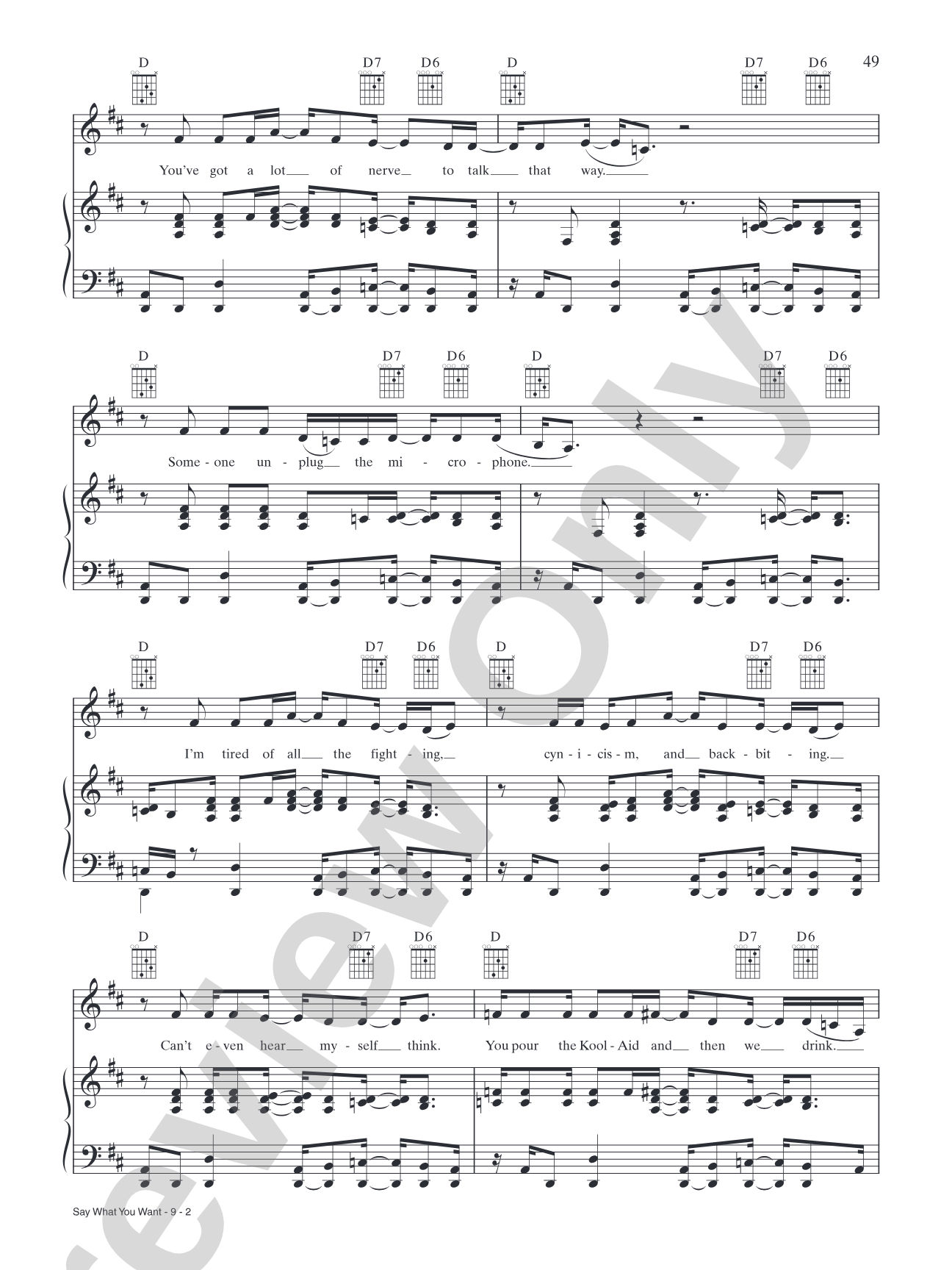

Say What You Want: Piano/Vocal/Chords
Sheryl Crow
Item: 00-XS-0000125
$5.99
Pickup currently not available
Related Items
Summer Day: Piano/Vocal/Chords |
$5.99
|
View | |
Our Love is Fading: Piano/Vocal/Chords |
$5.99
|
View | |
Eye To Eye: Piano/Vocal/Chords |
$9.99
|
View | |
Long Road Home: Piano/Vocal/Chords |
$5.99
|
View | |
Peaceful Feeling: Piano/Vocal/Chords |
$5.99
|
View | |
100 Miles From Memphis: Piano/Vocal/Chords |
$5.99
|
View | |
Roses and Moonlight: Piano/Vocal/Chords |
$5.99
|
View | |
Stop: Piano/Vocal/Chords |
$4.99
|
View |
Description
Alfred is proud to present the matching piano/vocal/guitar songbook to 100 Miles From Memphis, Sheryl Crow's seventh studio release. Every arrangement plays beautifully and captures Crow's signature blend of rock, folk, country, and pop.


Say What You Want: Piano/Vocal/Chords isn't in MakeMusic Cloud just yet...but it could be. Let us know you'd like to see it, and you'll help shape what comes next. In the meantime, start a free trial and dive into thousands of interactive titles your students can play along with today.
Request This Title
Tell us you want it.
Start Your Free Trial
Explore everything that's ready to play right now.
Sample Audio
No sample audio found.
Sample Video
No sample videos found.
Additional Details
Publisher:
Alfred Music
Page Count:
92
SKU:
00-XS-0000125
More about this title
About the Composer: Sheryl Crow
Sheryl Crow rose to prominence in the 1990s as a multi-instrumentalist and songwriter who refused easy categorization. Her work spans rock, country, folk, and pop with equal authenticity, and she has earned nine Grammy Awards across a career spanning three decades. As both composer and performer, Crow understands how to write vocal lines that serve the artist while remaining accessible to students and ensembles learning her work.
Crow's songwriting approach emphasizes melodic clarity and emotional directness, qualities that make her material valuable for music education. Her arrangements balance harmonic sophistication with singability, creating pieces that challenge without overwhelming musicians at intermediate levels.
Why we love this
This collection captures a working artist's creative process across multiple genres and instrumental roles. The piano/vocal/guitar format gives students real flexibility in how they approach each song, whether they're learning from the keyboard part, the vocal line, or the guitar voicings. Crow's songwriting consistently rewards close listening and rewards musicians who engage with both the lyrical content and the harmonic architecture.
What to expect
These arrangements breathe with the ease of music that knows its own voice. There's a conversational quality to the piano and guitar parts, neither fighting for attention but instead creating space for the melody. The overall sound balances intimacy with the polished production of a major artist's recording.
Who it's for
This songbook serves pianists learning contemporary song arrangement, guitarists expanding into singer-songwriter repertoire, and vocalists developing their interpretive skills through professionally published arrangements. It works equally well for solo practice and for small ensemble work in studios, churches, or educational settings where pop and rock music is part of the curriculum.
How to get the most out of it
- Pay attention to the interplay between piano and guitar voicings; often one instrument carries harmonic movement while the other provides rhythmic anchoring, so clarity about who leads in each section prevents muddiness.
- Use the vocal melody as your harmonic anchor when the chord changes feel unfamiliar. Crow's melodies almost always land on strong chord tones, so tracking the vocal line will reinforce your sense of the harmonic progression.
- Adjust the tempo and dynamics based on the original recording, especially in songs that blend rock and folk elements; these styles often call for expressive rubato that sheet notation alone cannot capture.
- If you're working with a vocalist, discuss the lyrical intent and emotional arc before rehearsing harmony. Crow's phrasing often bends slightly away from the strict metric grid to serve the lyrics.
How to use it
Integrate individual songs into contemporary music projects, singer-songwriter showcases, or pop/rock electives where students encounter real professional arrangements. The 92-page scope makes it practical for semester-long study of a single album, allowing deep work with voice leading, genre conventions, and Crow's distinctive approach to song structure.
Skills your students will build
- Reading and performing piano/vocal/guitar scores simultaneously
- Understanding contemporary harmonic language in pop and rock contexts
- Interpreting vocal phrasing and emotional intent from lyrics
- Recognizing and executing genre conventions across rock, country, folk, and pop styles
- Collaborating across instrumental roles in small ensemble settings