
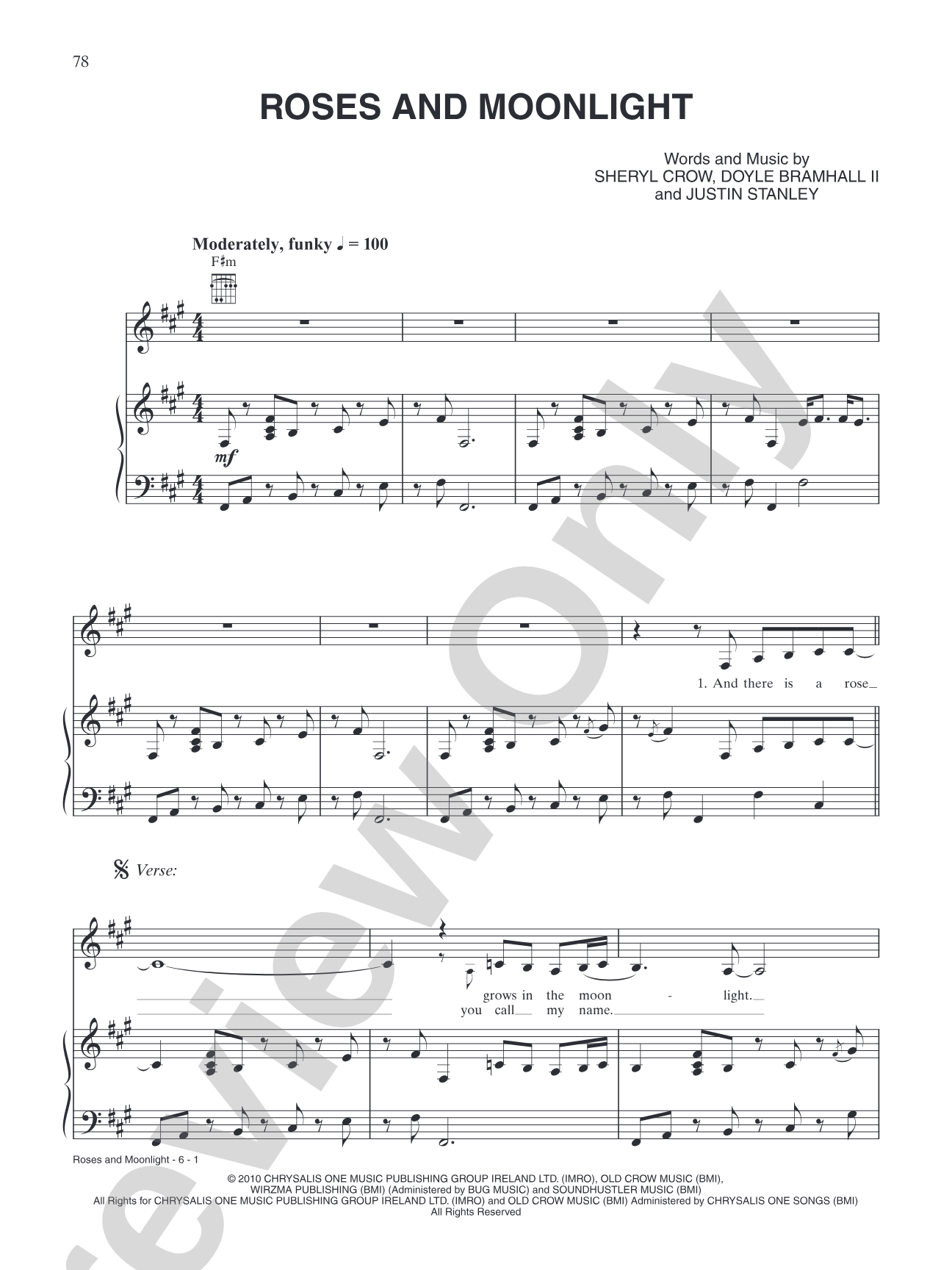
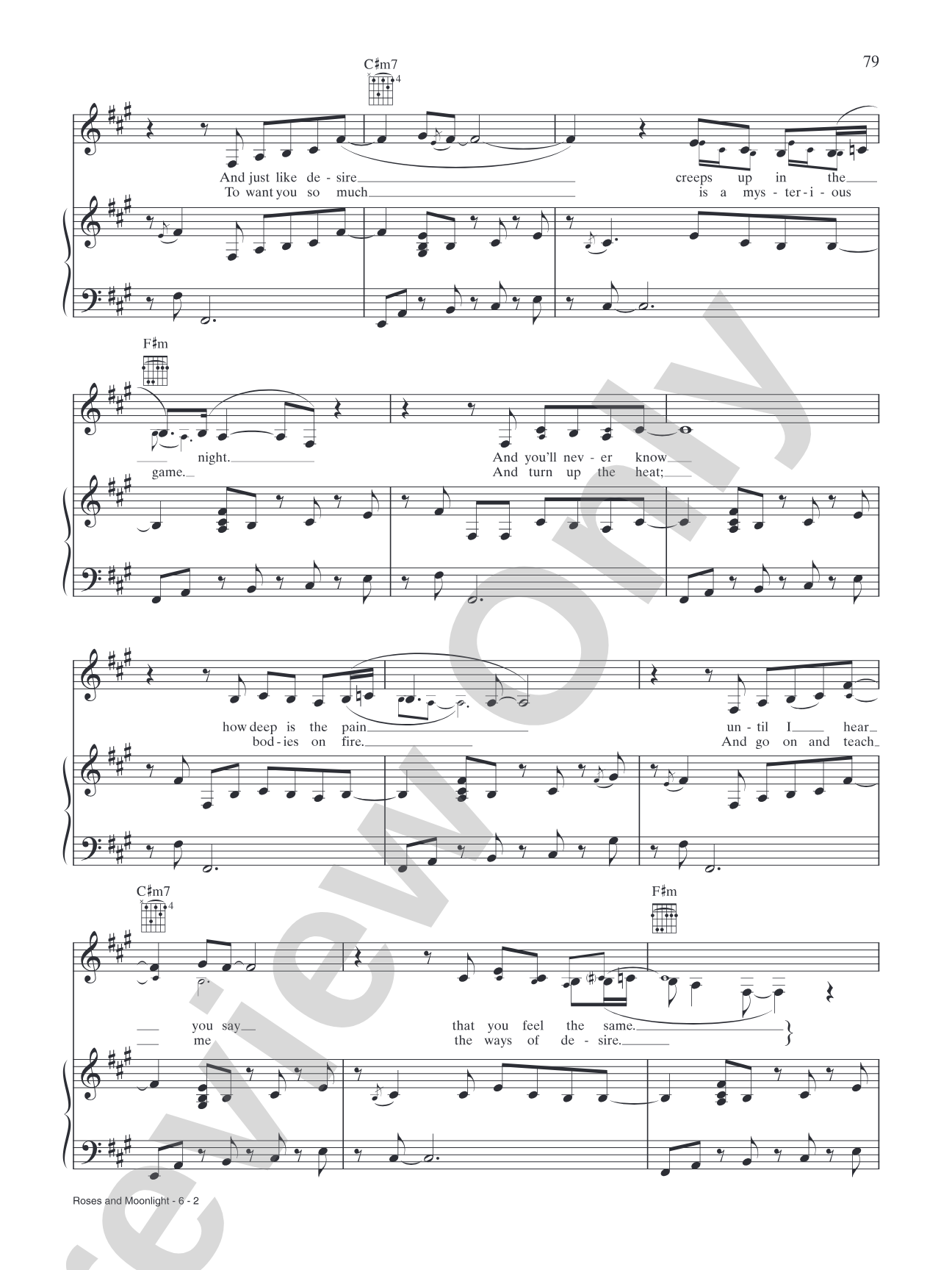

Roses and Moonlight: Piano/Vocal/Chords
Sheryl Crow
Item: 00-XS-0000128
$5.99
Pickup currently not available
Related Items
Summer Day: Piano/Vocal/Chords |
$5.99
|
View | |
Our Love is Fading: Piano/Vocal/Chords |
$5.99
|
View | |
Eye To Eye: Piano/Vocal/Chords |
$9.99
|
View | |
Long Road Home: Piano/Vocal/Chords |
$5.99
|
View | |
Say What You Want: Piano/Vocal/Chords |
$5.99
|
View | |
Peaceful Feeling: Piano/Vocal/Chords |
$5.99
|
View | |
100 Miles From Memphis: Piano/Vocal/Chords |
$5.99
|
View | |
Stop: Piano/Vocal/Chords |
$4.99
|
View |
Description
Alfred is proud to present the matching piano/vocal/guitar songbook to 100 Miles From Memphis, Sheryl Crow's seventh studio release. Every arrangement plays beautifully and captures Crow's signature blend of rock, folk, country, and pop.


Roses and Moonlight: Piano/Vocal/Chords isn't in MakeMusic Cloud just yet...but it could be. Let us know you'd like to see it, and you'll help shape what comes next. In the meantime, start a free trial and dive into thousands of interactive titles your students can play along with today.
Request This Title
Tell us you want it.
Start Your Free Trial
Explore everything that's ready to play right now.
Sample Audio
No sample audio found.
Sample Video
No sample videos found.
Additional Details
Publisher:
Alfred Music
Page Count:
92
SKU:
00-XS-0000128
More about this title
About the Composer: Sheryl Crow
Sheryl Crow rose to prominence in the 1990s as a multi-instrumentalist and vocalist who refused easy categorization. Her work spans rock, country, folk, and pop, often within a single song, earning her nine Grammy Awards and a reputation for artistic integrity across three decades of recording and performing.
As a composer and bandleader, Crow brings sophisticated arrangements and genre-blending sensibilities to her songwriting. Her willingness to collaborate with other musicians (as seen in 100 Miles From Memphis) reflects her generosity as a creative partner and her commitment to pushing her own artistry forward.
Why we love this
This collection captures the mature artistry of a boundary-crossing vocalist-composer at full command of her craft. Guitar players and singers gain authentic arrangements that honor the original recordings while remaining playable in small ensemble or solo settings, and pianists get the harmonic architecture that makes Crow's songwriting so memorable.
What to expect
These songs inhabit the space between introspection and resilience, blending stripped-down folk sensitivity with the polish of contemporary pop-rock production. Harmonies often surprise with their richness, while melodies remain direct and memorable, creating arrangements that feel both sophisticated and singable.
Who it's for
Singers preparing recitals or coffeehouses will find deeply rewarding material that showcases vocal storytelling and emotional range. Pianist-accompanists and guitarist-vocalists benefit from complete arrangements that translate Crow's studio production into formats suitable for intimate performance settings.
How to get the most out of it
- Study the original recordings alongside the charts to absorb Crow's phrasing and vocal nuance. Her rhythmic placement often sits slightly behind the beat in a way that feels conversational rather than metronomic.
- Balance the vocal line with piano and guitar textures rather than having the piano shadow every vocal move. These arrangements work best when accompaniment players create space for the singer to lead.
- Pay attention to key changes and modulations between songs. Planning your transpositions ahead will keep the set flowing smoothly and prevent fatigue across the full 92-page collection.
- Approach the rock and country elements with the same harmonic sophistication as the folk passages. Crow's music resists genre boundaries, so commit fully to each song's emotional center rather than leaning on stylistic shortcuts.
How to use it
This collection works beautifully in a contemporary singer's recital, especially paired with other singer-songwriter material from the same era. You might also draw from it for cabaret-style programming or as repertoire for a jazz vocal combo seeking accessible but artistically substantial pop-rock standards.
Skills your students will build
- Reading and interpreting chord charts in pop and rock idioms
- Balancing vocal phrasing with piano and guitar accompaniment
- Understanding genre blending (rock, country, folk, pop within single compositions)
- Managing key changes and modulations across a complete song cycle
- Developing interpretive nuance in contemporary singer-songwriter material