
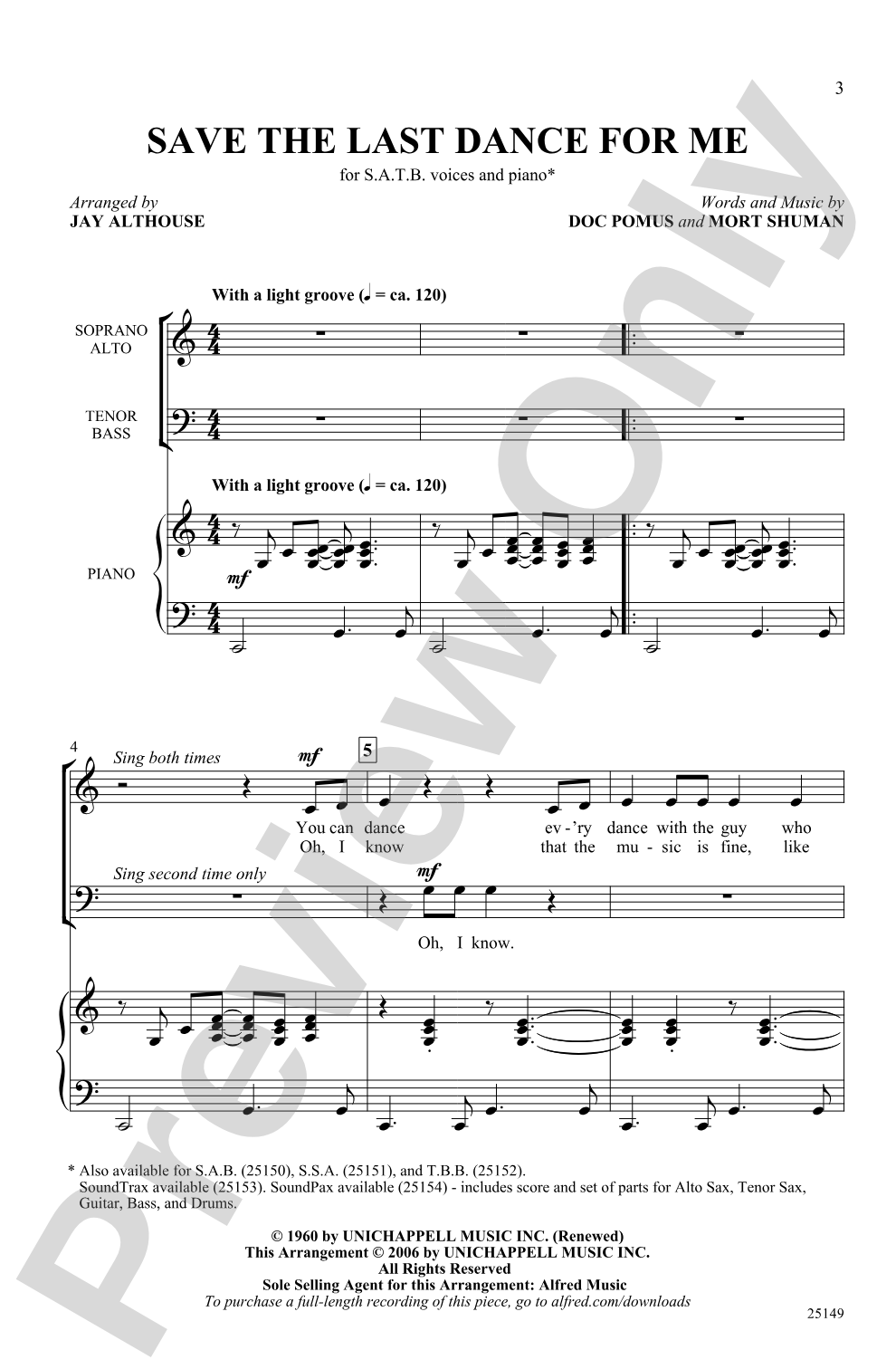
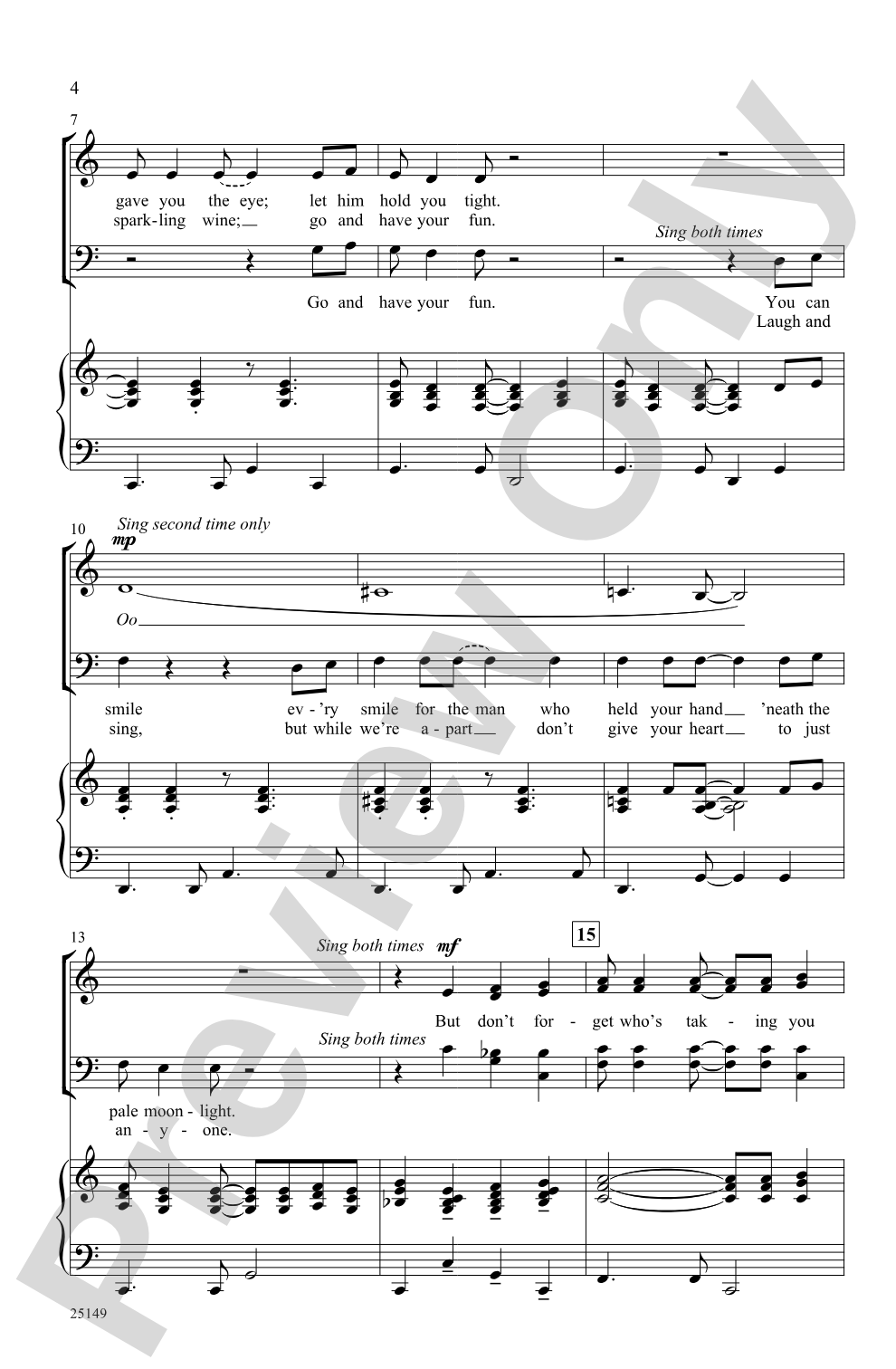

Save the Last Dance for Me: SATB Choral Octavo
By Doc Pomus and Mort Shuman / arr. Jay Althouse
Item: 00-PO-0006557
$2.25
Minimum order quantity: 20 copies
Pickup currently not available
Related Items
Save the Last Dance for Me: SoundTrax Digital Audio Download |
$22.95
|
View | |
Save the Last Dance for Me: SAB Choral Octavo |
$1.75
|
View | |
Save the Last Dance for Me: Choral SoundPax |
$25.00
|
View | |
Save the Last Dance for Me: SATB Choral Octavo |
$2.25
|
View | |
Save the Last Dance for Me: SAB Choral Octavo |
$1.75
|
View | |
Save the Last Dance for Me: SSA Choral Octavo |
$1.75
|
View | |
Save the Last Dance for Me: TTB Choral Octavo |
$1.75
|
View | |
Save the Last Dance for Me: Choral Octavo SoundTrax CD |
$22.95
|
View | |
Save the Last Dance for Me: Choral SoundPax |
$25.00
|
View |
Description
This pop hit from 1960 (the only #1 hit for the group, The Drifters) has been recorded by dozens of artists from country to r&b, including Dolly Parton and Michael Bublé. Jay's new arrangement has a light, almost Latin groove, a fresh new approach for a pop classic.


Save the Last Dance for Me: SATB Choral Octavo isn't in MakeMusic Cloud just yet...but it could be. Let us know you'd like to see it, and you'll help shape what comes next. In the meantime, start a free trial and dive into thousands of interactive titles your students can play along with today.
Request This Title
Tell us you want it.
Start Your Free Trial
Explore everything that's ready to play right now.
Sample Audio
1
Audio File
--:--
0:00
0:00
Sample Video
No sample videos found.
Additional Details
Series:
Alfred Pop Choral Series
Publisher:
Alfred Music
Page Count:
12
SKU:
00-PO-0006557
More about this title
About the Composer: Doc Pomus
Doc Pomus (1929-1991) was a lyricist and songwriter who shaped the sound of 1950s and 1960s popular music despite being blind from birth. Working primarily with composer Mort Shuman, Pomus wrote lyrics for dozens of hits recorded by artists across multiple genres, from The Drifters to Elvis Presley. His gift for crafting emotionally direct, singable melodies paired with universally relatable lyrics made his songs endure across generations and recording styles.
Pomus's work reflects a deep understanding of what makes a song stick in memory and in the heart. He approached songwriting as craft first, creating narratives and hooks that work whether performed as a doo-wop number, a country ballad, or a contemporary arrangement. His influence on American popular song remains visible in how songwriters today approach character and emotional clarity.
Why we love this
A perennial crowd-pleaser that your choir will genuinely enjoy learning and performing. Althouse's Latin-tinged groove freshens up a familiar tune without stripping away the warmth that makes this song resonate with audiences of all ages, and the accessibility of SATB voicing means you can program it confidently across ability levels.
What to expect
Smooth and inviting, with just enough rhythmic lift to keep things modern and fresh. The Latin undertones bring warmth and sophistication to a melody that audiences will recognize and love, while the pop sensibility keeps the energy approachable and genuine.
Who it's for
Any SATB choir seeking a contemporary-sounding pop arrangement that connects instantly with audiences. This works equally well for high school choirs, community groups, and collegiate ensembles looking for a solid programming piece that requires solid musicianship without excessive technical demands.
How to get the most out of it
- Establish the Latin feel clearly from the rhythm section. The groove sits between a steady pop pulse and something lighter, so lock the accompaniment with your singers early in rehearsal to find where that pocket lives.
- Keep the tone warm and connected through the melody line. This song lives in sincerity, not flash, so encourage singers to shape phrases with gentle breath support rather than dramatic dynamics.
- Balance the parts so the alto and tenor lines remain audible without overpowering the melody. Althouse's arrangement likely gives supporting harmony its own character, so listen for how those voices tell the story alongside the sopranos.
- Lean into the ease of the piece. The strength of this arrangement is that it feels effortless and fun to sing, not labored. If rehearsal feels strained, something in tempo, blend, or articulation needs to relax.
How to use it
Program this as a closer on a pop or variety concert, where its familiarity and charm can send audiences home with a smile. It also pairs beautifully alongside other classic pop standards or contemporary arrangements, creating a bridge between nostalgia and current musical taste.
Skills your students will build
- Balancing melody and harmony in pop voicing
- Singing with rhythmic precision in a groove-based context
- Shaping phrasing for lyrical storytelling in secular repertoire
- Blending voices while maintaining individual part independence