
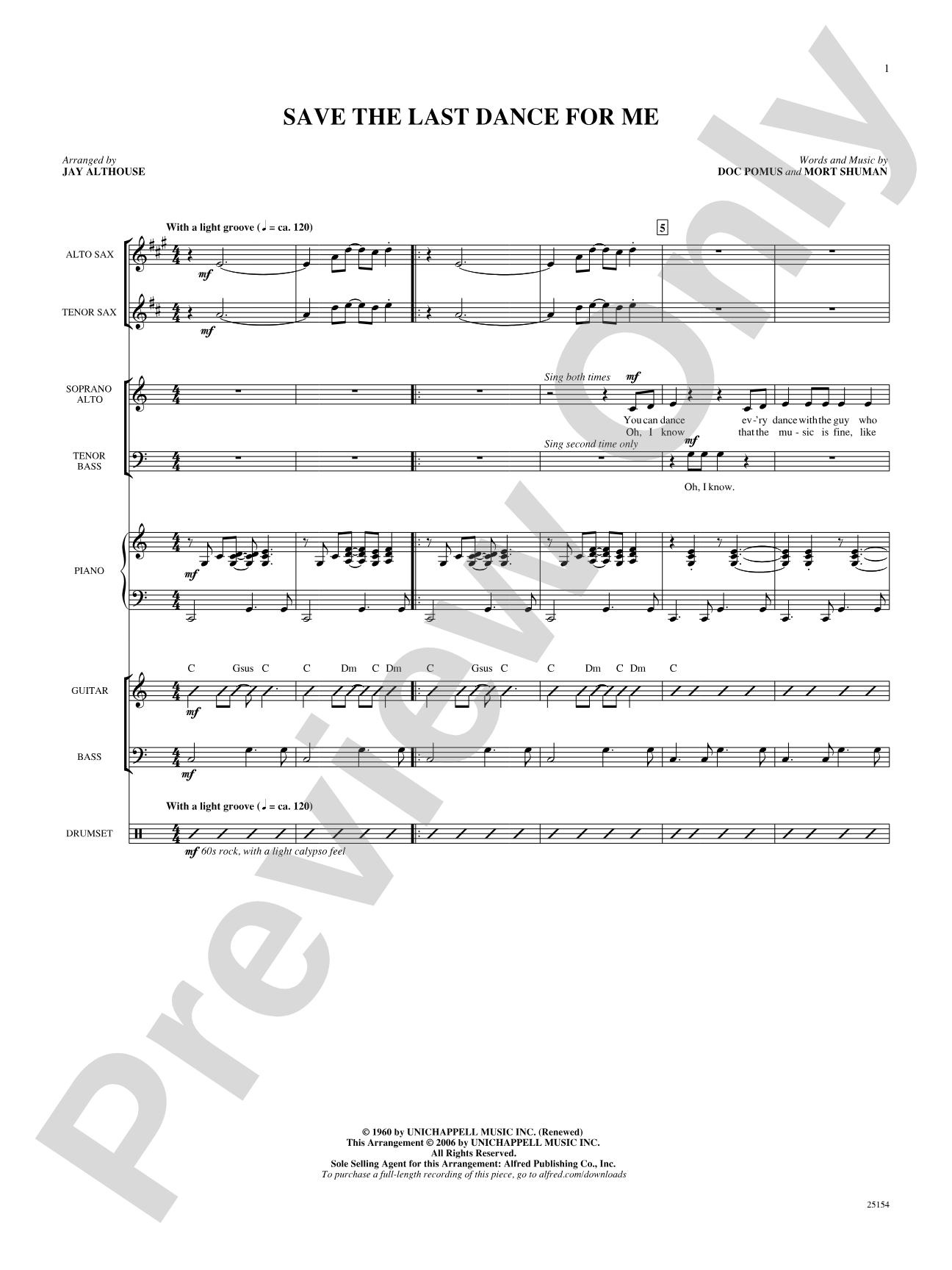
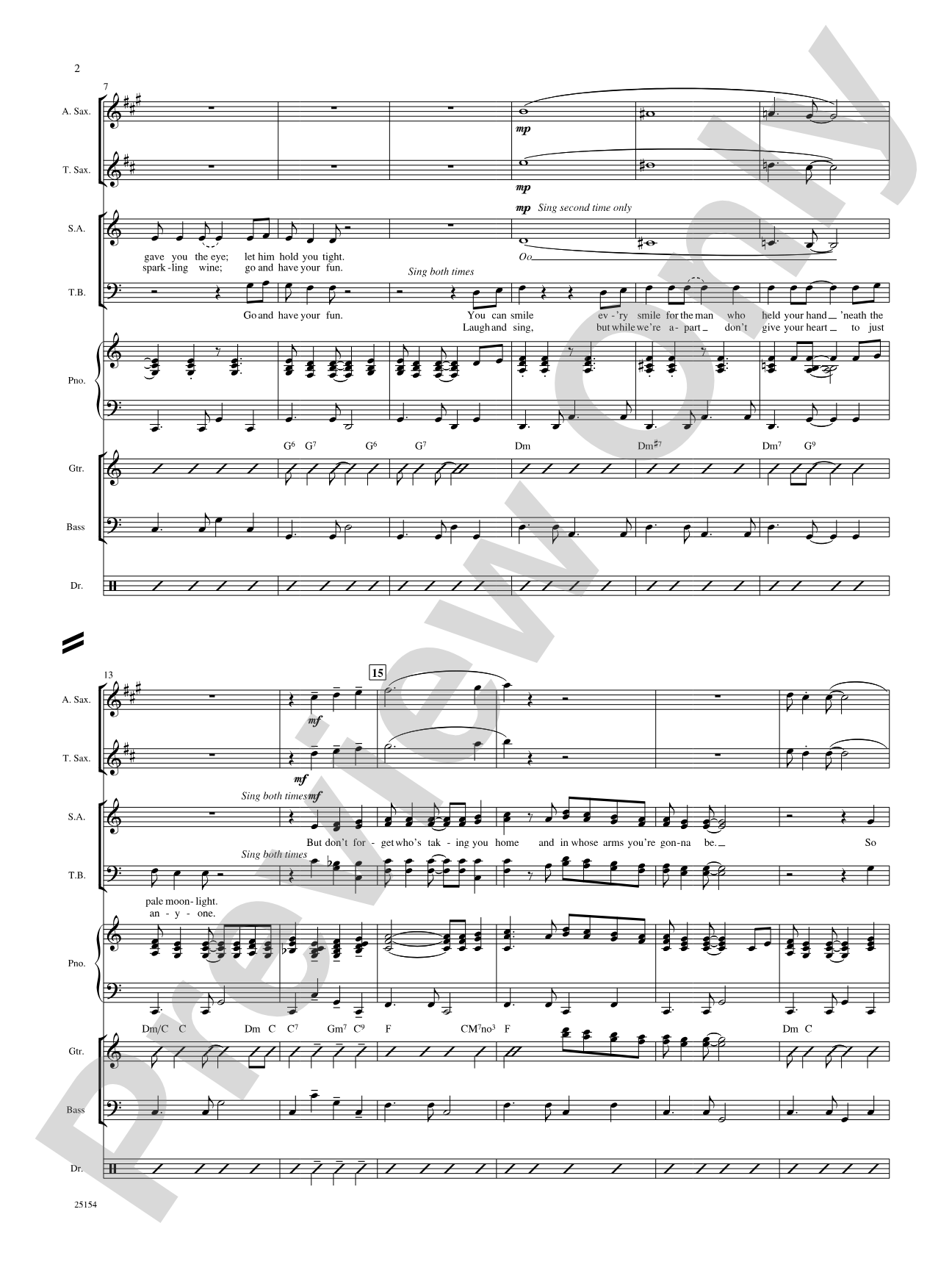
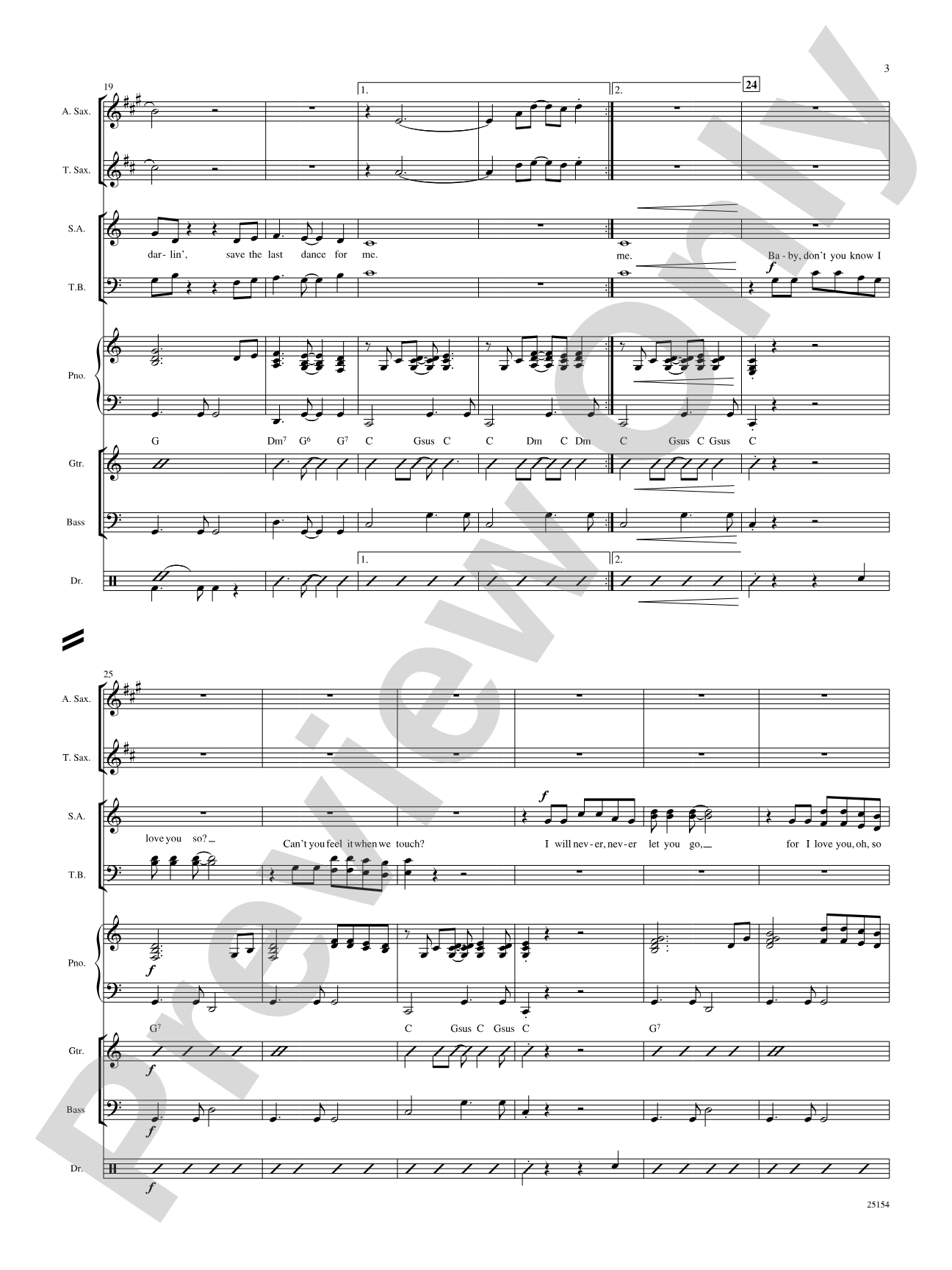
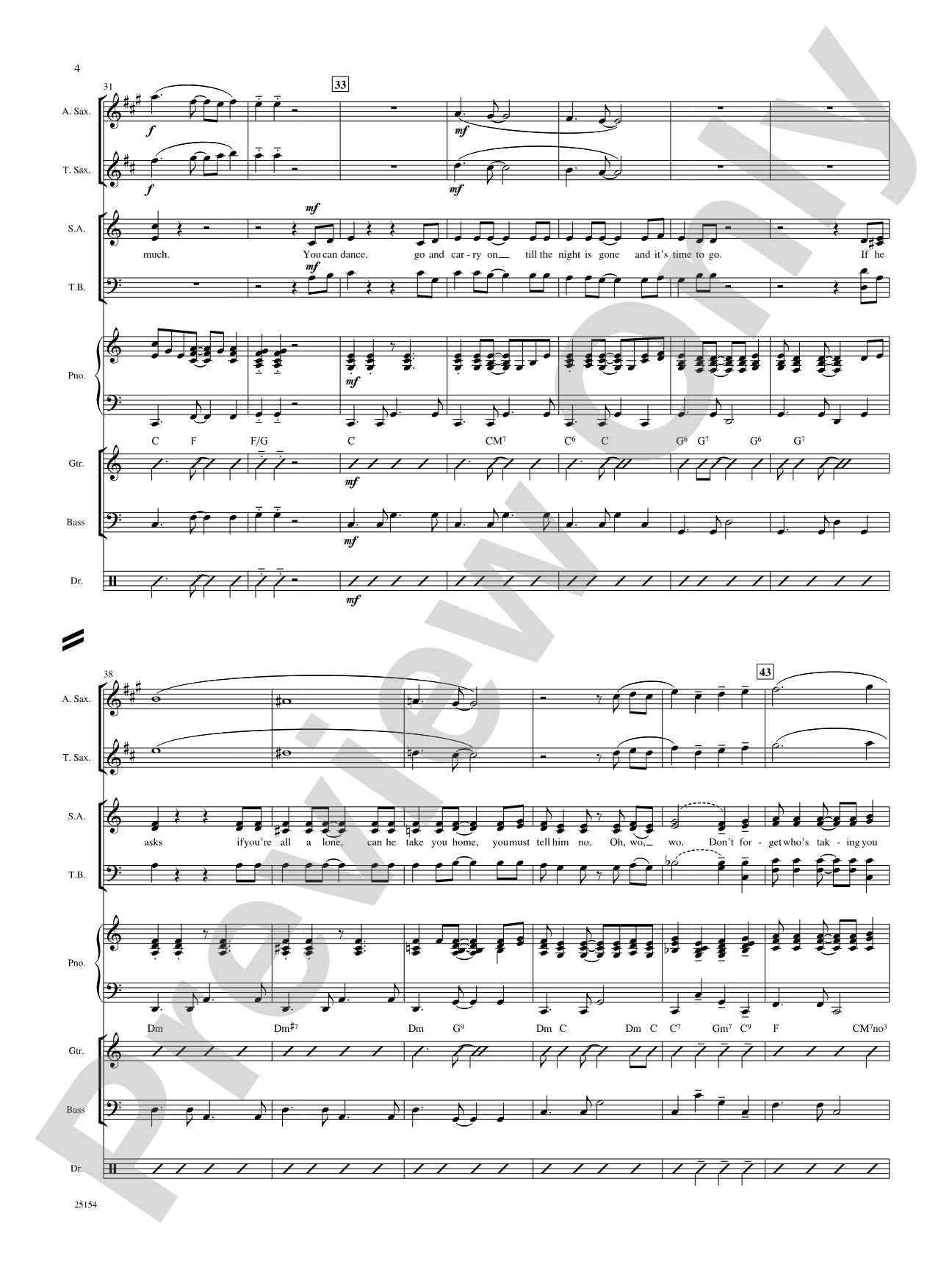
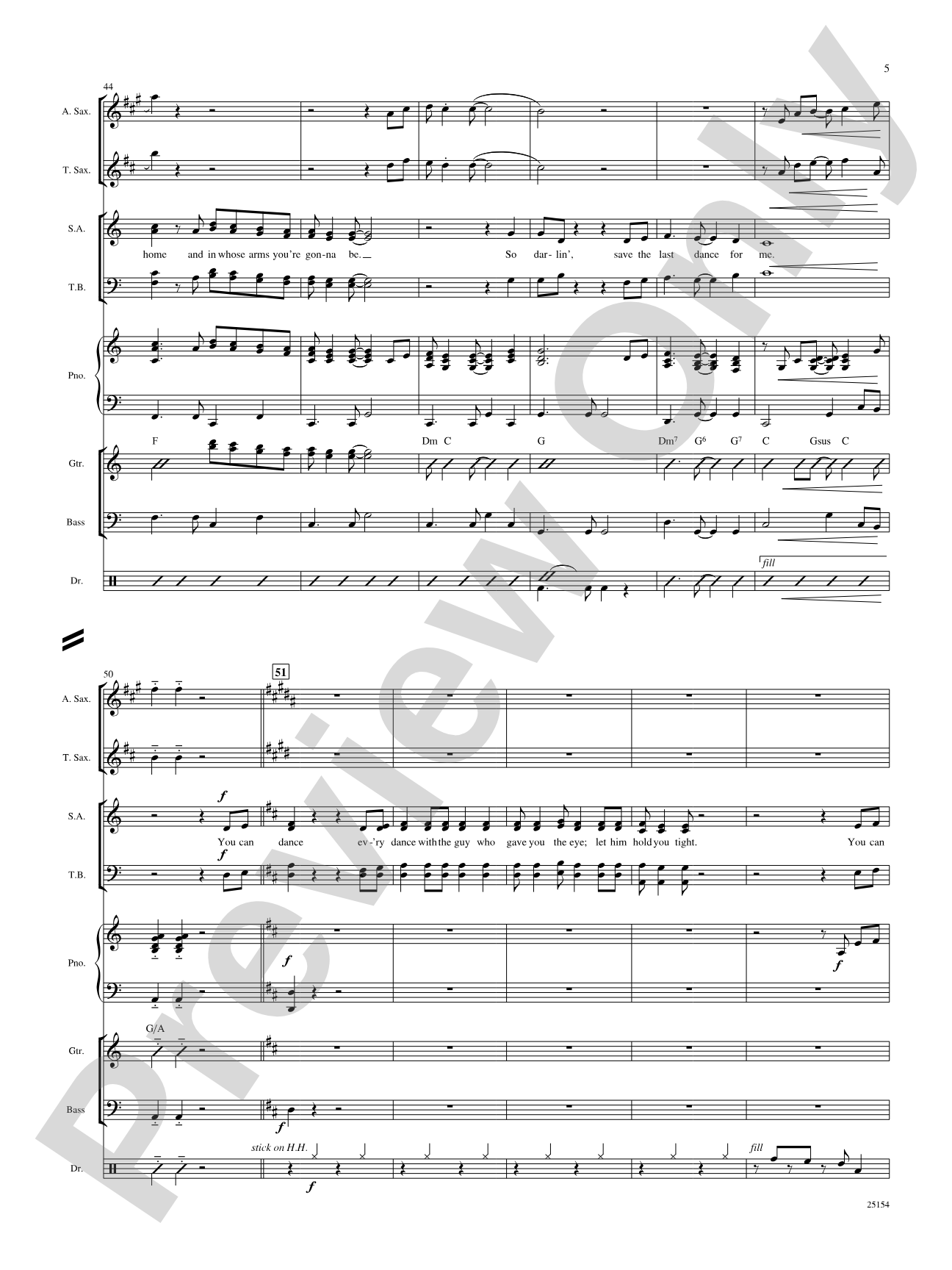
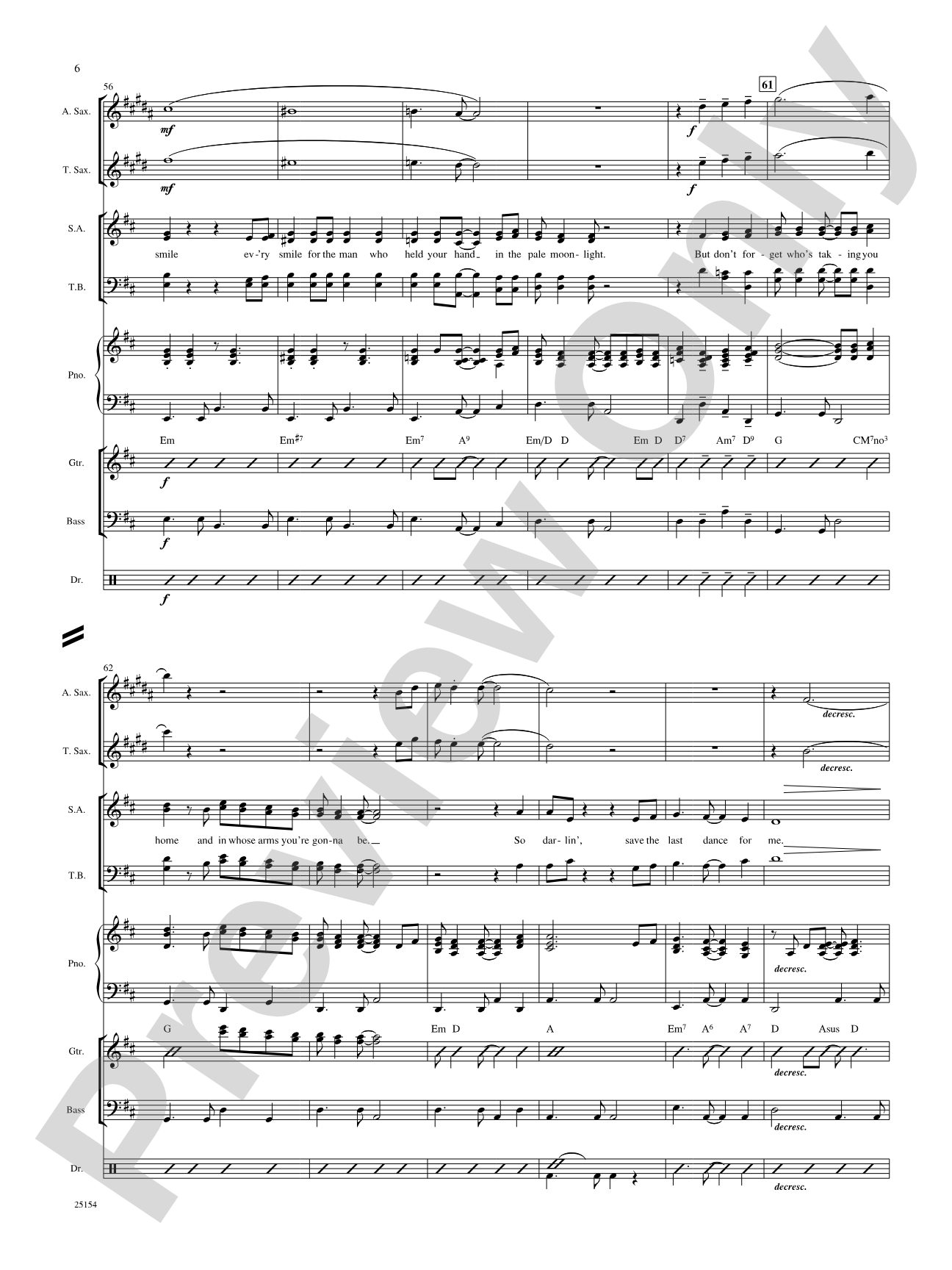
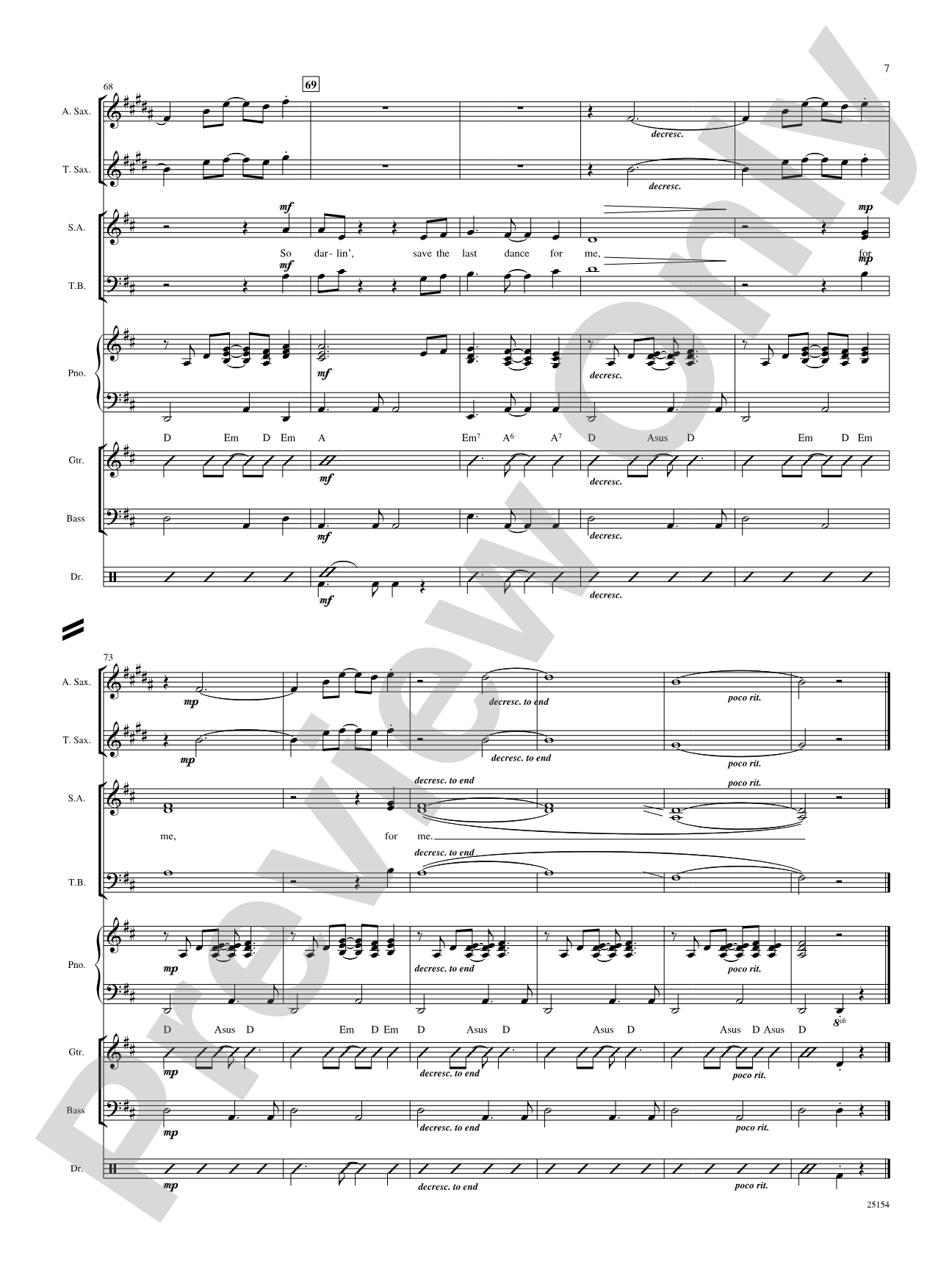


Save the Last Dance for Me: Choral SoundPax
By Doc Pomus and Mort Shuman / arr. Jay Althouse
Item: 00-PK-0001036

$25.00
One moment…
Related Items
Save the Last Dance for Me: SoundTrax Digital Audio Download |
$22.95
|
View | |
Save the Last Dance for Me: SATB Choral Octavo |
$2.25
|
View | |
Save the Last Dance for Me: SAB Choral Octavo |
$1.75
|
View | |
Save the Last Dance for Me: SATB Choral Octavo |
$2.25
|
View | |
Save the Last Dance for Me: SAB Choral Octavo |
$1.75
|
View | |
Save the Last Dance for Me: SSA Choral Octavo |
$1.75
|
View | |
Save the Last Dance for Me: TTB Choral Octavo |
$1.75
|
View | |
Save the Last Dance for Me: Choral Octavo SoundTrax CD |
$22.95
|
View | |
Save the Last Dance for Me: Choral SoundPax |
$25.00
|
View |
Description
Parts included are: a. sax., t. sax., rhy.


Don't just read it, hear it, play along with it, and watch your students grow with it. In MakeMusic Cloud, Save the Last Dance for Me: Choral SoundPax comes alive with professional accompaniment, adjustable tempo, and built-in practice tools that turn solo practice into real progress.
Open in the Player
Jump straight in and assign it today.
Start Your Free Trial
Open this title and explore the full library in minutes.
Sample Audio
1
Audio File
--:--
0:00
0:00
Sample Video
No sample videos found.
Additional Details
Series:
Alfred Pop Choral Series
Publisher:
Alfred Music
Page Count:
20
SKU:
00-PK-0001036
Instrumentation:
a. sax., t. sax., rhy.
More about this title
About the Composer: Doc Pomus
Doc Pomus (1920-1967) was a prolific songwriter who shaped the sound of 1950s and 1960s popular music despite being blind from birth. Writing primarily with Mort Shuman, he penned dozens of hits that became standards, including "Lonely Avenue," "Young Blood," and "Save the Last Dance for Me." His melodies were direct and memorable; his lyrics captured the emotional texture of teenage romance with authenticity that resonated across generations.
Pomus's influence on popular songwriting extended beyond chart success. His songs have been recorded by artists spanning jazz, R&B, rock, and pop traditions, and they remain staples of the American songbook. For music educators, his work offers accessible, singable material with genuine emotional depth.
Why we love this
Jay Althouse's arrangement strips this classic to its emotional core while keeping the energy intact for singers. The instrumentation (alto and tenor saxophones plus rhythm) anchors the piece without overwhelming young voices, and the recorded accompaniment gives directors a flexible rehearsal tool.
What to expect
The piece radiates warmth and nostalgia without feeling dated. The saxophone colors evoke a 1950s slow dance, while the straightforward melody and harmony let voices shine without technical demands. There's an easy elegance here; singers feel accomplished when performing it well.
Who it's for
This arrangement suits choirs that want to program accessible, recognizable music with enough instrumental color to engage ensemble musicians. It works equally well for middle school choirs looking for a polished pop number or high school groups seeking a shorter feature that doesn't require extensive rehearsal.
How to get the most out of it
- Balance the saxophone lines carefully during the opening; they should frame the vocal entrance rather than compete with it.
- Let the rhythm section lock in before bringing singers in, so the ensemble can hear the groove clearly during rehearsals.
- Shape the vocal phrases to match the natural speech rhythm of the lyrics; this song lives in conversational phrasing, not operatic legit.
- Use the recorded accompaniment strategically for sectional work, pulling it away in rehearsal so singers develop independence before the final run-throughs.
How to use it
Consider this for a spring concert or pops showcase where you want a mood shift toward lighter, more lyrical material. It also serves as a strong closer for an evening of classic American songs, or as a bridge piece between more formal choral literature and contemporary pop arrangements.
Skills your students will build
- Singing in a pop/contemporary idiom with natural phrasing over a steady beat
- Listening to and balancing with live instrumental accompaniment
- Coordinate ensemble attacks and releases with instrumental sections