
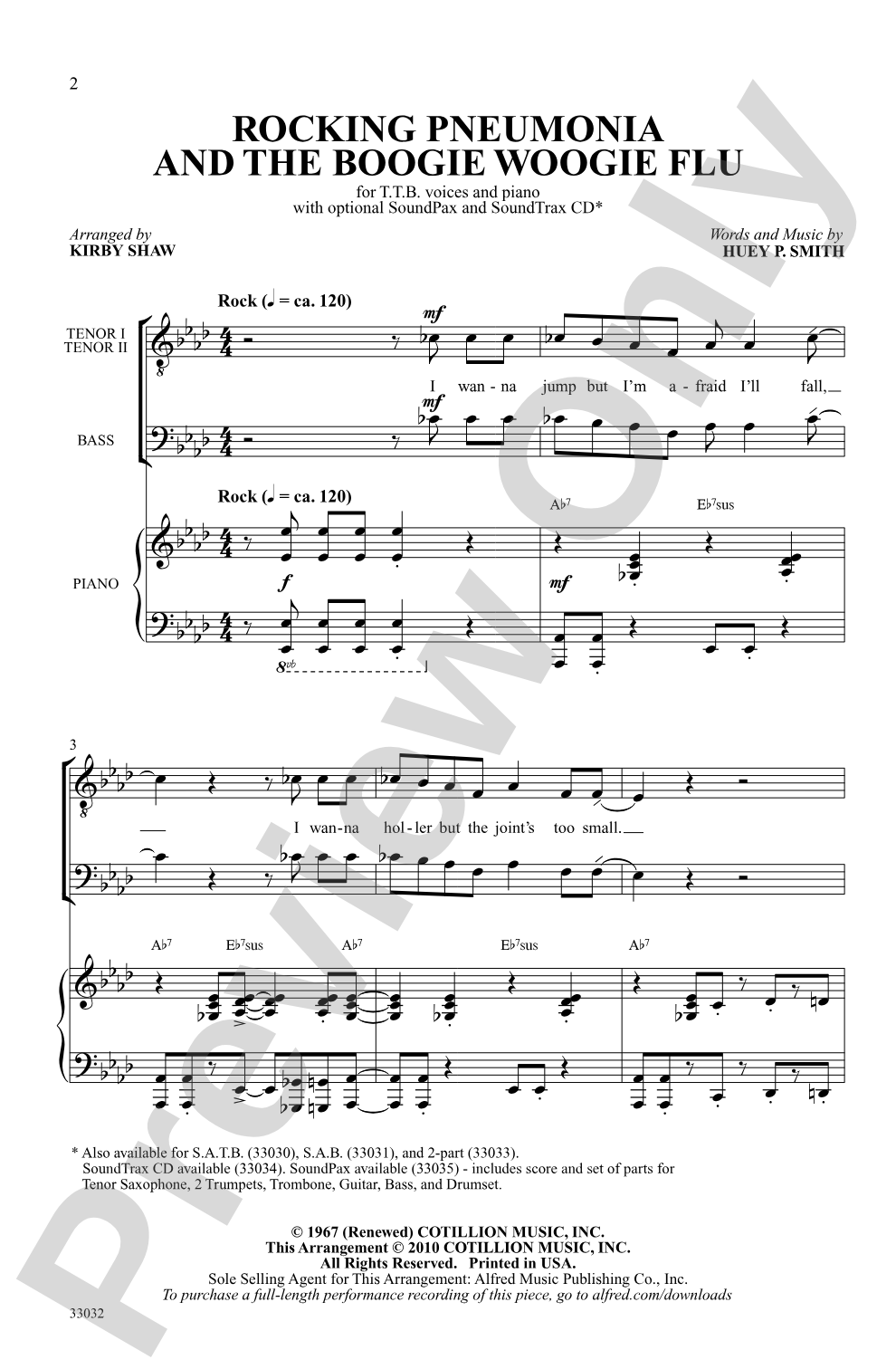
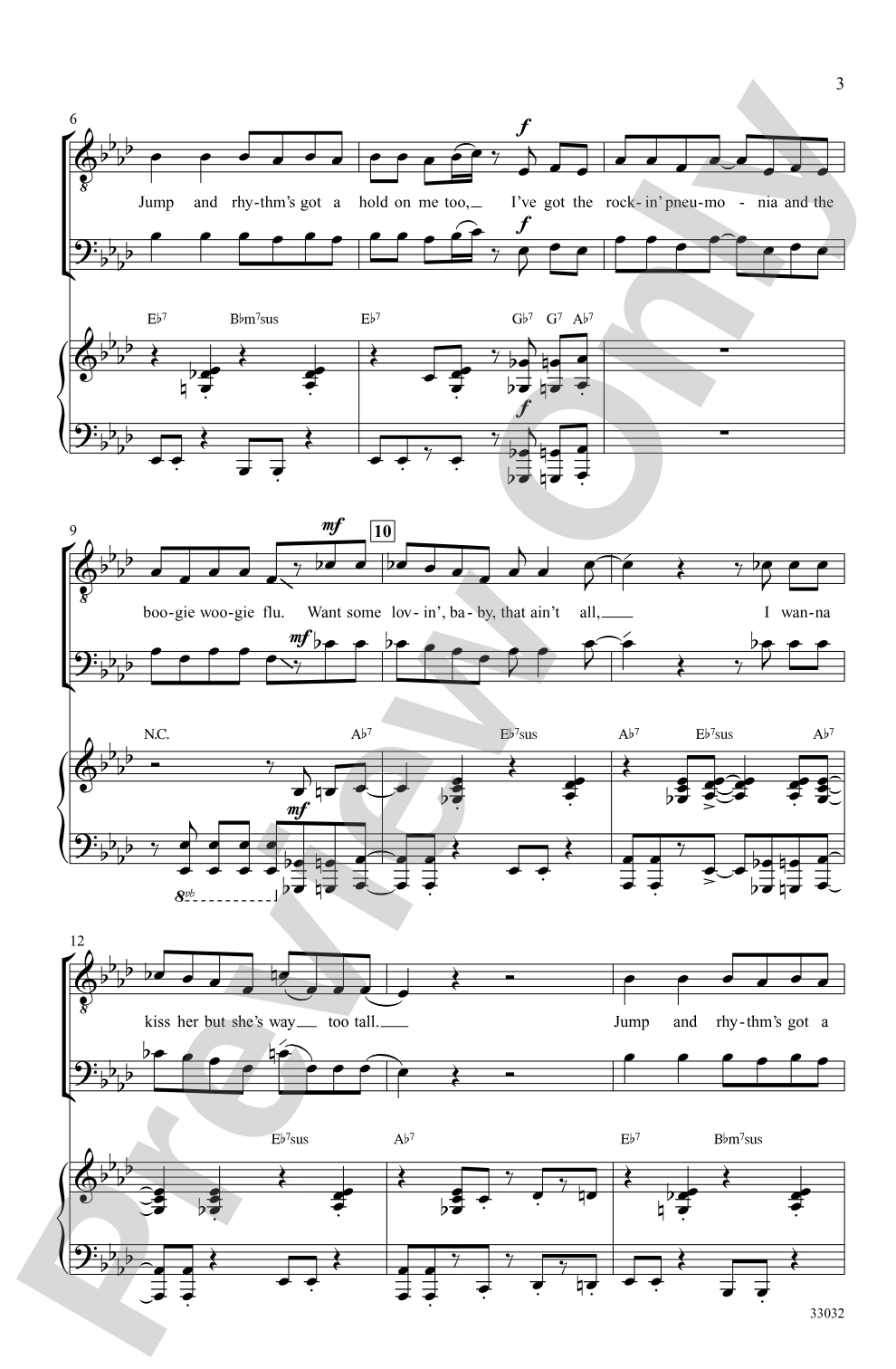

Rocking Pneumonia and the Boogie Woogie Flu: TTB Choral Octavo
Words and music by Huey P. Smith / arr. Kirby Shaw
Item: 00-PO-0008019
$1.85
Minimum order quantity: 20 copies
Pickup currently not available
Related Items
Rocking Pneumonia and the Boogie Woogie Flu: SoundTrax Digital Audio Download |
$26.99
|
View | |
Rocking Pneumonia and the Boogie Woogie Flu: SATB Choral Octavo |
$1.85
|
View | |
Rocking Pneumonia and the Boogie Woogie Flu: 2-Part Choral Octavo |
$1.85
|
View | |
Rocking Pneumonia and the Boogie Woogie Flu: Choral SoundPax |
$30.00
|
View | |
Rocking Pneumonia and the Boogie Woogie Flu: SATB Choral Octavo |
$1.85
|
View | |
Rocking Pneumonia and the Boogie Woogie Flu: SAB Choral Octavo |
$1.85
|
View | |
Rocking Pneumonia and the Boogie Woogie Flu: TTB Choral Octavo |
$1.85
|
View | |
Rocking Pneumonia and the Boogie Woogie Flu: 2-Part Choral Octavo |
$1.85
|
View | |
Rocking Pneumonia and the Boogie Woogie Flu: Choral Octavo SoundTrax CD |
$26.99
|
View | |
Rocking Pneumonia and the Boogie Woogie Flu: Choral SoundPax |
$30.00
|
View |
Description
A breakout hit for Huey "Piano" Smith and the Clowns in the 1950s, today Kirby Shaw gives us a fresh and funky blast of an arrangement to cure what ails you! Staging featured on "Shine!" movement DVD 00-34720.


Rocking Pneumonia and the Boogie Woogie Flu: TTB Choral Octavo isn't in MakeMusic Cloud just yet...but it could be. Let us know you'd like to see it, and you'll help shape what comes next. In the meantime, start a free trial and dive into thousands of interactive titles your students can play along with today.
Request This Title
Tell us you want it.
Start Your Free Trial
Explore everything that's ready to play right now.
Sample Audio
1
Audio File
--:--
0:00
0:00
Sample Video
No sample videos found.
Additional Details
Series:
Alfred Pop Choral Series
Publisher:
Alfred Music
Page Count:
8
SKU:
00-PO-0008019
More about this title
About the Composer: Huey P. Smith
Huey P. Smith emerged from New Orleans in the 1950s as a pianist and bandleader whose infectious blend of boogie woogie, rhythm and blues, and novelty humor defined a distinctive strain of early rock and roll. His work with the Clowns showcased his gift for crafting songs that were simultaneously musically sophisticated and wildly entertaining, proving that dance music could have real musicianship beneath its fun exterior.
Smith's influence rippled through generations of musicians who understood that groove and substance weren't mutually exclusive. His compositions remain valuable teaching tools for helping students grasp how rhythmic precision, strong melodic hooks, and genuine joy in performance create songs that endure.
Why we love this
Kirby Shaw's reimagining captures everything that made the original such a blast while tailoring it perfectly for TTB voicing. The arrangement sits in a comfortable range for developing singers while maintaining the infectious energy and funk that made this tune a classic; your students will feel like actual musicians the moment they nail the grooves.
What to expect
Pure, unapologetic groove with a wink and a smile. The piece swings with boogie woogie DNA running through its harmonies, and Shaw's arrangement keeps that New Orleans spirit alive while the infectious melody and syncopated rhythms pull everyone into motion. It's the kind of song that makes audiences want to move and singers want to perform.
Who it's for
TTB choirs (and flexible voicings including TB and TTBB) looking for a contemporary arrangement with genuine rhythmic and harmonic substance. Directors who want their singers to experience rock and popular music as a legitimate choral genre, not as a novelty, will find this ideal for mixed-level ensembles.
How to get the most out of it
- Lock the rhythm section (melody singers) into a confident front rhythm before layering harmonies. The groove depends on everyone landing these hits with precision.
- Emphasize the articulation patterns in the arrangement. Crisp consonants on the 'and' of the beat will tighten the funk and prevent the whole piece from sounding sluggish.
- Use the recorded accompaniment to establish the feel before students attempt a cappella passages. This piece needs a strong internal pulse, and hearing the drums and bass will anchor them.
- Explore the dynamic contrast between the verse and the rocker sections. Shaw gives you plenty of room to build energy, so take advantage of it rather than singing at one volume throughout.
How to use it
This works beautifully as a closer or a standalone concert feature that shifts the energy of your evening. It also sits naturally alongside other pop and rock standards in a contemporary choral set, or as a palate cleanser between heavier classical repertoire. The movement and staging component makes it a strong candidate for concert productions or festivals where visual engagement matters.
Skills your students will build
- Syncopated rhythm reading and execution
- Blues and boogie woogie harmonic language
- Funk-based articulation and phrasing
- Rhythmic independence within ensemble texture
- Interpretation of swing and groove notation