
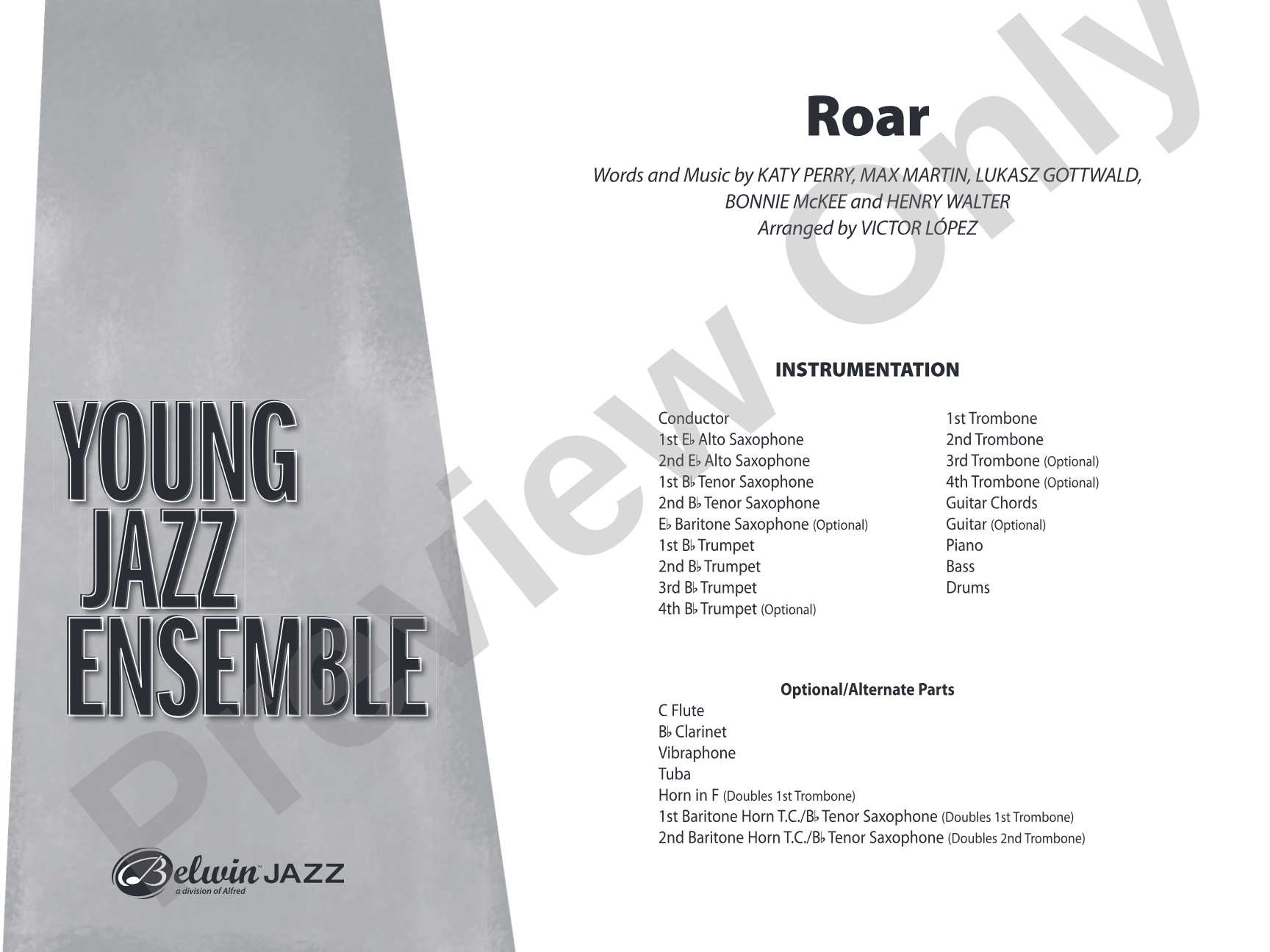
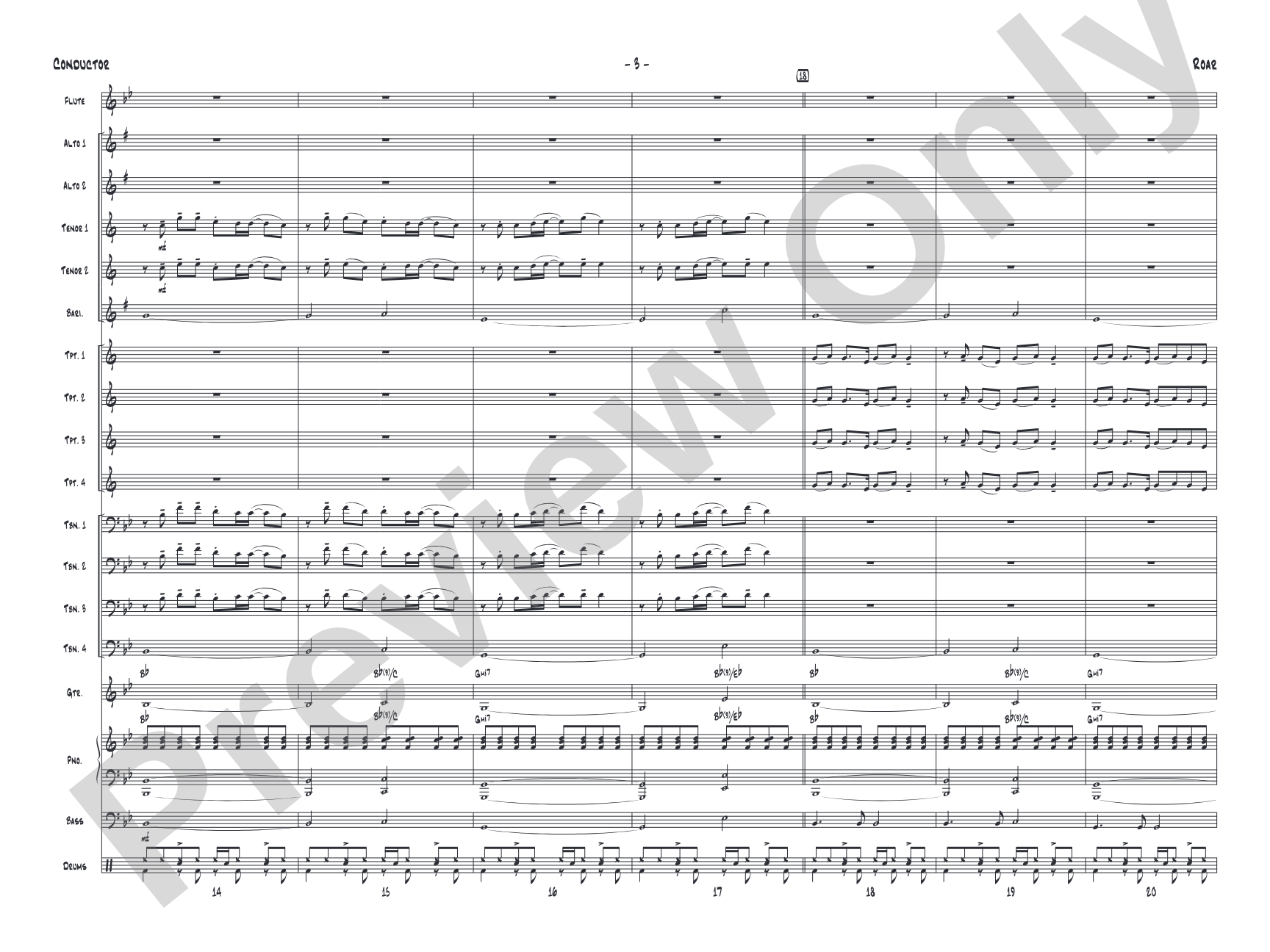
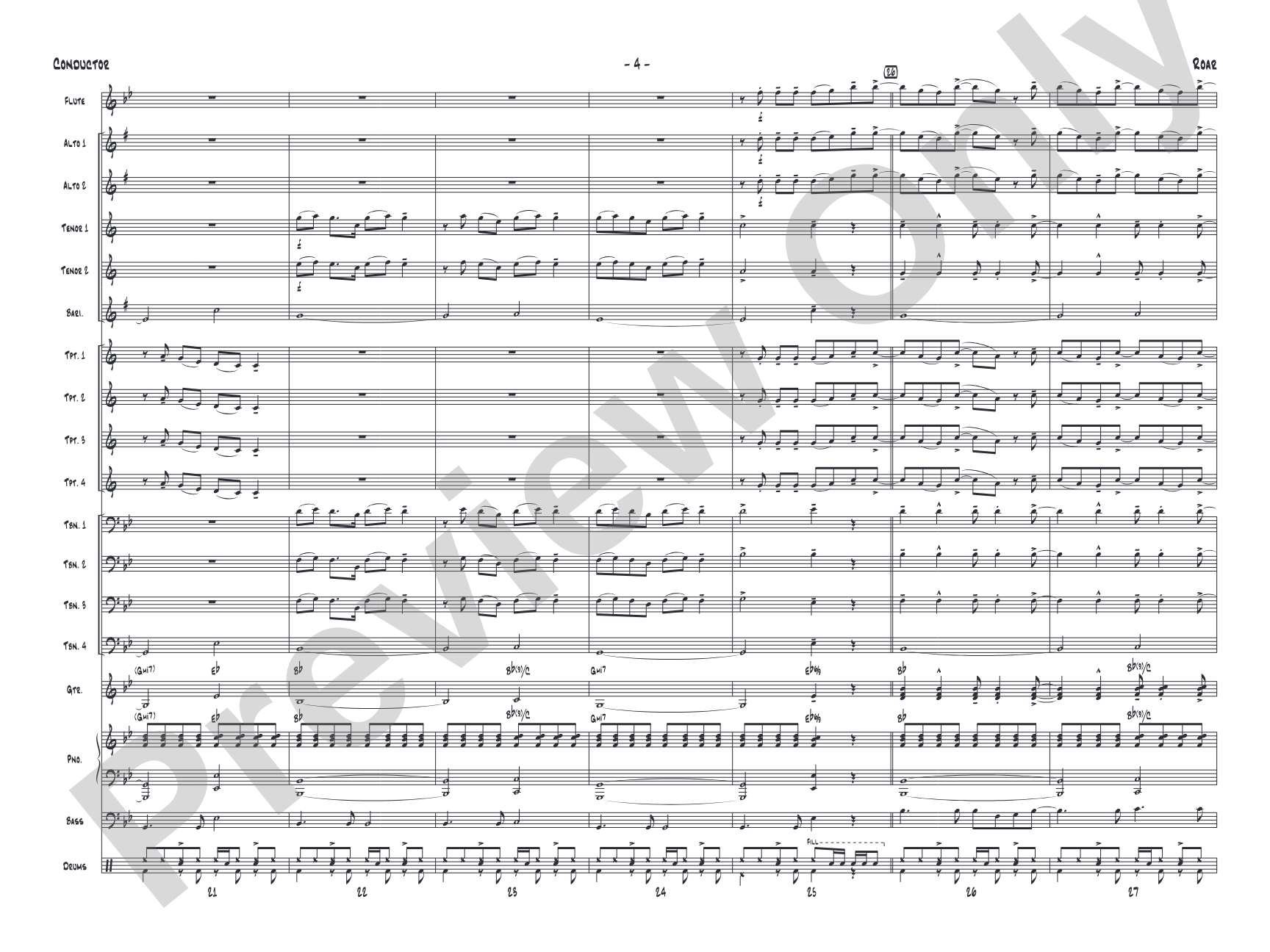
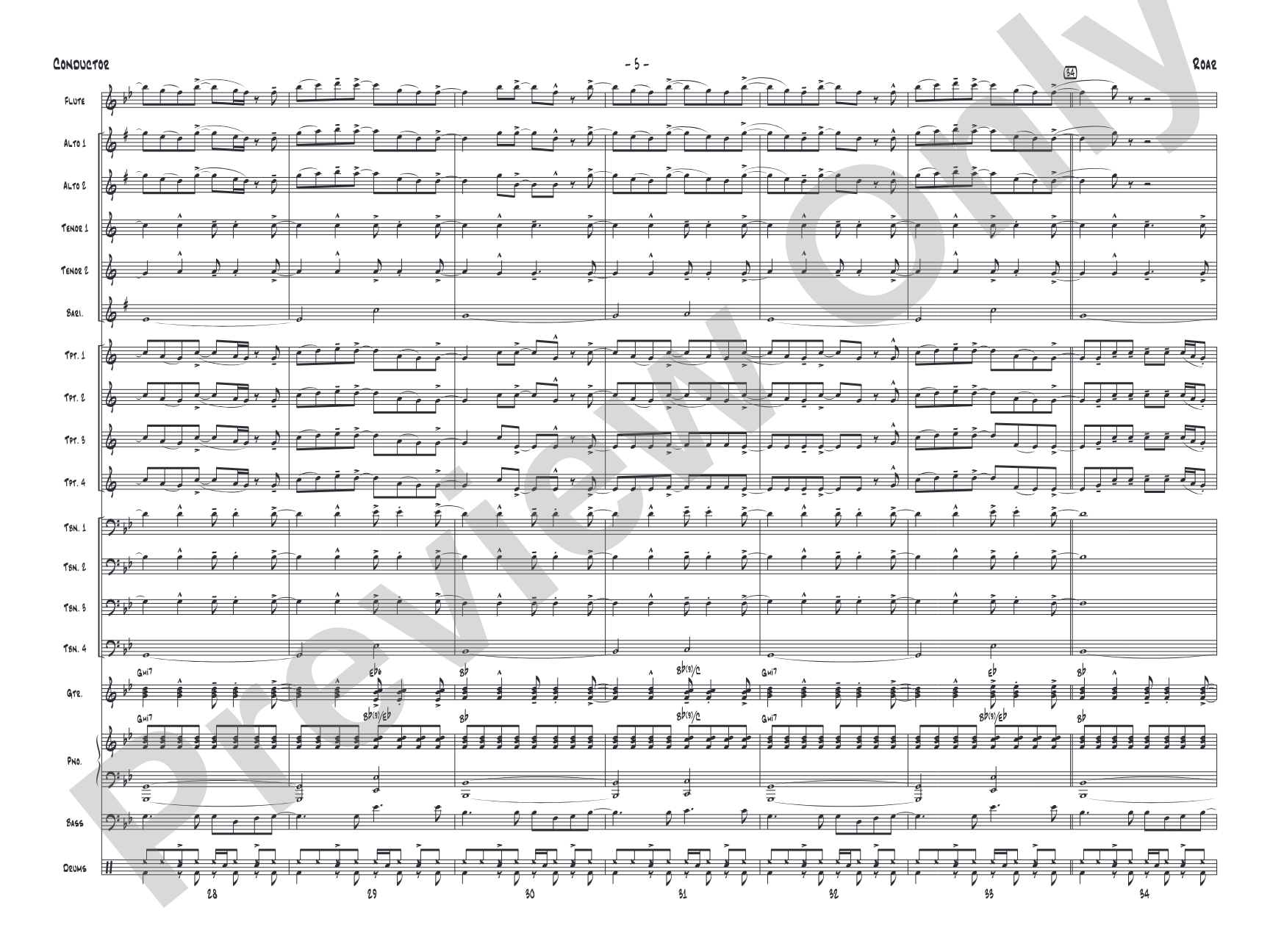
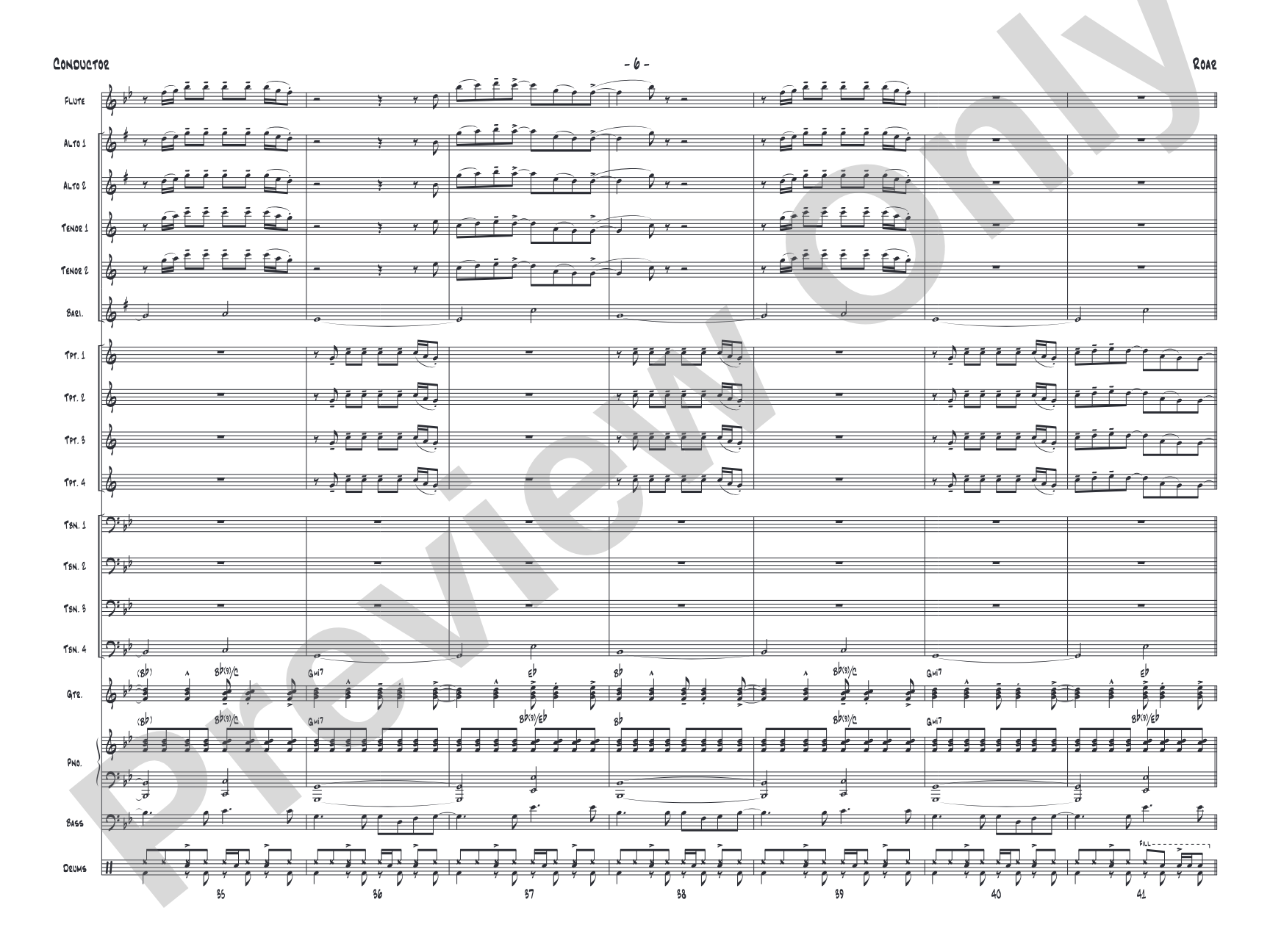
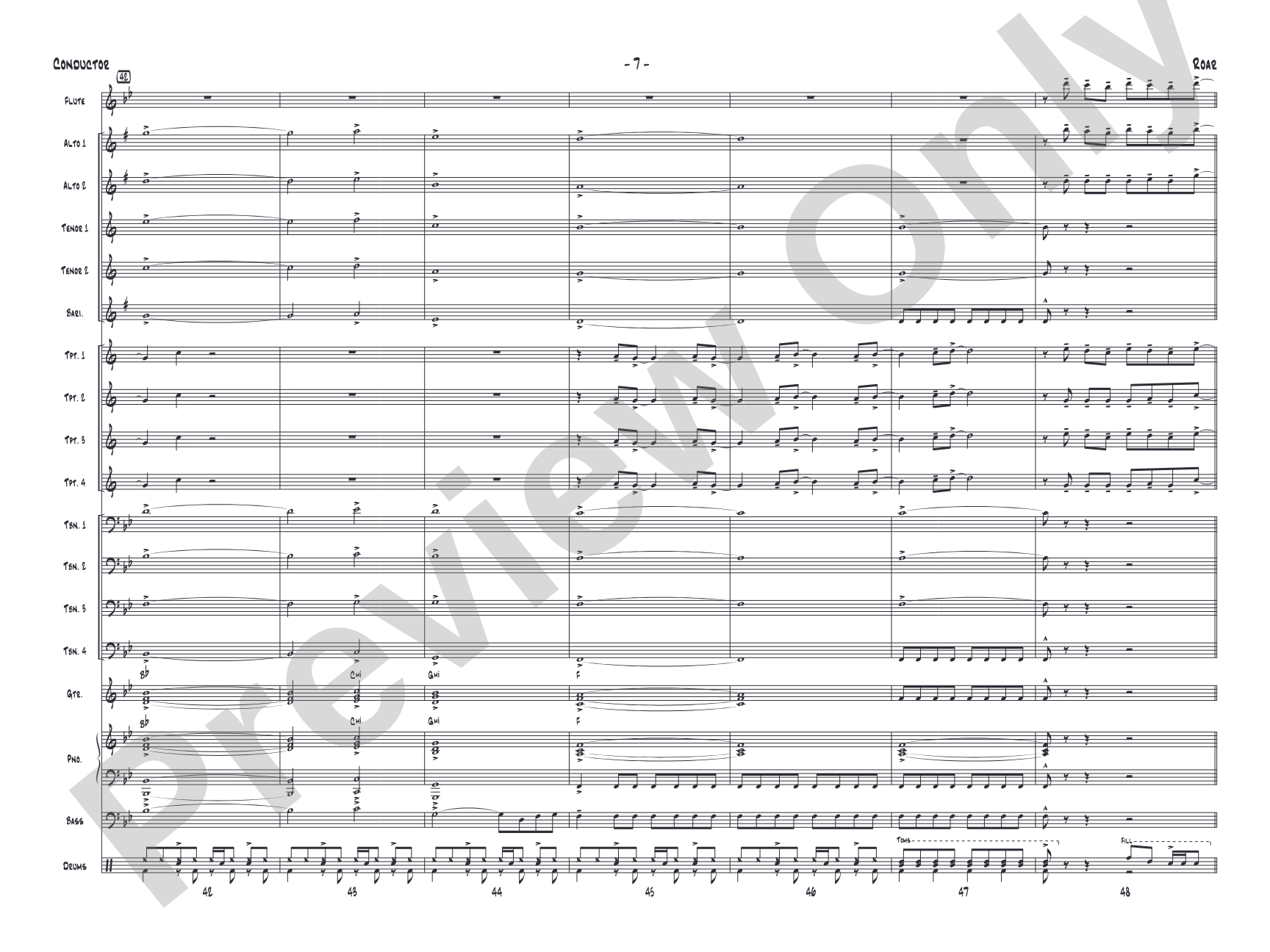
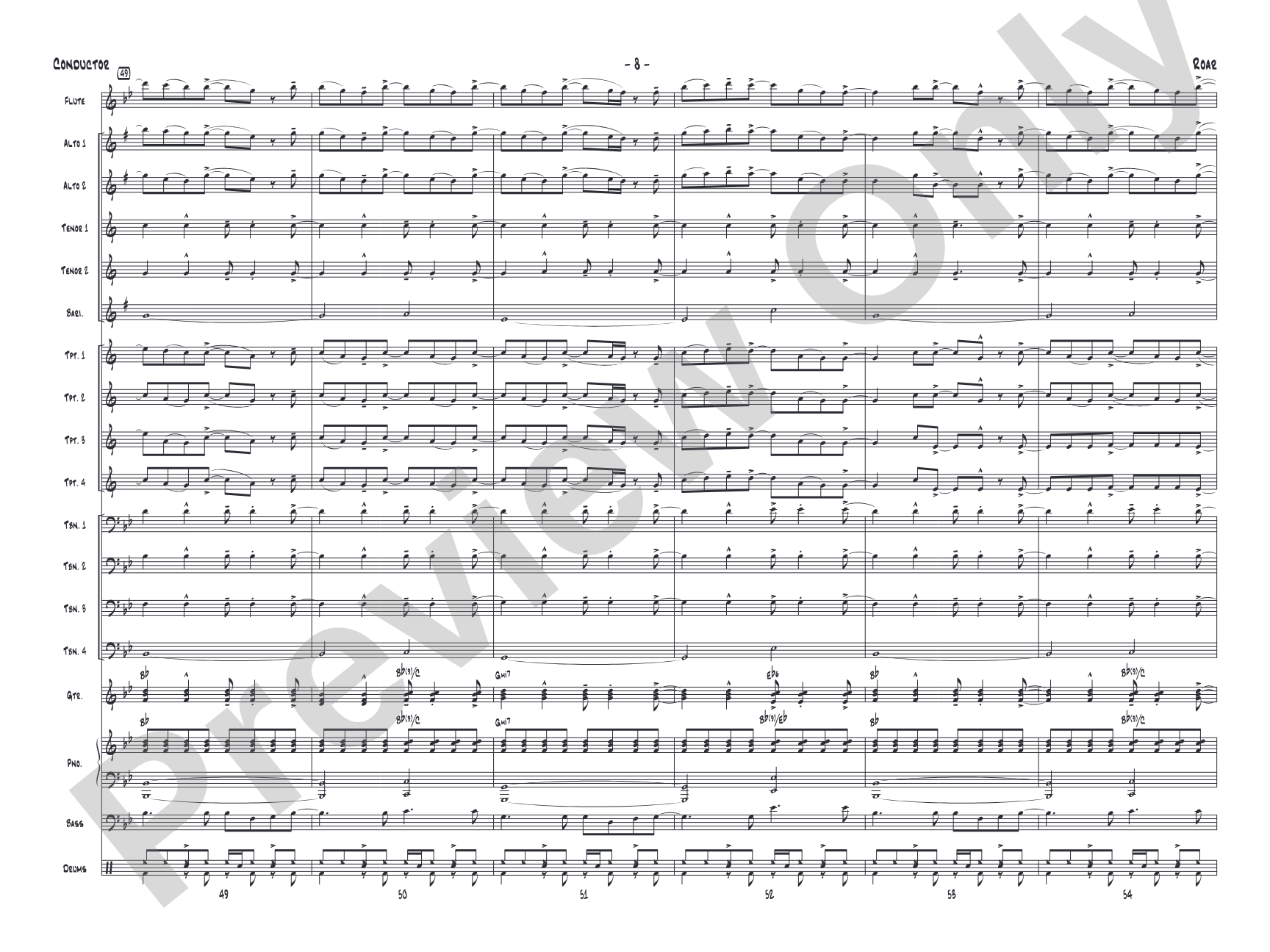
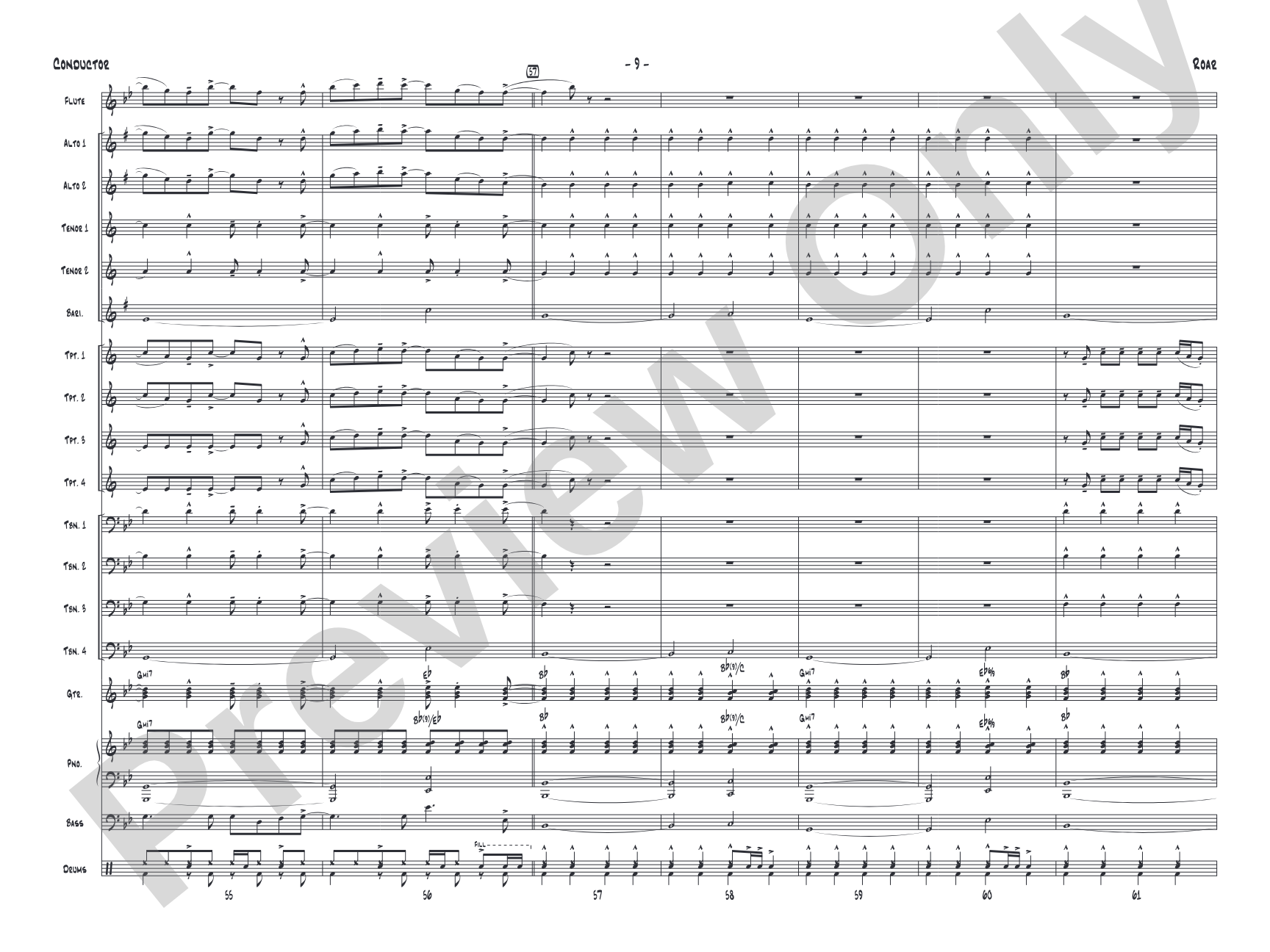
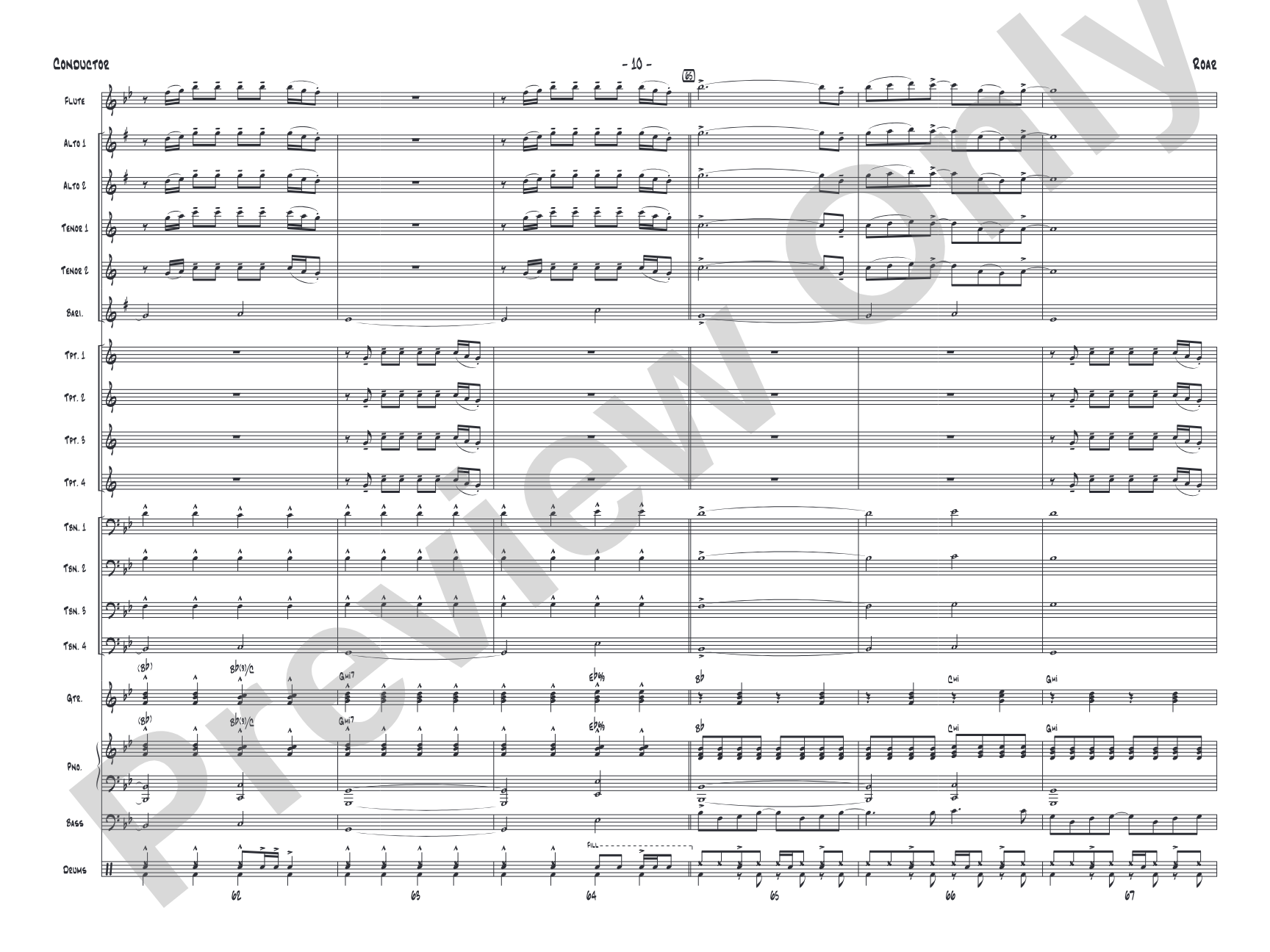
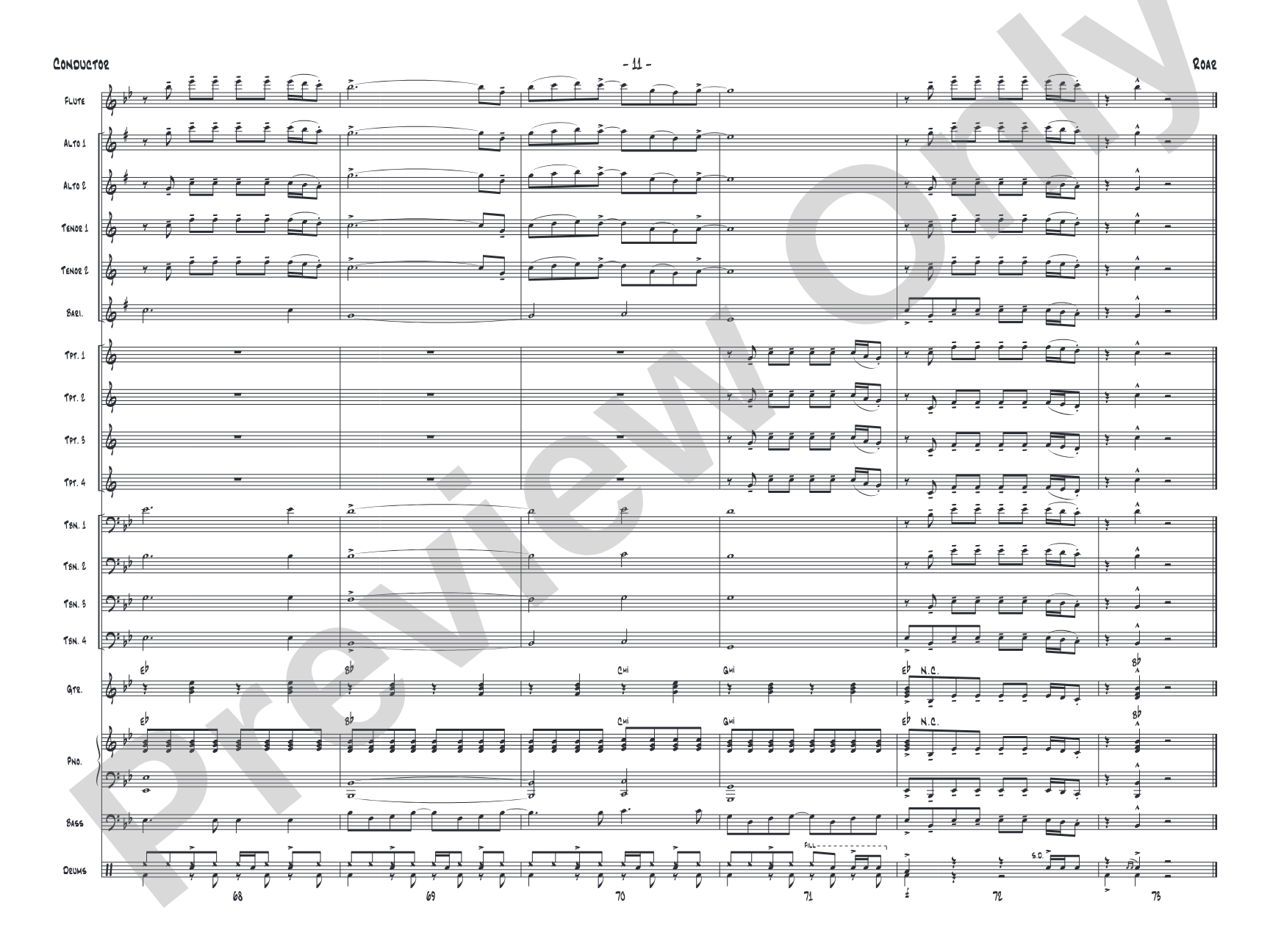

Roar: Jazz Ensemble Conductor Score & Parts
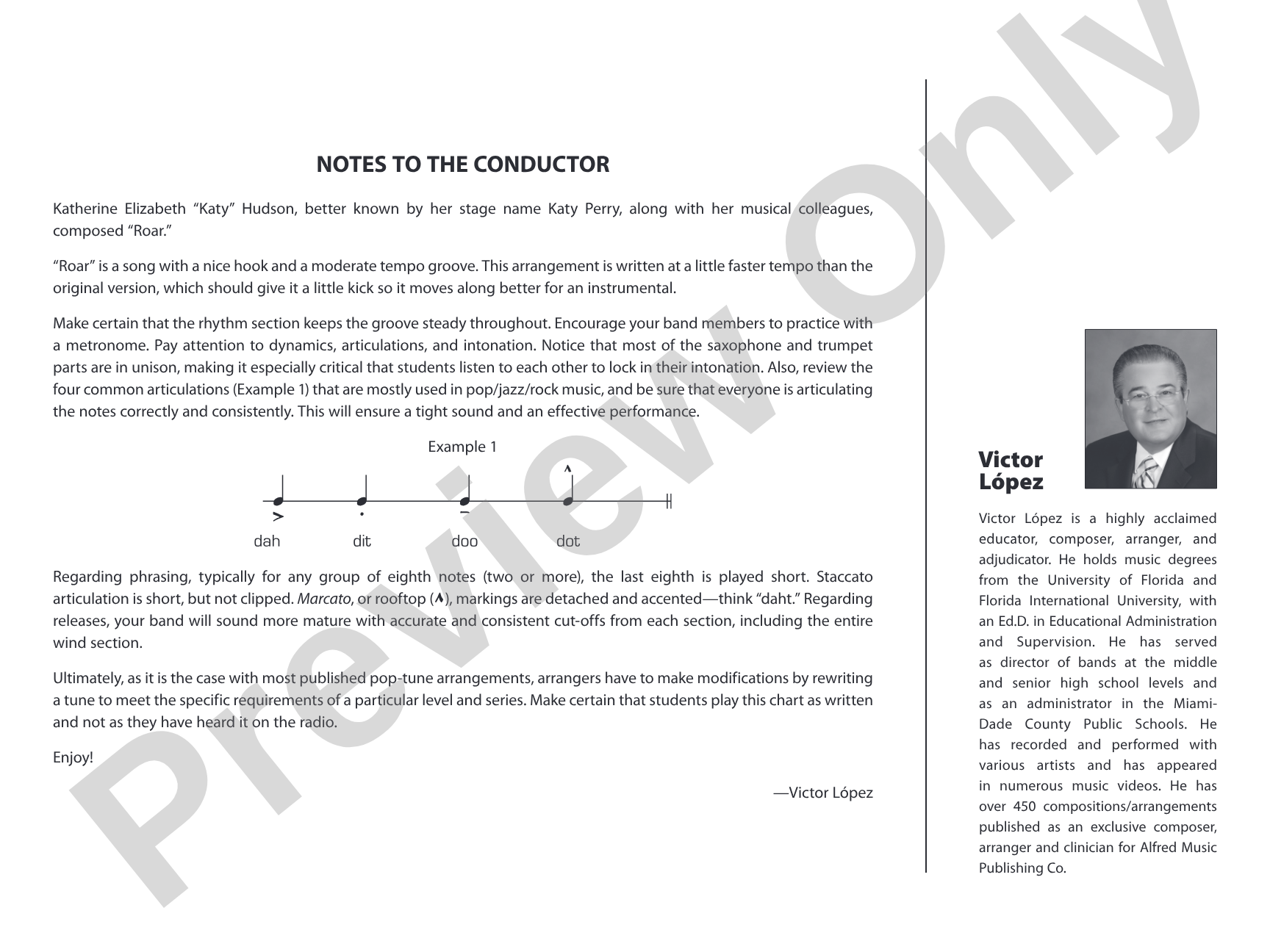
Words and music by Katy Perry, Max Martin, Lukasz Gottwald, Bonnie McKee, and Henry Walter / arr. Victor López
Grade: 2 (Medium Easy)
Item: 00-PK-0006037

$48.00
One moment…
Description
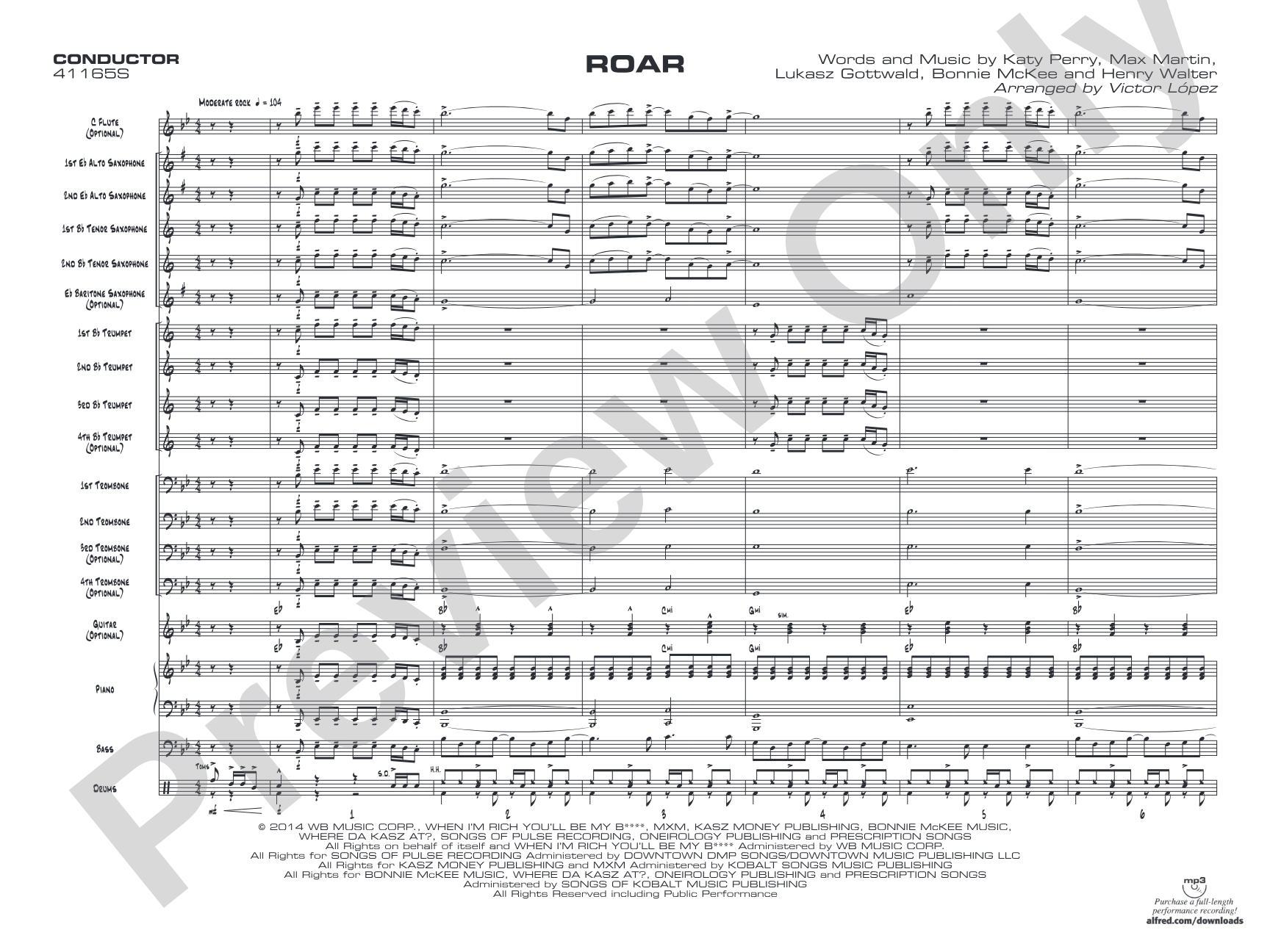
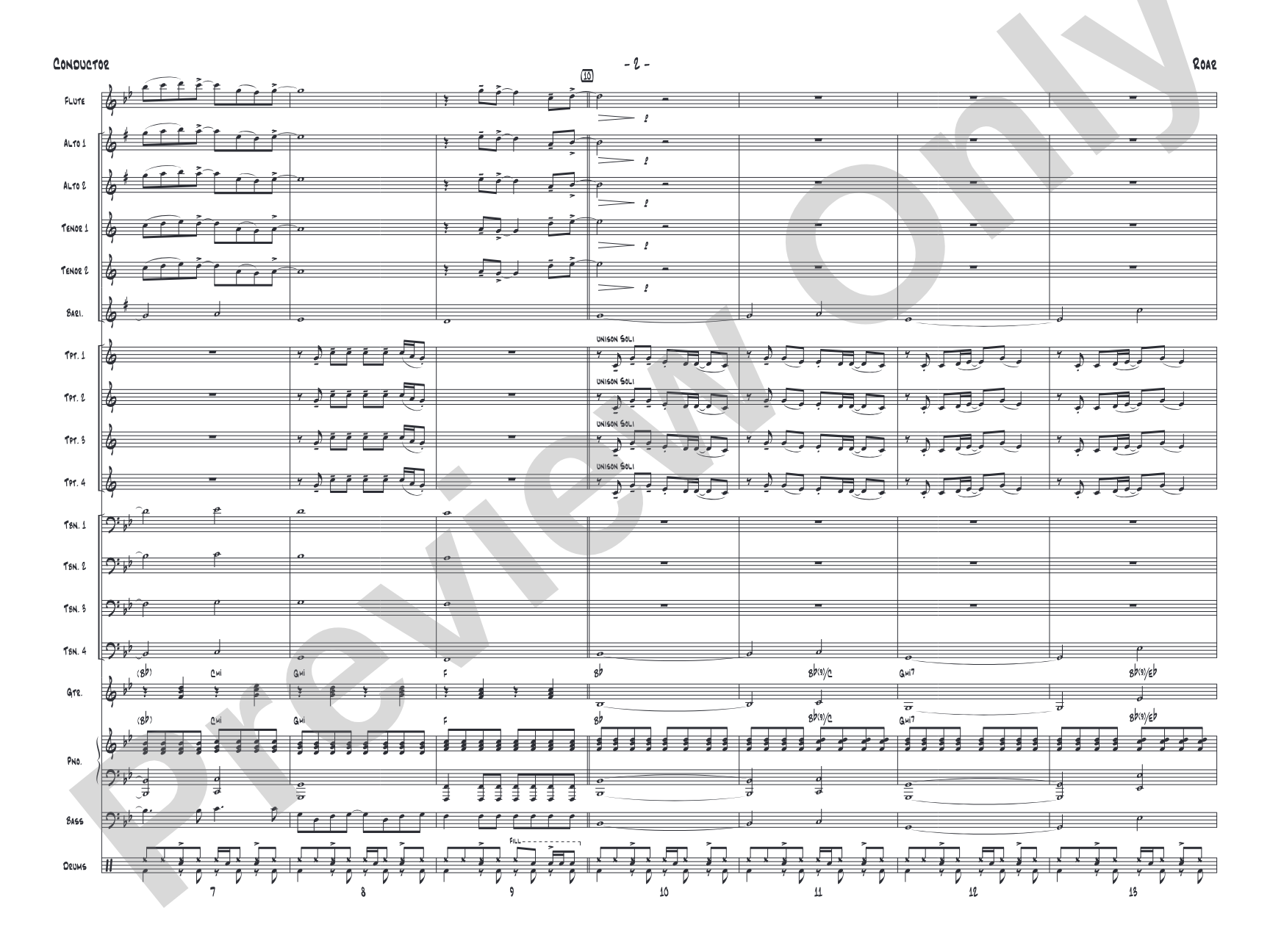
Here's a pop tune that your jazz ensemble will enjoy playing and that the audience will recognize and enjoy. A tempo of around 164 BPM, no solos, and a big ensemble sound with trumpet 1 range to written F top line and a solid drum back-beat. It works great. (2:47)


Don't just read it, hear it, play along with it, and watch your students grow with it. In MakeMusic Cloud, Roar: Jazz Ensemble Conductor Score & Parts comes alive with professional accompaniment, adjustable tempo, and built-in practice tools that turn solo practice into real progress.
Open in the Player
Jump straight in and assign it today.
Start Your Free Trial
Open this title and explore the full library in minutes.
Sample Audio
1
Audio File
--:--
0:00
0:00
Sample Video
No sample videos found.
Additional Details
Series:
Young Jazz Ensemble
Publisher:
Alfred Music
Page Count:
98
SKU:
00-PK-0006037
More about this title
About the Composer: Katy Perry
Katy Perry has established herself as one of the most successful pop songwriters and performers of the 21st century, with a catalog of globally recognized hits that span nearly two decades. Her work is characterized by infectious melodies, accessible lyrics, and production choices that translate remarkably well across different musical contexts and ensembles.
Perry's songs have become staples in music education settings because they balance immediate appeal with solid musical structure. Her collaborations with producers and songwriters like Max Martin have created pop standards that students recognize instantly, making them valuable repertoire for engaging younger or less experienced ensembles.
Why we love this
Your students already know this tune, which means you skip the lengthy process of familiarization and jump straight to the joy of playing it together. The arrangement respects the original's hook and energy while keeping the part writing manageable for Grade 2 players, so nobody gets buried in technical demands. A contemporary pop hit at this level and length fills a real programming gap between standards and trendy material.
What to expect
Energetic and immediate, with the kind of infectious groove that makes audiences lean in and students smile while playing. The arrangement captures the pop original's upbeat confidence without sacrificing the ensemble voice and instrumental texture that makes jazz ensemble music rewarding to perform.
Who it's for
Jazz ensemble directors looking for engaging, accessible repertoire that connects with student musicians and audiences alike. This works for community college jazz bands, high school jazz ensembles at the developing level, and any group that values contemporary material alongside traditional jazz repertoire.
How to get the most out of it
- Anchor the groove on the drum part; a tight backbeat is the spine of this arrangement, and everything locks when the drums stay consistent and confident.
- Bring the melody forward in trumpet 1, especially in the main sections. This line carries the recognizable hook, and the audience needs to hear it clearly above the ensemble texture.
- Keep the tempo sitting right around 164 BPM without rushing. The upbeat energy depends on steady pulse, not acceleration.
- Balance the ensemble so it reads as "big sound" rather than "everyone at full volume." Dynamics create the pop production effect more effectively than uniform loudness.
How to use it
Program this as a contrast piece between swing standards or blues heads; its contemporary idiom and shorter runtime (2:47) make it ideal for breaking up a set without losing momentum. Consider pairing it with other pop or R&B jazz arrangements to create a thematic set that showcases how jazz musicians approach modern material.
Skills your students will build
- Reading and executing a steady backbeat rhythm in ensemble context
- Balancing ensemble texture with a forward melodic line
- Playing contemporary pop material in a jazz ensemble setting
- Maintaining consistent tempo at moderate to fast speeds
- Responding to dynamic shaping in popular music style