
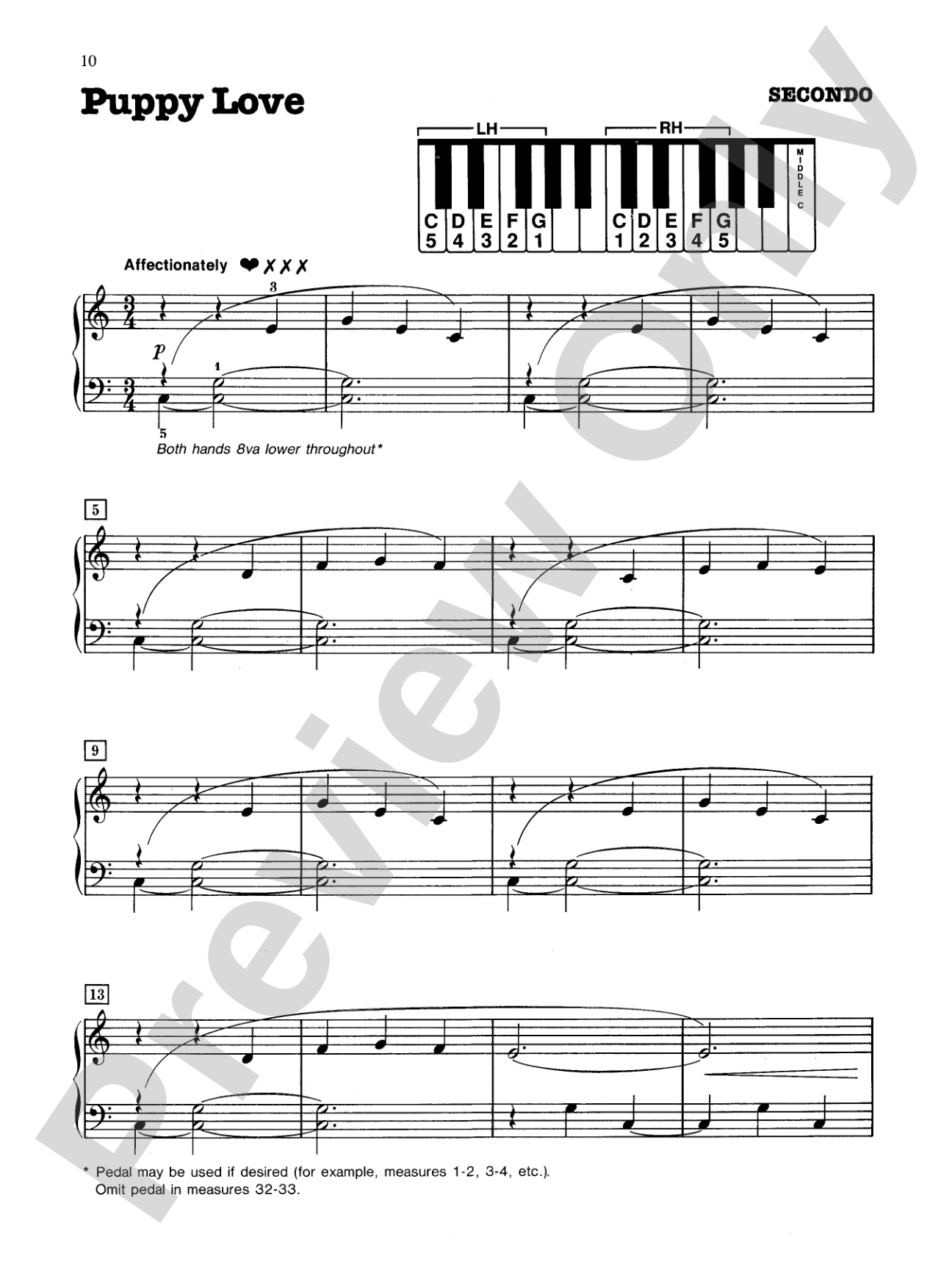

Puppy Love - Piano Duet (1 Piano, 4 Hands): Piano Duet (1 Piano, 4 Hands)
Early Elementary Duets for 1 Piano, 4 Paws
By Margaret Goldston
Level: Early Elementary
Item: 00-PS-0017485
$4.99
Pickup currently not available
Related Items
Guard Dog - Piano Duet (1 Piano, 4 Hands): Piano Duet (1 Piano, 4 Hands) |
$4.99
|
View | |
The Bow-Wow Chorus - Piano Duet (1 Piano, 4 Hands): Piano Duet (1 Piano, 4 Hands) |
$4.99
|
View | |
The Wagging Tail - Piano Duet (1 Piano, 4 Hands): Piano Duet (1 Piano, 4 Hands) |
$6.99
|
View | |
Duets for Dog Lovers: Piano Duet (1 Piano, 4 Hands) Book |
$6.99
|
View |
Description
A collection of elementary duets for one piano and four paws! The primo and secondo parts are equal in difficulty and the hand positions are shown for each piece. Some pieces feature easy position shifts. An indispensible collection to add variety to the lesson plan and help make practicing the piano become less work and more fun! A Federation Festivals 2024-2028 selection.


Discover MakeMusic Cloud: thousands of interactive titles your students can play along with today.
Sample Audio
1
Audio File
--:--
0:00
0:00
Sample Video
No sample videos found.
Additional Details
Publisher:
Alfred Music
Page Count:
20
SKU:
00-PS-0017485
More about this title
About the Composer: Margaret Goldston

Margaret Goldston spent her teaching career in North Carolina, where she worked with piano students across all age ranges in her private studio. She earned her Bachelor of Music degree in piano performance from Louisiana State University and later studied composition privately with Pulitzer Prize winner Robert Ward, eventually becoming a sought-after clinician and masterclass instructor throughout the United States and Canada.
Goldston's contributions to music education were recognized repeatedly by the North Carolina Federation of Music Clubs, which named her Composer of the Year in both 1983 and 1994. Her work continues to appear on major festival lists, and in 2020, the Music Teachers National Association honored her posthumously as a Foundation Fellow, cementing her lasting influence on contemporary piano pedagogy.
Why we love this
Goldston understood exactly what makes young pianists eager to keep practicing: the joy of making music together. By crafting primo and secondo parts with equal weight and interest, she ensures neither student feels like they're playing an accompaniment. The hand position guides eliminate guesswork during lessons, and the gentle position shifts build technical confidence without overwhelming emerging players.
What to expect
Playful and accessible, with the kind of melodic charm that makes young players feel accomplished. The music invites genuine musical communication between the two parts rather than merely tacking one line on top of another.
Who it's for
Early elementary piano students ready to experience ensemble playing without complex rhythmic demands or difficult hand positions. This collection works equally well for lesson reinforcement and for preparing duets that sound polished enough for student recitals or festivals.
How to get the most out of it
- Balance the melodic line between hands. Even though both parts have engaging material, decide ahead of time which voice carries the primary theme in each section and let that guide your dynamic choices.
- Practice the rhythm independently before combining parts. Duet playing requires precision, and having each student rock-solid on their own material makes rehearsal time far more efficient.
- Sit close enough that both players can see each other's hands when needed. Young pianists often benefit from watching their partner's technique, especially during the position shifts.
- Record yourselves periodically. Students hear ensemble balance and intonation issues much more clearly when listening back, and it builds accountability for staying together.
How to use it
Rotate individual duets throughout the year as reward pieces after mastering technique-focused exercises, or program several in a student recital to showcase collaboration and peer learning. The NFMC festival selection status makes these especially valuable for students preparing for competitions at the early elementary level.
Skills your students will build
- Ensemble listening and staying rhythmically locked with another player
- Reading and maintaining independent parts while tracking a partner's music
- Hand position navigation with gentle shifts across the keyboard
- Dynamic control and phrasing in a musical dialogue rather than solo context
- Sight-reading multiple part textures