Psalm 121 Cover Image

Psalm 121: SATB Choral Octavo

$2.25 USD
Sale price  $2.25 USD Regular price 
Skip to product information
Psalm 121 Cover Image

Psalm 121: SATB Choral Octavo

Music by Dave Brubeck

Level: Moderately Difficult

Item: 00-LG53058

Need it now?

Buy Digital Version
$2.25
Shipped

One moment…

Description

Psalm 121: SATB Choral Octavo isn't in MakeMusic Cloud just yet...but it could be. Let us know you'd like to see it, and you'll help shape what comes next. In the meantime, start a free trial and dive into thousands of interactive titles your students can play along with today.

Sample Pages

Sample Audio
0:00
0:00
Sample Video
Additional Details
Series: Alfred Archive Edition: Lawson-Gould Music Publishers
Publisher: Alfred Music
Page Count: 12
UPC: 654979042907
SKU: 00-LG53058

More about this title

About the Composer: Dave Brubeck
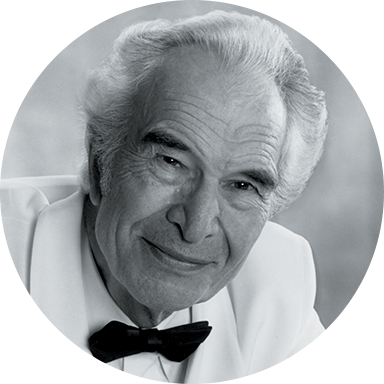
Dave Brubeck

Dave Brubeck was a jazz pianist and composer whose improvvisational brilliance extended far beyond the jazz idiom. He studied with Darius Milhaud at Mills College, who encouraged him to synthesize jazz language with classical forms. This dual foundation shaped a vast catalog that includes choral music, orchestral works, chamber pieces, and large-scale compositions for chorus and orchestra. His 1959 album "Time Out" became the first jazz recording to sell over a million copies, and the standard "Take Five" remains his most famous work.

Beyond his recordings and compositions, Brubeck was a social pioneer who broke racial barriers in mid-20th-century American music. His sacred works, including the mass "To Hope!" and oratorios such as "The Voice of the Holy Spirit" and "Beloved Son," have been performed and recorded internationally by orchestras and choirs from London to Washington, DC. He received the Presidential Medal of the Arts from President Clinton, a Grammy Lifetime Achievement Award, and was elected into the American Classical Music Hall of Fame in 2003.

Why we love this

Brubeck brings a composer's distinctive voice to sacred text, blending harmonic sophistication with accessibility. At Grade 4, this setting sits in the sweet spot where singers engage with meaningful musical ideas without excessive technical burden. Programming a Brubeck choral work signals depth and cultural literacy to your audience while giving singers repertoire they'll remember.

What to expect

Reflective and luminous. Brubeck's setting treats Psalm 121 with spiritual weight while maintaining lyrical accessibility. The harmonic language moves gracefully between jazz-influenced sonorities and classical restraint, creating moments of both repose and gentle ascent.

Who it's for

Intermediate to advanced high school choirs and auditioned community or semi-professional ensembles. Your singers need secure sight-reading and the maturity to handle sophisticated harmony and theological content with respect.

How to get the most out of it

  • Balance the harmonic color Brubeck creates; his chord voicings are deliberate, so avoid excessive vibrato that muddies the vertical sonorities.
  • Attend to text clarity across the whole choir. Sacred texts deserve projection, but not at the expense of blend in the homophonic sections.
  • Shape phrases according to the psalm's spiritual arc rather than mechanically marking time signatures. Brubeck's music rewards singers who listen to the larger narrative.
  • Use the accompaniment as a harmonic anchor, not a crutch. The piano part should support but not dominate the choral sound.

How to use it

This work fits naturally into a concert centering on faith, hope, or American sacred music. Pair it with other mid-century choral settings or with instrumental jazz to highlight Brubeck's unique synthesis of idioms. It also serves well as a festival or competition selection for choirs ready to tackle material beyond standard octavos.

Skills your students will build

  • Reading and balancing jazz-influenced harmony (extended chords and unexpected progressions)
  • Sustaining phrase shape in longer melodic lines without excessive breath marks
  • Ensemble blend across four independent parts with colorful harmonic writing
  • Interpretive phrasing of sacred text with musicianship matching sophistication

You May Also Like