
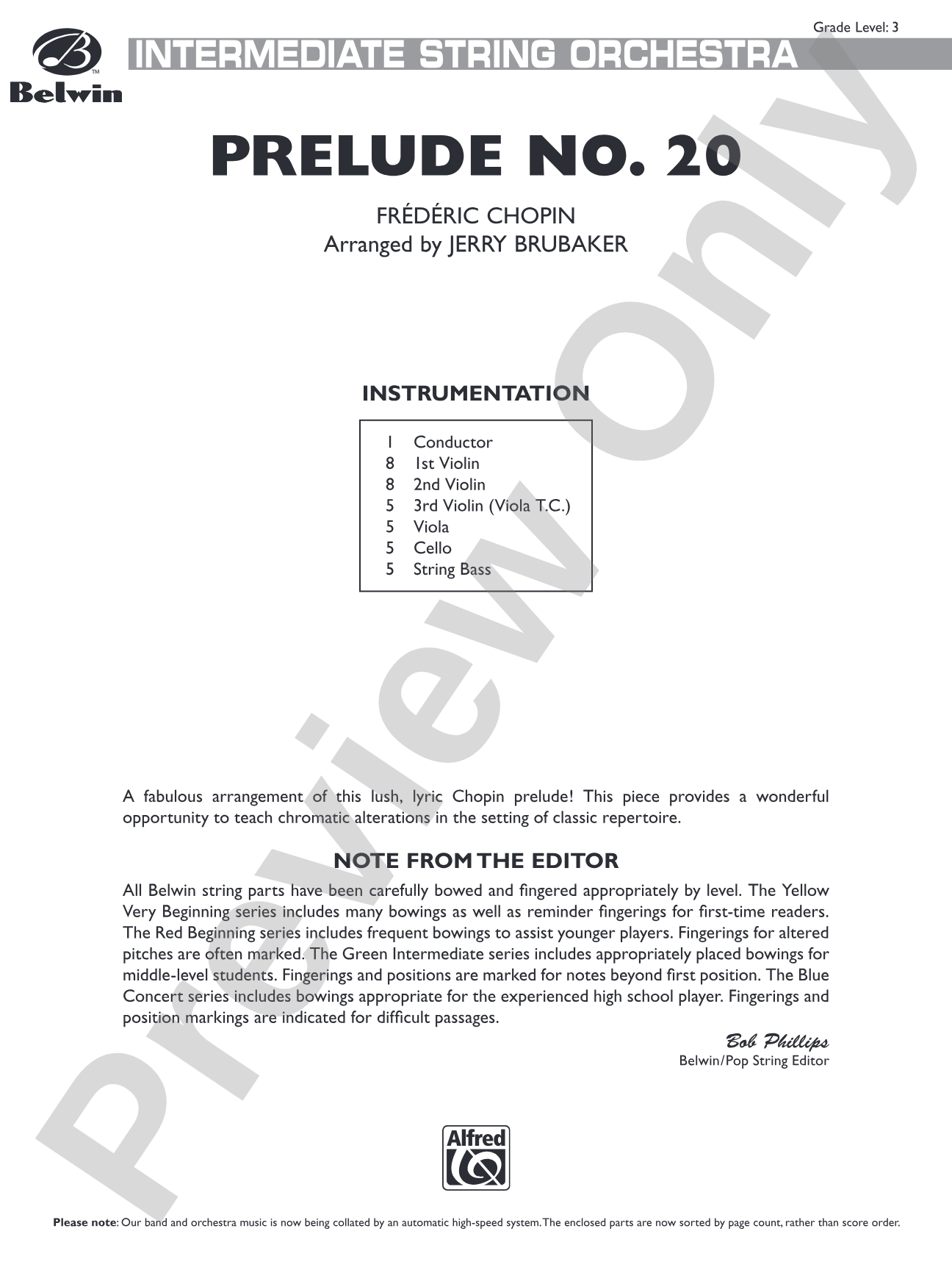
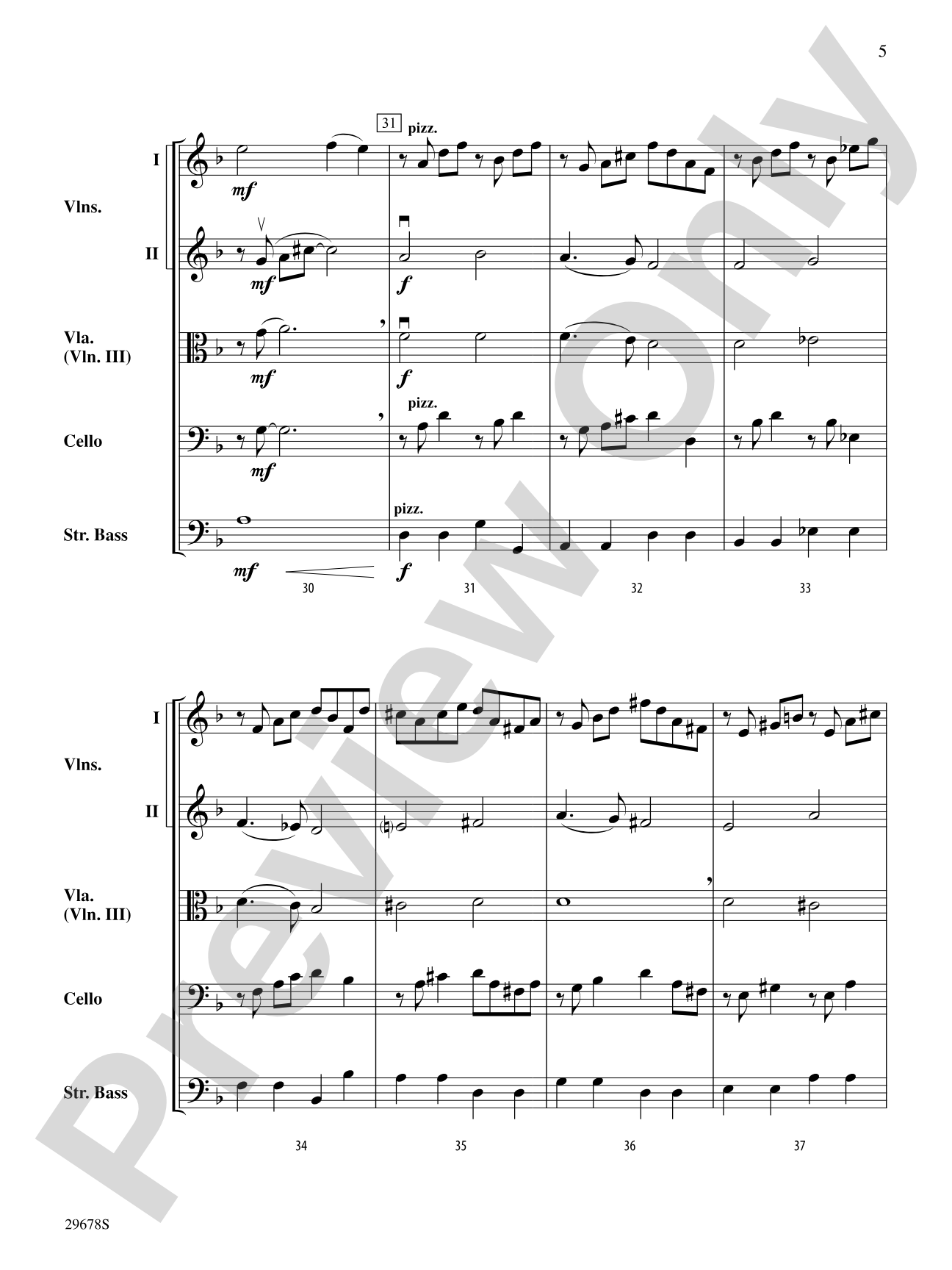
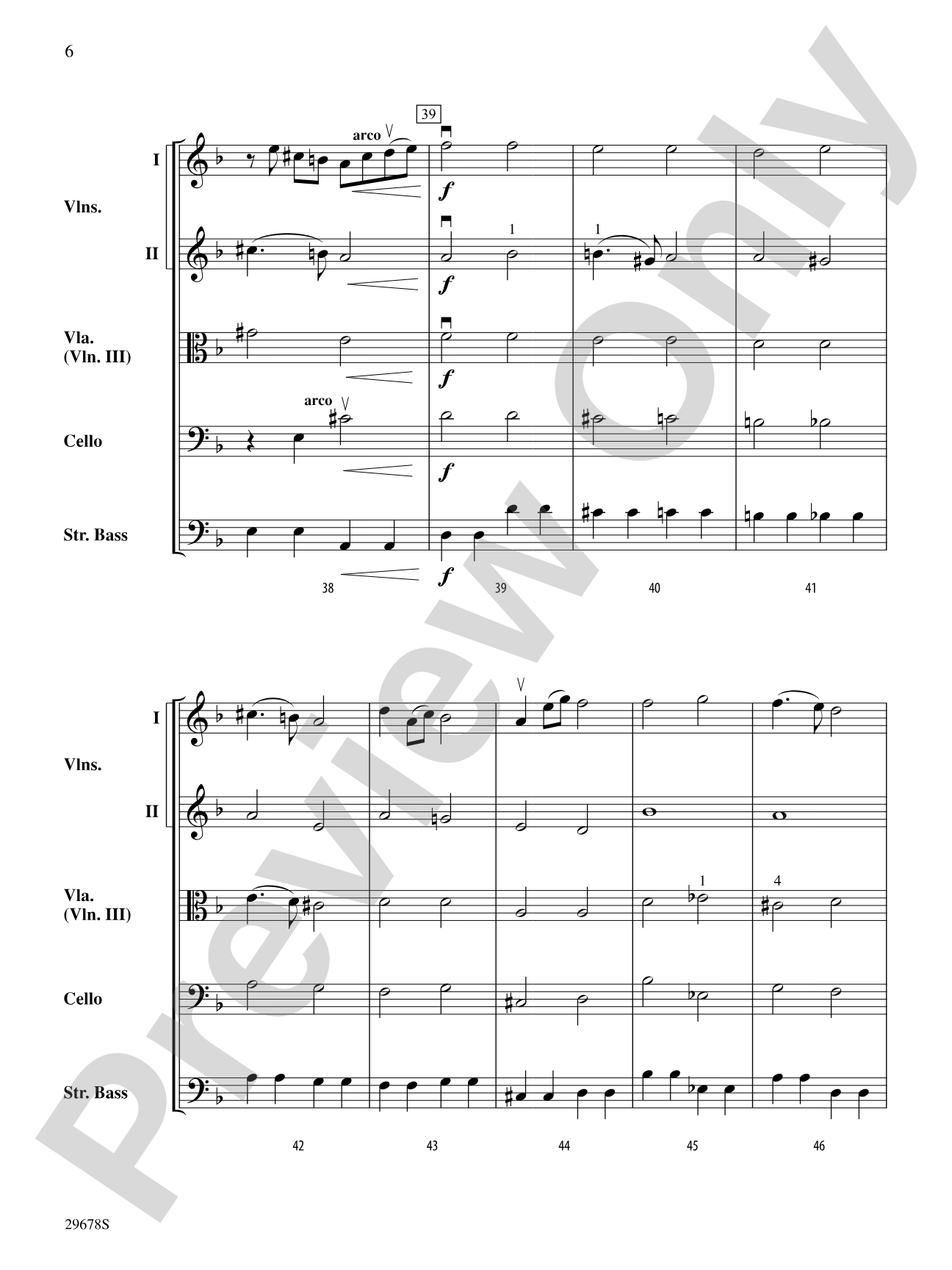
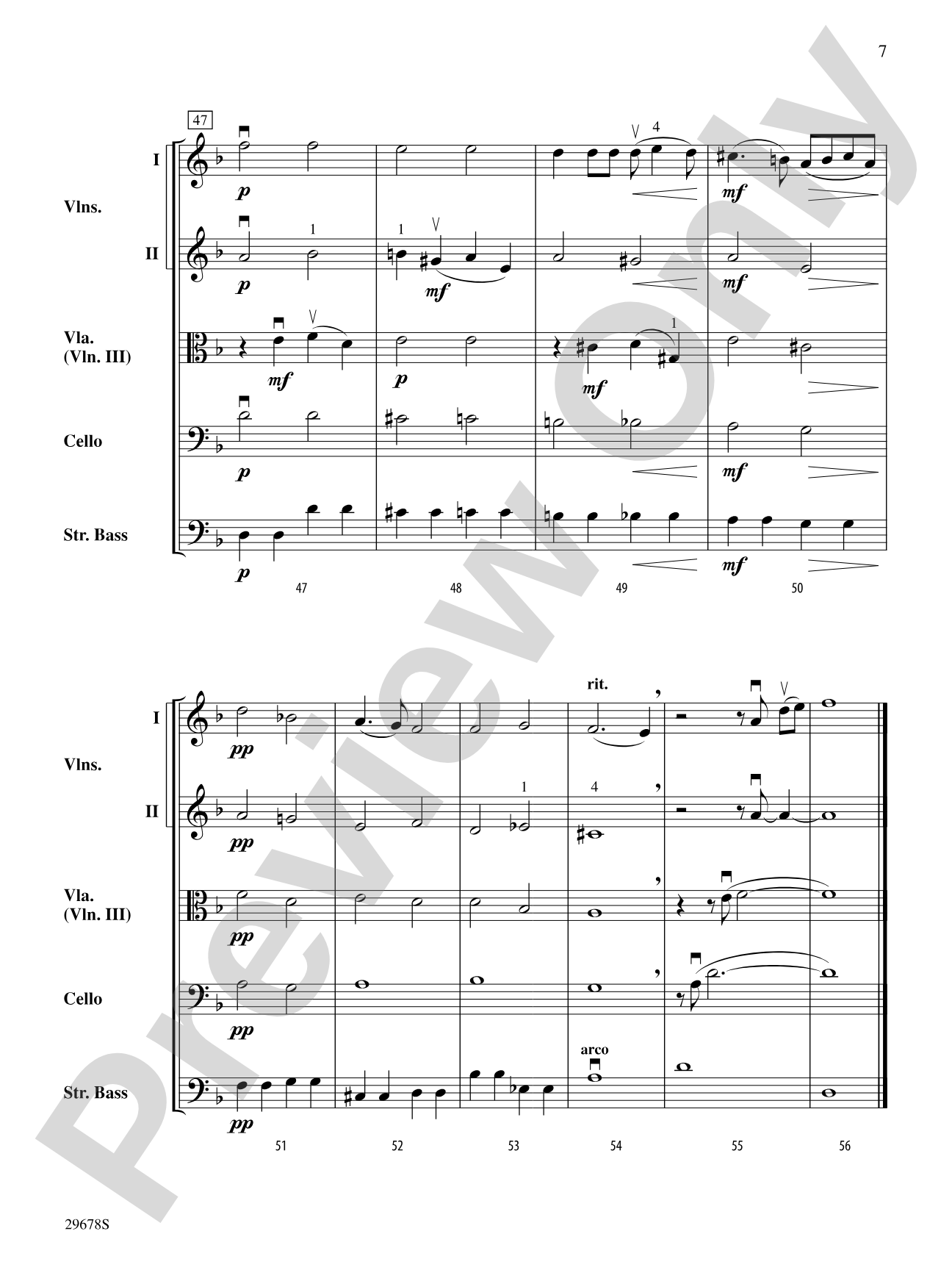


Prelude No. 20: String Orchestra Conductor Score & Parts
By Frédéric Chopin / arr. Jerry Brubaker
Grade: 3
Item: 00-PK-0001558

$49.00
Pickup currently not available
Buy Extra Parts (Digital PDF Download)
| Product | Price | Quantity |
|---|---|---|
| Prelude No. 20: Score | $7.00 | |
| Prelude No. 20: 1st Violin | $5.99 | |
| Prelude No. 20: 2nd Violin | $5.99 | |
| Prelude No. 20: 3rd Violin (Viola [TC]) | $5.99 | |
| Prelude No. 20: Viola | $5.99 | |
| Prelude No. 20: Cello | $5.99 | |
| Prelude No. 20: String Bass | $5.99 |
Parts Added to Cart!
Description
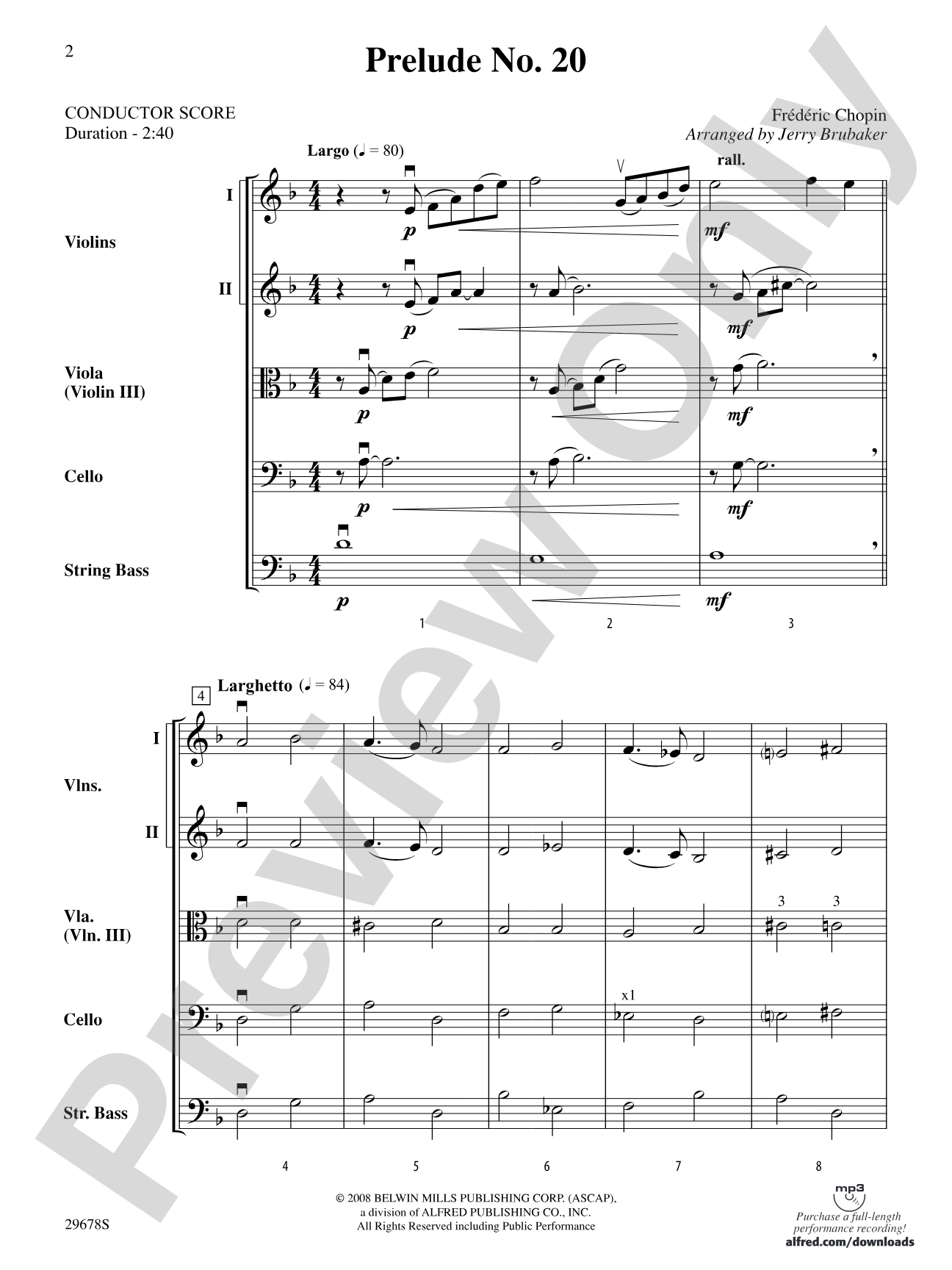
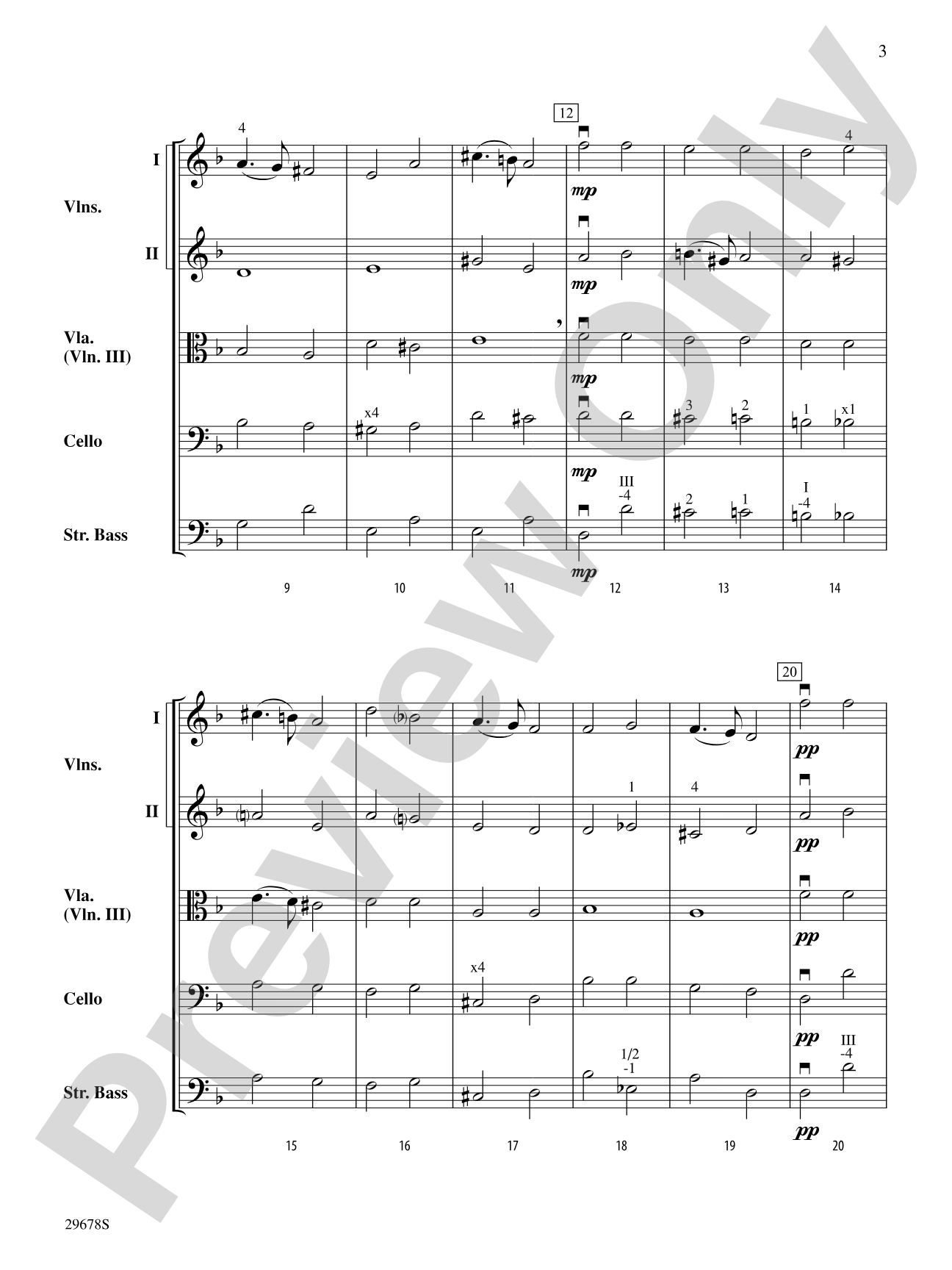
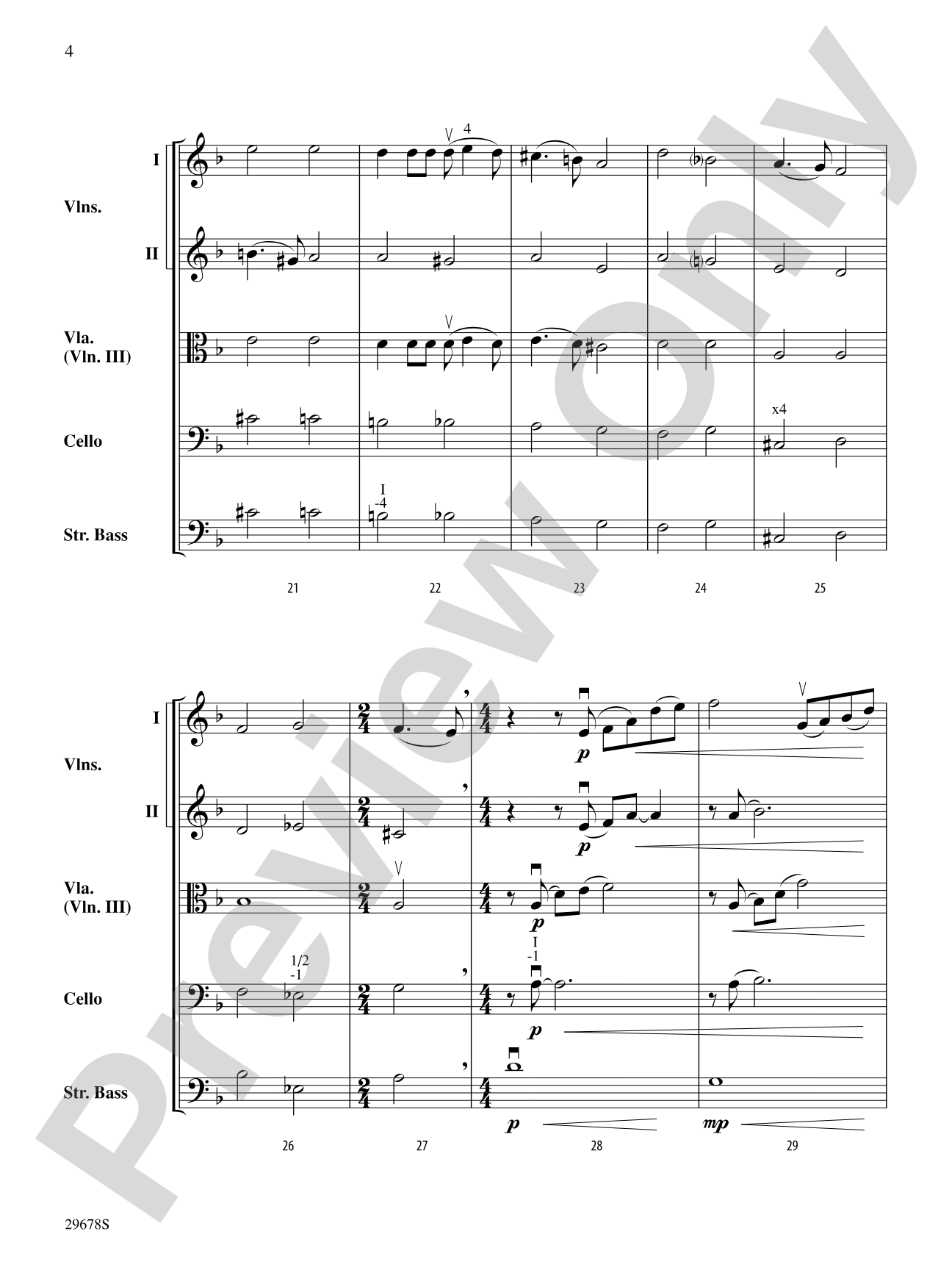
A fabulous arrangement of this lush, lyric Chopin prelude! This piece provides a wonderful opportunity to teach chromatic alterations in the setting of classic repertoire.


Don't just read it, hear it, play along with it, and watch your students grow with it. In MakeMusic Cloud, Prelude No. 20: String Orchestra Conductor Score & Parts comes alive with professional accompaniment, adjustable tempo, and built-in practice tools that turn solo practice into real progress.
Open in the Player
Jump straight in and assign it today.
Start Your Free Trial
Open this title and explore the full library in minutes.
Sample Audio
1
Audio File
--:--
0:00
0:00
Sample Video
No sample videos found.
Additional Details
Series:
Belwin Intermediate String Orchestra
Publisher:
Alfred Music
Page Count:
72
SKU:
00-PK-0001558
More about this title
About the Composer: Frédéric Chopin
Frédéric Chopin (1810, 1849) was a Polish composer and pianist who fundamentally expanded the expressive range of the piano and influenced how musicians understood harmony and emotion in the Romantic era. His 24 preludes, composed across his lifetime, stand as a cornerstone of piano literature, each one exploring different keys and technical or emotional territories with remarkable economy.
Chopin's music is essential study for any ensemble because it demands attention to chromatic voice leading, rubato, and the architecture of feeling rather than pure virtuosity. His melodies sing with an almost vocal quality, and his harmonies, often surprising, always purposeful, show how a composer can say something profound in a brief span of music.
Why we love this
Jerry Brubaker's arrangement captures the intimate quality of Chopin's original while giving string orchestras direct access to one of the most influential works in the Romantic canon. The Grade 3 scoring makes chromatic alterations and Romantic harmony tangible for young players without sacrificing the piece's emotional core, and the concert and festival applications mean students experience this masterwork in meaningful performance contexts.
What to expect
Lush and introspective, with long, singing lines that seem to unfold naturally across the string section. The chromatic movement creates gentle harmonic color and emotional nuance, inviting players to listen deeply to one another and shape the phrase as a unified voice rather than individual parts.
Who it's for
String orchestra directors working with Grade 3 ensembles who want to teach Romantic-era harmony through a piece that rewards careful, expressive playing. This arrangement serves composers and conductors equally well: it introduces students to Chopin's compositional voice while giving directors a manageable entry point into chromatic voice leading.
How to get the most out of it
- Shape the melodic line with gradual dynamic layering; resist the urge to jump to full volume early. Let the opening statement breathe, then build texture as inner voices enter.
- Balance the first and second violins carefully so the melody sings clearly above accompanying figures. This clarity becomes essential as chromatic voices interact.
- Maintain rhythmic flexibility through the harmonic shifts. Slight breathing space before chromatic alterations helps the ear register the voice leading.
- Coordinate bow changes in the lower strings to support (not compete with) the upper melodic line. A lighter touch in accompaniment figures enhances the piece's lyrical character.
How to use it
Pair this as a concert opener or closing piece, it sets a reflective mood and shows your audience the range of your string section. It also works beautifully in a program that explores Romantic-era harmony or as a bridge between classical technique and contemporary string repertoire.
Skills your students will build
- Reading and performing chromatic alterations in context
- Balancing melody and accompaniment in string arrangements
- Shaping long lyrical lines with dynamic control
- Understanding voice leading and harmonic color in Romantic music
- Coordinating bow technique for sustained, singing tone