Precious Gift His Wondrous Birth Cover Image

Precious Gift His Wondrous Birth: SATB, <I>a cappella</I> Choral Octavo

$1.50 USD
Sale price  $1.50 USD Regular price 
Skip to product information
Precious Gift His Wondrous Birth Cover Image

Precious Gift His Wondrous Birth: SATB, a cappella Choral Octavo

Lyrics by Dave and Iola Brubeck, music by Dave Brubeck

Item: 00-38617

makemusic Cloud badge

Need it now?

Buy Digital Version
$1.50
Shipped

One moment…

Description

Don't just read it, hear it, play along with it, and watch your students grow with it. In MakeMusic Cloud, Precious Gift His Wondrous Birth: SATB, a cappella Choral Octavo comes alive with professional accompaniment, adjustable tempo, and built-in practice tools that turn solo practice into real progress.

Sample Pages

Sample Audio
No sample audio found.
Sample Video
Additional Details
Series: Lawson-Gould: The Dave Brubeck Series
Publisher: Alfred Music
Page Count: 4
UPC: 038081427904
SKU: 00-38617

More about this title

About the Composer: Dave Brubeck
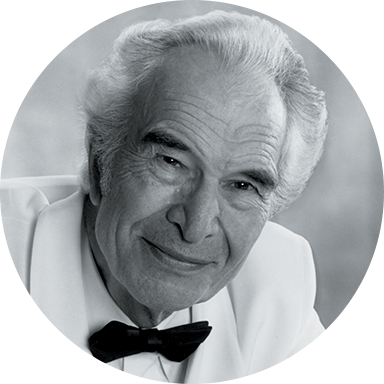
Dave Brubeck

Dave Brubeck was a jazz pianist whose improvisational brilliance extended far beyond the bandstand. He composed extensively across multiple genres: choral works, hymns, orchestral compositions, chamber music, ballets, a string quartet, and large-scale pieces for chorus and orchestra. His album "Time Out" became the first jazz recording to sell over a million copies, and "Take Five" remains one of the most recognizable pieces in American music.

Brubeck's compositional voice blended jazz language with classical structure, a fusion encouraged by his studies with Darius Milhaud at Mills College following World War II. His sacred works, including the mass "To Hope!" and oratorios "The Voice of the Holy Spirit" and "Beloved Son," have been performed and recorded internationally. Beyond music, Brubeck was instrumental in breaking racial barriers in mid-20th-century America. He received numerous honors throughout his career, including the Presidential Medal of the Arts, a Grammy Lifetime Achievement Award, and induction into the American Classical Music Hall of Fame in 2003.

Why we love this

Brubeck's sacred writing carries the same sophistication and harmonic richness that defined his instrumental work, yet remains deeply singable for amateur and professional choirs alike. The a cappella setting demands focused intonation and blend, making this an excellent choice for choirs ready to deepen their ensemble refinement without instrumental support.

What to expect

The music carries warmth and reverence without heaviness, infused with the harmonic sophistication Brubeck brought to both jazz and classical forms. The a cappella texture creates an intimate, unadorned beauty that lets the voices themselves become the instrument of expression.

Who it's for

This piece suits choirs with secure intonation skills and comfort with moderate harmonic complexity. It works well for groups preparing Christmas or Advent services, interfaith celebrations, or concert programs that blend jazz-influenced sacred writing with traditional choral literature.

How to get the most out of it

  • Establish a firm tonal center early in rehearsal using sustained unison sections to lock ensemble pitch, then gradually introduce the layered harmonies.
  • Shape the phrases according to text meaning rather than purely musical phrasing; allow word stress and natural speech rhythms to guide breath placement.
  • Balance upper voices (soprano and alto) with lower voices (tenor and bass) so that harmonic movement remains clear despite the density of a cappella scoring.

How to use it

Pair this with other sacred seasonal repertoire to create a contemporary take on Christmas music programming. The piece's moderate length (4 pages) makes it ideal as a centerpiece for a smaller sacred concert or as a significant contribution to a holiday service where a modern compositional voice balances traditional hymns.

Skills your students will build

  • Intonation stability in a cappella SATB settings
  • Reading and balancing jazz-influenced harmonic language
  • Text-driven phrasing and interpretation
  • Ensemble blend and voice independence without instrumental reference

You May Also Like
